Color-Changing Cat Litter: Watching for Urine Changes at Home

Cats are experts at keeping discomfort to themselves, which means the litter box is often one of the first places a change shows up. Paying attention to what you scoop each day can help you notice something new long before your cat looks unwell. Color-changing cat litter adds one more easy observation to that routine: the litter reacts where your cat urinates, and you compare the result to a chart. This guide explains how to use it thoughtfully. It is an at-home observation aid, not a diagnostic test. It can help you notice changes worth discussing with your veterinarian. We also cover the other litter box clues that matter, how to read the litter correctly, how to manage several cats, and which signs mean you should contact your veterinarian right away.
Important: This article shares general educational information for pet owners and is not a substitute for an in-person veterinary examination, diagnosis, or treatment. For any medical concern or emergency, contact your veterinarian promptly.
Why Urinary Changes Matter in Cats
Cats tend to mask signs of weakness, so many keep eating and grooming even when something is wrong. Subtle shifts in urination are often among the earliest clues an attentive owner can spot.
Changes in how much, how often or how comfortably a cat urinates can be linked to many different conditions, including bladder inflammation, crystals or stones, urinary tract infection, kidney disease, diabetes and thyroid disease. Only a veterinary exam and appropriate testing can sort out the cause, so the goal at home is simply to notice and report.
Our overview of feline lower urinary tract disease explains the bladder and urethra problems that commonly show up as litter box changes.
How Color-Changing Litter Works
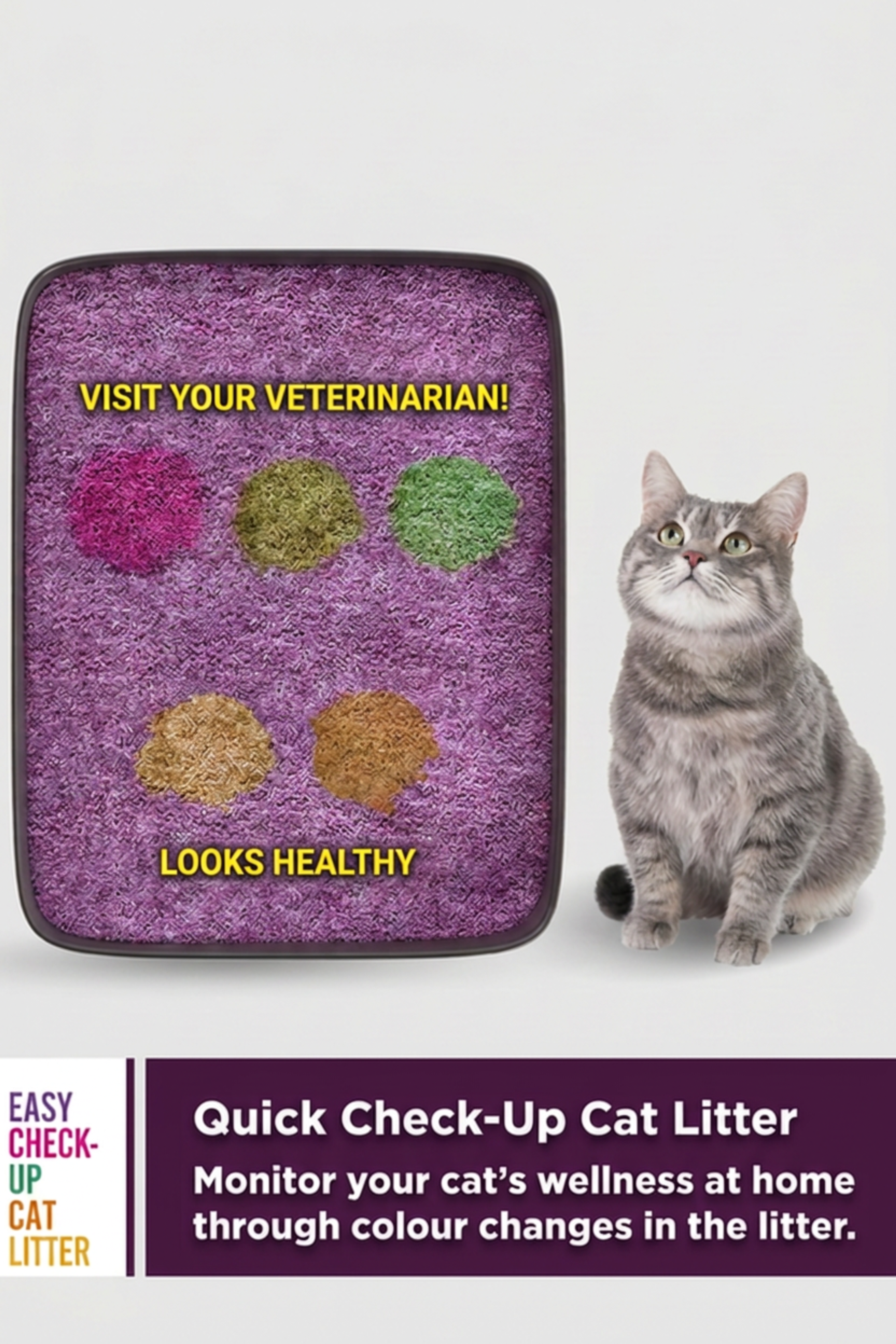
Color-changing litter contains an indicator that reacts when it comes into contact with urine. The litter in the wet area takes on a shade, and you compare that shade to a chart supplied with the product.
What it can and cannot do
- It can: give you one extra observation to note alongside your cat's usual habits, and prompt a conversation with your veterinarian when the result looks different from what the chart describes as typical.
- It cannot: diagnose any condition, identify a cause, or replace a urinalysis performed by your veterinarian.
- A typical color does not rule out illness: many health problems do not change the color result, so a cat with other worrying signs still needs an exam.
- A changed color does not confirm a disease: it is a reason to check in with your veterinarian, who will decide what testing makes sense.
Think of the indicator as a conversation starter. Whatever it shows, your veterinarian's urinalysis and exam are what give real answers. Our simple guide to understanding your pet's urinalysis walks through what that test looks at.
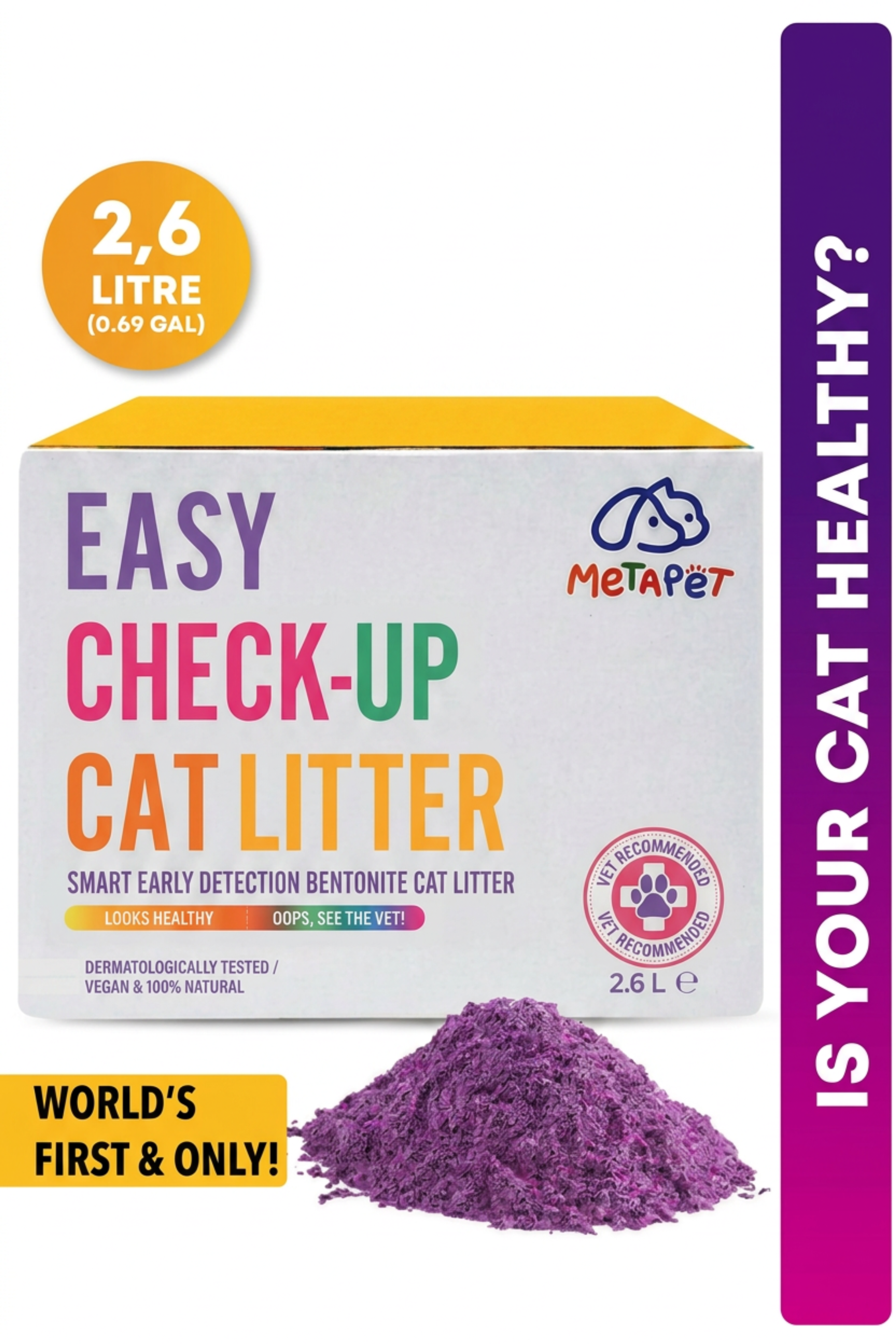
About MetaPet Easy Check-Up Smart Cat Litter
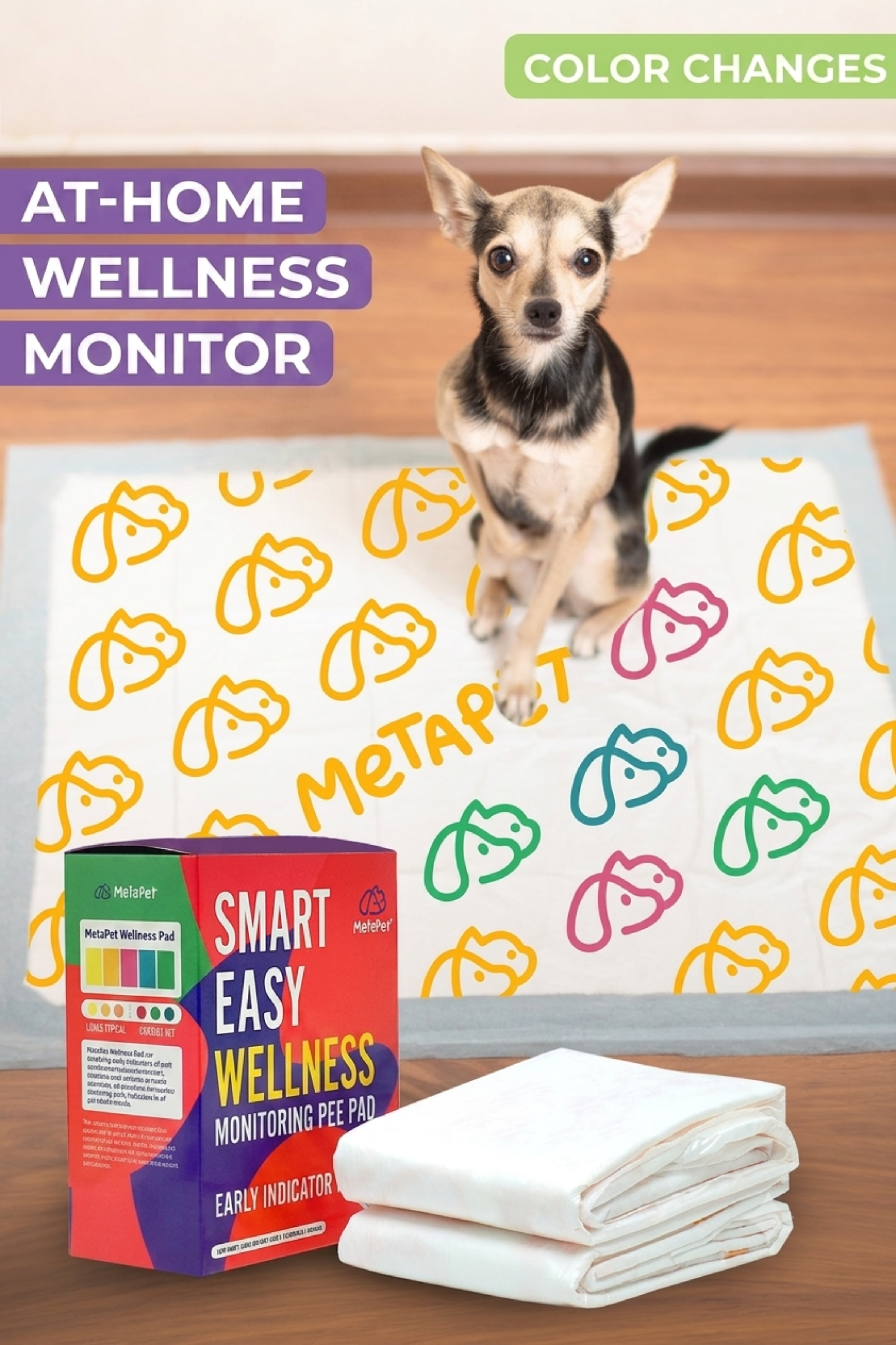
The MetaPet Easy Check-Up Smart Cat Litter is a natural bentonite litter with a built-in color-changing indicator. After your cat urinates, the litter in the contact area changes color so you can compare it to the included chart. According to the chart, yellow shades are typical, while pink, blue or green shades suggest it is time to check in with your veterinarian.
Because it is natural bentonite, it clumps quickly and helps lock in odor, and it is fragrance-free, so it is gentle on sensitive noses.
This litter is a convenience for at-home observation. It does not diagnose anything, and it complements, not substitutes for, regular veterinary checkups and the urine testing your veterinarian recommends. If your cat shows any of the warning signs in this article, contact your veterinarian whatever color the litter shows.
Setting Up and Reading the Litter
A consistent routine makes the results easier to interpret.
- Start with a clean box: pour the litter evenly into a clean litter box.
- Compare with the chart: check the contact area against the included chart, and follow any instructions supplied with the product.
- Use good light: natural daylight or a bright, white light makes shades easier to judge. Dim or warm-toned lighting can make colors look different than they are.
- Hold the chart next to the clump: compare side by side instead of relying on memory.
- Write it down: note the date, the shade, and anything else you noticed, such as clump size or how long your cat spent in the box.
- Scoop and keep the box clean: remove clumps daily so older wet spots do not confuse the next reading.
If odor control is a concern between changes, MetaPet No Smell in Litterbox is a coconut-shell activated carbon litter deodorizer with no added fragrance that helps absorb and trap litter box odors and works with all litter types. Sprinkle a scoop over the litter and mix it in after changing the litter. It is a litter care product only, and it complements, not substitutes for, veterinary care.
What Else to Watch in the Litter Box
Color is only one clue. The way your cat uses the box often tells you more.
- Frequency: more or fewer trips to the box than usual, or many short visits in a row.
- Clump size and number: clumps that are noticeably larger, smaller or more numerous than your cat's normal.
- Straining: squatting for a long time, pushing, or getting up and returning repeatedly. Straining with little or no urine is an emergency, so contact your veterinarian right away.
- Crying in the box: vocalizing while trying to urinate can signal pain or a blockage and needs veterinary attention right away.
- Visible blood: pink, red or brown tinges in the litter or on the fur.
- Accidents outside the box: urinating on beds, laundry, bath mats or other soft or cool surfaces.
- Licking the genital area: more licking than your cat usually does, especially after using the box.
- Odor changes: a urine smell that is stronger or different from usual.
Knowing your own cat's normal is the key.
Combining Litter Checks With Weight and Water Intake
Litter box observations become much more useful when paired with other simple home records.
Water intake
Drinking more than usual often goes hand in hand with producing more urine, which you may notice as larger or more frequent clumps. Measure the water you put out each morning and what is left the next day, using the same bowl and amount. Remember that cats on wet food naturally drink less from the bowl.
Body weight
Gradual weight loss is easy to miss under fur. Weigh your cat regularly at home using the same scale, or ask your veterinary team about a quick weight check.
Appetite and behavior
Note changes in appetite, hiding, grooming or activity. Bring all of these notes to your appointment.
Monitoring in Multi-Cat Homes
When several cats share boxes, it can be hard to know whose clump is whose.
- Watch when you can: observing who uses which box at certain times of day helps you link results to a specific cat.
- Temporarily separate if advised: your veterinarian may suggest briefly giving one cat a private room with its own box to get a clearer picture.
- Keep enough boxes: a common guideline is one box per cat plus one extra, placed in quiet, separate locations.
- Track each cat separately: keep separate notes on weight, water intake and behavior for every cat.
If you see an unusual result in a shared box and cannot tell which cat produced it, mention that to your veterinarian.
How to Collect a Urine Sample for Your Veterinarian
Your veterinarian may ask for a urine sample, or may prefer to collect one directly at the clinic for the most reliable results. Always ask before you collect at home.
- Ask about the container and timing: your clinic can supply a clean container and tell you how soon to bring the sample in.
- Use a non-absorbent option: many clinics suggest an empty, clean box with non-absorbent litter beads or a clean, dry box so urine can be drawn up or poured into the container.
- Collect a fresh sample: urine that has sat out for a long time is less useful for testing.
- Label and store as directed: write your cat's name and the collection time, and follow your veterinarian's advice on refrigeration.
A color-changing litter clump cannot be used as a urine sample. Our guide to collecting a urine sample from your dog or cat at home has more step-by-step detail.
Common Mistakes to Avoid
- Reading a typical color as an all-clear: a normal-looking result does not rule out illness, so other signs still deserve attention.
- Assuming a changed color means a specific disease: only your veterinarian's testing can identify what is going on.
- Reading the litter in poor light: compare the contact area with the included chart in bright light.
- Waiting to see if it goes away: when straining or crying in the box is present, contact your veterinarian right away.
- Skipping checkups: at-home observation complements regular veterinary visits and routine urine testing.
When to Call Your Veterinarian
Contact your veterinarian or an emergency clinic right away if your cat:
- Strains in the litter box and produces little or no urine, especially if your cat is male
- Cries or vocalizes while trying to urinate
- Vomits, seems lethargic or hides, or refuses food along with any litter box change
A cat that cannot pass urine is in a life-threatening situation, and male cats are at particular risk because of their narrow urethra. Do not wait to see whether it improves.
Schedule a veterinary exam soon if you notice:
- A color result that the chart suggests is worth checking with your veterinarian
- Visible blood in the urine
- More frequent trips to the box, or larger or more numerous clumps
- Urinating outside the box
- Increased licking of the genital area
- Drinking more water than usual or unexplained weight loss
Your veterinarian will usually examine your cat and run a urinalysis, and may recommend other tests. Any medication, such as antibiotics or pain medication, should be given only as prescribed by your veterinarian.
Frequently Asked Questions
Can color-changing litter diagnose a urinary infection or kidney disease?
No. It is an at-home observation aid that helps you notice changes worth discussing with your veterinarian. Diagnosis requires a veterinary exam and urine testing.
My cat's litter shows a typical yellow shade. Does that mean my cat is healthy?
Not necessarily. A typical color does not rule out illness. If your cat has other signs, such as frequent trips to the box or drinking more, schedule a veterinary exam. If your cat is straining without producing urine, crying in the box, vomiting or lethargic, contact your veterinarian right away.
What should I do if I see a pink, blue or green shade?
Note the date and details, check how your cat is behaving, and call your veterinarian to discuss it. Your veterinarian may ask for a urine sample or an appointment.
Key Takeaways
Cats hide illness, so the litter box is a valuable window into their health. Color-changing litter can add a simple daily observation, but it is not a diagnostic test: a typical color does not rule out illness, and a changed color does not confirm a disease. Compare the contact area with the included chart in good light, and watch frequency, clump size, blood, accidents and licking too. Pair litter checks with water intake and weight records, and always follow up with your veterinarian, who can perform a urinalysis. If your cat, especially a male, is straining without producing urine, crying in the box, or vomiting or lethargic with litter box changes, contact your veterinarian or an emergency clinic right away.