Why Dogs Tilt Their Heads: Hearing, Curiosity, and Attention
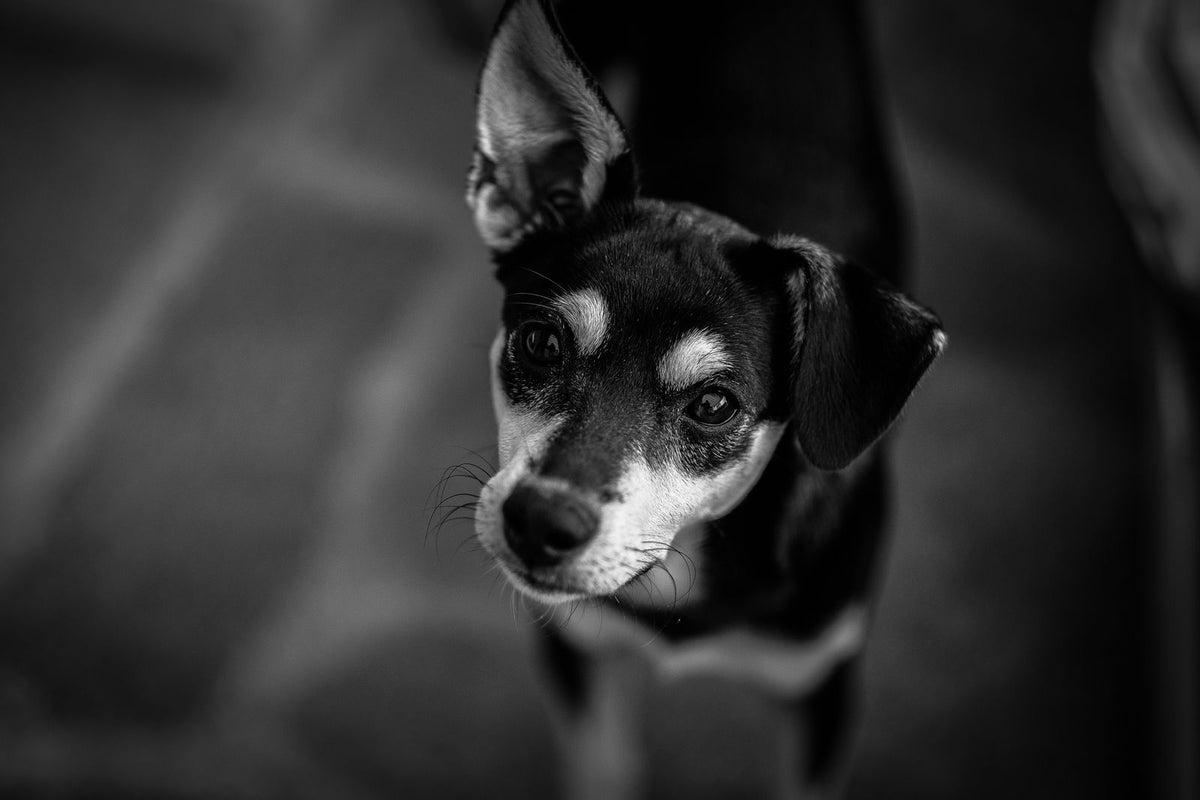
Few things look as endearing as a dog who tips their head to one side when you say a favorite word or make a strange noise. Researchers and veterinarians have offered several explanations for this familiar behavior, and most come down to hearing, vision, attention, and learning. No single theory has been proven, and different dogs likely tilt for different reasons. This guide walks through the leading ideas, explains how a playful tilt differs from one caused by a health problem, and describes the signs that warrant a veterinary exam.
Important: This article shares general educational information for pet owners and is not a substitute for an in-person veterinary examination, diagnosis, or treatment. For any medical concern or emergency, contact your veterinarian promptly.
What a Normal Head Tilt Looks Like
A normal, behavioral head tilt is brief. Your dog turns their head to one side, often while looking straight at you, and then returns it to a level position within a moment. Some dogs tilt to the same side every time, while others alternate sides.
The tilt usually follows something specific: a new or unusual sound, a word your dog knows well, a squeaky toy, a voice on a phone, or a question asked in a lively tone. Between these moments, the dog holds their head level, walks normally, and acts like their usual self.
That combination of a clear trigger, a short duration, and an otherwise normal dog is what separates an everyday tilt from one that deserves medical attention.
Theory One: Pinpointing Where a Sound Comes From
Dogs have keen hearing and can detect higher-pitched sounds than people can. Locating a sound, however, involves more than detecting it. The brain compares tiny differences in when a sound reaches each ear and how loud it is on each side, which tells a dog whether a noise came from the left or right, above or below, and near or far.
Why changing head position may help
When a dog tilts their head, they shift their ears relative to the sound. This may give the brain an extra set of comparisons that helps sharpen where the sound is coming from. Owners often see this when a dog hears an odd noise in a wall or a beep from a device they cannot see.
Ear flaps and ear shape
The outer ear flap, called the pinna, funnels sound toward the ear canal. Dogs with upright ears can swivel them independently, while dogs with long, folded ears have less freedom to move the flap. Some people suggest that floppy-eared dogs tilt more to compensate, but this is an informal observation rather than an established fact. For more about canine hearing, read our guide to how well dogs and cats hear.
Theory Two: Seeing Past the Muzzle
Another popular idea involves vision. A dog's muzzle sits in the lower part of their field of view, and when a dog looks at a person's face, the muzzle may partly block the mouth and lower face, which carry a lot of expressive information.
Tilting the head could move the muzzle out of the way and give a clearer view of your expression. Dogs pay close attention to human faces, so getting a better look at your mouth and eyes while you speak would make sense.
Supporters of this theory note that dogs with longer muzzles might tilt more than dogs with short, flat faces. This has not been firmly established, and plenty of short-faced dogs tilt enthusiastically, so it is best seen as one possible piece of the picture.
Theory Three: Attention, Curiosity, and Familiar Words
Many owners notice that their dog tilts most when hearing words that matter, such as their name, the word for a walk, or a favorite toy. This suggests the tilt may be linked to concentration and mental processing, not just to the physical act of hearing.
What research on word-learning dogs suggests
Researchers who study canine cognition have looked at a small group of dogs that are unusually good at learning the names of many toys. In that work, these gifted word learners appeared to tilt their heads more often when hearing familiar toy names than dogs that had not learned those names. The research is limited and the groups were small, so it cannot explain why any individual dog tilts. It does support the idea that a tilt can go along with focused attention to meaningful sounds.
Curiosity and novelty
New, puzzling, or high-pitched sounds often draw a tilt as well. A squeak, a whistle, or a noise your dog has never heard before can capture their interest, and the tilt seems to signal that they are listening carefully and trying to make sense of it.
Theory Four: Social Learning and Reinforcement
Dogs learn quickly which behaviors earn attention. When a dog tilts their head, most people respond with smiles, laughter, praise, or petting. Over time, many dogs seem to repeat the tilt because it reliably produces a pleasant response.
This is a normal and harmless form of learning. It also helps explain why some dogs tilt far more at home than with strangers, and why the behavior can become more frequent once owners encourage it. Dogs who never tilt are not missing anything; personality and life experience play a role.
Reading the tilt alongside your dog's ears, tail, and eyes gives a fuller picture of how they feel. Our guide to dog body language explains how these signals fit together.
When a Head Tilt Is a Health Concern
A behavioral tilt comes and goes. A medical head tilt stays to one side even when nothing interesting is happening, and it does not straighten when your dog walks, eats, or rests. A persistent tilt is a sign that warrants a veterinary exam, because it can reflect a problem with the ear or the balance system.
The balance system
The vestibular system, made up of structures in the inner ear and parts of the brain, helps a dog know which way is up and keeps the eyes, head, and body coordinated. When something affects this system, a dog may tilt their head, lose their balance, lean to one side, or walk in circles. Our article on vestibular disease in dogs and cats explains these signs in more detail.
The ear
Problems in the ear canal or deeper parts of the ear can also lead to a tilt, often with head shaking, scratching, odor, redness, or discharge. Read more in our guide to head shaking in dogs and cats.
A sudden tilt that comes with falling, stumbling, being unable to stand, circling, flicking eyes, vomiting, collapse, or a seizure needs your veterinarian or an emergency clinic right away. A gradual or lingering tilt warrants a scheduled exam.
When to Call Your Veterinarian
Schedule a veterinary exam soon if your dog shows gradual changes, such as:
- A head tilt that develops slowly or lingers while your dog still walks, eats, and behaves normally
- Ear odor, redness, discharge, or repeated scratching at one ear
- Frequent head shaking that does not settle
- Reduced response to sounds or to their name
Contact your veterinarian or an emergency clinic right away if your dog
- Develops a head tilt suddenly with falling, rolling, or being unable to stand
- Has a sudden head tilt with vomiting
- Suddenly starts circling, stumbling, or showing eyes that flick rapidly side to side
- Seems disoriented, collapses, has a seizure, or has trouble breathing
- Shows facial drooping, a head injury, or severe pain
While you arrange care, keep your dog in a safe, padded area away from stairs.
What to Expect at the Veterinary Visit
For a dog with a persistent head tilt, your veterinarian will look for the cause step by step.
- History: when the tilt started, whether it came on suddenly, and whether you have noticed vomiting, circling, or ear problems.
- Physical and ear exam: a look into the ear canals with an otoscope and a check of the ear flaps and skin.
- Neurologic exam: tests of balance, reflexes, eye movements, and how your dog walks.
- Ear samples: a swab of debris examined under a microscope, if discharge is present.
- Further testing: bloodwork, and sometimes imaging, depending on the exam findings.
Any medication, such as anti-inflammatory or anti-nausea medication, should be given only as prescribed by your veterinarian. Never place drops or cleaners in an ear that has not been examined.
Encouraging Healthy Curiosity at Home
A normal head tilt is a sign of an engaged, attentive dog, and you can build on that curiosity.
- Teach names for toys: say the name each time you play with a particular toy, and praise your dog for picking it up.
- Use a warm, varied voice: dogs often respond well to an upbeat tone during training.
- Keep sessions short and fun: end while your dog is still keen to play.
- Avoid frightening noises: never use loud or startling sounds just to provoke a tilt.
- Track changes: if the tilt starts to linger or no longer looks playful, tell your veterinarian.
Common Myths and Mistakes
Myth: A head tilt means a dog understands every word.
Fact: a tilt may go along with attention to familiar words, but it does not prove a dog understands full sentences the way people do.
Myth: Only dogs with certain ear types tilt their heads.
Fact: dogs with every ear shape may tilt. Ear and muzzle shape may influence the behavior, but this is not established.
Mistake: Assuming every tilt is cute behavior.
Fact: a tilt that develops gradually or stays in place, especially with ear discharge or gradual balance changes, deserves a scheduled veterinary exam. A sudden tilt with falling, stumbling, circling, flicking eyes, vomiting, collapse, or a seizure needs your veterinarian or an emergency clinic right away.
Mistake: Cleaning or medicating the ear without an exam.
Fact: putting products in an ear before it has been examined can make some ear problems worse.
Frequently Asked Questions
Is it bad to make my dog tilt their head on purpose?
A gentle, interesting sound or a familiar word is generally harmless. Avoid loud or startling noises, and ease off if your dog seems unsettled.
Do smarter dogs tilt their heads more?
Head tilting is not a measure of intelligence. Limited research suggests dogs skilled at learning toy names may tilt more when hearing those names, but many bright dogs rarely tilt.
Why does my dog always tilt to the same side?
Many dogs seem to have a preferred side during brief, playful tilts, which is not usually a concern. A tilt that stays to one side all the time warrants a scheduled exam.
Can older dogs develop a head tilt?
Yes. Older dogs can develop balance problems that cause a sudden tilt. A sudden tilt with falling, stumbling, circling, flicking eyes, vomiting, collapse, or a seizure needs your veterinarian or an emergency clinic right away. A tilt that comes on gradually warrants a scheduled exam.
Do cats tilt their heads too?
Cats can tilt their heads when listening, though the behavior is more often noticed in dogs. In both, a lingering tilt warrants an exam, and a sudden tilt with falling or vomiting needs care right away.
Key Takeaways
Dogs tilt their heads for several likely reasons, and no single explanation has been proven. A tilt may help a dog locate sounds, see past their muzzle to read your face, focus on familiar or puzzling sounds, and earn praise from the people they love. A normal tilt is brief, has a clear trigger, and happens in a dog who is otherwise acting normally. A head tilt that lingers, or comes with ear discharge or frequent head shaking, warrants a veterinary exam. Contact your veterinarian or an emergency clinic right away if a tilt appears suddenly with falling, stumbling, circling, flicking eyes, vomiting, collapse, or seizures.