Understanding Your Pet's Stool: A Fecal Scoring Guide

Few things tell you more about a dog or cat's day-to-day wellbeing than what lands in the yard or the litter box. Stool is a daily, free, remarkably honest report on how food is being digested, how much water the body is holding onto, how fast material is moving through the intestine, and whether the gut lining is irritated or bleeding. Most owners glance at it and scoop. Learning to actually read it turns an unpleasant chore into one of the most useful home-monitoring habits you can build.
Veterinarians use a simple tool for this called a fecal scoring scale. It is a numbered chart, usually running from 1 to 7, that describes stool consistency from rock-hard pellets at one end to pure liquid at the other. The scale exists because "a bit loose" means something different to every owner, while "a 5 on the chart, three days running" means the same thing to everyone. Once you know your pet's normal score, deviations stand out early rather than after a week of guessing.
This guide walks through the scoring scale in plain language, explains what color, coating, frequency and volume can suggest, describes the changes that warrant a same-day phone call, and shows you how to collect a useful sample if your veterinarian asks for one. None of it replaces a professional assessment, but all of it helps you give your veterinary team a far better history than "his stomach has been off".
Important: This article shares general educational information for pet owners and is not a substitute for an in-person veterinary examination, diagnosis, or treatment. For any medical concern or emergency, contact your veterinarian promptly.
What a Healthy Stool Actually Looks Like
A normal stool in a healthy adult dog or cat is chocolate brown, firm enough to hold a distinct log or segmented shape, moist on the surface but not wet, and easy to pick up in one piece without leaving a smear behind. It should not be so hard that it crumbles, and not so soft that it loses its outline the moment it hits the ground. On a 1-to-7 scale, this ideal sits around a 2 to a 3.
Size and frequency vary enormously with diet. Pets eating highly digestible foods tend to produce smaller, denser stools because more of the meal is absorbed. Diets with more fiber or more plant material produce noticeably bulkier stools. Neither is automatically better or worse; what matters is that the pattern is consistent for that individual. Most adult dogs pass stool one to three times daily and most adult cats once or twice daily, though healthy individuals sit outside those ranges.
The single most useful thing you can do is establish a baseline while your pet is well. Note the usual score, the usual color, the usual number of trips per day. That baseline is what turns a vague worry into a specific observation your veterinarian can act on.
The Fecal Scoring Scale, Step by Step
- Score 1 - very hard pellets. Small, dry, separate lumps that require obvious effort to pass and often roll rather than sit. Suggests dehydration, low dietary moisture, or slowed transit through the colon.
- Score 2 - firm and segmented. Holds a clear shape, has a slightly bumpy surface, leaves no residue. This is the ideal for most dogs and cats.
- Score 3 - log-shaped and moist. Still holds shape and picks up cleanly, but the surface is visibly damp. Perfectly acceptable in many healthy pets.
- Score 4 - very moist, log holds shape but leaves residue. Picks up but smears. Often the first sign that something in the diet or routine has shifted.
- Score 5 - very moist, piles rather than logs. Distinct piles with defined edges, but no log shape. Clearly abnormal if it persists.
- Score 6 - mushy piles with no defined shape. Texture of soft-serve or porridge. This is diarrhea.
- Score 7 - watery, no solid pieces. Pure liquid, often passed with urgency. Fluid losses can add up quickly, especially in small pets.
A single soft stool after a rich treat or a stressful car ride rarely means anything. A pattern - three or more consecutive stools above a 4, or any move to a 6 or 7 - is what deserves attention. Writing the score in a notes app for a few days costs nothing and makes the trend obvious.
What Color Can and Cannot Tell You
Brown comes from bile pigments processed as food moves through the intestine. Shades of brown vary with diet, and food dyes in some treats can shift the color temporarily without any medical meaning. A few color changes, however, are worth taking seriously.
- Black and tarry. Suggests digested blood from the upper digestive tract. This is not a wait-and-see finding; contact your veterinarian promptly.
- Fresh red streaks. Usually indicates bleeding lower down, often from an irritated colon or rectum. A small streak with an otherwise normal stool is common and often self-limiting, but repeated or heavy bleeding needs assessment.
- Pale, gray or clay-coloured. May reflect a problem with bile reaching the intestine. Worth a call, particularly alongside yellow gums or eyes.
- Orange or yellow. Sometimes seen with rapid transit or liver and gallbladder issues. Note it and mention it.
- Green. Frequently just grass or a chlorophyll-containing treat, but can accompany rapid transit.
- White specks that move. Possible tapeworm segments. Bring a sample and mention it directly.
Color on its own is rarely diagnostic. Color combined with consistency, appetite, energy and duration is what actually guides a veterinarian's thinking.
Mucus, Coatings and Straining
A thin, glistening film of mucus on an otherwise normal stool can be a minor, transient finding; the colon produces mucus to protect and lubricate its lining. Thick jelly-like mucus, especially with straining, small frequent stools and urgency, points toward colonic irritation and is worth reporting.
Straining deserves careful interpretation because it looks similar whether the problem is constipation or colitis. A pet straining and producing nothing may be constipated, but a cat straining in the litter box may equally be struggling to urinate - a situation that is a genuine emergency in male cats. If you cannot tell whether your cat is passing stool or urine, treat it as urgent and call.
In dogs, scooting, licking at the rear and a sudden reluctance to sit can point toward anal gland discomfort rather than the intestine itself. Mentioning exactly what you observed - straining, scooting, urgency, accidents indoors - helps narrow things quickly.
Common Reasons Stool Quality Slips
- Diet changes made too fast. Switching food abruptly is one of the most frequent causes of soft stool in otherwise healthy pets. A gradual transition over seven to ten days is gentler on the gut.
- Dietary indiscretion. Table scraps, garbage raiding, a stolen sandwich or a rich chew can loosen stool for a day or two.
- Intestinal parasites. Roundworms, hookworms, whipworms, giardia and coccidia are common causes, particularly in puppies, kittens and newly adopted pets.
- Stress. Boarding, moving, new household members and travel can all shift stool quality through effects on gut motility.
- Medications. Some prescribed medicines list loose stool among their expected effects. Never stop a prescribed medication without speaking to your veterinarian first.
- Underlying disease. Food-responsive enteropathy, inflammatory bowel disease, pancreatic problems, thyroid disease, kidney disease and other conditions can all show up first as a change in stool.
Because that list ranges from trivial to serious, duration and accompanying signs matter more than the stool alone.
When to Call Your Veterinarian
- Any black, tarry stool. Contact your veterinarian promptly.
- Diarrhea lasting more than 24 to 48 hours. Sooner for puppies, kittens, senior pets and those with existing health conditions.
- Diarrhea with vomiting, lethargy or refusal to eat. This combination raises the risk of dehydration.
- Repeated straining with little or nothing produced. Especially urgent in cats, where urinary blockage must be ruled out.
- Visible worms or moving segments. Bring a sample.
- A pale, weak or collapsed pet. Seek emergency care immediately.
For any medical emergency, contact your veterinarian or the nearest emergency clinic rather than waiting to see whether things settle overnight.
Collecting a Useful Sample
If your veterinarian asks for a fecal sample, freshness matters. Aim for a sample passed within the last few hours, roughly the size of a large grape or a teaspoonful. Use a clean sealable bag or the container your clinic provides, label it with your pet's name and the time collected, and keep it refrigerated - not frozen - until you can drop it off.
Avoid samples that have been sitting outdoors overnight or that are heavily contaminated with soil, litter or grass, as these can make some tests harder to interpret. If your pet has intermittent diarrhea, collecting a sample on a bad day is far more informative than one collected on a good day.
A clear photograph on your phone, taken with something for scale, is also genuinely helpful - particularly for episodes that resolve before the appointment. Most veterinary teams would far rather see a photo than rely on a description.
Supporting Digestive Comfort at Home
Once serious causes have been excluded by your veterinarian, day-to-day habits do a lot of the quiet work of keeping stool consistent. Feed measured portions on a predictable schedule rather than free-feeding and topping up. Keep treats to a small share of daily intake. Introduce any new food gradually. Make sure fresh water is always available, since hydration influences stool at both ends of the scale.
Fiber is worth understanding rather than simply adding. Different fiber types behave differently, and more is not automatically better. Rather than improvising, ask your veterinarian whether a fiber adjustment suits your individual pet before changing anything.
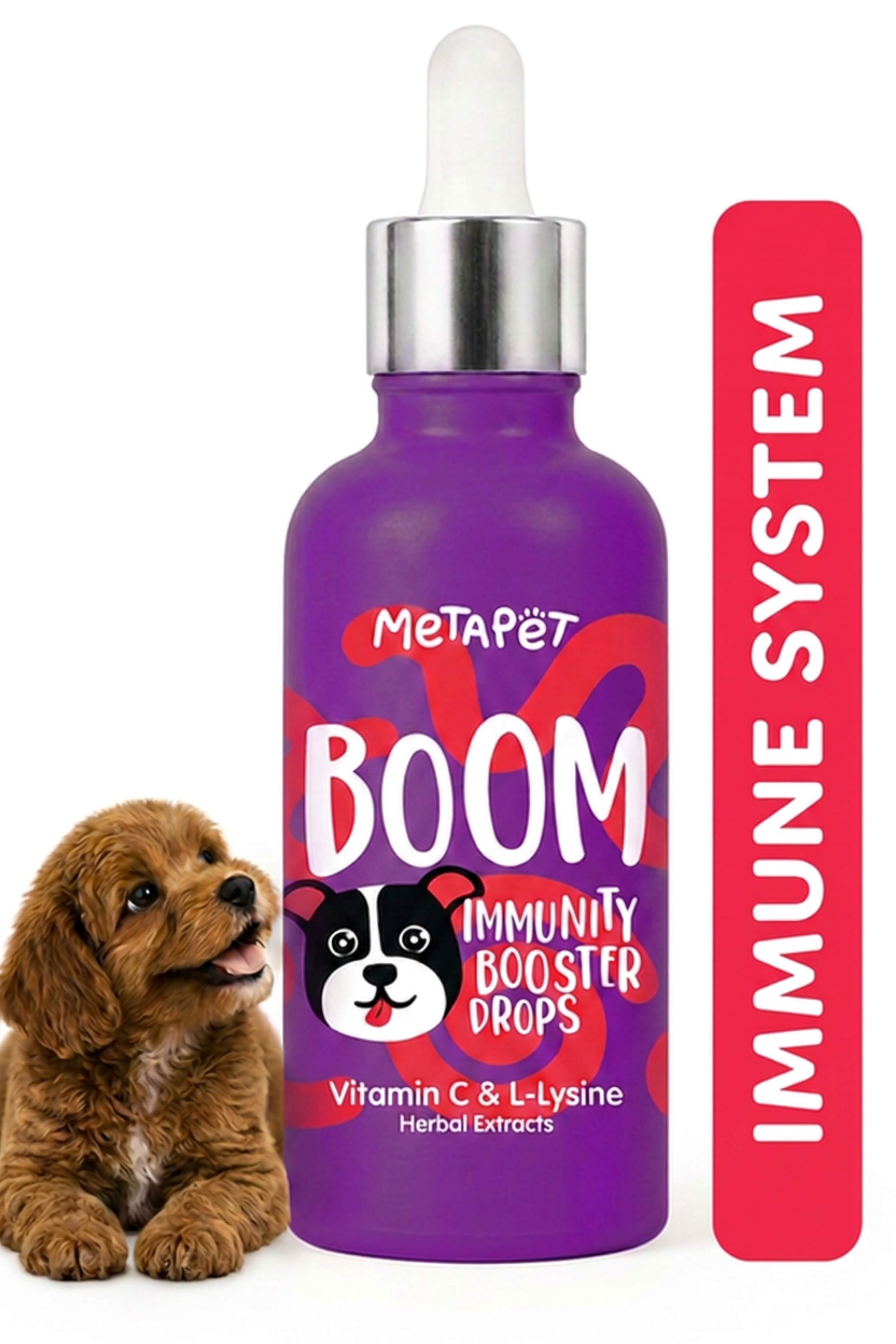
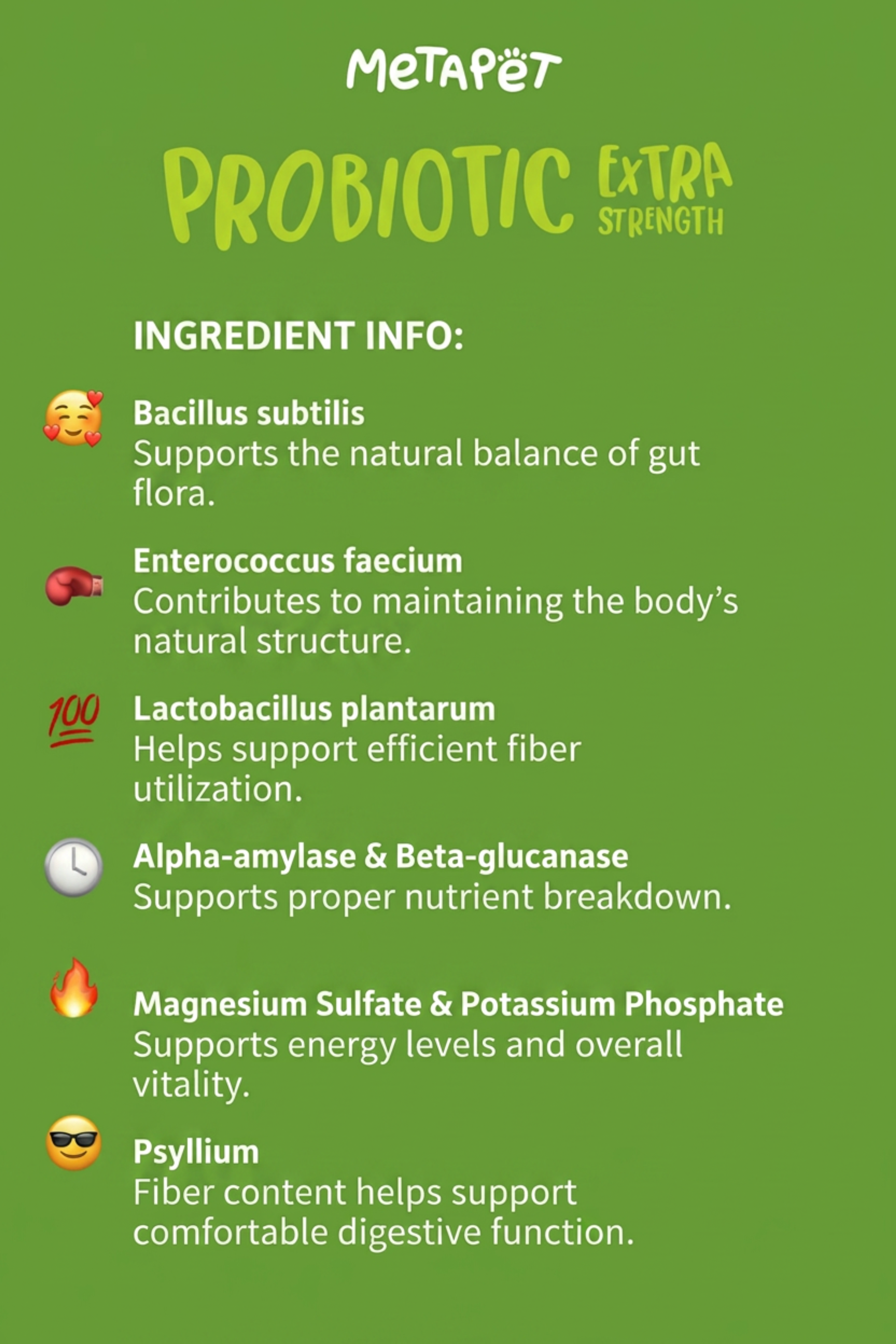
Some owners like to include a supplement as part of a general routine. MetaPet's Probiotic Drops for Dogs and Probiotic Drops for Cats are designed to be given alongside normal meals as part of an everyday care routine. Supplements of this kind are a complement to proper veterinary care, never a substitute for it, and they are not intended to diagnose, treat, cure or prevent any disease. If your pet has ongoing digestive signs, the right first step is a veterinary examination - not a new product.
Stool Changes at Different Life Stages
Puppies and kittens
Young animals dehydrate quickly and are more likely to be carrying intestinal parasites, so the threshold for calling is lower. A puppy or kitten with diarrhea, especially alongside reduced appetite or low energy, should be assessed sooner rather than later. Routine deworming and fecal testing schedules exist precisely because these problems are so common in the young.
Adult pets
In healthy adults, brief episodes tied to a dietary slip often resolve. The key is that they resolve. Recurrent soft stool over weeks, gradual weight loss, or stool that never quite returns to baseline all justify investigation even if your pet seems bright.
Senior pets
Older dogs and cats are more likely to have organ changes that show up as altered stool, and they tolerate fluid losses less well. Any persistent change in an older pet, particularly alongside increased thirst, weight loss or appetite change, deserves a veterinary conversation.
Myths Worth Retiring
- "Fasting always fixes diarrhea." Prolonged fasting is not appropriate for every pet, and is specifically risky for cats, puppies and kittens. Ask your veterinarian before withholding food.
- "Grass eating means an upset stomach." Many perfectly healthy dogs and cats eat grass regularly. It is not a reliable indicator on its own.
- "A firmer stool always means a better diet." Very hard stool can reflect inadequate moisture or slowed transit, neither of which is desirable.
- "Human anti-diarrheal medicines are fine in a pinch." Several common human medications are dangerous to dogs and cats. Never give any human medication without veterinary direction.
- "If he is eating and playing, the stool cannot matter." Many chronic intestinal conditions begin in pets who still seem cheerful.
Building a Simple Home Monitoring Habit
You do not need a spreadsheet. A short note on your phone with the date, a score from 1 to 7, and anything unusual takes seconds. Over a month it produces something genuinely valuable: a record of how often things slip, whether there is a pattern around particular treats or events, and whether a change your veterinarian recommended is actually helping.
Pair stool notes with two other easy data points - body weight measured on the same scale every few weeks, and appetite - and you have a home health picture that most clinics would be delighted to receive. Trends spotted at home are frequently what prompt the visit that catches a problem early.
Reading stool is not glamorous, but it is one of the most practical skills a dog or cat owner can develop. Know your pet's baseline, notice when it shifts, record what you see, and bring that information to your veterinarian. That combination catches far more than any single observation ever could.