Air Quality and Wildfire Smoke: Protecting Dogs and Cats

When the air outside turns hazy and the local advisory tells people to stay indoors, the guidance is almost always written for humans. Pets are rarely mentioned — yet they breathe the same air, often closer to the ground, and frequently while exercising.
Dogs and cats are affected by poor air quality for the same reasons people are. Fine particles small enough to travel deep into the lungs cause airway irritation and inflammation, and animals with existing respiratory or heart conditions feel it first and worst.
This guide covers who is most vulnerable, what to watch for, how to adjust daily routines on bad air days, and how to prepare in advance if you live somewhere wildfire smoke is a recurring reality.
Important: This article shares general educational information for pet owners and is not a substitute for an in-person veterinary examination, diagnosis, or treatment. For any medical concern or emergency, contact your veterinarian promptly.
Why Poor Air Affects Pets
Smoke and polluted air carry very fine particulate matter along with a mixture of gases. The smallest particles bypass the natural filtering of the nose and upper airway and reach deep into the lungs, where they irritate delicate tissue and provoke an inflammatory response.
Several factors make companion animals particularly exposed. They spend time close to the ground, where some pollutants concentrate. They frequently exercise outdoors, and exercise increases the volume of air moved through the lungs enormously. Dogs pant, which moves more air still. And they cannot choose to stay indoors or to shorten a walk.
The effect is usually irritation rather than a dramatic event, but for an animal that already has an airway condition, that additional irritation can be the difference between stable and struggling. Cats with asthma and dogs with chronic airway disease are among the first to show it.
Effects also accumulate. Repeated exposure across a smoke season adds up in a way a single hazy afternoon does not.
Which Pets Are Most at Risk
- Pets with existing airway disease: feline asthma, chronic bronchitis, tracheal collapse, or any chronic cough.
- Flat-faced breeds: dogs and cats whose airways are already compromised have far less reserve.
- Pets with heart disease: for whom additional respiratory strain is poorly tolerated.
- Very young animals: with developing respiratory systems.
- Senior pets: who commonly have reduced reserve and undiagnosed conditions.
- Overweight pets: in whom breathing already takes more effort.
- Working and highly active dogs: because of the sheer volume of air they move.
If your pet falls into any of these groups, ask your veterinarian in advance what your plan should be during poor air quality events. That conversation is much easier to have before a smoke event than during one.
Signs of Smoke or Air Quality Irritation
Mild irritation looks unremarkable, which is exactly why it gets missed. Watch for changes from your pet's normal, not for dramatic symptoms.
- Coughing or gagging: new, or worse than usual.
- Eye irritation: redness, squinting, or increased discharge.
- Nasal discharge: or increased sneezing.
- Reduced appetite: and general subdued behavior.
- Reduced activity: less willingness to play or walk.
- Increased respiratory effort: faster or more labored breathing at rest.
- Open-mouth breathing in cats: which is never normal and always warrants prompt veterinary attention.
- Disorientation or weakness: which suggests something more serious.
Contact your veterinarian promptly for any breathing difficulty, persistent coughing, blue or gray gums, collapse, or a cat breathing with its mouth open. These are urgent, not wait-and-see situations.
Managing Daily Routines on Bad Air Days
Check your local air quality index the way you would check the temperature, and treat it as a planning input rather than background information.
- Keep outdoor time short and purposeful — toilet breaks rather than exercise.
- Cancel runs, long walks, and vigorous play entirely when air quality is poor.
- Choose the cleanest part of the day, which is often early morning, and check rather than assume.
- Keep cats indoors for the duration of the event.
- Close windows and doors, and run air conditioning on a recirculate setting where available.
- Substitute indoor enrichment for physical exercise so your pet stays occupied.
- Wipe down coat, face, and paws after outdoor trips to remove settled particles.
- Watch closely for any change in breathing and act early rather than waiting.
Mental exercise genuinely substitutes for physical exercise over short periods. Food puzzles, scent games, training sessions, and chew activities tire dogs surprisingly effectively, and cats respond well to short interactive play indoors.
Improving Indoor Air
Indoor air is not automatically clean during a smoke event, but it is far easier to influence than outdoor air.
- Use a portable air cleaner: a well-maintained unit with a high-efficiency filter, sized for the room where your pet spends most time.
- Change filters as recommended: a saturated filter does very little.
- Keep windows and doors closed: during smoke events, opening up only when air quality improves.
- Avoid adding indoor pollutants: no smoking indoors, and avoid candles, incense, and aerosol sprays during poor air quality.
- Be cautious with fragrance products: air fresheners and scented sprays add particles and volatile compounds to air your pet is already struggling with.
- Do not use essential oil diffusers around pets: several oils are not appropriate for animals, cats are especially sensitive, and diffusing places aerosolized compounds directly into the air.
- Vacuum and damp-dust regularly: to remove settled particulate rather than letting it be stirred back into the air.
- Create one cleaner room: a smaller space with an air cleaner running, where vulnerable pets can spend most of their time.
Do not attempt to make a pet wear a face mask. Masks designed for people do not seal on animal faces, are not effective, and frightening or restricting a stressed animal makes breathing worse rather than better.
Coat and Paw Care After Exposure
Particles settle on fur and paws, and pets then ingest them while grooming — a route that matters more for cats, who groom meticulously. A simple post-outing routine reduces that.
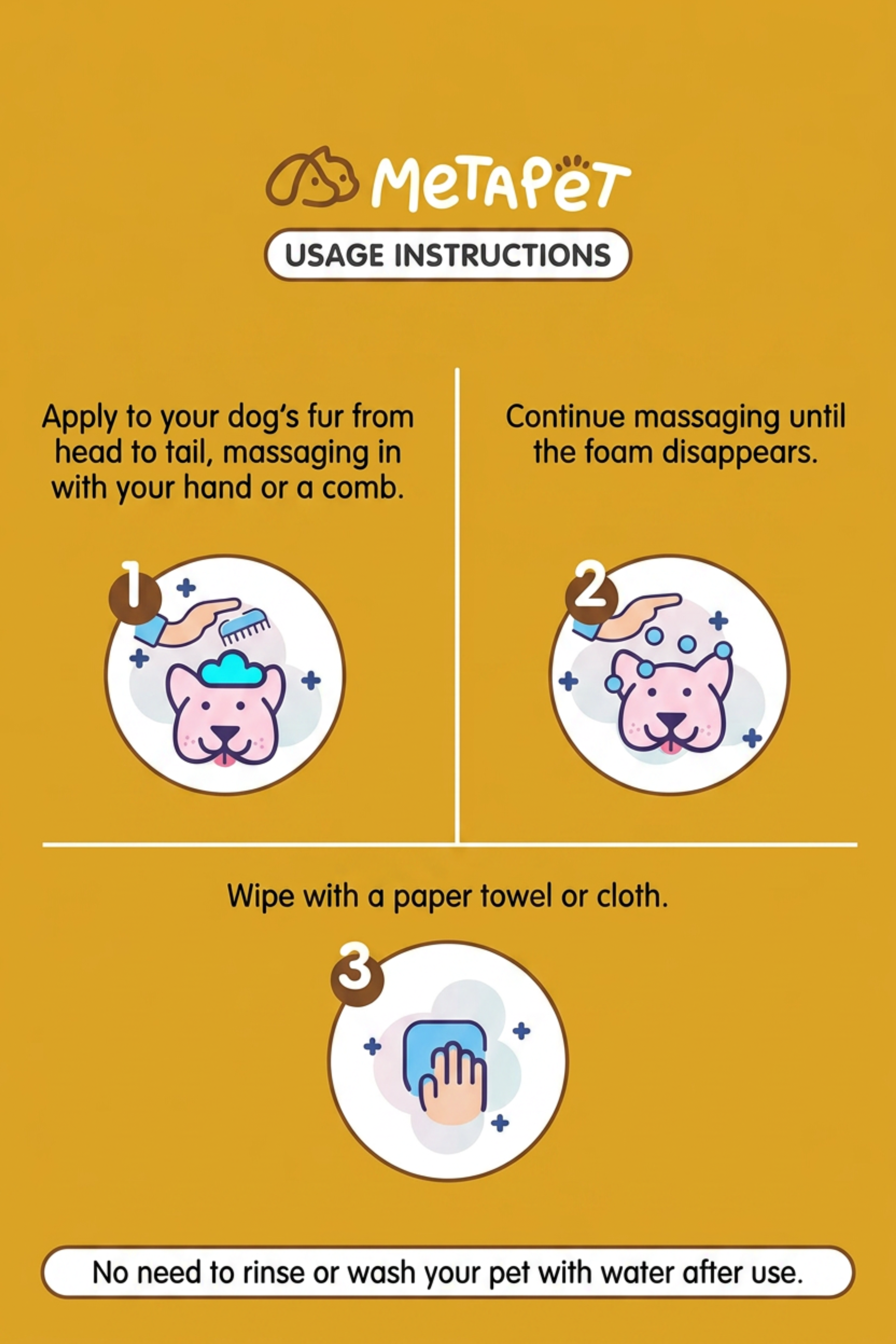
Wipe the coat, face, and paws with a damp cloth after outdoor trips during smoke events, paying attention to the areas that touch the ground. Brushing removes surface deposits from the coat, and it doubles as a check for eye or nose discharge you might otherwise miss.
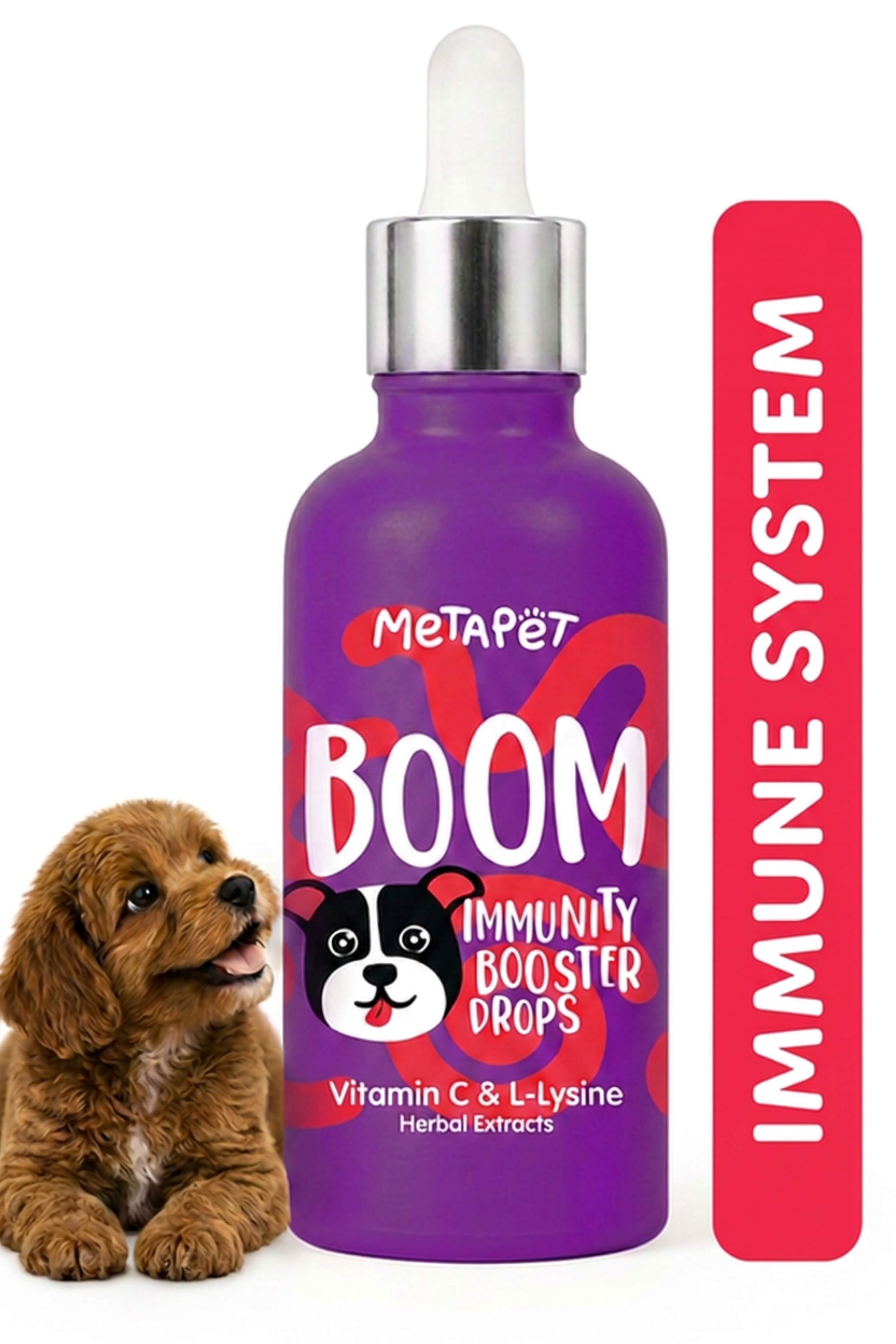
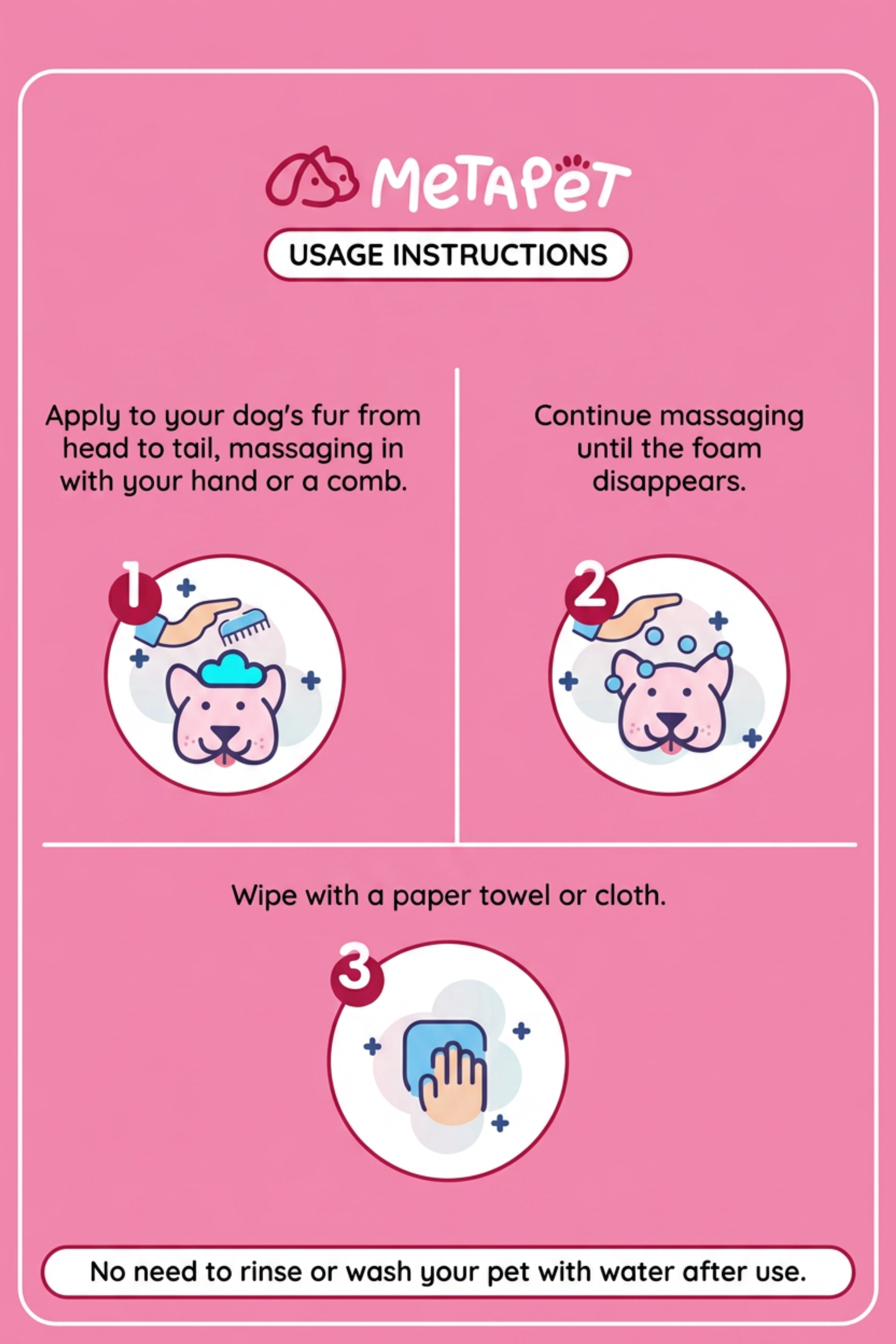
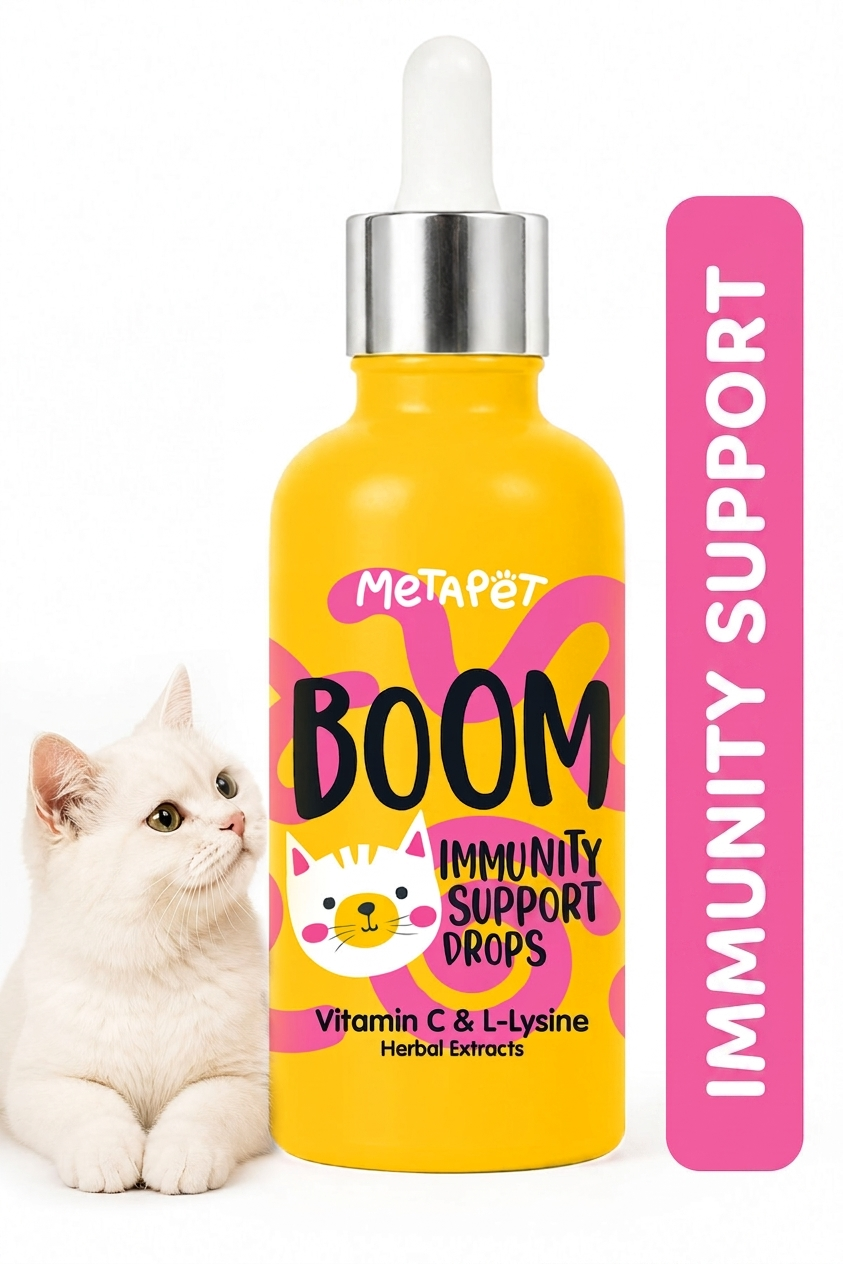
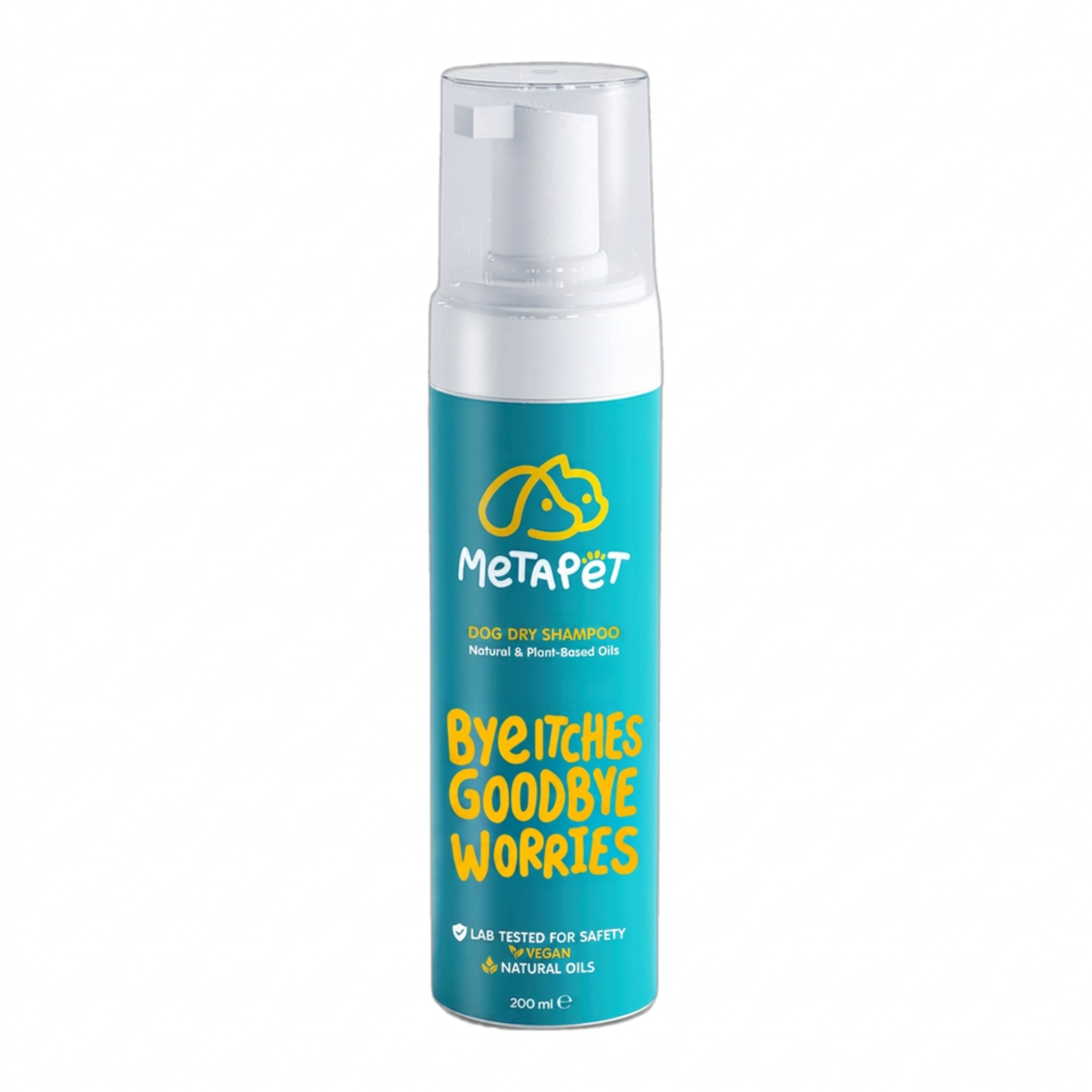
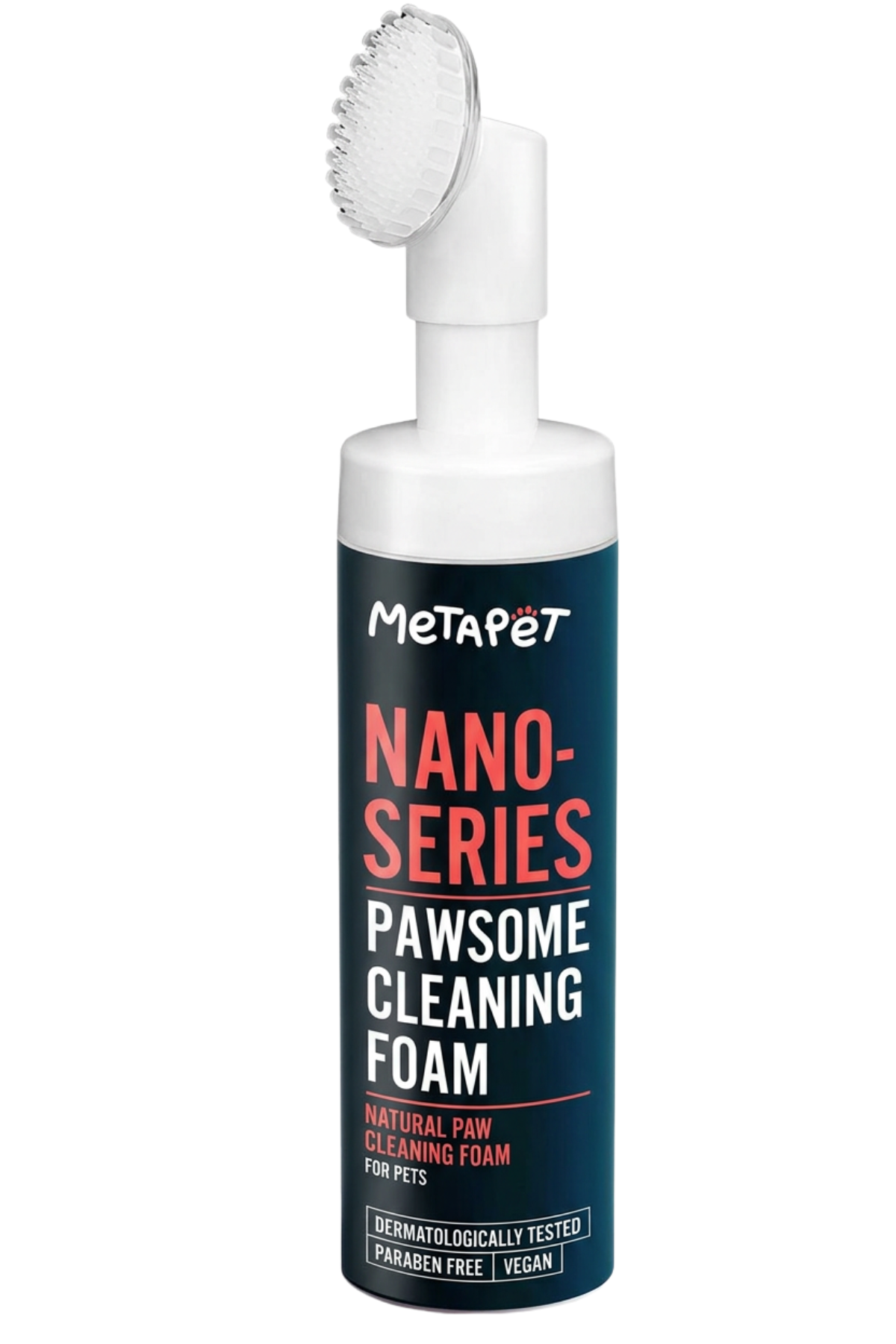
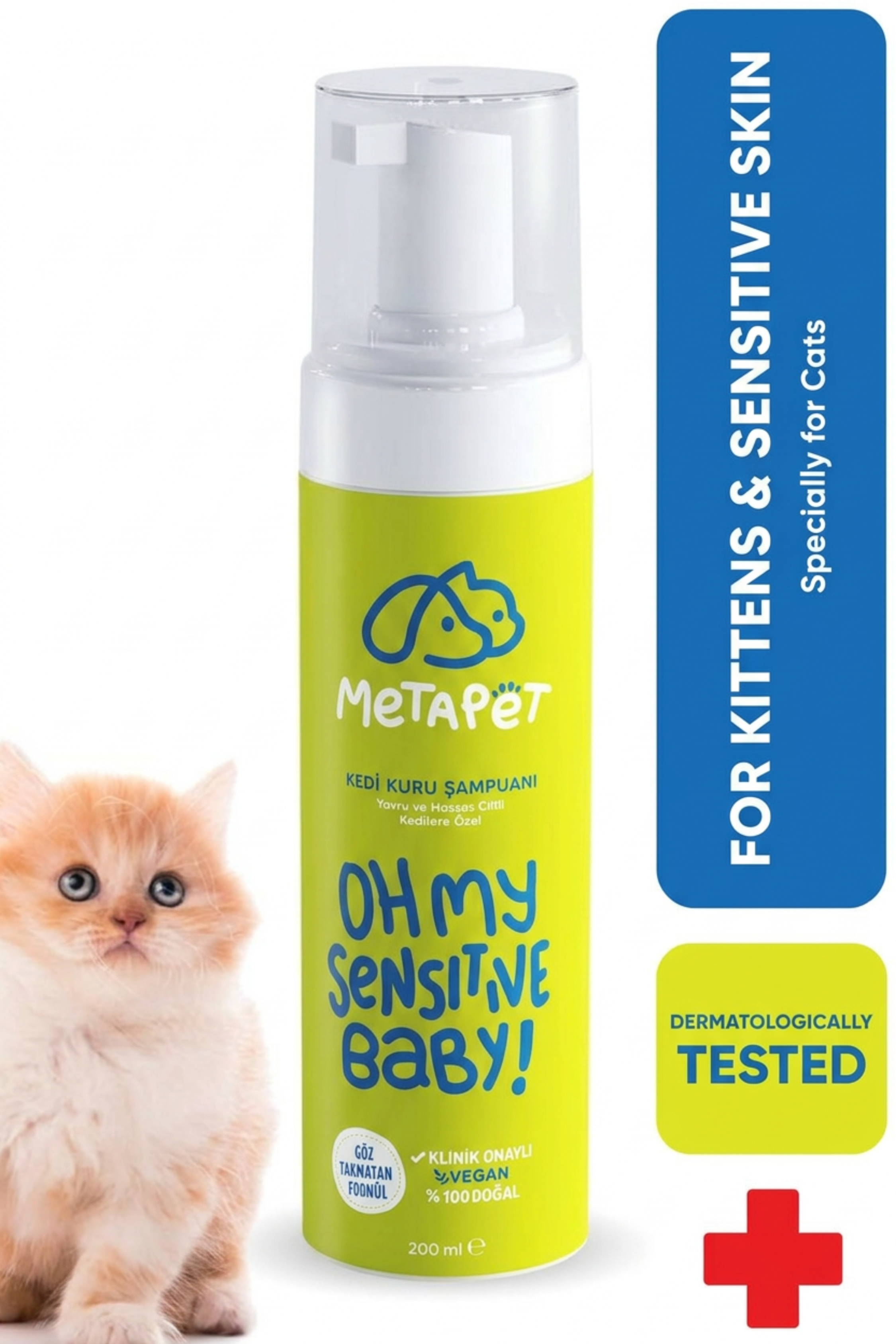
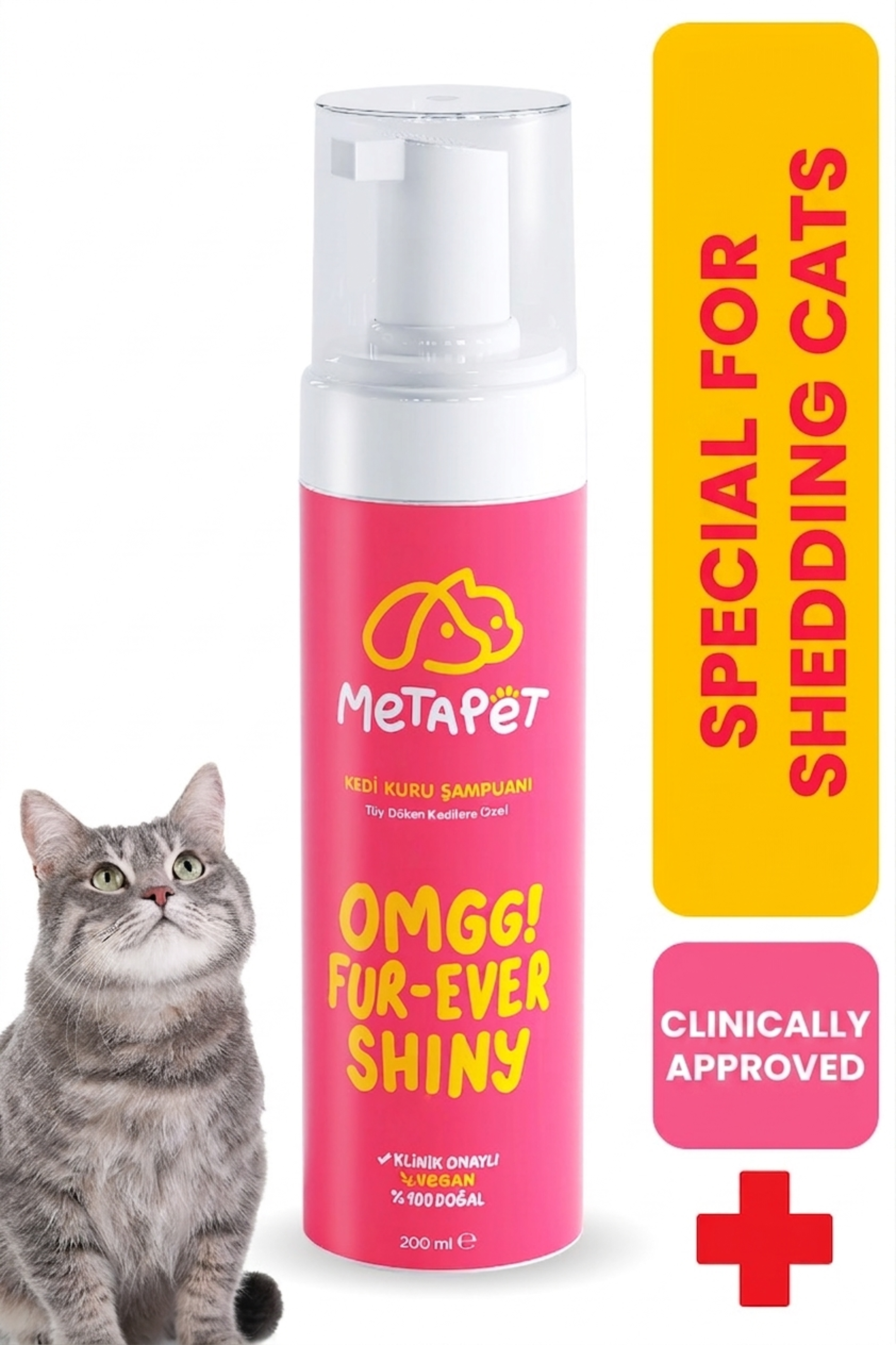
Where washing is impractical or a full bath would be stressful, gentle grooming products can make the routine easier to sustain. Soft options such as the MetaPet Nano-Series Hygiene & Care Towel Wipes, or a waterless format such as the MetaPet Oh My Sensitive Baby! Waterless Dry Foam Shampoo for Cats, are designed to help keep the coat and skin surface clean between baths.
These are cosmetic grooming products. They help keep a coat clean and comfortable; they do not protect the lungs, treat respiratory irritation, or replace veterinary care. If your pet is coughing or breathing abnormally, grooming is not the answer — call your veterinarian.
Cats Deserve Specific Attention
Cats hide respiratory difficulty exceptionally well, and by the time signs are obvious the situation is often already serious. Any cat breathing with its mouth open, breathing with obvious abdominal effort, or sitting with its neck extended and elbows out needs emergency veterinary care immediately.
Cats with asthma are among the most affected by smoke events. If your cat has a diagnosed airway condition, contact your veterinarian at the start of a smoke season rather than in the middle of an episode, and ask what your plan should be and what would prompt an urgent visit.
Our guides to feline asthma and resting respiratory rate at home are worth reading before smoke season. Learn your cat's normal resting respiratory rate now, while things are calm. Count chest rises over thirty seconds while your cat is genuinely asleep and double it, doing this a few times so you know the baseline. A meaningful increase over that baseline is one of the earliest objective signals you can get, and it is far more reliable than impressions.
Preparing Before a Smoke Event
- Know your evacuation plan: including where you would go with pets, since not all shelters accept animals — our guide to emergency and disaster preparedness covers this fully.
- Keep carriers accessible: one per cat, in a place you can reach in seconds.
- Prepare a go-bag: food, water, bowls, medications, litter, and a leash and harness.
- Keep records current: vaccination records, medication list, and a recent photograph of each pet.
- Ensure identification is up to date: microchip registration details and collar tags with a current phone number.
- Have enough medication: for at least several days, ideally longer.
- Know your emergency clinic route: and an alternative in case roads are affected.
- Arrange a backup carer: someone who could collect your pets if you cannot get home.
If evacuation becomes necessary, take your pets with you. Animals left behind during a wildfire face severe risk, and returning later is often impossible.
After the Air Clears
Recovery is usually gradual rather than immediate. Resume normal exercise in stages rather than returning to full activity on the first clear day, particularly for dogs with existing airway conditions.
Continue watching for a lingering cough, reduced exercise tolerance, or eye and nasal discharge. Signs that persist for more than a few days after the air improves deserve a veterinary appointment, since prolonged irritation sometimes leads to secondary problems, and smoke exposure can unmask an underlying condition that was previously silent.
It is also worth cleaning the environment once the event has passed — washing pet bedding, vacuuming thoroughly, and wiping down surfaces removes settled particulate that would otherwise continue to be stirred up.
Indoor Alternatives That Actually Tire a Pet
The hardest part of a poor air quality stretch is not the health risk itself but the restlessness that follows several days of cancelled walks. An under-exercised dog becomes difficult to live with, and owners understandably start bending the rules. Planning indoor alternatives in advance keeps everyone honest.
- Scent games: hide small portions of your dog's daily food around a room and let them search. Nose work is genuinely tiring and requires almost no space.
- Food puzzles and slow feeders: turning a meal into a fifteen-minute problem-solving task rather than a thirty-second event.
- Short training sessions: five minutes of teaching or refreshing a cue is mentally demanding and easy to fit in several times a day.
- Chew activities: appropriate, supervised chew items provide a settled outlet, with your veterinarian's guidance on what suits your dog.
- Indoor wand play for cats: several short sessions ending with a catch is far more satisfying than one long one.
- Vertical space and hiding spots: cardboard boxes, paper bags, and cleared shelves change an indoor environment cheaply.
- Stair or hallway games: gentle recall games between two people, kept low-impact and on non-slip footing.
Keep sessions short and finish while your pet is still keen. Several brief bursts across the day work better than one long attempt, and they break up the boredom more effectively.
Questions Owners Ask During Smoke Events
Is it safe to walk my dog at all?
Brief toilet breaks are generally necessary and reasonable. What should be avoided is exercise — running, long walks, and vigorous play — because exertion multiplies the volume of air moved through the lungs. Keep outings short, calm, and purposeful.
My pet seems completely fine. Do I still need to change anything?
Yes, particularly for pets in the higher-risk groups. Irritation is not always visible early, and reducing exposure is far easier than managing the consequences of it. Healthy adult pets tolerate short exposures better, but exercise should still be scaled back.
Can I use a humidifier to help?
A humidifier adds moisture but does not remove particles, so it is not a substitute for filtration. Very dry air can worsen airway irritation in some animals, so it may help comfort as an addition to an air cleaner, provided the unit is cleaned diligently to avoid growing anything unpleasant in it.
Should I give my pet anything to help them cope?
Do not give any medication or over-the-counter product without veterinary direction. If your pet has an existing airway condition, call your veterinarian and ask what your plan should be during the event, since that plan may differ from your usual routine.
The Bottom Line
Air quality is a pet health issue, not just a human one. On bad air days, keep outdoor time brief, cancel strenuous exercise, keep cats indoors, close up the house, run a good air cleaner in the room your pet uses most, and watch breathing closely.
If your pet has a heart or airway condition, is flat-faced, or is very young or very old, talk to your veterinarian ahead of the season about what your plan should be. And if you live somewhere wildfire smoke recurs, assemble the go-bag now — the middle of an evacuation is a difficult time to be looking for a carrier.