A Healthy, Shiny Coat from the Inside Out

A glossy, soft coat is more than a beauty feature — it is one of the most visible signs of a pet's overall health. When a dog or cat's coat looks dull, dry, or flaky, the cause often runs deeper than the surface, because skin and hair reflect what is happening throughout the body. Truly great coat condition is built from the inside out, with grooming polishing what good health has already created.
That is why coat care is best thought of as a combination of nutrition, everyday grooming, and, where appropriate, targeted supplements — all resting on a foundation of good general health. No single spray or shampoo can compensate for a poor diet or an untreated skin condition, but together these elements help a pet look and feel its best.
This guide explains what makes a coat healthy, how nutrition and specific nutrients support skin and coat, the role of grooming, where supplements fit as part of a routine, and the signs that a coat change is actually a symptom worth a veterinary visit. Relevant MetaPet products are mentioned as optional, everyday support rather than as cures.
Important: This article shares general educational information for pet owners and is not a substitute for an in-person veterinary examination, diagnosis, or treatment. For any medical concern or emergency, contact your veterinarian promptly.
What a Healthy Coat Looks Like
Knowing what you are aiming for makes it easier to spot when something is off. A healthy coat, whatever its length or type, tends to look and feel a certain way, and the skin beneath it is just as important as the hair on top. Getting familiar with your individual pet's normal coat helps you notice meaningful changes early.
- A soft, smooth texture. Healthy hair feels pleasant rather than brittle, greasy, or straw-like.
- A natural sheen. A modest shine reflects well-nourished hair and skin producing appropriate oils.
- Even coverage. A healthy coat is generally full and even, without patchy thinning or bald spots.
- Clean, comfortable skin. The skin underneath should be free of excessive flaking, redness, greasiness, or odor.
- Manageable shedding. Some shedding is normal, but a healthy coat is not constantly leaving handfuls of hair or forming mats.
Nutrition Is the Foundation
Hair is made largely of protein, and the skin is a metabolically active organ that renews itself constantly. Both depend on a complete, balanced diet to stay in good condition. A pet eating a diet appropriate for its life stage and needs has the raw materials to build strong hair and healthy skin, which is why coat quality so often improves when overall nutrition is on track.
When a coat looks poor, diet is one of the first things worth reviewing with your veterinarian. Rather than reaching immediately for a topical fix, consider whether your pet's food is complete and balanced and suits its individual needs. Your veterinarian can help you evaluate the diet and decide whether any adjustments or additions make sense. Good nutrition will not fix a coat overnight — hair grows slowly — but over weeks and months it is the single most powerful influence on coat condition.
Key Nutrients for Skin and Coat
Several nutrients are especially associated with skin and coat health. In a balanced diet these are typically already present, but understanding them explains why certain supplements are marketed for coat support and how they are meant to fit into a routine.
- Omega fatty acids. Omega-3 and omega-6 fatty acids, such as those found in fish oil, are widely used to support skin condition and a healthy-looking, shiny coat.
- Quality protein. Because hair is protein-rich, adequate high-quality protein in the diet supports hair growth and strength.
- Biotin and other B vitamins. These are commonly included in skin and coat supplements for their role in normal skin and hair maintenance.
- Zinc. This mineral is associated with healthy skin, and it appears frequently in coat-support formulas.
- Overall vitamin and mineral balance. A complete diet supplies the broad range of micronutrients that skin and coat renewal depend on.
The Role of Grooming
If nutrition builds a healthy coat, grooming reveals and maintains it. Regular brushing does far more than tidy appearance: it removes loose hair and debris, prevents mats and tangles, and distributes the skin's natural oils along the hair shafts, which is a big part of what creates that healthy sheen. Brushing also stimulates the skin and gives you a frequent, hands-on check of skin and coat condition.
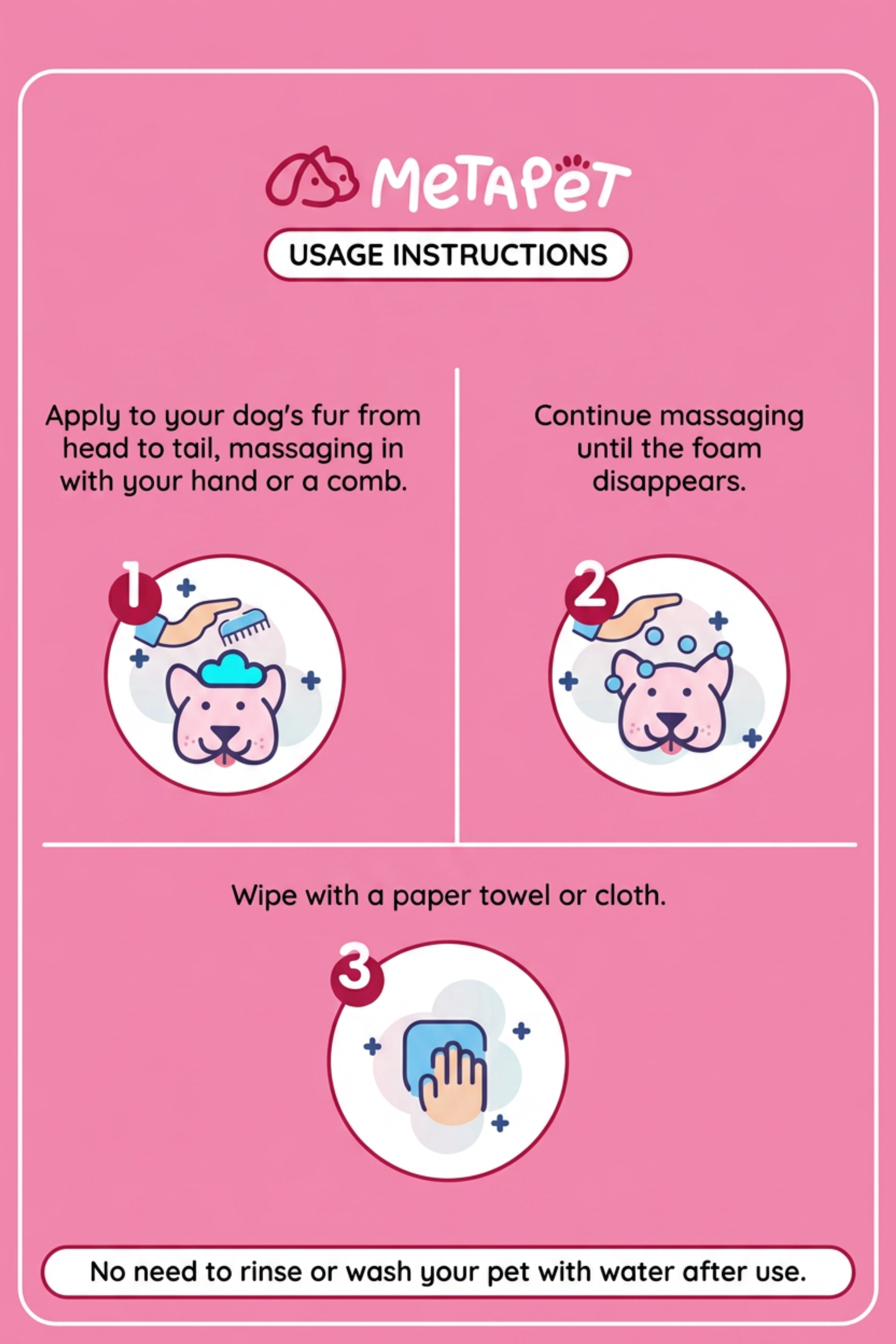
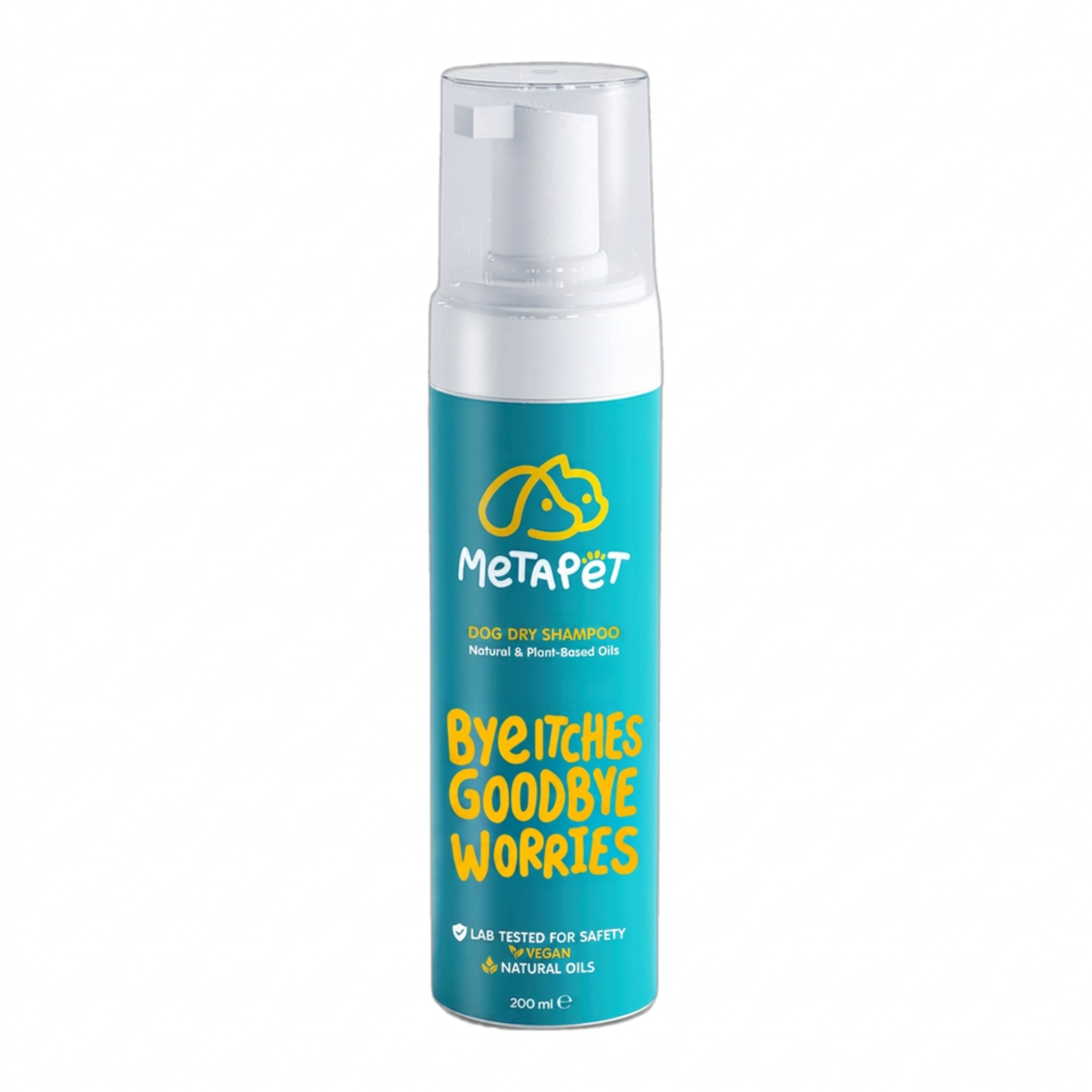
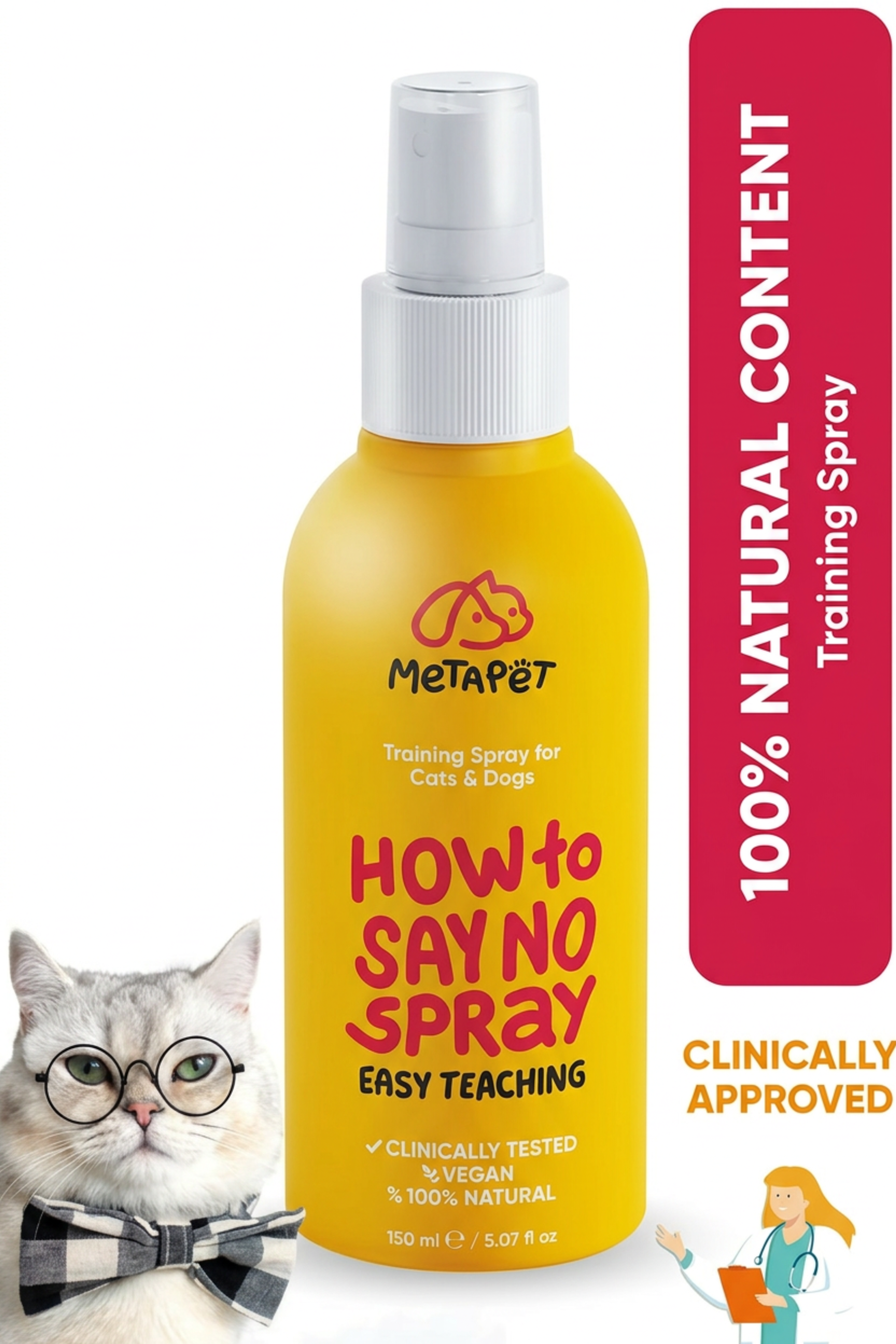
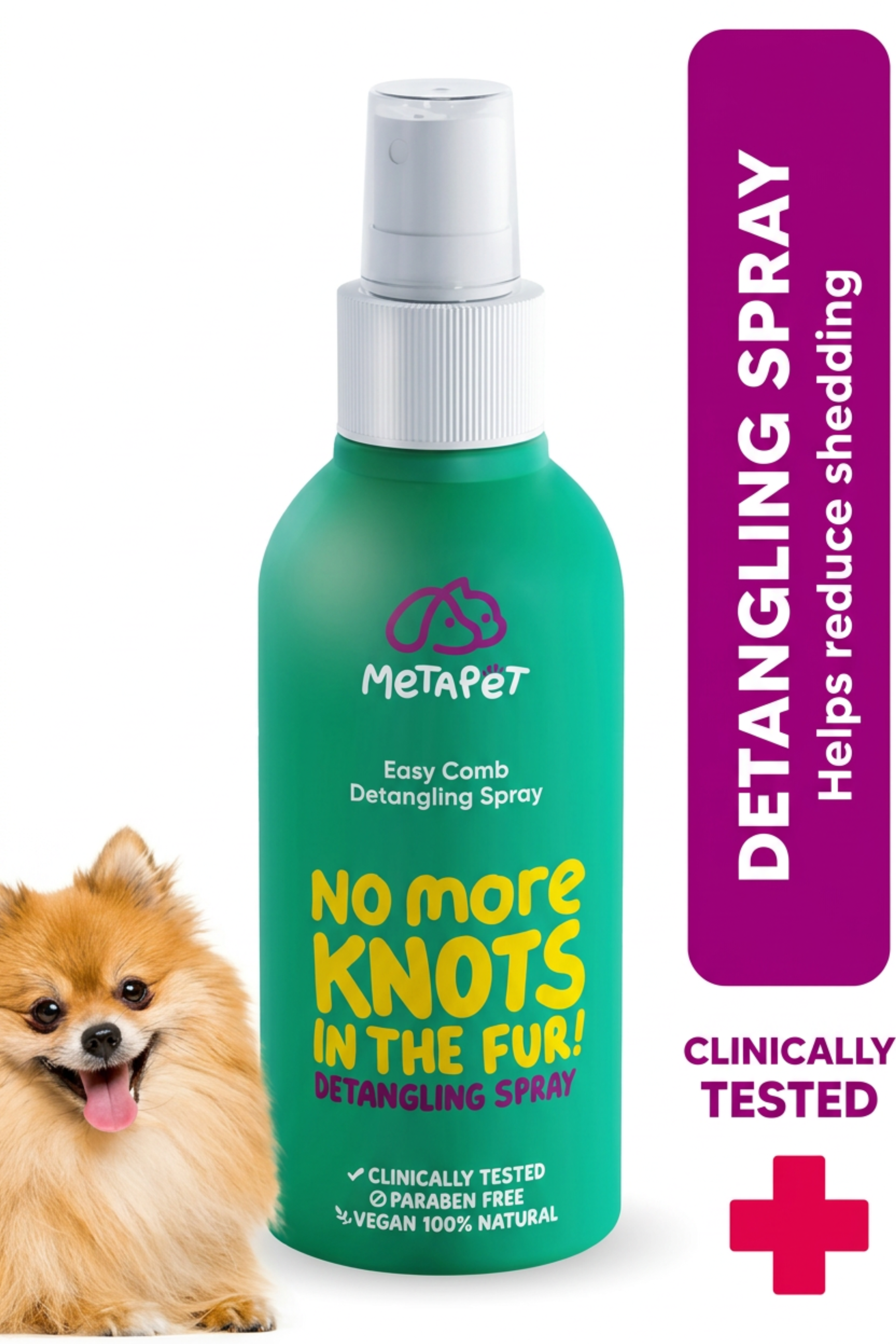
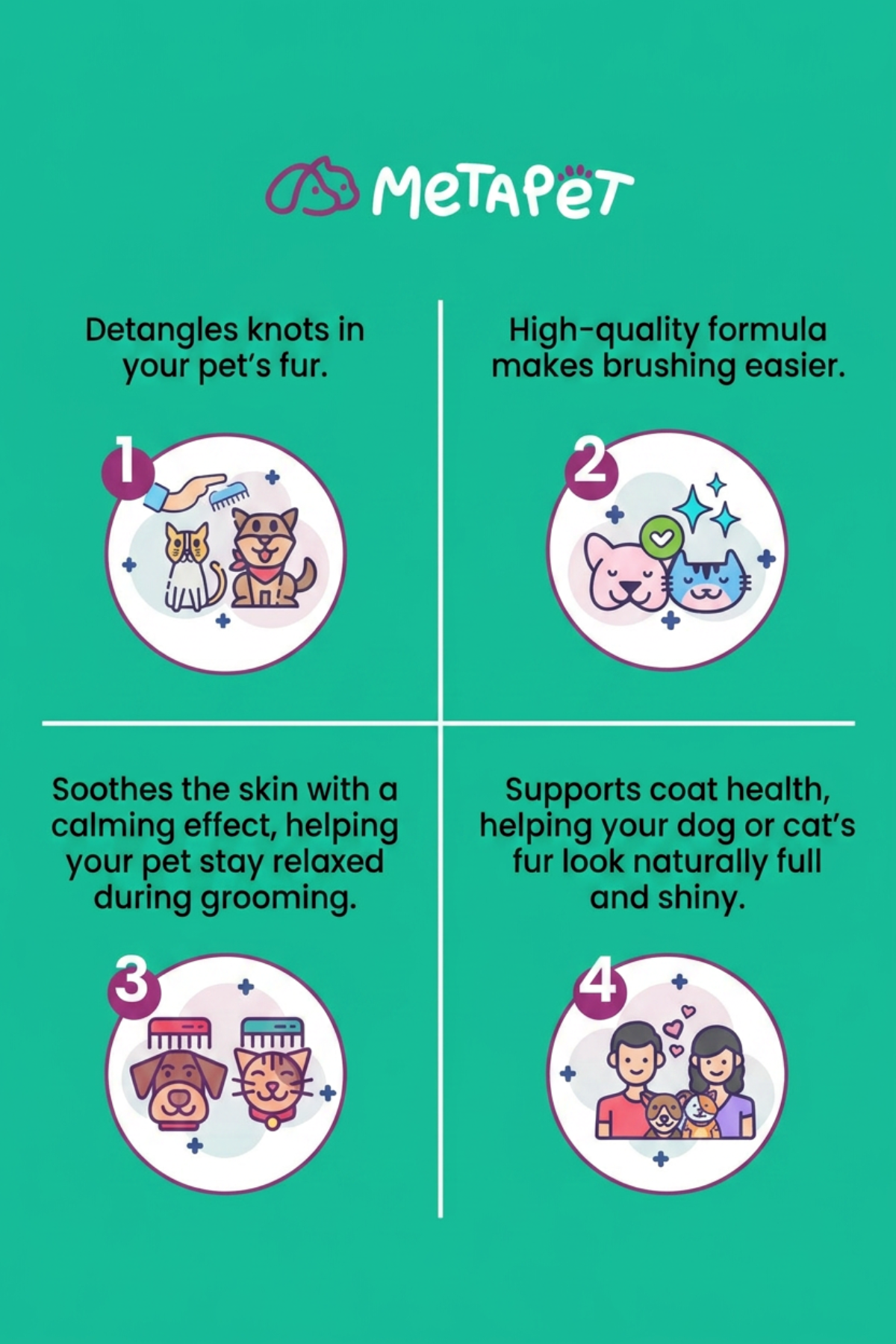
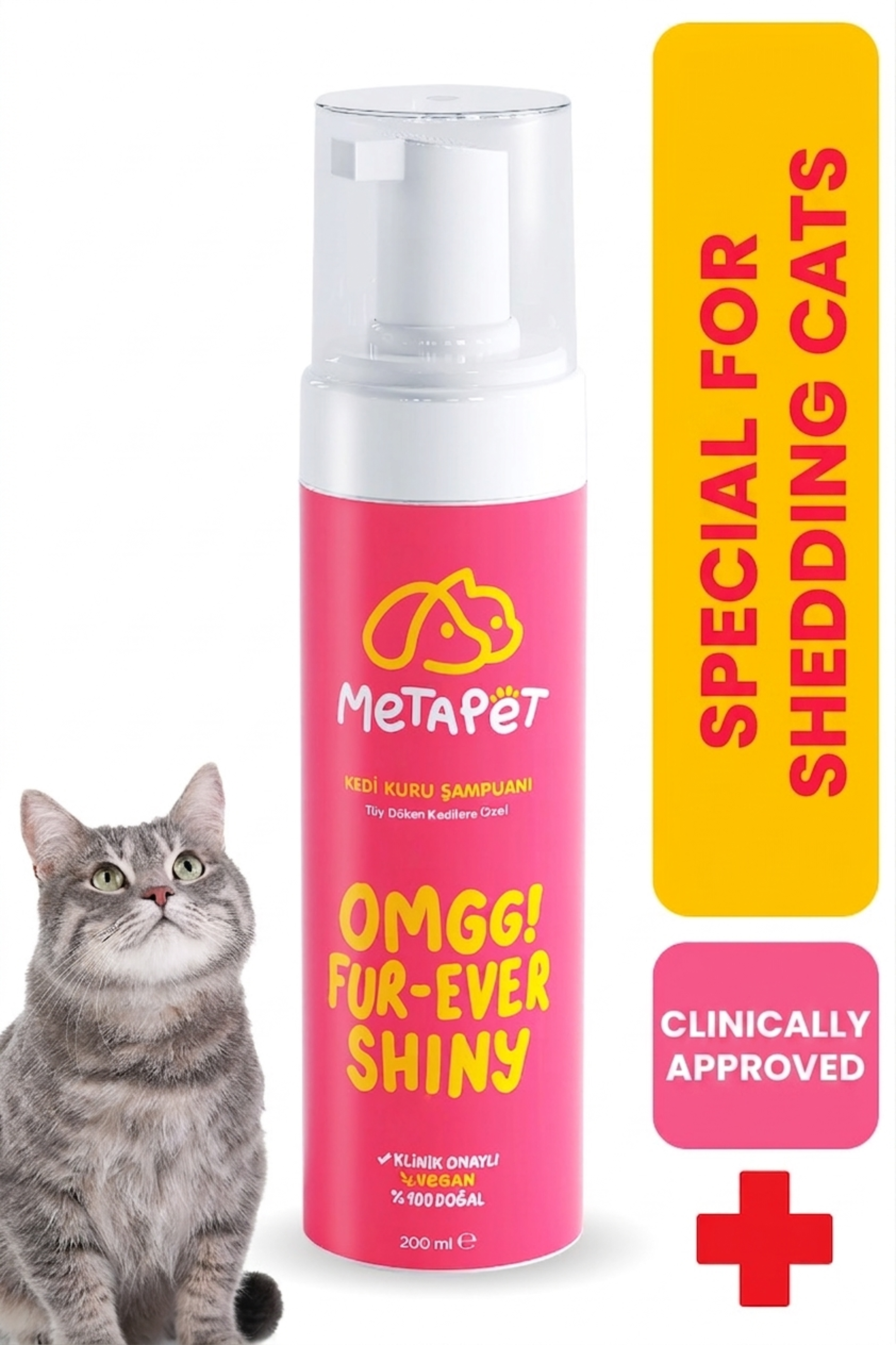
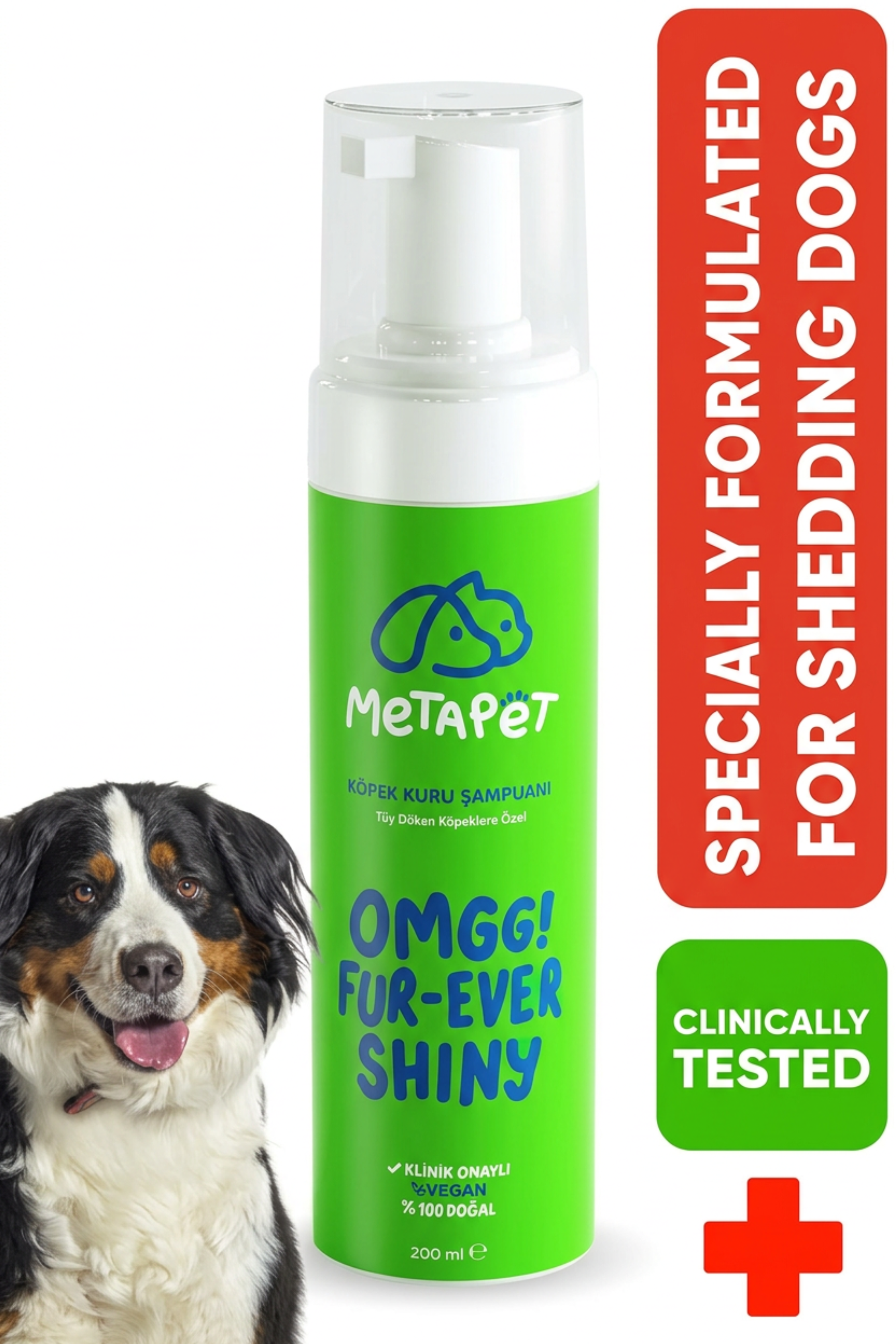
Bathing has its place too, but moderation matters, since over-bathing or harsh products can strip natural oils and dry the skin. Using a gentle, pet-appropriate shampoo at a sensible frequency keeps the coat clean without undermining it, and between baths, waterless foams, wipes, or detangling sprays can help with maintenance. For pets prone to tangles, a product such as MetaPet No More Knots in the Fur detangling spray can make combing easier and more comfortable as part of a gentle grooming routine. These grooming aids support a clean, manageable coat cosmetically; they are not treatments for skin disease.
Where Supplements Fit In
Supplements can be a helpful part of coat care for some pets, but it is important to frame them correctly: they are intended to support and complement a good diet and proper care, not to replace them or to treat medical conditions. A supplement will not overcome an unbalanced diet, an untreated skin problem, or a parasite infestation. Used thoughtfully alongside those fundamentals, though, coat-support products can be a convenient way to add specific nutrients.
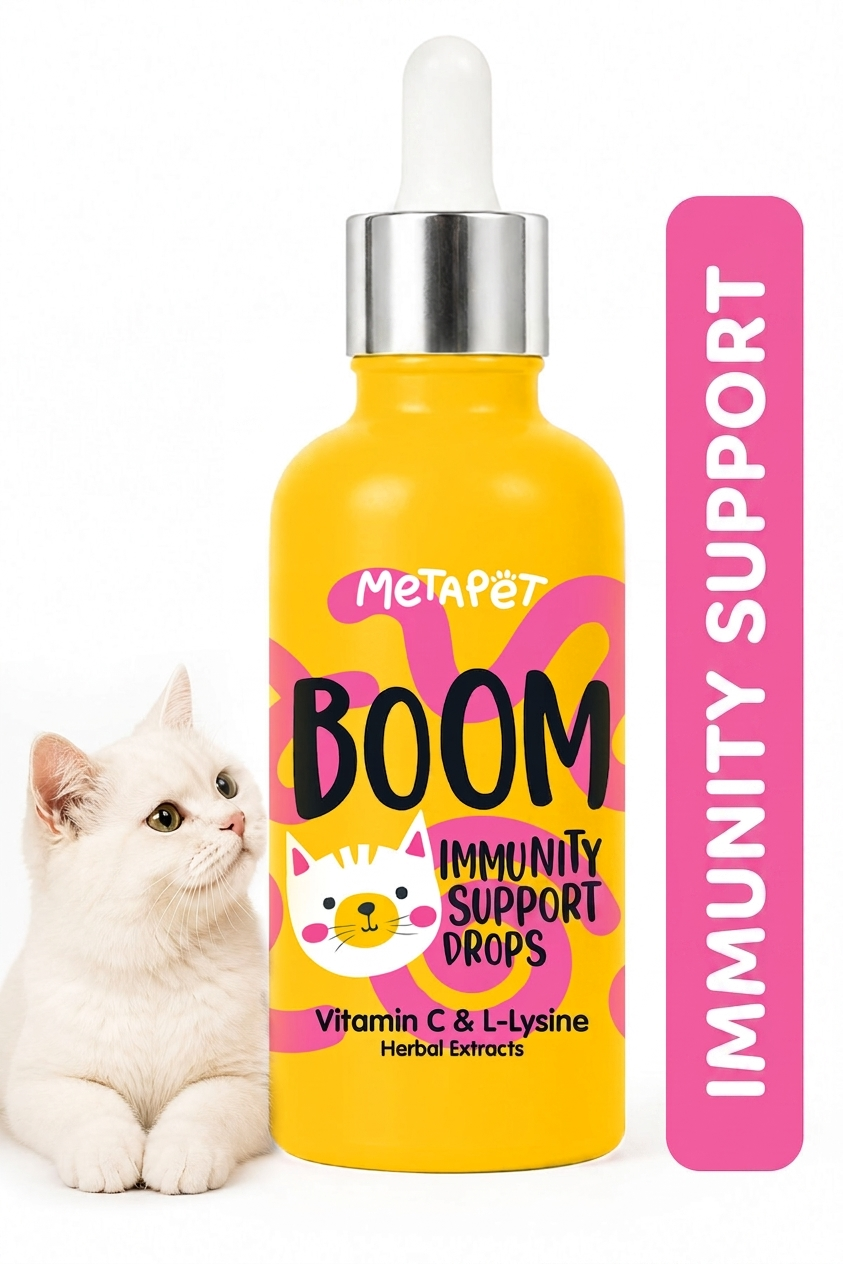
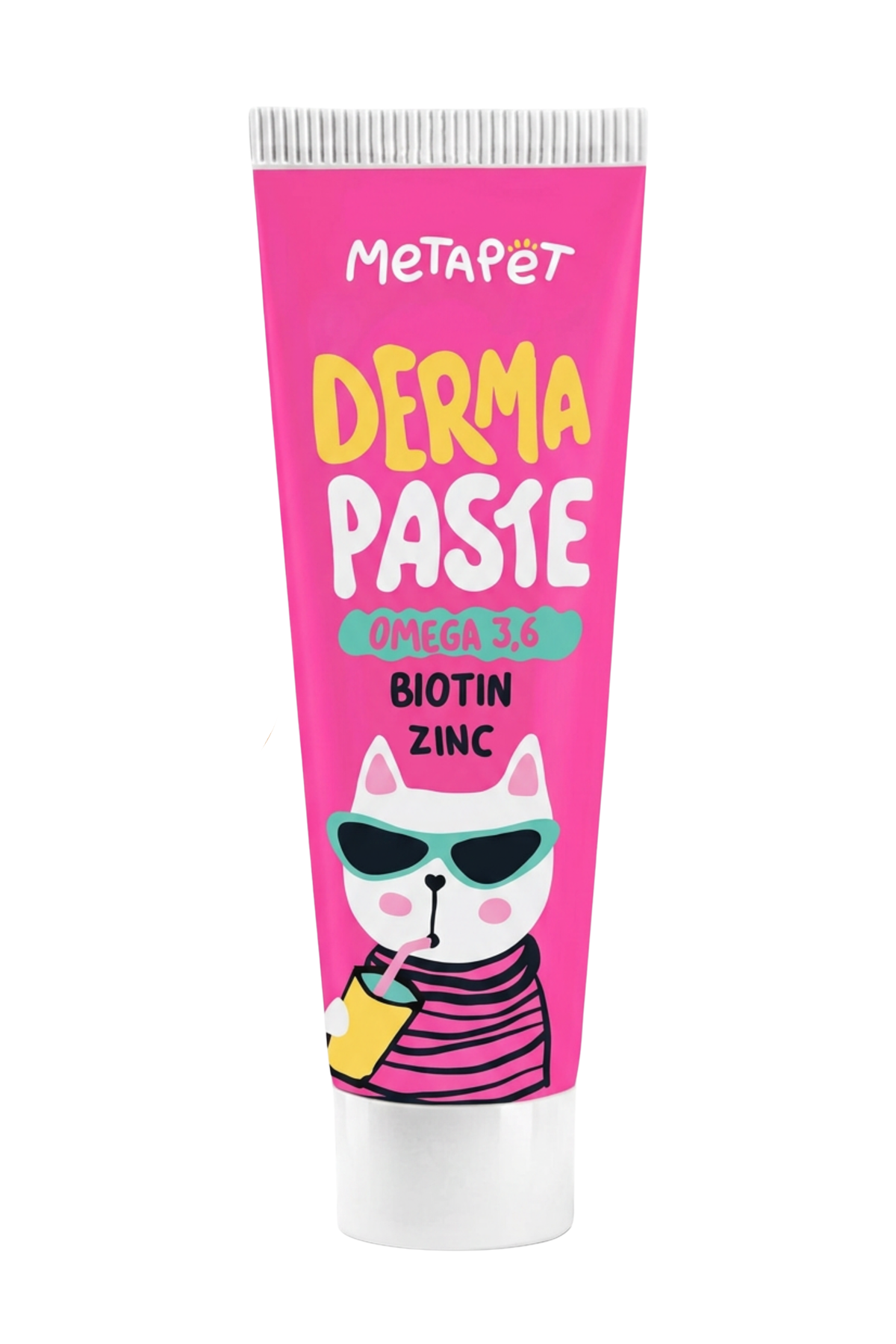
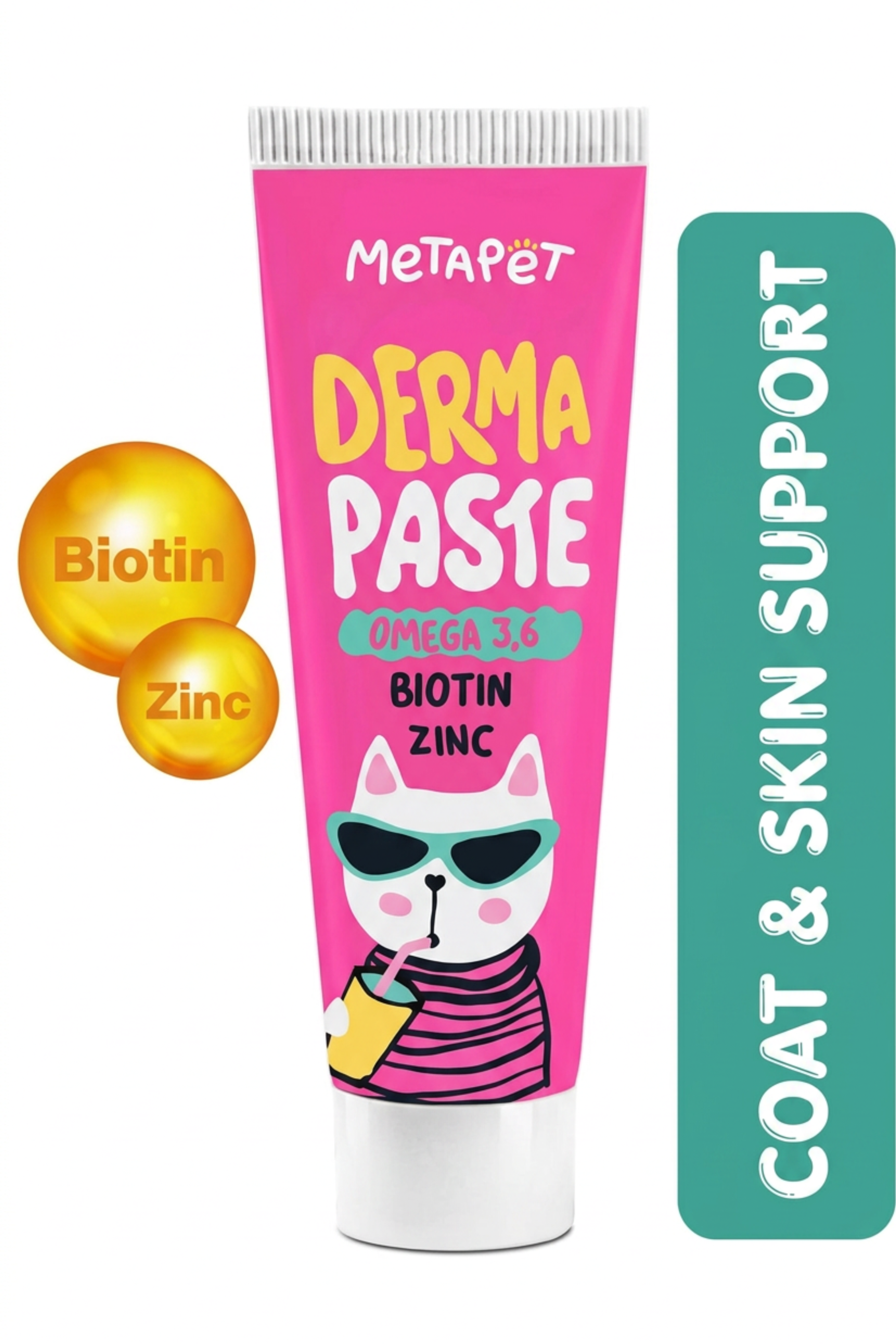
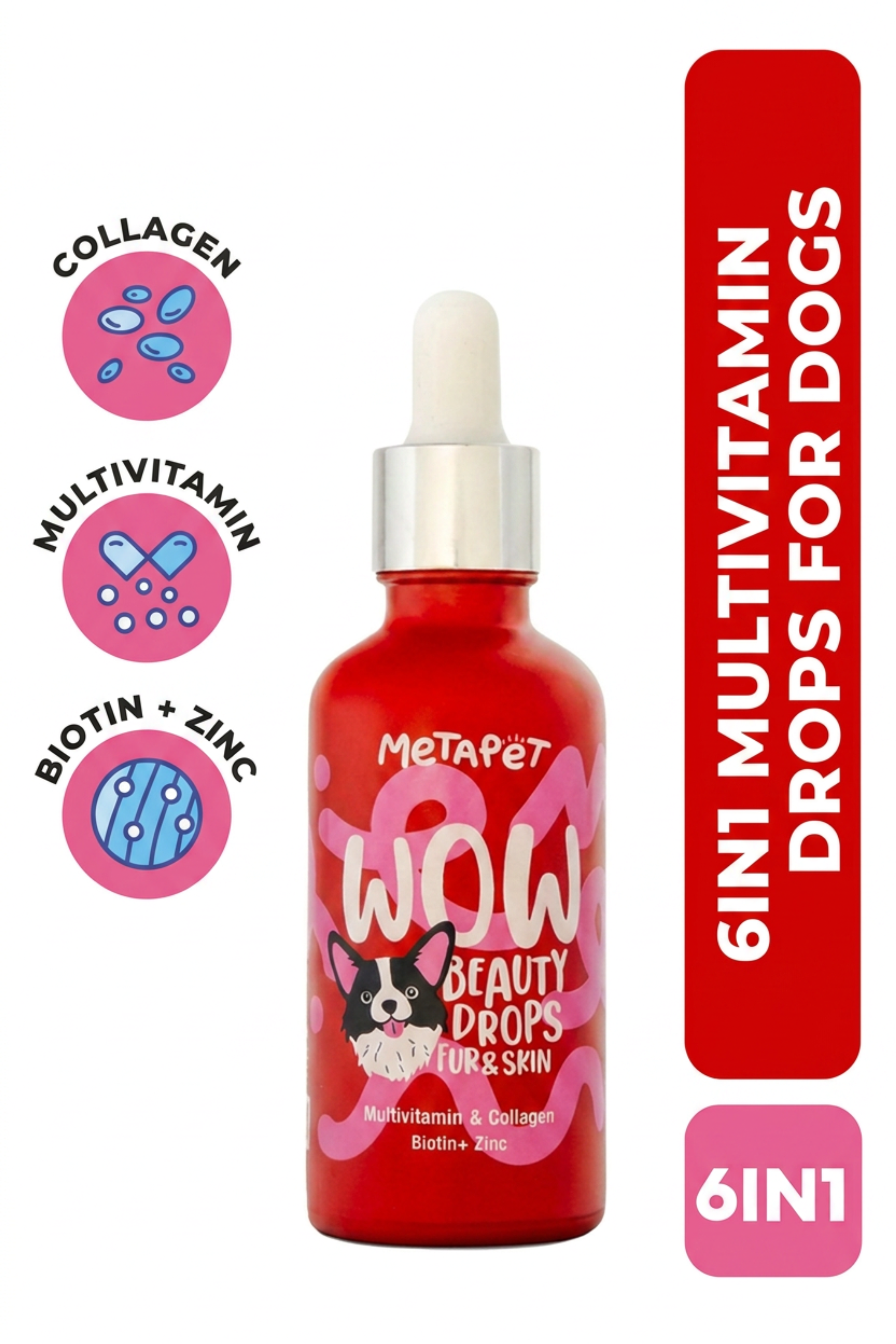
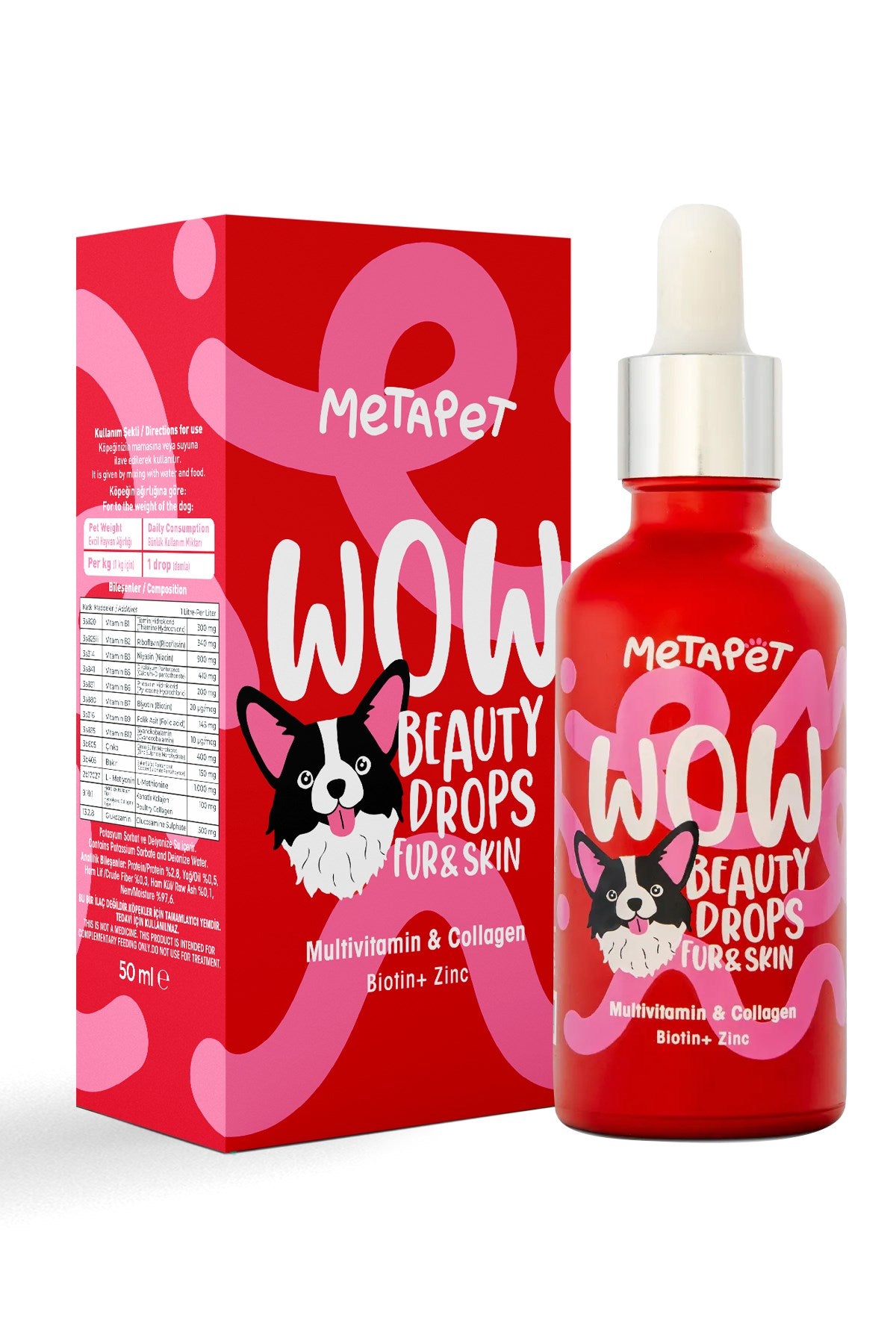
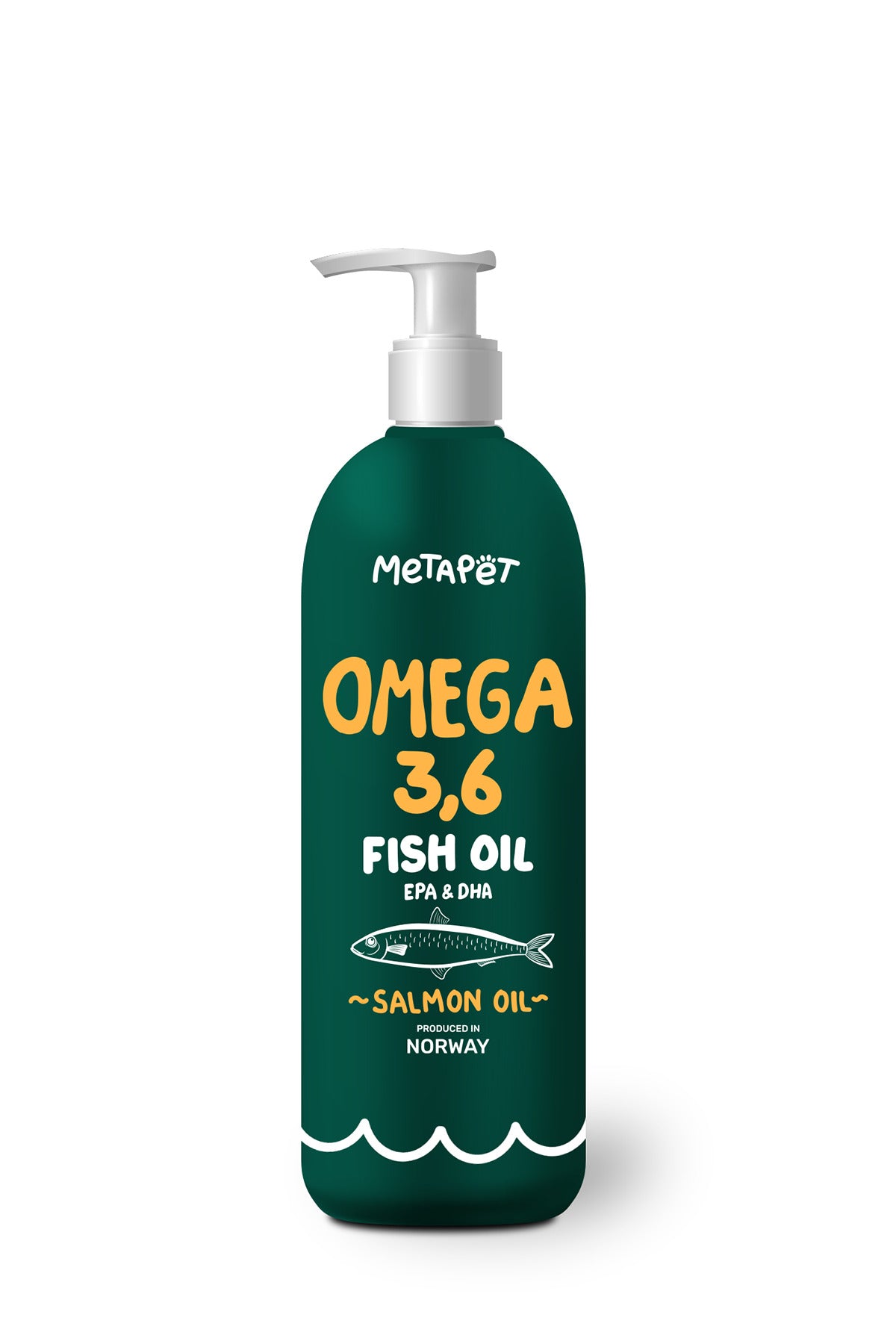
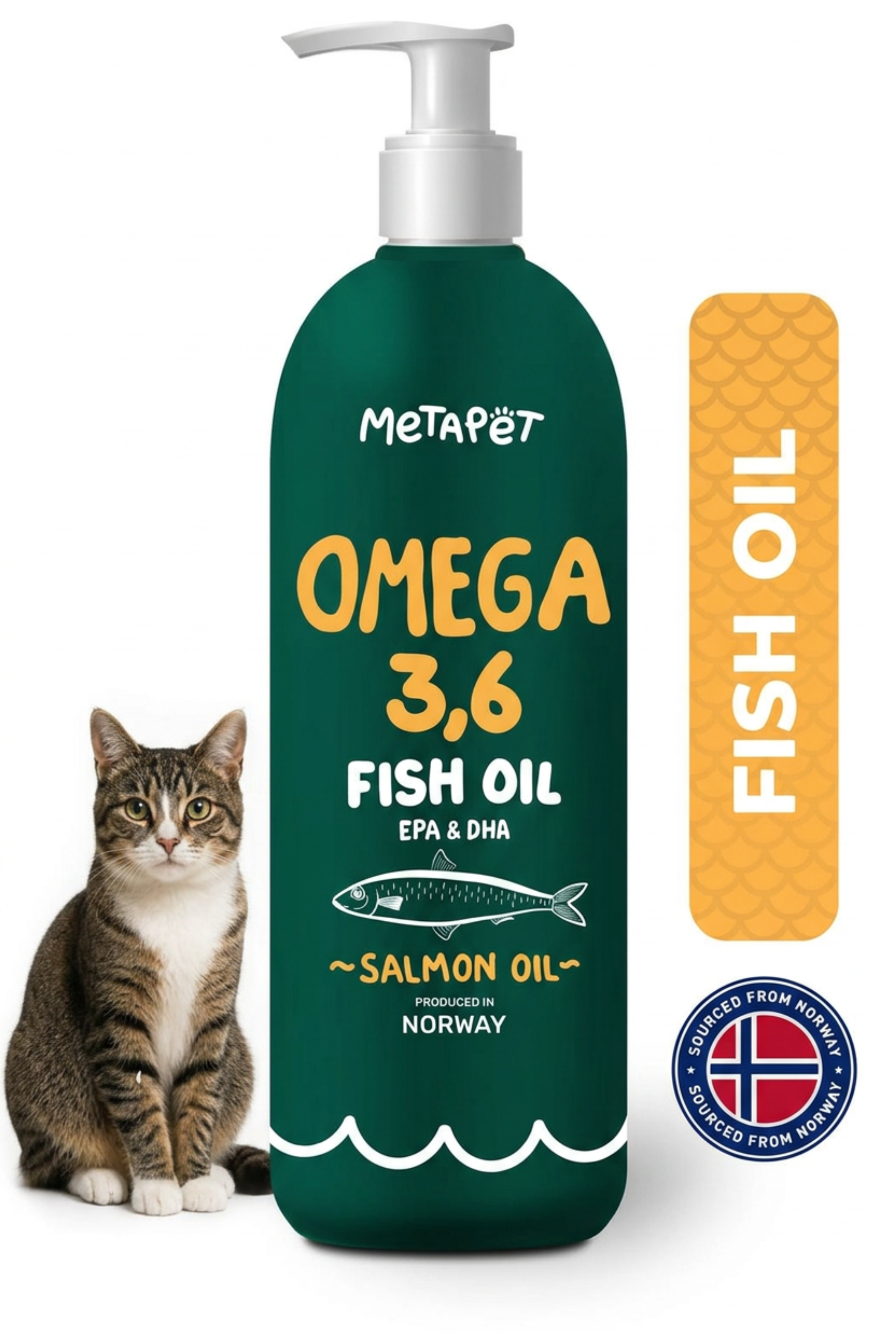
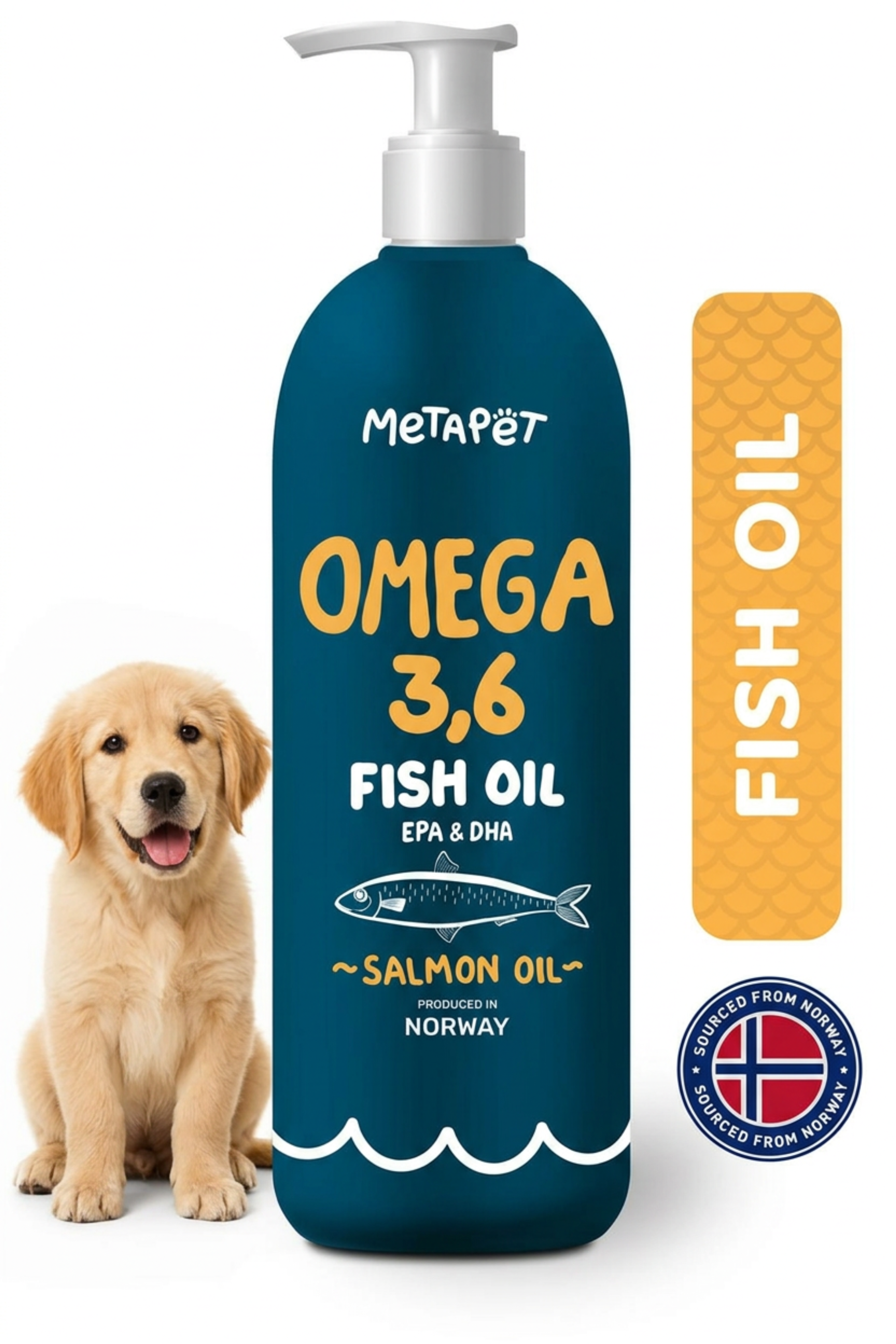
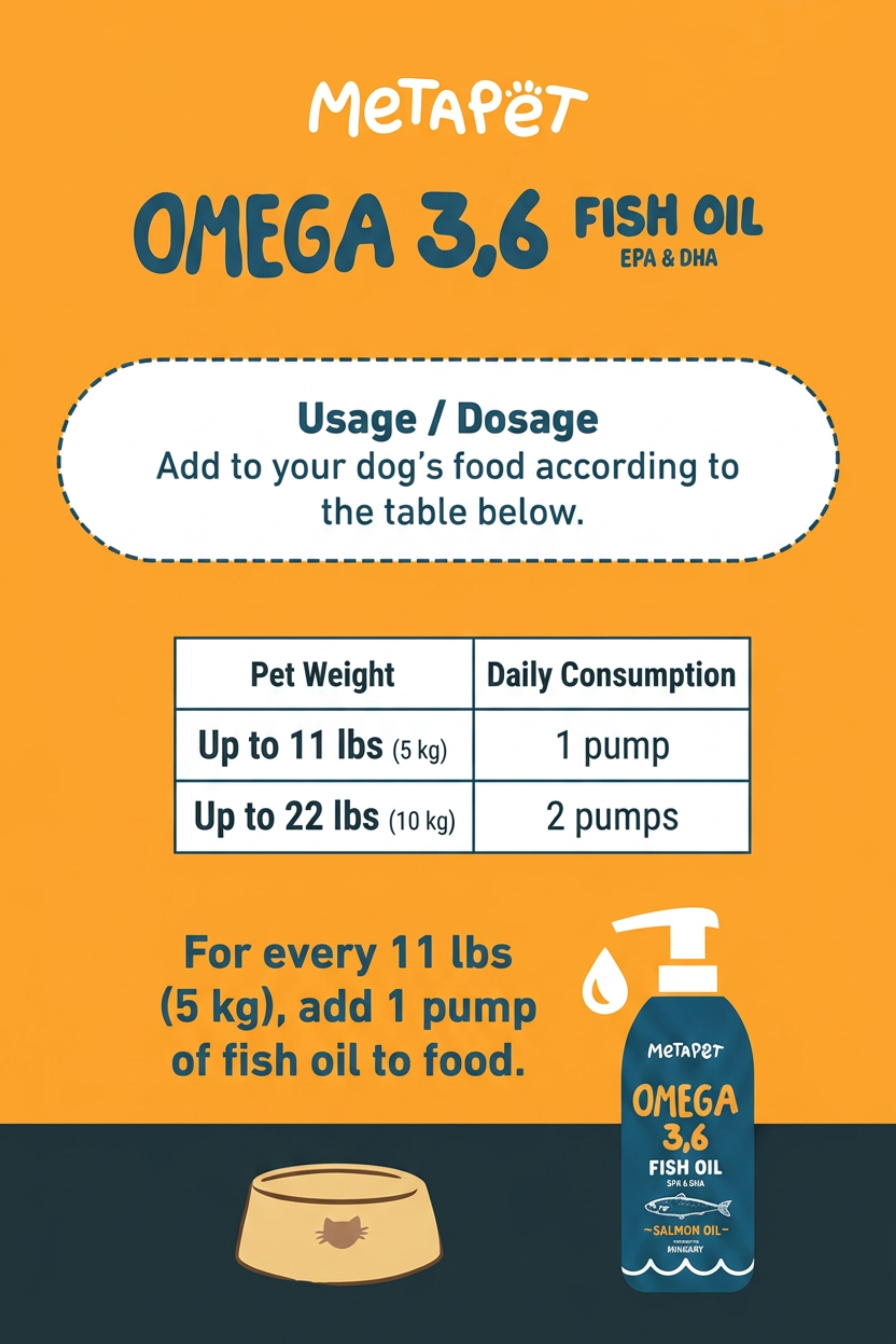
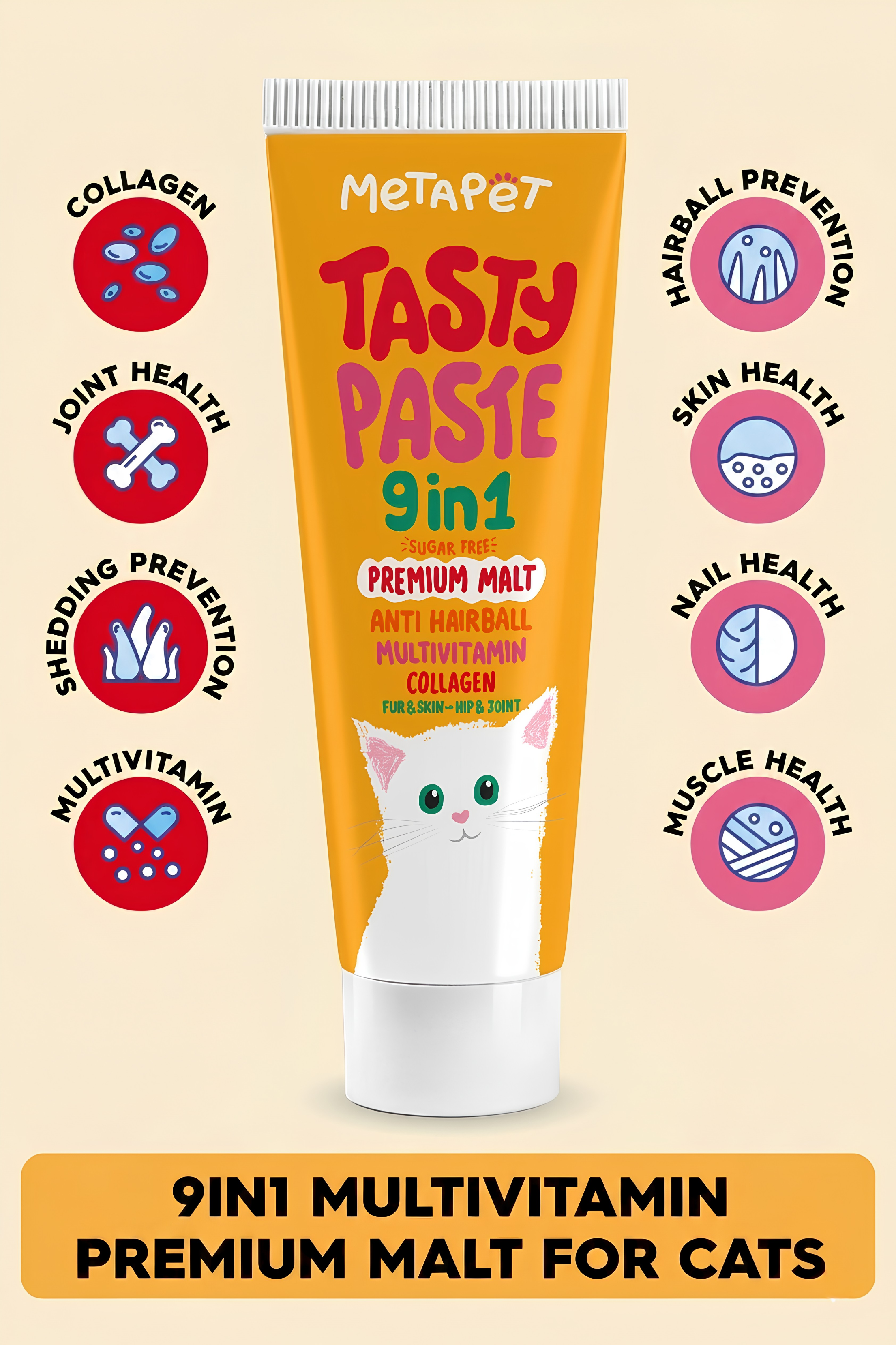
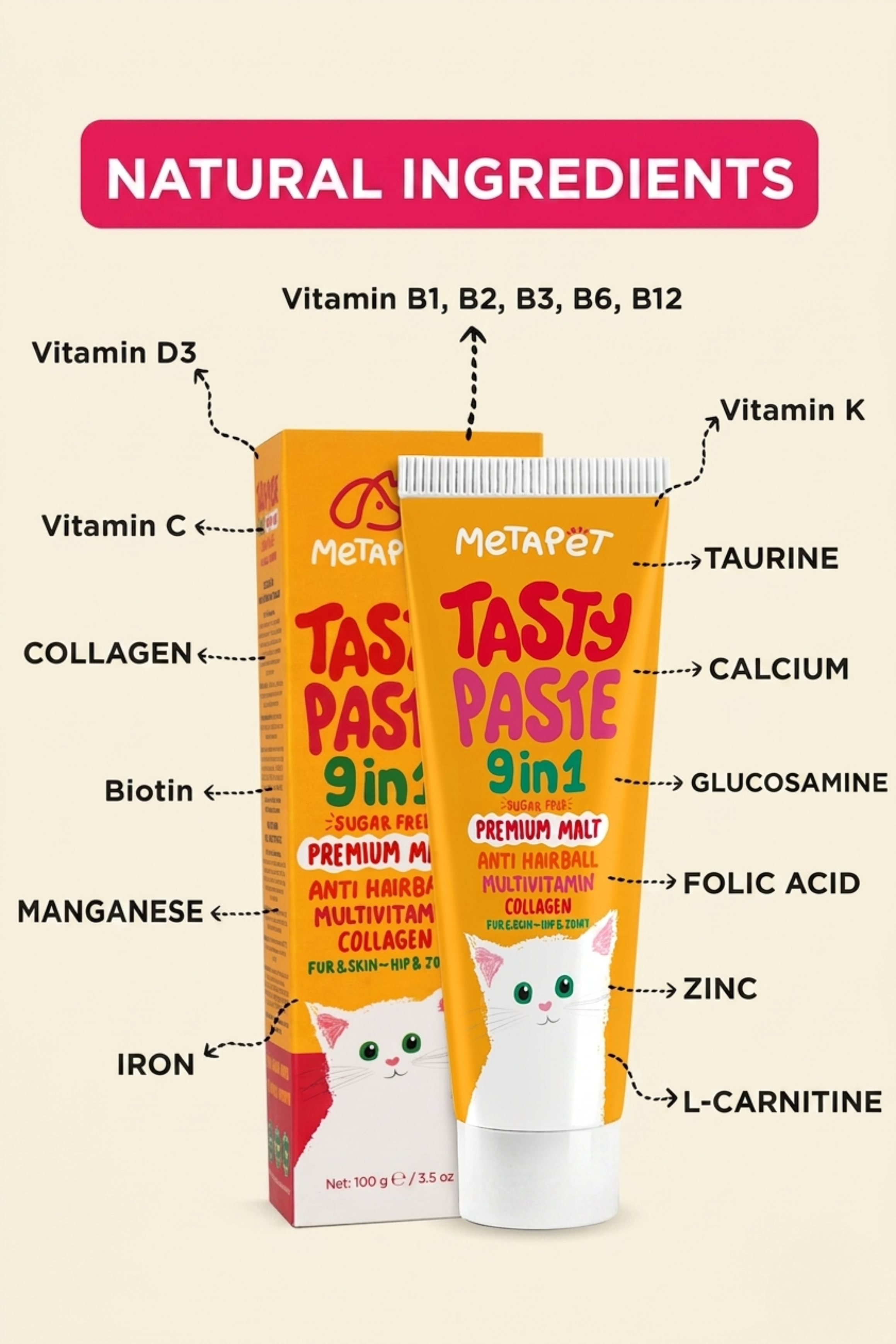
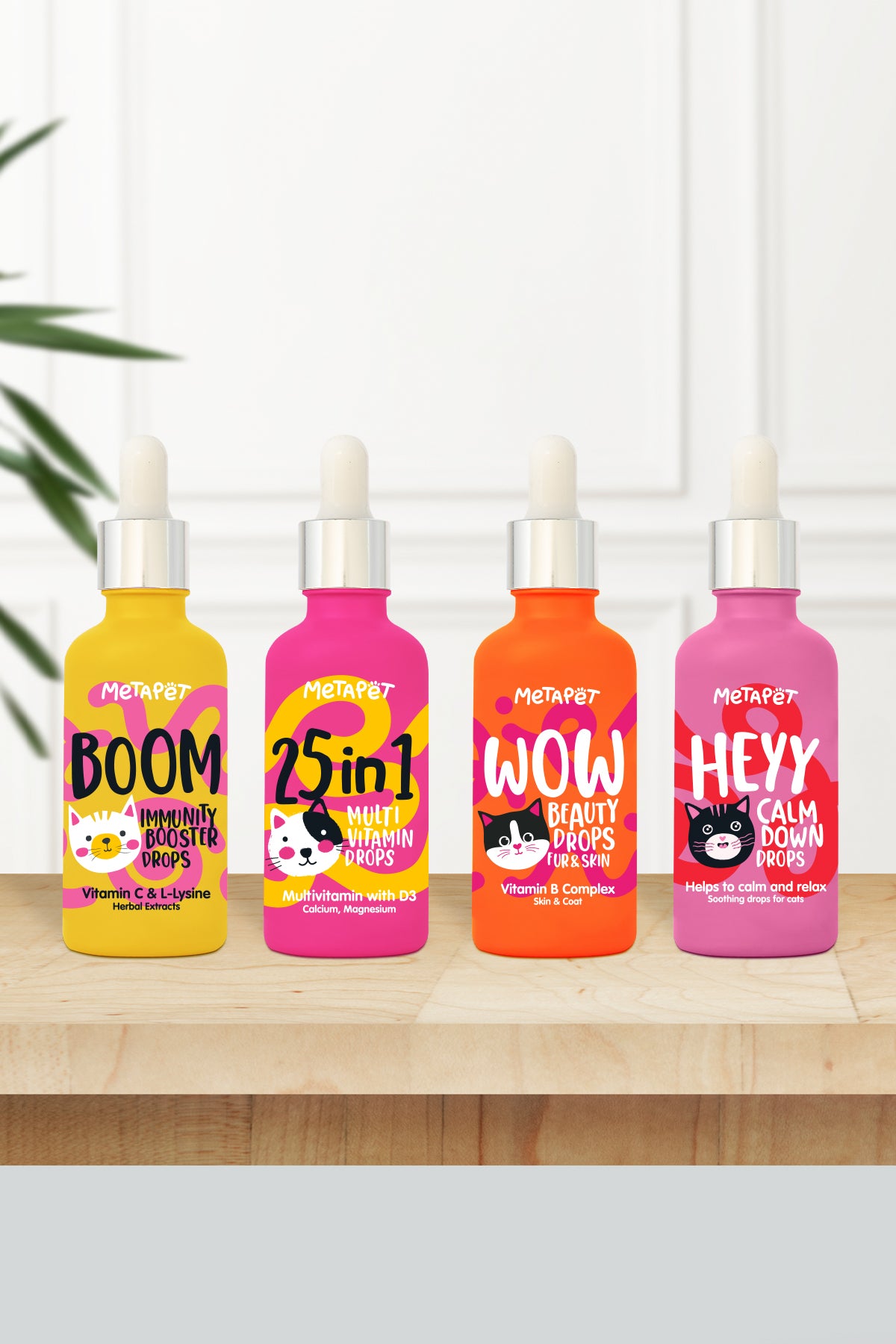
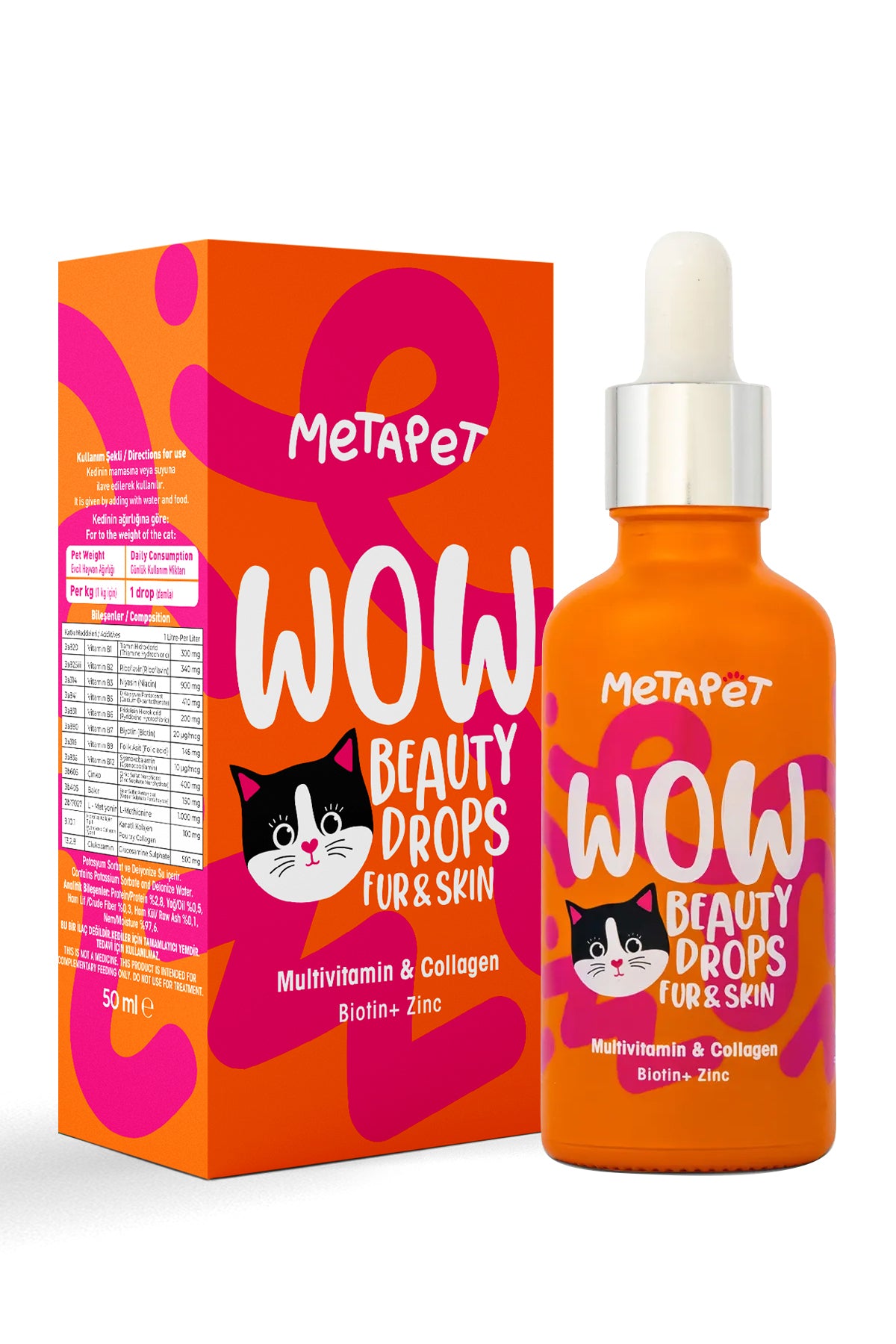
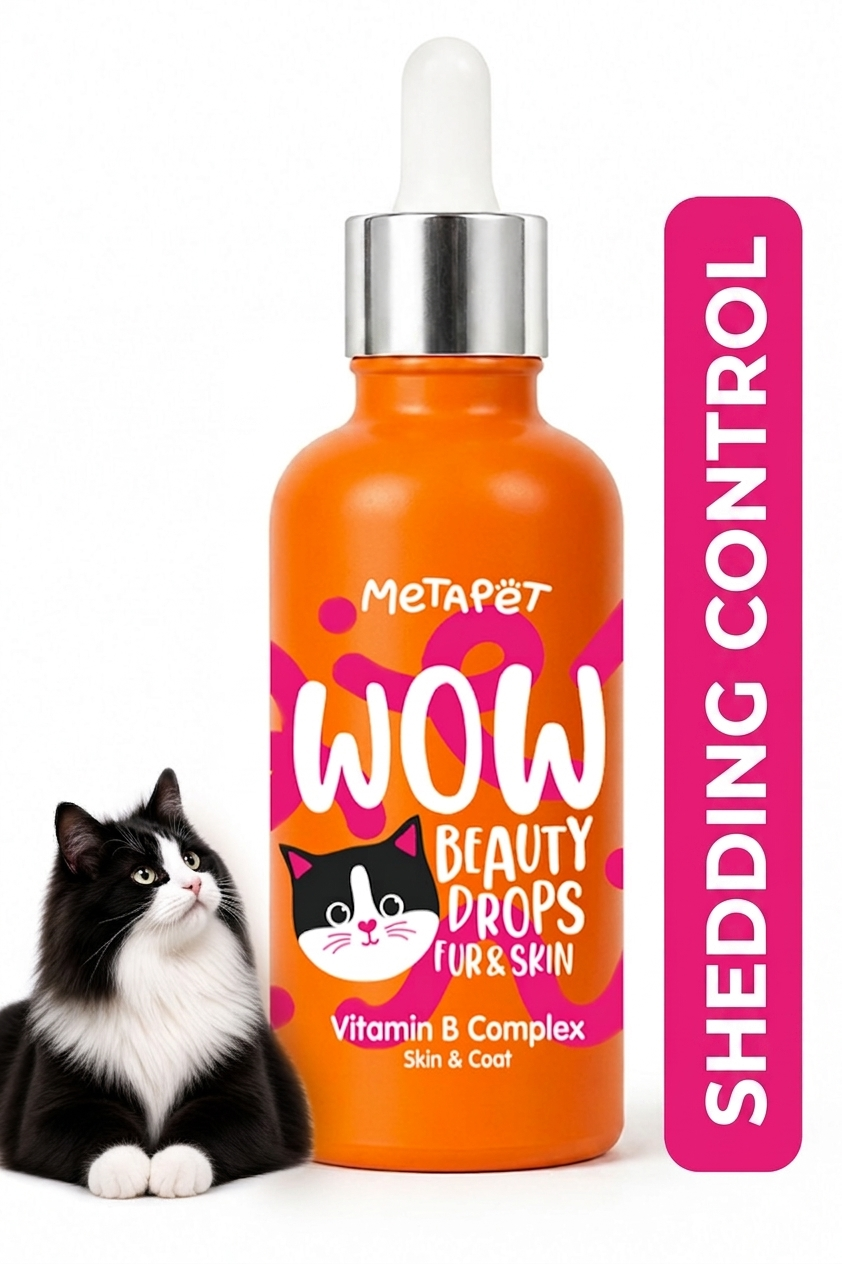
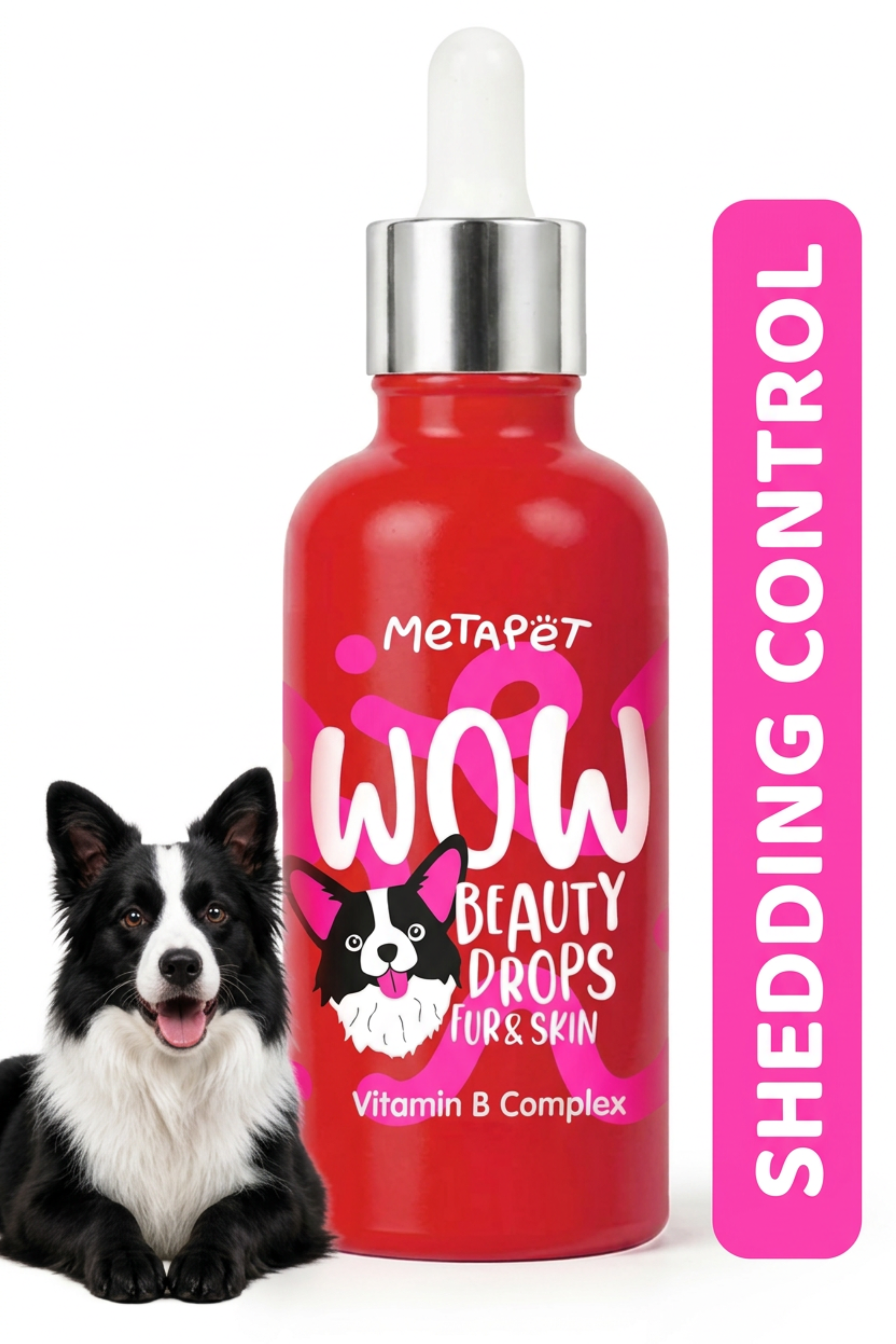
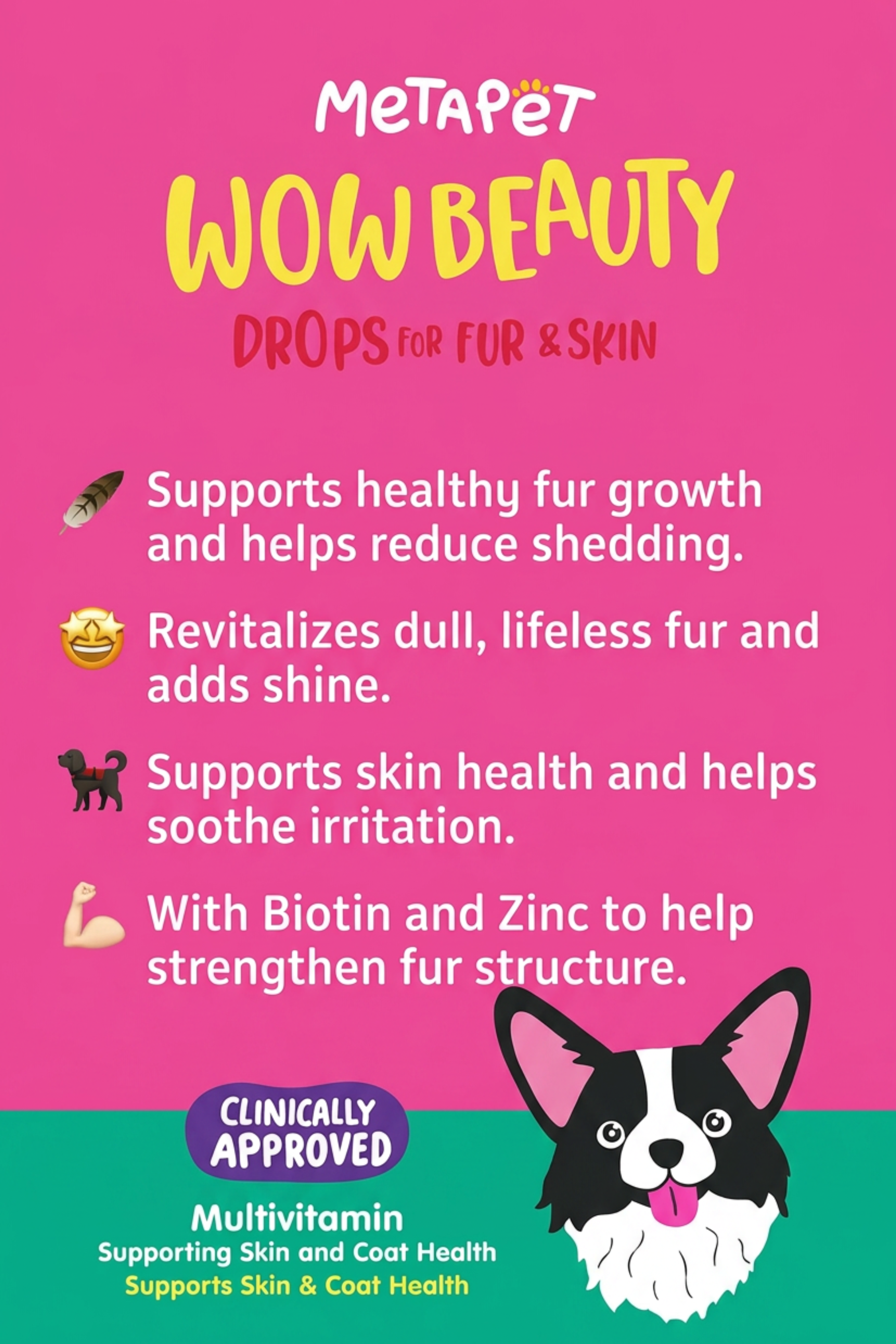
MetaPet offers several options that owners use as everyday support for skin and coat. Omega Salmon Oil for dogs and for cats is a Norwegian salmon oil naturally rich in omega-3 and omega-6 that can be added to food as a daily supplement supporting skin and coat condition. Wow Beauty Drops for dogs and for cats are formulated with biotin, zinc, glucosamine, and collagen to support healthy-looking skin and a vibrant coat, and for cats there is also a Derma Paste Omega lickable malt with omega 3-6, biotin, and zinc. These are supplements formulated to support normal skin and coat, offered as a complement to — never a substitute for — a complete diet, good grooming, and veterinary care. Always check with your veterinarian before starting any supplement, particularly if your pet has a health condition or takes medication.
When a Coat Change Is a Symptom
Sometimes a dull, dry, greasy, or shedding coat is not a grooming or nutrition issue at all but an outward sign of an underlying problem. Because the skin and coat reflect general health, changes there can be one of the first clues that something needs veterinary attention. It is important not to assume that a struggling coat simply needs a better shampoo or a supplement.
- Sudden or patchy hair loss. Bald spots or unusual thinning warrant a veterinary exam.
- Itching, redness, or sores. These suggest a skin condition or parasites that need treatment.
- A greasy, flaky, or smelly coat. Persistent changes in skin and coat quality should be evaluated.
- Excessive or sudden shedding. A marked change in shedding can accompany several health issues.
- Changes with other signs. Coat problems alongside weight changes, thirst, or lethargy need prompt attention.
- Over-grooming in cats. Bald patches from excessive licking can reflect stress, allergies, or discomfort.
When a coat change comes with any of these signs, a veterinary visit is the right move so the underlying cause can be identified and addressed.
Building a Coat-Care Routine
Bringing it all together, a good coat-care routine is simply a set of consistent, complementary habits layered on top of good general health. Start with a complete, balanced diet suited to your pet, since that is the foundation everything else builds on. Add regular brushing appropriate to your pet's coat type, sensible bathing with gentle products, and, if your veterinarian agrees, a coat-support supplement to round things out.
Consistency and patience are essential, because hair grows slowly and improvements show over weeks and months rather than days. Combine that steady routine with routine wellness visits and parasite prevention, and you give your pet the best chance at the soft, shiny coat that signals a healthy animal underneath. When something looks off despite good care, let your veterinary team investigate rather than layering on more products.
Frequently Asked Questions
How long until I see coat improvement from better nutrition or supplements?
Because hair grows slowly, meaningful changes usually take several weeks to a few months. Consistency matters more than speed, so give any dietary change or supplement a fair, sustained trial while monitoring your pet.
Can I just use a supplement instead of improving the diet?
No. Supplements are designed to complement a complete, balanced diet, not replace it. A supplement cannot overcome poor overall nutrition, so the diet should come first, with supplements as optional support.
My cat is over-grooming and has bald patches. Is that a coat problem?
Not exactly — over-grooming often reflects stress, allergies, skin irritation, or discomfort rather than a simple coat issue. It is worth a veterinary visit to find the cause rather than treating it as a grooming problem.
Do I need to bathe my pet often for a shiny coat?
Usually not. Regular brushing does more for shine than frequent bathing, and over-bathing can dry the skin. Bathe as needed with a gentle, pet-appropriate product, and rely on brushing for everyday coat maintenance.
A truly healthy coat starts on the inside and is maintained on the outside. Feed well, groom consistently, use supplements thoughtfully as support, and let your veterinarian address any coat change that looks like a symptom.