Electric Shock and Cord Chewing in Dogs and Cats: A Guide

An electrical cord is, to a teething puppy, an ideal chew: the right diameter, slightly flexible, and usually within reach at floor level. To a kitten it is a moving string. Neither animal has any way of knowing what is inside it, and the injuries that follow are among the more serious household accidents in young pets.
This guide covers why it happens, what electric current actually does to an animal, the delayed lung complication that catches owners out, what to do in the moments after — starting with your own safety — and the practical pet-proofing that stops it recurring.
Important: This article shares general educational information for pet owners and is not a substitute for an in-person veterinary examination, diagnosis, or treatment. For any medical concern or emergency, contact your veterinarian promptly.
Why Pets Chew Cords in the First Place
This is overwhelmingly a young-animal problem, and it usually reflects normal development rather than a behavioral disorder. Puppies explore with their mouths and chew hard through teething; kittens chase and bite anything cord-shaped.
- Teething: puppies and kittens seek relief on firm, slightly yielding objects, and a cable fits that description well.
- Play and exploration: a dangling charger cable behaves like a toy.
- Boredom and under-stimulation: an animal with too little to do finds its own entertainment.
- Anxiety: some dogs chew when stressed, particularly when left alone.
- Habit: a chew that was never interrupted can persist past the teething stage.
Adult animals chew cords too, and when a previously reliable adult starts doing it, that is worth mentioning to your veterinarian rather than treating purely as naughtiness. Sudden changes in chewing can accompany dental discomfort, anxiety or other underlying problems.
What Electric Current Does to an Animal
Household current causes injury through several mechanisms at once, which is why the visible damage understates the picture.
Burns at the point of contact
Current entering through the mouth produces burns on the lips, tongue, gums and the roof of the mouth. These often look pale, gray or yellowish rather than red, and they can be surprisingly painless at first because nerve endings are damaged. Tissue at the site may not declare its full extent for several days.
Muscle spasm that traps the animal
Alternating current causes sustained muscle contraction, which can clamp the jaw onto the cord so the animal cannot let go. This both prolongs the exposure and is the reason an owner must never simply grab the pet.
Effects on the heart and nervous system
Current passing through the body can disturb heart rhythm and cause collapse, loss of consciousness or seizures. These effects are not predictable from the size of the visible burn.
The Delayed Complication Owners Miss
This is the part of the topic that matters most, and the reason a pet who seems fine after a shock still needs veterinary assessment.
Electric shock can cause fluid to accumulate in the lungs. Crucially, this can develop hours after the incident rather than immediately, so an animal that walked away apparently unharmed can be in respiratory distress that evening or overnight. Owners who watched a puppy bite a cord, saw it yelp and run off, and concluded no harm was done are the group this catches.
- Signs of breathing trouble to watch for: rapid or labored breathing, breathing with an open mouth in a cat, exaggerated effort with the abdomen, coughing, a crackling sound, blue or gray gums, restlessness or an inability to settle, or refusing to lie down.
- Any of these is an emergency. Go to a veterinary hospital immediately rather than phoning and waiting for a call back.
Because of this delay, veterinarians frequently recommend examination and a period of monitoring after any suspected electrical injury, even in an animal that appears normal. That recommendation is about the lungs, not the mouth.
Your Safety Comes First
This is not a caveat to skim. An animal still in contact with a live cord is an electrical hazard, and owners have been injured pulling a pet away from one. You cannot help your animal if you are also being shocked.
- Do not touch the pet while it may still be in contact with the current.
- Cut the power first: switch off at the breaker or fuse box, or unplug the cord at the outlet if you can reach the plug safely and your hands are dry.
- If you cannot cut the power, use a dry, non-conductive object such as a wooden broom handle to move the cord away from the animal. Never use anything metal or damp.
- Only once the current is off, approach your pet.
- Check whether they are breathing and responsive.
- Call your veterinarian or an emergency hospital and go in.
Do not put your hands in the mouth of a shocked, frightened or seizing animal. Even a gentle pet may bite reflexively, and a mouth injury does not need your fingers in it.
What to Do Once the Power Is Off
Keep the plan simple. The goal is safe transport to veterinary care, not treatment at home.
- Keep your pet calm, warm and as still as possible
- Handle them minimally, and use a towel or carrier for a cat
- Do not apply anything to the mouth — no water flushes, ointments, creams or home remedies
- Do not offer food or water, particularly if the mouth is burned or the animal is drowsy
- Do not give any human medication
- Note the time of the incident and what the cord was connected to
- Take a photograph of the damaged cord if it is safe to do so
If your pet is unresponsive and not breathing, and you have been trained in pet CPR, begin while someone else drives. If you have not been trained, get to a veterinary hospital as fast as is safe rather than delaying to attempt it.
What Veterinary Treatment Usually Involves
Care depends entirely on severity and on the individual patient, and every decision belongs with the attending veterinarian. Broadly, the team will be thinking about three things: breathing, pain, and the mouth.
- Assessment and stabilization: checking breathing, circulation and consciousness first.
- Oxygen support: where breathing is compromised.
- Chest imaging: to look for fluid in the lungs, sometimes repeated because changes can develop over hours.
- Monitoring: frequently overnight, precisely because of the delayed lung risk.
- Pain relief: oral burns are painful once the initial numbness passes.
- Wound care for the mouth: reviewed over the following days as the extent of tissue damage declares itself.
- Nutritional support: if the mouth is too sore to eat normally.
Follow the discharge instructions exactly, and attend the recheck appointments. Oral tissue damage evolves, and a mouth that looks acceptable on day one can need attention on day four.
Recovery at Home
Once your pet is discharged, most of the work is soft food, medication compliance and watchful monitoring.
- Give all medication exactly as prescribed, and never substitute human painkillers
- Offer soft or moistened food if the mouth is sore, as advised by your veterinarian
- Check the mouth daily in good light, if your veterinarian has shown you how
- Watch breathing closely for several days and call about any change
- Keep water available and note whether your pet is drinking
- Prevent access to cords entirely during recovery
Report reduced appetite, drooling, a bad smell from the mouth, reluctance to eat hard food, or any change in breathing. These are the signs that most often bring an electrical-injury patient back in.
Pet-Proofing: The Part That Actually Prevents It
Prevention here is unusually effective, because the hazard is fixed in place and easy to modify. An hour of work removes most of the risk permanently.
- Walk your home at your pet's eye level and note every reachable cord.
- Fit cord covers, split-loom tubing or cable channels over accessible runs.
- Route cables behind furniture and secure them along baseboards.
- Unplug and store items that are not in use, especially phone chargers left on the floor.
- Use furniture, gates or covers to block access to outlet clusters and power strips.
- Confine young or unsupervised animals to a room you have already proofed.
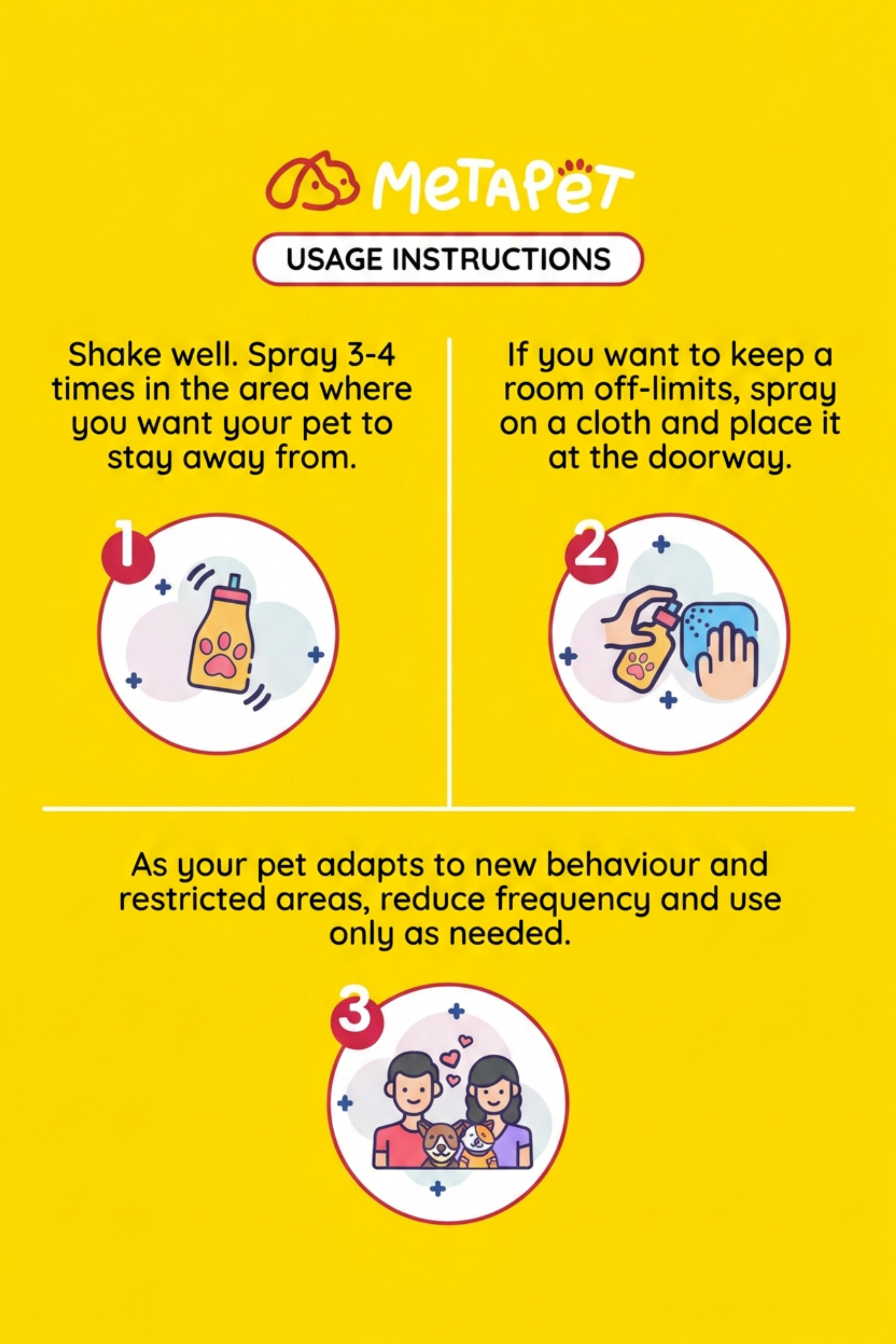
A commercial anti-chew deterrent spray, applied to surfaces the manufacturer states are suitable, is sometimes used alongside these physical measures. Treat it as an aid rather than a solution: sprays are not reliable on their own, they wear off, and no spray substitutes for physically blocking access. Never apply a product to a cord in a way the manufacturer has not approved.
Give the Chewing Somewhere Else to Go
Blocking access solves the hazard; giving the behavior an outlet solves the underlying need. Teething puppies and bored young animals will chew something, and choosing what is easier than preventing it entirely.
- Provide appropriate chew toys sized correctly for your pet, and rotate them
- Offer chilled chew items for a teething puppy, if your veterinarian agrees they are suitable
- Increase daily exercise and mental work, particularly for young dogs
- Use food puzzles to occupy time that would otherwise be idle
- Interrupt cord chewing calmly and redirect to an acceptable item rather than punishing
- Supervise closely, and confine when you cannot supervise
If chewing is driven by distress when left alone rather than by teething or boredom, that is a different problem with a different solution. Persistent destructive chewing that happens only in your absence is worth raising with your veterinarian, who can advise on assessment and appropriate help.
Seasonal and Household Risk Points
Certain periods and certain rooms account for a disproportionate share of incidents, largely because they add new cords at floor level.
- Holiday decorations and light strings, which are novel, low down and often on timers
- Home office setups, with charger cables running across the floor
- Heating appliances and fans brought out seasonally
- Newly moved-in homes, before cables have been tidied
- Extension cords and power strips used as a temporary solution
- Any period when a new puppy or kitten arrives
Check cords periodically for bite marks even if you have never seen your pet chew one. Damaged insulation is a fire risk as well as a hazard to the animal, and a chewed cable should be replaced rather than taped.
When to Call, and What to Say
Any suspected electrical injury warrants a call, including one where your pet appears completely normal afterwards. The delayed lung complication is the reason, and it is not something you can rule out by looking at the animal.
- Call immediately if: your pet was seen or is suspected to have bitten a live cord, has burns or pale patches in or around the mouth, is drooling, is pawing at its face, collapsed, seized, or lost consciousness.
- Treat as an emergency: any difficulty breathing, open-mouth breathing in a cat, coughing, blue or gray gums, weakness, or inability to settle — at any point in the days following.
- Tell the clinic: when it happened, what the cord powered, whether the power was on, how long the contact lasted, and everything you have observed since.
Electrical injury is one of the household accidents that is close to fully preventable. If you have a puppy, a kitten, or a young animal newly in the house, the cord audit is worth doing this week rather than after something happens.