Dog Growling: What It Means and Why Not to Punish It

A low rumble from your dog can be startling, especially when it comes from the same companion who sleeps on your feet every night. But a growl is not a sign that your dog is bad, spiteful, or trying to take over the household. It is one of the clearest ways a dog has to say "I am uncomfortable, please back off." This guide explains what growling means, the different kinds of growls, how to read the body language around them, why punishing a growl can make a bite more likely, what to do in the moment, how to plan longer term, and when to get help.
Important: This article shares general educational information for pet owners and is not a substitute for an in-person veterinary examination, diagnosis, or treatment. For any medical concern or emergency, contact your veterinarian promptly.
Growling Is Communication, Not Defiance
Dogs cannot explain in words that something hurts, frightens them, or feels like too much. Instead, they use a ladder of signals that usually starts small and escalates if the first signals are ignored. Early rungs include looking away, lip licking, yawning, turning the head, and freezing. Further up come a hard stare, a lifted lip, and growling. Above that are snapping and biting.
Seen this way, a growl is a warning that arrives before any contact. It gives the person or dog nearby a chance to change course. A dog who growls is, in effect, choosing to communicate rather than bite. That is valuable information, and it is something you want your dog to keep doing.
The Main Types of Growling
Context and body language tell you which kind of growl you are hearing.
Play growling
Many dogs growl during tug, wrestling, or chase games. Play growls usually come with a loose, wiggly body, a relaxed open mouth, play bows, bouncy movements, and frequent pauses or role reversals. Play growling is normal; take short breaks if play gets very intense.
Fear growling
A frightened dog may growl at a stranger, a visitor reaching toward it, a loud noise, or an unfamiliar place. The body is often lowered, the tail tucked, the ears pinned back, and the weight shifted away from the trigger.
Resource guarding
Some dogs growl to keep people or other dogs away from food, chews, toys, resting spots, or even a favorite person. Our guide to resource guarding in dogs explains this behavior in more detail.
Pain-related growling
A sore dog may growl when touched in a certain spot, lifted, or asked to move. New growling during handling a dog once enjoyed warrants a veterinary exam.
Handling sensitivity
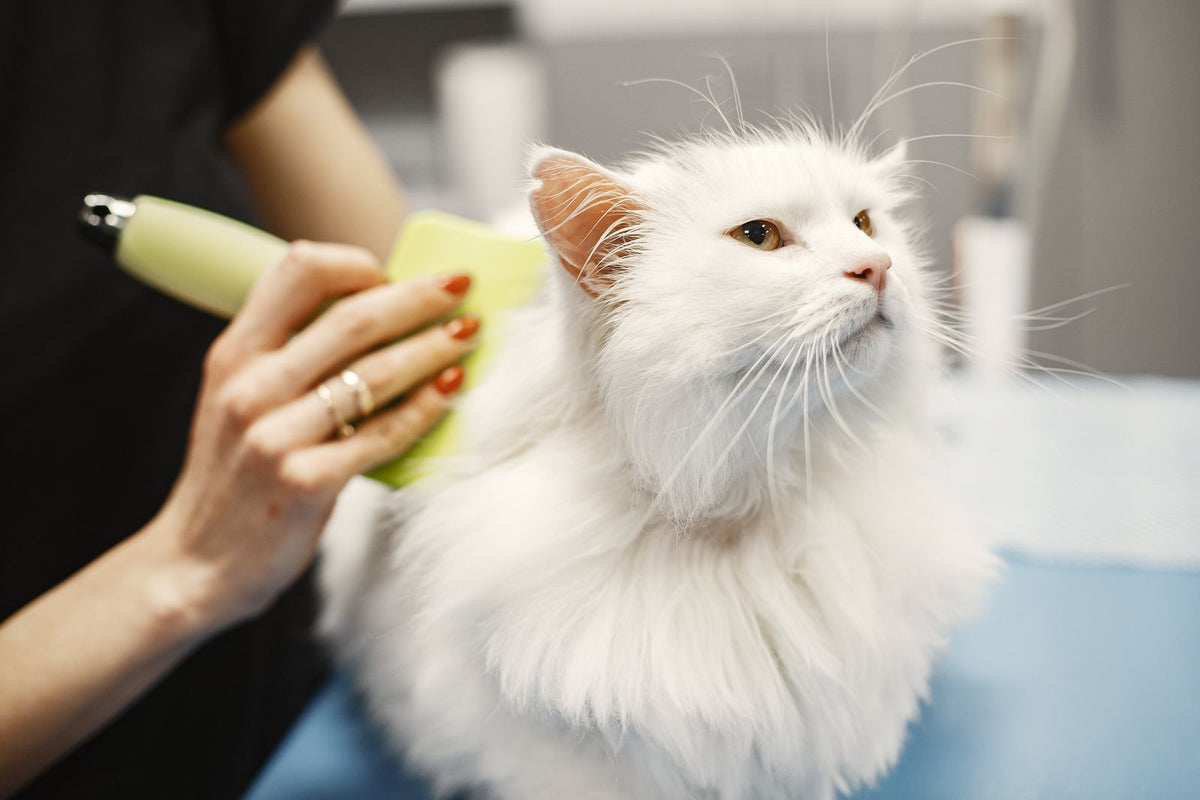
Nail trims, ear cleaning, brushing, bathing, being picked up, or being restrained can all prompt growling in a dog who finds them uncomfortable or frightening.
Territorial or alert growling
Some dogs growl at people approaching the door, the yard, or the car. This growl is often paired with barking, an upright posture, and forward-pointing ears.
Reading Body Language Around a Growl
The sound is only part of the message. Watch the whole dog. Our guide to dog body language covers these signals in depth.
- Body: loose and bouncy suggests play; stiff, frozen, or leaning back suggests discomfort.
- Face: a relaxed open mouth is a good sign; a closed mouth, tight lips, a lifted lip, or bared teeth signal tension.
- Eyes: soft eyes are relaxed; a hard stare or the whites of the eyes showing in a half-moon shape point to stress.
- Ears and tail: pinned ears and a tucked tail suggest fear; a high, stiff tail can signal arousal, so a wagging tail is not always friendly.
- Movement: a dog who keeps re-engaging is often playing; a dog who freezes, turns away, or tries to leave wants space.
- What came before: note the trigger, such as a touch, an approach, a resource, or a sudden noise.
Freezing deserves special attention. A dog who goes suddenly still while growling, especially over an item or during handling, is often very close to the next step on the ladder.
Why Punishing a Growl Backfires
Scolding, yelling, leash corrections, physical punishment, or forcing a dog to tolerate whatever caused the growl may seem to work, because the growling may become less frequent. But punishment does nothing to change how the dog feels about the trigger. The dog is still afraid, sore, or worried about losing its food. What it learns is that warning out loud is dangerous.
Over time, some dogs that are punished for growling skip the warning altogether. Owners then describe a bite that came "without warning" or "out of nowhere." In many of these cases the dog did warn, earlier and more quietly, until the growl was suppressed and the earlier signals were missed.
Punishment can also add fear and mistrust: a dog scolded for growling near its bowl now has more reason to feel uneasy when people approach.
The better approach is to view the growl as useful information: respect it in the moment, then work on the underlying cause so the dog no longer feels the need to growl.
What to Do in the Moment
When your dog growls, keep everyone safe and lower the pressure.
- Pause what you are doing: if you were reaching, touching, grooming, or moving toward the dog, freeze and then slowly back away.
- Create space: give the dog a clear path to move away, and calmly move other people or dogs out of the area.
- Take away the trigger if you safely can: end the nail trim, ask the visitor to step back, or toss a food reward away from the dog rather than reaching for a guarded item.
- Avoid confrontation: do not stare at the dog, lean over it, raise your voice, or try to win the situation.
- Write it down later: note what happened just before the growl, where, and who was present.
Backing off keeps the warning system intact while you work on the cause.
A Longer-Term Plan for Growling
Afterward, the aim is to change how your dog feels so the growl is no longer needed.
Identify and manage triggers
Look for patterns in your notes. Is it always around food, during handling, at the door, or when the dog is woken? Meanwhile, manage the environment: feed in a quiet room, use baby gates, and let sleeping dogs lie.
Counter-conditioning and desensitization
These two techniques are usually used together. Desensitization means exposing the dog to a very mild version of the trigger, such as a person at a distance or a brief touch near the paw, at a level that does not cause worry. Counter-conditioning pairs that mild version with something the dog loves, such as high-value food rewards, so the trigger begins to predict good things. Raise intensity in small steps, and go back a step if stress appears.
Work with qualified professionals
Growling plans are best built with help. Look for a trainer who uses positive reinforcement and avoids punishment, prong, choke, or shock collars. For frequent, intense, or worsening growling, or any bite, ask your veterinarian about a referral to a veterinary behaviorist, who can combine a behavior plan with medical care. In some cases a veterinarian may discuss anti-anxiety medication, as prescribed by your veterinarian, alongside training.
Pain as a Hidden Cause: Get a Veterinary Exam
Pain is a common and often overlooked reason for growling. Dogs tend to hide discomfort, so a growl may be one of the first clear signs that something hurts. Arthritis, dental disease, ear problems, back pain, and injuries can all make a dog more sensitive to touch.
Schedule a veterinary exam if growling is new, if it shows up in an adult or senior dog who never growled before, or if it happens when a particular body part is touched. Other signs that warrant an exam include limping, stiffness after rest, reluctance to jump or use stairs, head shaking, or licking one spot.
Your veterinarian will take a history, perform a physical and orthopedic exam, and may recommend bloodwork, X-rays, or other tests to look for a medical cause. Addressing pain can make behavior work far more effective.
Children and Growling Dogs
Children often miss subtle dog body language, so take growling around kids seriously.
- Always supervise: an adult should actively watch any interaction between a dog and a young child, or separate them with gates or closed doors.
- Teach kids the rules: no hugging, kissing, or climbing on the dog; leave the dog alone when it is eating, chewing, or sleeping; and walk away if the dog growls.
- Give the dog a retreat: a crate, bed, or room where children are not allowed lets the dog take a break.
- Never let children correct the dog: kids should get an adult instead.
Growling directed at children is a good reason to involve a qualified professional promptly. Our guide to keeping kids safe with dogs and cats offers more family tips.
When to Call Your Veterinarian or Get Help Urgently
Some situations should not wait for a routine appointment. Contact your veterinarian or a qualified behavior professional promptly if your dog:
- Has bitten or snapped at a person or another dog, or the growling is escalating
- Growls at children or in a home with young children
- Shows growling that is new, sudden, or very different from its usual behavior
- Growls when touched in a specific area, or seems sore, stiff, or lame
- Guards resources intensely, or growls with a frozen body and a hard stare
Contact your veterinarian or an emergency clinic right away if
- Growling comes with signs of serious pain, such as crying out, trembling, or refusing to move
- Your dog seems disoriented, confused, unsteady, or has a seizure
- There is a sudden, dramatic change in behavior alongside lethargy, vomiting, or trouble breathing
- Your dog has been injured, for example after a fall or being hit by a car
If your dog has bitten someone, separate the dog safely, attend to the injured person, and seek medical care for them as needed.
Common Mistakes and Myths
Myth: A growling dog is trying to be dominant.
Fact: most growling is driven by fear, discomfort, pain, or worry about losing something valued.
Mistake: Punishing the growl.
This can remove the warning while leaving the underlying fear or pain in place, raising the risk of a bite that seems to come without warning.
Myth: A wagging tail means the dog will not bite.
Fact: a stiff, high wag can come with tension. Read the whole body.
Frequently Asked Questions
Is it ever okay for a dog to growl?
Yes. Play growling is normal, and a warning growl is far safer than a bite. What matters is understanding why your dog is growling.
Will backing off teach my dog that growling works?
Respecting a growl keeps everyone safe. The longer-term plan then changes how the dog feels, so it no longer needs to growl.
Why did my dog start growling suddenly?
A sudden change can point to pain or illness, so schedule a veterinary exam before starting a training plan.
Can growling be fully resolved?
Many dogs improve a great deal with management, positive training, and medical care where needed.
Key Takeaways
Growling is communication: a warning that comes before contact. Dogs growl in play, from fear, to guard resources, from pain, during handling, and at people approaching their space. Read the whole body and the context. Do not punish a growl, because that can remove the warning without changing the feeling behind it. In the moment, pause, create space, take away the trigger if safe, and avoid staring or leaning in. Over time, identify triggers, use counter-conditioning and desensitization, and work with a positive-reinforcement trainer or veterinary behaviorist. Have your veterinarian examine any dog whose growling is new or linked to touch, keep children supervised, and get help urgently after any bite.