Brushing Long-Haired Cats and Dogs: A Gentle Routine Guide

A long, flowing coat is one of the most beautiful things about breeds like the Persian, Maine Coon, Ragdoll, Collie, Shih Tzu, and Golden Retriever — and one of the most demanding. Long fur does not maintain itself. Left to its own devices it traps loose hair, dust, and moisture, and slowly knits itself into mats that pull painfully at the skin.
The good news is that coat care for long-haired pets is far less about heroic effort and far more about consistency. Ten quiet minutes several times a week, with the right tool for that particular coat, prevents almost every grooming crisis before it starts. The pets who end up needing a full shave-down at a groomer are rarely the ones brushed regularly.
This guide covers how often to brush, how to choose tools that suit your pet's coat type, a step-by-step gentle technique, how to work through tangles safely, and how to turn grooming into something your dog or cat tolerates — or even enjoys — rather than dreads.
Important: This article shares general educational information for pet owners and is not a substitute for an in-person veterinary examination, diagnosis, or treatment. For any medical concern or emergency, contact your veterinarian promptly.
Why Long Coats Need Regular Brushing
Brushing does far more than keep a pet looking tidy. It removes loose, shed hair before it can weave into the coat and form mats. It distributes the skin's natural oils along the hair shafts, which is a large part of what makes a well-groomed coat look glossy. It lifts out dirt and debris, improves airflow to the skin, and gives you a regular, hands-on opportunity to notice lumps, scabs, fleas, ticks, or sore spots early.
For cats there is an extra benefit: every hair you capture in a brush is a hair your cat does not swallow while self-grooming. Long-haired cats ingest a great deal of fur, and regular brushing is one of the most practical ways to reduce how much ends up in the stomach. If your cat is bringing up hairballs frequently or seems uncomfortable, that is a conversation for your veterinarian rather than a grooming fix alone.
How Mats Form — and Why They Hurt
A mat begins when loose shed hair fails to fall away and instead tangles around growing hair. Movement, moisture, and friction tighten the tangle progressively. Within days a soft knot can become a dense, felted clump anchored close to the skin.
Mats are not merely unsightly. As they tighten, they pull constantly on the skin beneath — a low-grade, unrelenting discomfort. They trap moisture and debris against the skin, which can lead to irritation and inflamed patches underneath. Severe matting can restrict movement and hide wounds or parasites entirely. This is why prevention is so much kinder than cure, and why a badly matted pet needs professional help rather than home scissors.
Mats form fastest in high-friction areas: behind and under the ears, in the armpits, around the collar, between the back legs, along the belly, around the tail base, and between the toes. Those are the spots to check every single grooming session, even on a short day.
How Often Should You Brush?
- Long, fine-coated cats and dogs. Daily brushing is ideal — fine hair tangles fastest. Persians, Ragdolls, and silky-coated small dogs fall here.
- Long, coarse or double coats. Three to four times a week usually suffices, with daily attention during heavy shedding seasons.
- Medium-length coats. Two to three times a week keeps loose hair under control and mats at bay.
- During seasonal shedding. Increase frequency for a few weeks in spring and autumn when the undercoat releases in volume.
- Senior or unwell pets. Older pets often groom themselves less; they may need more owner help, in shorter, gentler sessions.
Short and frequent beats long and occasional every time. Five minutes daily is more effective — and far more pleasant for your pet — than a forty-minute struggle once a fortnight.
Choosing the Right Tools
Using the wrong brush is the most common reason owners think their pet 'hates grooming.' A tool that skims the surface leaves the undercoat untouched; one that is too harsh scratches the skin. Matching the tool to the coat changes everything.
- Slicker brush. Fine angled wires that lift loose hair from medium and long coats. Use light pressure — never scrub against the skin.
- Wide-toothed comb. The honest tester: if a comb passes cleanly from skin to tip everywhere, the coat is genuinely mat-free.
- Metal greyhound comb. A dual-spaced comb ideal for finishing work and for finding hidden tangles behind ears and in armpits.
- Undercoat rake. Designed for double-coated breeds; reaches the dense underlayer that surface brushes miss.
- Pin brush. Gentler on long, silky coats; good for everyday smoothing without stripping hair.
- Soft bristle brush. Finishing tool that distributes oils and adds shine at the end of a session.
- Blunt-nosed scissors. For carefully trimming hygiene areas only — never for cutting out mats close to skin.
MetaPet's own guide to matching tools to coat types goes into more detail if you are building a kit from scratch — see our article on choosing grooming tools for your dog or cat.
A Gentle Step-by-Step Brushing Routine
- Pick your moment. Groom when your pet is naturally relaxed — after a walk, after a meal, or during a sleepy evening rather than a playful burst.
- Start with a quick check. Run your fingers over the whole body first to locate tangles, lumps, or sore spots so nothing surprises either of you.
- Work in sections. Begin at the shoulders and work back in small, manageable areas rather than sweeping randomly over the whole pet.
- Brush in layers. Lift the top coat with one hand and brush the section beneath, so you reach the undercoat rather than only the surface.
- Follow hair growth. Brush in the direction the coat grows, using short, light strokes rather than long, dragging pulls.
- Save sensitive areas for later. Belly, armpits, and hind legs are the ticklish zones — approach them once your pet has settled.
- Comb to confirm. Finish each area with a comb; if it snags, that spot needs more work before you move on.
- End on a positive note. Stop while your pet is still comfortable, and follow with a treat, a meal, or a favorite game.
Working Through Tangles Safely
When you meet a tangle, resist the instinct to pull. Hold the hair firmly at its base, between the tangle and the skin, so any tension is absorbed by your fingers rather than your pet's skin. Then work at the outer edge of the knot with the tips of a comb or your fingers, teasing a few hairs free at a time and gradually breaking the tangle apart from the outside in.
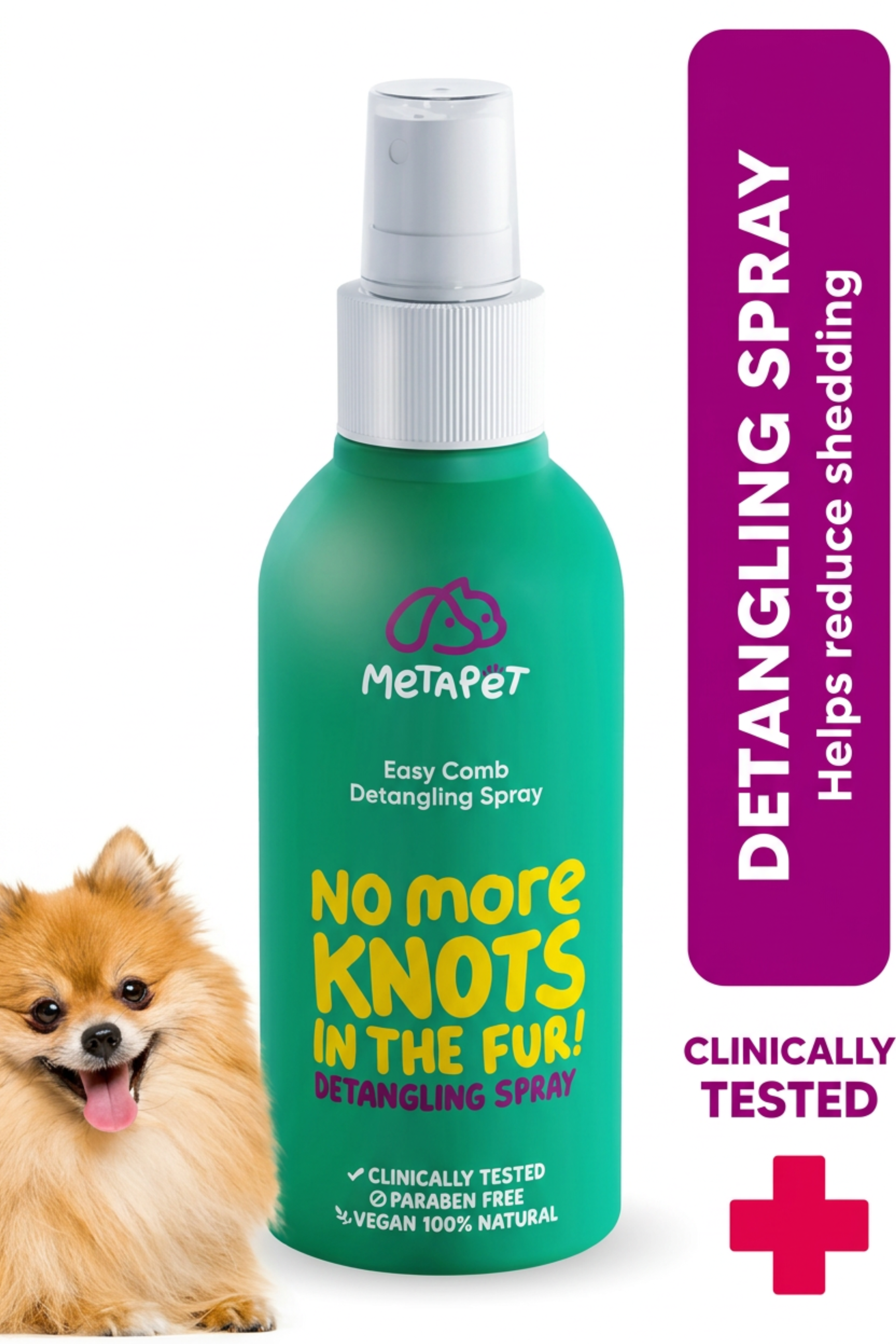
A detangling spray makes this considerably easier by reducing friction so the comb glides rather than snags. MetaPet's No More Knots in the Fur — Detangling & Easy-Combing Spray is designed to help loosen knots and make brushing easier and more comfortable, and can be a useful optional addition to a regular grooming routine. Products like this are a complement to consistent brushing and proper veterinary care, never a substitute for either.
Know where to stop. Tight mats felted against the skin, mats near the eyes or genitals, and any matting on a pet who is painful or distressed should be handled by a professional groomer or your veterinary team. Never cut a mat out with scissors: a pet's skin tents up into the base of a mat far more than owners expect, and lacerations from home mat removal are a genuinely common reason for emergency visits.
Making Grooming a Positive Experience
A pet who associates the brush with restraint and pulling will avoid it for life; one who associates it with treats and calm attention will often come running. Building that association is worth the early investment, especially with kittens and puppies.
- Introduce the tools first. Let your pet sniff and investigate the brush, rewarding calm curiosity before you ever use it.
- Start absurdly short. Two or three strokes, then a treat and freedom. Build duration over weeks, not minutes.
- Groom where they're comfortable. Many cats prefer a familiar sofa or lap over a table; use whatever spot lowers tension.
- Watch the body language. Tail flicking, ears back, tense stillness, or head turning are signals to pause and lower intensity.
- Never groom as punishment. Keep sessions entirely separate from any correction so the brush stays a neutral, pleasant object.
- Reward generously. High-value treats during and after grooming genuinely change how a pet feels about the routine.
Special Notes for Cats
Cats bring their own considerations. Their skin is thinner and more delicate than a dog's, so tool pressure should be lighter throughout. Many cats have a limited tolerance window and do far better with several very short sessions across a week than one long one — grooming the back and shoulders on Monday and the belly and hindquarters on Wednesday is a perfectly legitimate strategy.
Belly and hind-end grooming is where most cats object, yet those are exactly the areas that mat first in long-haired cats. Work up to them gradually with rewards, and never wrestle a cat into position. If your long-haired cat becomes seriously matted, or is aggressive when handled, ask your veterinarian — sometimes sedated grooming is the safest and kindest option, and a sudden change in grooming tolerance can itself be a sign of pain worth investigating.
Frequently Asked Questions
Should I bathe my long-haired pet before brushing?
No — always brush first. Water tightens existing tangles dramatically, turning a workable knot into a solid mat. Brush thoroughly, then bathe, then brush again as the coat dries.
My dog's coat mats even though I brush daily. Why?
Usually the brush is only reaching the surface. Try brushing in layers with an undercoat tool, and confirm your work with a comb — the comb never lies about what the brush missed.
Is shaving a long-haired pet a good solution?
Sometimes it is the kindest option for a severely matted pet, and it should be done by a professional. For routine care, though, shaving is not a substitute for brushing, and some double coats do not regrow normally afterward. Discuss it with your groomer and veterinarian first.
How do I know if a lump I find is a mat or something else?
Mats are made of hair and sit within the coat; skin lumps are attached to the body beneath the fur. If you find anything firm under the skin, have your veterinarian check it rather than assuming it is a tangle.
Regular, gentle brushing is one of the simplest, highest-value things you can do for a long-haired pet — for comfort, for skin health, and for the quiet bond built in ten unhurried minutes together.