Probiotics and Digestive Health in Dogs and Cats: A Guide

A healthy digestive system is one of the quiet foundations of a happy dog or cat. When digestion is comfortable and regular, pets absorb nutrients well, feel good, and have steady energy. When it is off, the signs can range from a one-off soft stool to ongoing tummy trouble that affects quality of life. Understanding how the gut works helps owners support it sensibly.
Important: This article is general educational information and is not a substitute for an in-person veterinary examination, diagnosis, or treatment. Always consult your own veterinarian about your pet, and for any medical emergency contact your veterinarian or a local emergency animal hospital right away.
This guide explains the basics of canine and feline digestion, the everyday factors that can upset it, the signs that mean it is time to call your veterinarian, and how probiotics can fit into a balanced routine as a complement to good care. Probiotics and supplements are supportive extras, never a replacement for veterinary diagnosis or treatment.
How Your Pet's Gut Works
The digestive tract is a long, coordinated system that breaks food into absorbable nutrients and moves waste along to be eliminated. Along the way, it relies on a community of beneficial microorganisms, often called the gut microbiome, that help with digestion and form part of the body's natural defenses. A balanced microbiome is a hallmark of good digestive health.
Dogs and cats have somewhat different digestive needs. Cats are obligate carnivores with a strong requirement for animal-based nutrition, while dogs are more flexible omnivores. Both, however, depend on a stable population of gut microbes, and both can experience disruption when that balance is thrown off by diet changes, stress, or illness.
Thinking of the gut as an ecosystem is a useful frame. Like any ecosystem, it does best with stability and gentle, gradual change. Sudden disruptions are exactly what tend to cause the loose stools and discomfort that owners notice.
What Can Upset Digestive Balance
Many everyday situations can temporarily unsettle a pet's digestion. Recognizing these triggers helps you respond calmly and, where possible, prevent them in the first place. Some are minor and pass quickly, while others point to something that needs veterinary attention.
- Sudden diet changes: Switching foods abruptly is a very common cause of loose stools.
- Dietary indiscretion: Eating garbage, table scraps, or something they found outdoors.
- Stress: Travel, boarding, a new home, or household changes can affect the gut.
- Parasites and illness: Intestinal parasites and various illnesses can disrupt digestion.
- Medications: Some treatments your veterinarian prescribes can temporarily affect gut balance.
When a digestive upset has an obvious, mild cause, such as a too-fast food switch, it often settles with time and gentle care. But because some causes are more serious, persistent or severe signs always warrant a veterinary call rather than guesswork at home.
Signs of a Healthy Digestive System
It helps to know what good looks like so you can spot changes early. A pet with comfortable digestion tends to show a consistent, predictable pattern day to day, which makes any deviation easier to notice.
- Formed stools: Regular, well-formed stools of a consistent appearance.
- Steady appetite: Reliable interest in food without dramatic swings.
- Comfortable belly: No frequent gurgling, straining, or signs of discomfort.
- Good energy: Steady energy and a healthy, maintained weight.
- Regular routine: Predictable bathroom habits and timing.
Keeping a casual mental note of your pet's normal pattern is one of the simplest and most valuable habits an owner can build. It turns you into the early-warning system that helps your veterinarian the most.
When Digestive Upset Needs the Vet
Occasional, mild digestive hiccups are common, but certain signs mean it is time to involve your veterinarian rather than waiting. Trust your judgment, and err on the side of calling if you are unsure, especially with very young, very old, or already-unwell pets.
- Persistence: Vomiting or diarrhea that lasts more than a day or keeps recurring.
- Severity: Repeated vomiting, large-volume or watery diarrhea, or signs of dehydration.
- Blood: Any blood in vomit or stool.
- Other signs: Lethargy, loss of appetite, painful abdomen, or fever.
- Vulnerable pets: Lower threshold to call for puppies, kittens, seniors, and pets with existing conditions.
When in doubt, call. Digestive signs can sometimes reflect a more serious problem. Your veterinarian can advise whether home care is appropriate or an exam is needed, and that conversation is always worth the call.
The Role of Diet
Diet is the single biggest day-to-day influence on digestive health. A complete, balanced food appropriate to your pet's species and life stage gives the gut what it needs to function well. When you do change foods, doing so gradually over a week or so, mixing increasing amounts of the new food with the old, helps the microbiome adjust without a jolt.
Resist the urge to share rich table foods, which are a frequent cause of upset stomachs, and be mindful of treats, which should stay a small fraction of daily calories. If your pet has recurring digestive issues, your veterinarian may recommend a specific diet, and that professional guidance should always take priority over general advice.
What Probiotics Are
Probiotics are beneficial microorganisms that, when given appropriately, are intended to support a balanced gut environment. Prebiotics, a related term, are food sources that help beneficial microbes flourish. Many owners use probiotic supplements as part of a routine to help support digestive comfort, particularly around predictable disruptions such as travel or a diet transition.
It is important to set expectations correctly: probiotics are supportive supplements, not medicine. They are designed to complement good care, not to diagnose, treat, cure, or prevent any disease. If your pet is unwell, a probiotic is not a substitute for a veterinary examination, and you should speak with your veterinarian about whether and how a supplement fits your pet's situation.
Using Probiotics Sensibly
If you and your veterinarian decide a probiotic is a reasonable addition to your pet's routine, a few practical principles help you use it well. As with any new addition, introduce it thoughtfully and watch how your individual pet responds.
- Choose species-appropriate options: Use products formulated for dogs or for cats specifically.
- Introduce gradually: Add new supplements slowly so you can observe your pet's response.
- Be consistent: Supportive routines tend to work best when given regularly as directed.
- Pair with good diet: A probiotic supports, but never replaces, a balanced complete diet.
- Loop in your vet: Mention any supplement to your veterinarian, especially for pets with health conditions.
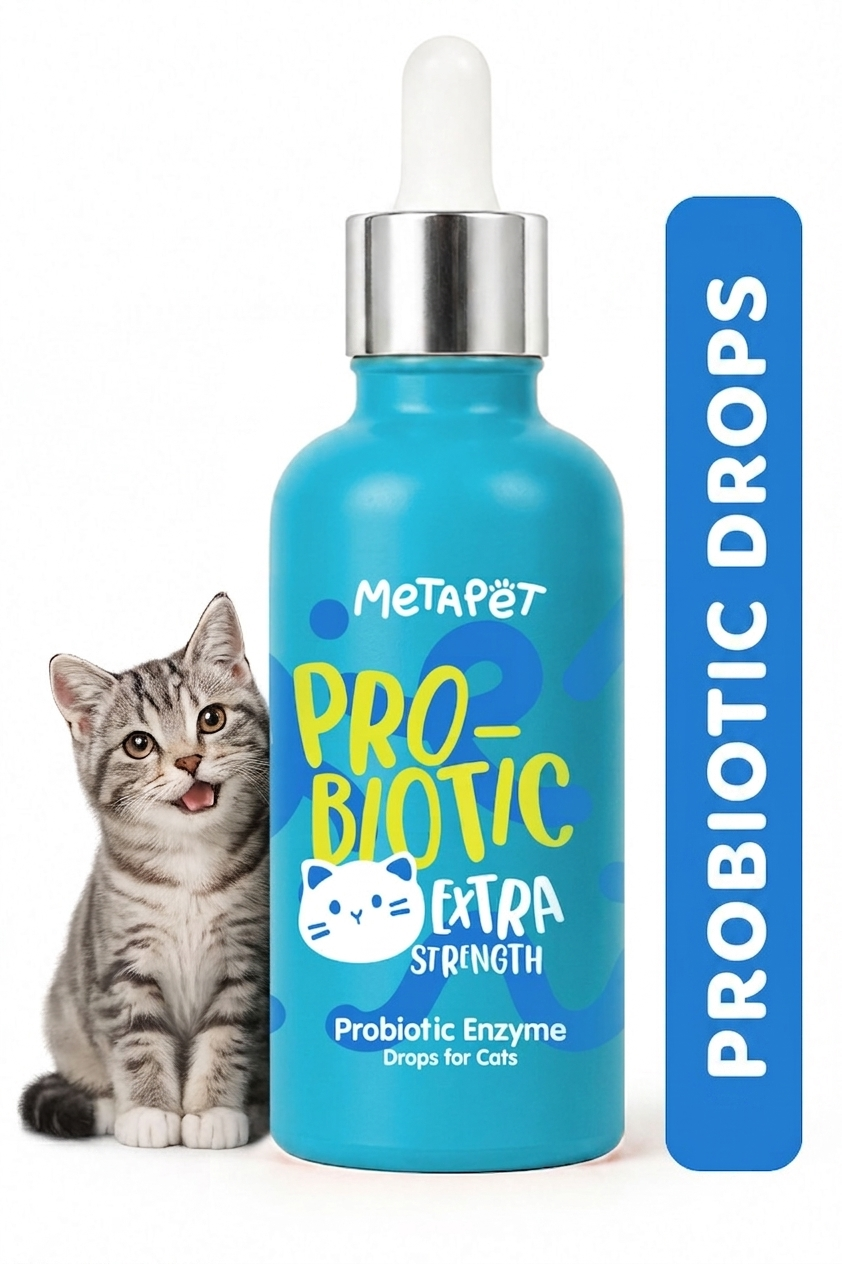
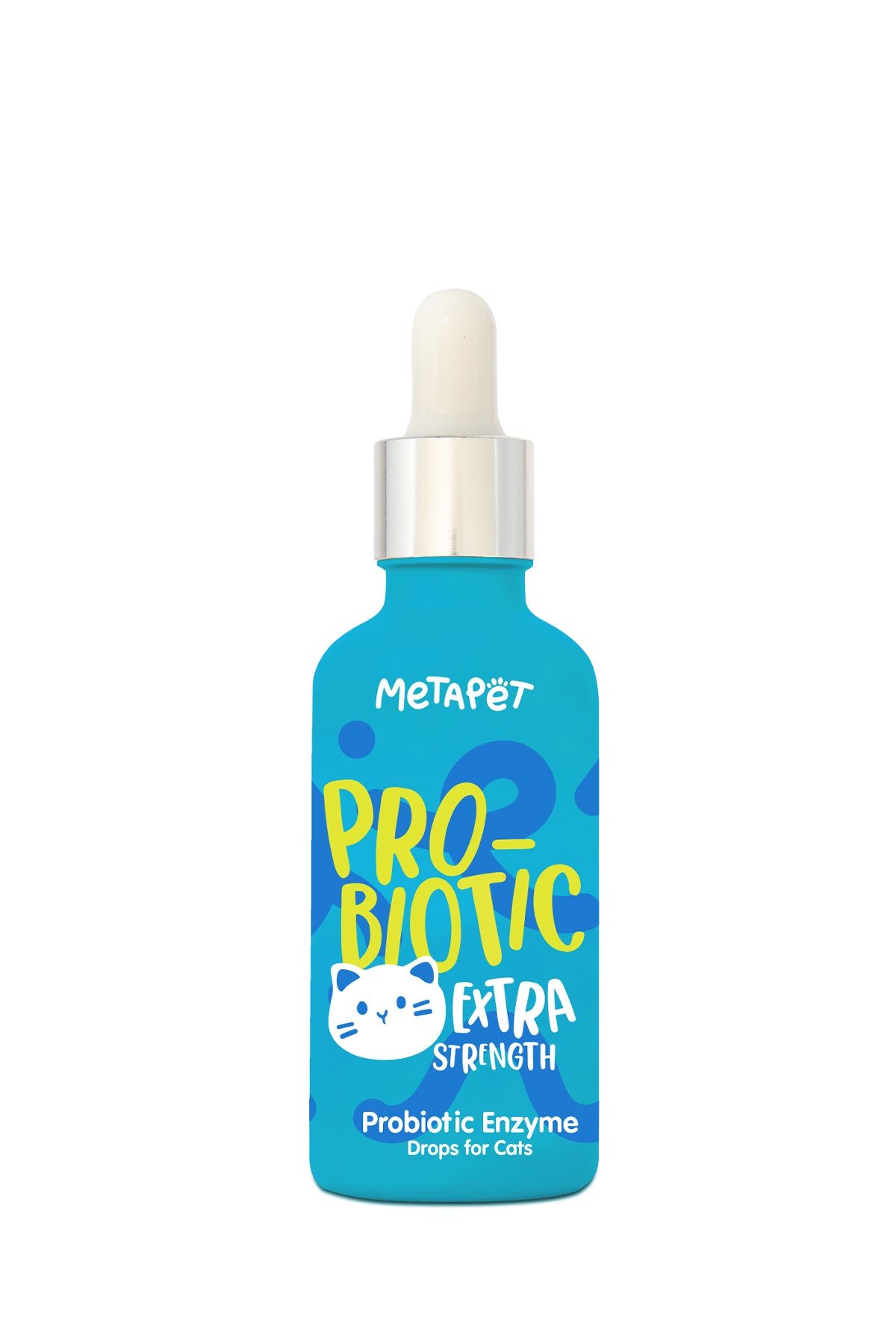
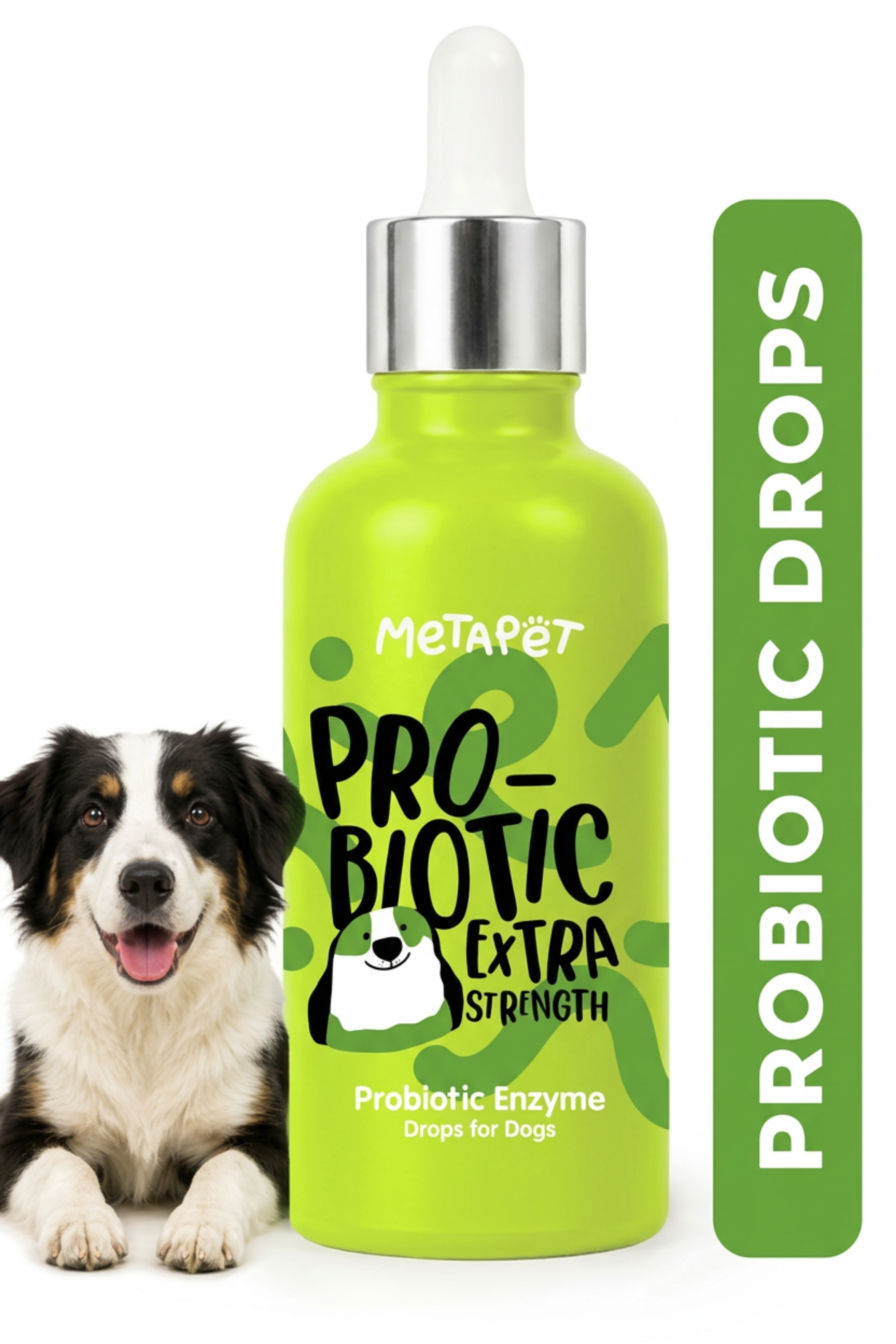
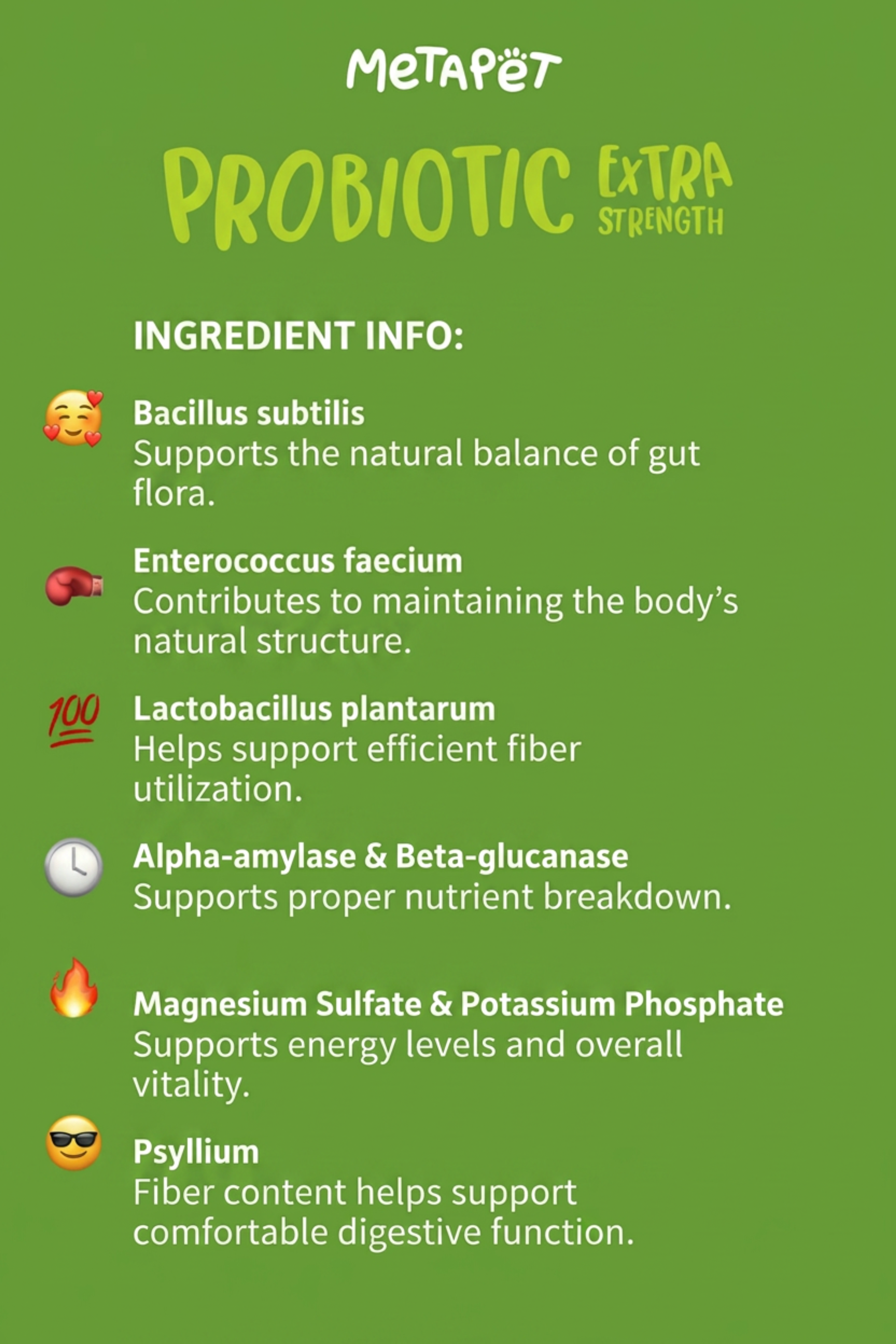
For owners looking for a convenient option, MetaPet offers easy-to-use daily drops formulated specifically for each species: Probiotic Drops for Dogs and Probiotic Drops for Cats. As the product information describes, they are made with carefully selected probiotics and natural enzymes designed to support gut health and comfortable digestion. They are intended as a complement to a balanced diet and proper veterinary care, not as a substitute for either.
Other Everyday Support
Digestive wellbeing does not happen in isolation; it is part of a pet's overall lifestyle. Steady routines, fresh water, appropriate exercise, parasite prevention guided by your veterinarian, and a calm home environment all support a comfortable gut alongside good nutrition.
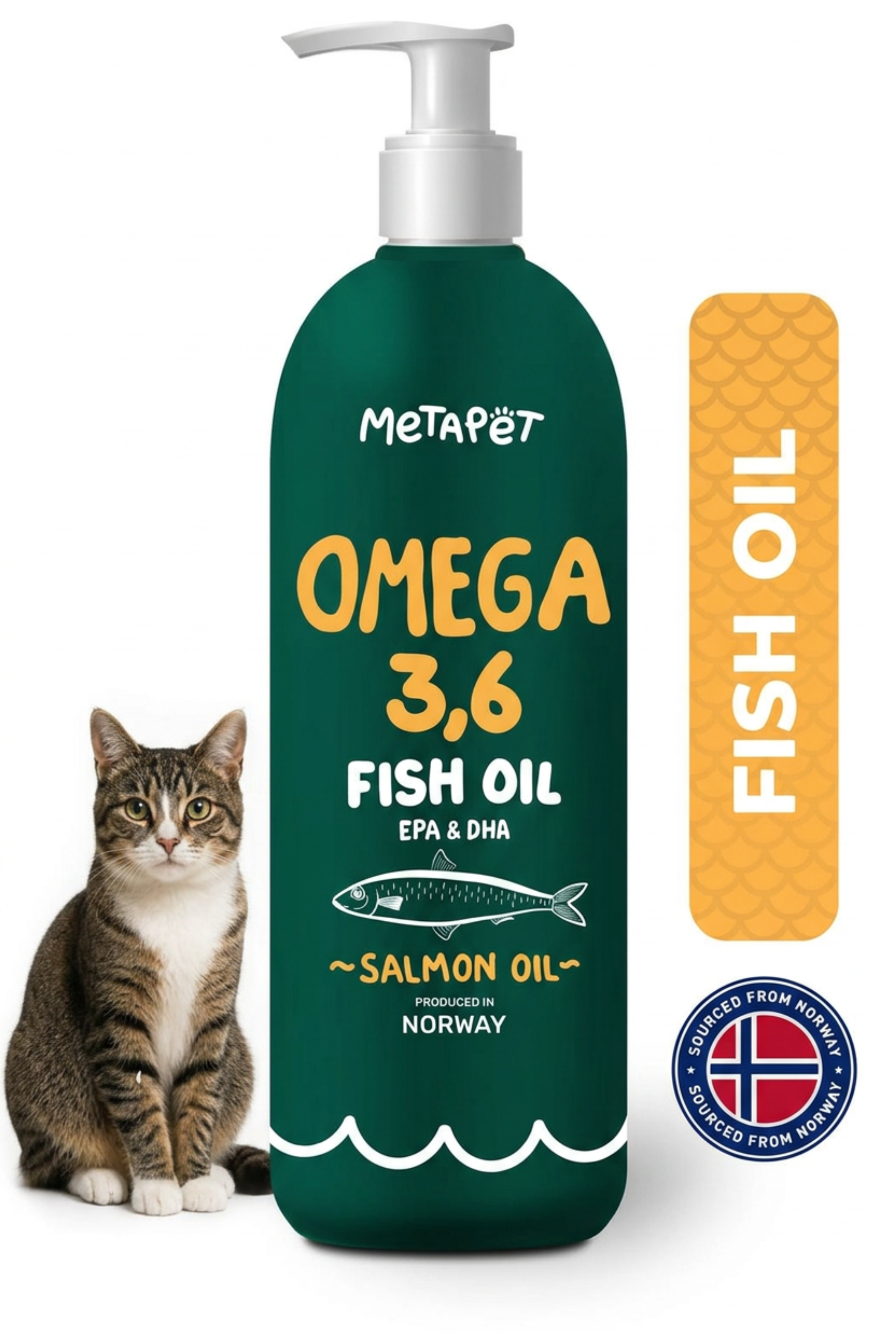
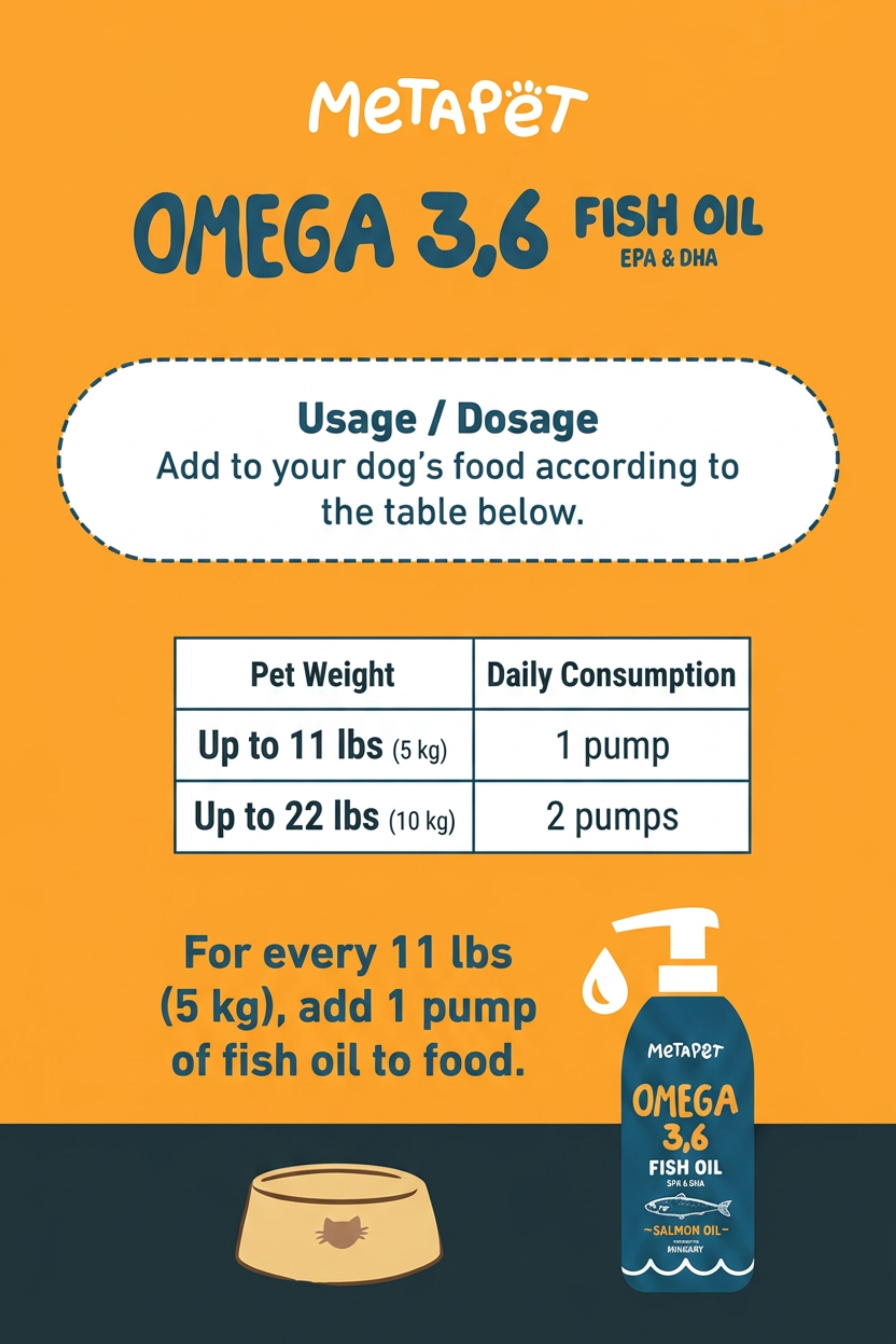
Some owners also include broader daily-wellness products as part of their routine, such as a balanced Omega Salmon Oil for Dogs or the matching Omega Salmon Oil for Cats, which the product information describes as supporting skin and coat condition. Like probiotics, these are optional complements to good care; they do not treat or prevent any condition, and they never replace your veterinarian's guidance.
Building a Gut-Friendly Routine
Small, consistent habits do more for digestive health than any single product. Because the gut thrives on stability, the most helpful thing an owner can do is keep the day-to-day rhythm predictable and make changes slowly when they are needed.
- Feed on a schedule: Regular meal times help the digestive system settle into a reliable pattern.
- Measure portions: Consistent, measured meals prevent the swings that overfeeding can cause.
- Transition foods slowly: Blend old and new food over a week or more when switching diets.
- Keep water fresh: Easy access to clean water supports healthy digestion and hydration.
- Limit surprises: Keep table scraps, garbage, and rich treats out of reach to avoid upsets.
None of these steps is complicated, and together they create the calm, stable environment in which a healthy gut does its best work. Layer a sensible supplement on top only if it genuinely adds value for your individual pet, and always with your veterinarian in the loop.
Myths and Facts
"A probiotic will fix any tummy trouble"
Fact: probiotics are supportive supplements, not a remedy for illness. Persistent or severe signs need a veterinarian, not a supplement.
"Human probiotics are fine for pets"
Fact: dogs and cats do best with products formulated for their species. Ask your veterinarian before sharing human products.
"If a little helps, more is better"
Fact: more is not better with supplements. Follow the product directions and your veterinarian's advice rather than overdoing it.
When to Contact Your Veterinarian
Contact your veterinarian if your pet has vomiting or diarrhea that persists beyond a day, recurs frequently, or is accompanied by lethargy, appetite loss, blood, or signs of dehydration. Puppies, kittens, and senior pets warrant an earlier call because they can decline more quickly.
Your veterinarian is also the right person to ask before starting any supplement, particularly if your pet has an existing condition or takes medication. A quick conversation ensures that anything you add genuinely complements, rather than complicates, your pet's care.
The Bottom Line
Good digestive health rests on simple, consistent foundations: a balanced species-appropriate diet, gradual food changes, a calm routine, and prompt veterinary attention when something seems off. Within that framework, probiotics can be a convenient, supportive addition for many pets when used sensibly and with veterinary input.
Keep your expectations realistic, treat supplements as complements rather than cures, and lean on your veterinarian for anything beyond a brief, mild upset. That balanced approach gives your dog or cat the best chance at the comfortable, steady digestion that underpins everyday wellbeing.