Syringomyelia in Dogs: Chiari-Like Malformation Explained
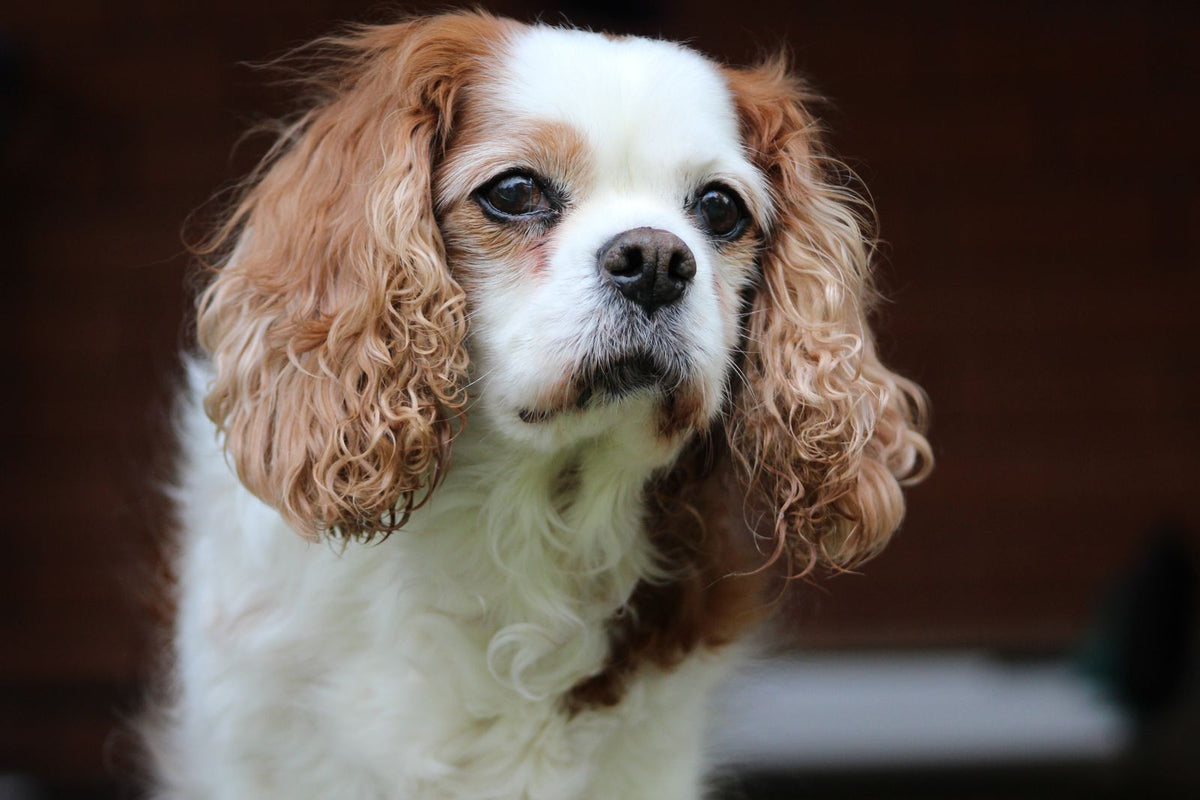
An owner describes something that sounds impossible. Their dog lifts a hind leg toward the neck or shoulder and scratches — except the paw never makes contact. It scratches the air, often while walking, often on one side, sometimes repeatedly. Some dogs also yelp suddenly for no visible reason, or become reluctant to be touched around the head and neck.
This pattern, often called phantom scratching or air scratching, is one of the more recognisable signs of syringomyelia: the development of fluid-filled cavities within the spinal cord. In dogs it is most often associated with Chiari-like malformation, a structural mismatch in which the back of the skull is too small for the brain tissue it contains, disturbing the normal flow of cerebrospinal fluid.
The condition is most famously associated with the Cavalier King Charles Spaniel, but it is recognised in a range of small and toy breeds. It is also widely misread at home as fleas, allergies, ear trouble or simple fussiness — which delays diagnosis in a condition where pain is often the central problem. This guide explains what is happening, what to look for, and what care generally involves.
Important: This article shares general educational information for pet owners and is not a substitute for an in-person veterinary examination, diagnosis, or treatment. For any medical concern or emergency, contact your veterinarian promptly.
What Chiari-Like Malformation Is
At the base of the skull sits a compartment containing the cerebellum and brainstem. In Chiari-like malformation, that compartment is proportionally too small for its contents. The result is crowding at the junction between skull and spine, with brain tissue pressed against and sometimes partially through the opening where the spinal cord exits.
Cerebrospinal fluid normally circulates freely through this region, cushioning the brain and spinal cord. Crowding obstructs that flow and alters the pressure dynamics. Over time, the abnormal fluid movement can force fluid into the substance of the spinal cord itself.
The malformation is common in some breeds — considerably more common than the clinical disease that can follow it. Many dogs have the anatomical feature and never develop significant problems, which is an important point for owners who have seen it mentioned in breed discussions and become alarmed.
What Syringomyelia Is
Syringomyelia is the formation of fluid-filled cavities, called syrinxes, within the spinal cord. As they enlarge, they disrupt the nerve pathways running through the cord, and the pathways carrying pain and sensory information appear to be particularly affected.
This produces neuropathic pain — pain arising from damage to the nervous system itself rather than from injury to tissue. Neuropathic pain behaves differently from ordinary pain. It can be triggered by things that would not normally hurt, may be felt in areas away from the actual damage, and often responds poorly to standard painkillers.
That explains the odd, specific behaviours owners describe. The scratching is not an attempt to relieve an itch in the skin; it appears to be a response to abnormal sensation generated within the nervous system. Understanding this reframes the whole condition: it is fundamentally a pain problem rather than a skin problem.
Which Dogs Are Affected
The Cavalier King Charles Spaniel is the breed most strongly associated with Chiari-like malformation and syringomyelia, and the association is well documented in the veterinary literature. Responsible breeders in many countries participate in screening schemes precisely because of this.
It is far from exclusive to that breed, however. It is recognised in other small and toy breeds including Griffon Bruxellois, Chihuahuas, Pomeranians, Yorkshire Terriers, Maltese, Papillons, Affenpinschers and Pugs, among others. Signs most often appear in young adult dogs, though onset can occur at any age.
If you own one of these breeds, this is worth knowing about — not as a cause for anxiety, but so that if the specific signs appear you recognise them rather than spending months treating an imagined skin problem.
Signs Owners Should Recognise
The presentation varies considerably between individuals, and mildly affected dogs may show very little. The following are the signs most consistently reported.
Characteristic signs
- Phantom scratching — a hind leg scratching motion toward the neck or shoulder without the paw making contact, often one-sided and often while the dog is walking or excited.
- Neck and head sensitivity — flinching, pulling away or objecting when touched around the head, ears or neck.
- Sudden vocalisation — yelping or crying out with no apparent trigger, sometimes on rising, jumping or being picked up.
- Abnormal posture — holding the head low, tilted or in an unusual position.
- Reaction to collars — distress or resistance when a collar is put on or pressure is applied to the neck.
- Weather or excitement sensitivity — owners commonly report that signs worsen at particular times of day, on waking, or in certain weather.
- Reluctance to jump or use stairs — a general reduction in activity that is easy to attribute to age.
In more advanced cases, additional neurological signs may appear, including weakness or incoordination in the limbs, muscle wastage, curvature of the spine, or facial changes. Any of these warrant prompt veterinary assessment.
Why It Gets Mistaken for Something Else
Scratching is such a familiar sign of fleas, allergies and ear problems that it is a reasonable first assumption, and many affected dogs are treated for those conditions before anyone considers a neurological cause. This is not a criticism of that approach — those causes are far more common overall.
The clue is the detail. In this condition the paw typically does not reach the skin, the scratching is frequently confined to one side, it often happens during walking or activity rather than at rest, and there is usually no skin abnormality to find. Flea treatment and skin medication do not change it.
Describe exactly what you see, rather than summarising it as 'scratching'. Better still, film it. A short phone video of the behaviour is one of the most useful things you can bring to an appointment, because the behaviour is distinctive and often does not occur in the consulting room.
How Veterinarians Reach a Diagnosis
Your veterinarian will start by excluding the common causes, which is appropriate and necessary. That usually means a thorough skin and ear examination, checking parasite prevention, and assessing for pain elsewhere in the spine or joints. A neurological examination assesses reflexes, posture, gait and sensation.
Definitive diagnosis requires MRI, which shows the structure at the back of the skull and reveals any fluid cavities within the spinal cord. MRI requires general anaesthesia and is usually performed at a referral centre, most often by or in conjunction with a veterinary neurologist.
One point often surprises owners: imaging and clinical signs do not always match neatly. Larger syrinxes are generally associated with more pain and scratching, but some dogs with marked changes are comfortable, and a dog can be painful from the malformation itself with little or no syrinx present. Treatment decisions are therefore based on the dog's clinical signs and quality of life alongside the imaging, not on the scan alone.
How It Is Managed
For most affected dogs, management is medical and long term, aimed at controlling pain and maintaining quality of life rather than curing the underlying anatomy. This is a condition managed over years, and expectations should be set accordingly from the outset.
Medication is selected and adjusted by your veterinarian or a veterinary neurologist. Because the pain is neuropathic, drugs used for ordinary inflammatory pain are often insufficient on their own, and combinations are common. Other medications may be used to influence cerebrospinal fluid production. Finding an effective regime frequently takes time and several adjustments, which is normal rather than a sign that something is going wrong.
Surgery to decompress the crowded area at the back of the skull is available for selected cases, usually those with severe signs that are not adequately controlled medically. It is a specialist procedure with real risks, and signs can return over time in some dogs. Your neurologist will discuss whether it is a realistic option for your dog specifically. No medication or dose is suggested here deliberately — this condition requires individual specialist prescribing.
Practical Changes That Help at Home
Alongside prescribed treatment, several everyday adjustments reduce discomfort and are entirely within an owner's control.
- Use a harness, not a collar — pressure on the neck is a common trigger, and a well-fitted harness avoids it entirely.
- Raise food and water bowls — reducing the need to lower the head can make eating more comfortable.
- Provide supportive bedding — a well-cushioned bed with room to choose a comfortable head position, in a warm, draught-free spot.
- Reduce jumping — ramps or steps to furniture and the car avoid repeated impact through the neck and spine.
- Keep excitement manageable — many owners notice signs are worse during high arousal, so calmer routines can help.
- Handle the head and neck gently — and tell groomers, sitters and visitors about the sensitivity.
- Maintain a lean body condition — reducing load on the spine is beneficial in almost every musculoskeletal and neurological condition.
Keeping a simple diary is particularly valuable here. Note how often the scratching occurs, any vocalisation, activity levels and sleep quality. Because changes are gradual, a written record is far more reliable than memory when assessing whether a medication adjustment has helped, and your veterinarian will find it genuinely useful.
Quality of Life and Long-Term Outlook
The outlook varies widely. Many dogs are managed successfully for years with medication and sensible adjustments, living full and comfortable lives. Others have signs that progress and become harder to control, and in a proportion of dogs the condition remains stable for long periods without worsening.
Quality of life assessment should be an ongoing, structured conversation with your veterinary team rather than a single decision. Useful markers include whether your dog is sleeping well, eating with enthusiasm, engaging with the household, moving willingly, and having more good days than difficult ones. Pain that is not controlled despite appropriate treatment is a serious welfare matter and should always be raised.
Any supplement or over-the-counter product should be discussed with your veterinarian before use in a dog on neurological medication, since interactions are a genuine concern. General wellness products may support overall wellbeing as part of a daily routine, but they are a complement to veterinary care and are not treatments for this condition.
Breeding, Screening and Buying a Puppy
Because there is a recognised hereditary component, screening schemes exist in several countries in which breeding dogs of affected breeds are assessed by MRI and graded for both the malformation and the presence of syrinxes. Breeding recommendations are then based on those grades alongside the dog's age.
If you are buying a puppy of an affected breed, ask the breeder directly about screening results for both parents, and ask to see documentation rather than accepting verbal reassurance. A breeder engaged with the issue will expect the question and answer it readily.
No screening programme eliminates risk entirely, and a screened litter is not a guarantee. It does, however, meaningfully shift the odds, and supporting breeders who screen is how the prevalence of the condition is reduced over generations.
When to Contact Your Veterinarian
This condition is managed rather than cured, so regular contact with your veterinary team is part of normal care. Certain developments should prompt an earlier call.
- Phantom scratching or unexplained yelping — book an appointment and bring a video; do not simply treat for fleas indefinitely.
- Any weakness, wobbliness or dragging of a limb — needs prompt neurological assessment.
- Pain that is no longer controlled — a change in medication response should be reported rather than tolerated.
- A sudden worsening of signs — warrants urgent review.
- Reluctance to eat or drink — may reflect pain on lowering the head and needs addressing.
- Changes in behaviour or interaction — withdrawal, irritability or hiding can indicate increasing discomfort.
- Any new neurological sign — facial changes, head tilt, seizures or altered consciousness require immediate attention.
If your dog appears to be in severe pain or shows sudden neurological deterioration, contact your veterinary practice or an emergency clinic immediately. For ongoing management questions, a planned appointment with your veterinarian or neurologist — ideally with your diary to hand — is the most productive route.