Caring for Orphaned Newborn Puppies and Kittens

Finding yourself responsible for newborn puppies or kittens without a mother is stressful, and it usually happens without warning — a litter discovered outdoors, a mother who cannot or will not nurse, or a rescue that arrives with days-old babies. Neonates are entirely dependent, and small mistakes matter more at this age than at any other stage of life.
The good news is that the essentials are few and learnable: keep them warm before anything else, feed the right formula in the right way, help them toilet, keep everything clean, and weigh them daily. The equally important message is that hand-rearing is genuinely demanding around the clock, and that veterinary involvement early — not only when something goes wrong — makes a real difference to outcomes.
Important: This article shares general educational information for pet owners and is not a substitute for an in-person veterinary examination, diagnosis, or treatment. For any medical concern or emergency, contact your veterinarian promptly.
First Question: Are They Really Orphaned?
Before you take a litter home, pause. Outdoor kittens in particular are often found while the mother is away hunting or moving her litter one at a time. A mother cat may be gone for an hour or more, and removing the litter deprives them of the single best carer available.
If the babies are clean, plump, quiet, and in a sheltered spot, the mother is probably nearby. Watch discreetly from a distance for a few hours if the weather is safe. If they are cold, thin, dirty, crying continuously, or in immediate danger from traffic, weather, or dogs, intervene.
Once you do take responsibility, contact a veterinary clinic or an experienced rescue organisation quickly. Many areas have foster networks with nursing queens or bitches who may accept extra babies, which is far better than hand-rearing. Even where that is not possible, an early veterinary check establishes a baseline and gives you species- and age-appropriate instructions.
Warmth Comes Before Food — Always
This is the rule that saves the most lives and the one most often broken. Newborns cannot regulate their own body temperature for the first weeks of life. They rely on the mother, littermates, and the nest. A chilled neonate cannot digest properly, and feeding a cold baby can cause serious problems.
If a newborn feels cool to the touch, warm it gradually before offering any milk. Gentle, gradual rewarming over a period — using a covered heat source, a warm towel, or body heat under your clothing — is safer than rapid heating. Never apply a hot item directly to bare skin, and never use a microwave-heated object without a thick cover.
Setting up the nest box
- Use a sided box or carrier. High enough that babies cannot crawl out, with soft, clean bedding.
- Provide a heat gradient, not uniform heat. Warm one end only, so babies can crawl away if they get too hot.
- Always place a barrier between the heat source and the babies. Several layers of towel, never direct contact.
- Keep the area draught-free and quiet. Away from air conditioning, open windows, and household traffic.
- Check on them frequently. A neonate that has crawled off the warm area can chill surprisingly fast.
Ask your veterinarian for the specific temperature range appropriate to the age of your litter, and how it should be reduced week by week as the babies develop. These ranges change quickly in the first month and are worth getting right rather than guessing.
Choosing the Right Milk Replacer
Puppies and kittens need a species-appropriate commercial milk replacer. Puppy formula and kitten formula are not interchangeable, because the milk of the two species differs in composition.
Cow's milk from the fridge is not a substitute and commonly causes digestive upset. Homemade recipes circulating online are similarly risky: even when the ingredients sound reasonable, the balance of protein, fat, calcium and other nutrients is very difficult to get right, and neonates have almost no reserve to cope with errors. If you are waiting to buy proper formula, ask your veterinarian what to do in the interim rather than improvising.
- Follow the mixing instructions exactly. Over-concentrated formula causes digestive problems; over-diluted formula underfeeds.
- Mix fresh and use promptly. Discard leftovers rather than saving a bottle for later.
- Warm to roughly body temperature. Test on the inside of your wrist; it should feel neutral, not hot.
- Store powder sealed and dry. And check the expiry date before starting a new tin.
Feeding Technique: Slow and Safe
How you feed matters as much as what you feed. The single greatest danger is aspiration — milk entering the airway — which can be immediately serious.
- Position the baby on its stomach, flat, with the head level. Never feed a puppy or kitten on its back like a human infant.
- Support the head gently and let the baby take the teat rather than squeezing milk into the mouth.
- Let the neonate set the pace; you should see rhythmic swallowing rather than milk running out of the nose or mouth.
- Stop immediately if milk appears at the nostrils, if there is coughing or spluttering, or if the baby goes limp.
- Feed until the baby stops nursing and settles, rather than aiming for a fixed volume it must finish.
- Afterwards, hold the baby upright against your shoulder briefly and pat very gently to release swallowed air.
Feeding frequency and volume depend on species, age, and body weight, and change quickly over the first weeks. Ask your veterinarian for a written schedule for your specific litter rather than relying on a generic figure. Newborns generally need feeds around the clock, including overnight, which is the part of hand-rearing that people most underestimate.
Bottle or syringe?
Purpose-made nursing bottles with correctly sized teats are usually preferable because they allow the baby to suckle and control flow. Syringe feeding is sometimes used for very small or weak neonates, but it increases aspiration risk and should ideally be demonstrated by a veterinary professional before you attempt it. Tube feeding is a veterinary technique and should not be attempted without proper training.
Helping Newborns Toilet
Very young puppies and kittens cannot urinate or defecate without stimulation. In a normal litter, the mother licks the genital and anal area to trigger this. When you are hand-rearing, that job becomes yours, and skipping it causes real problems.
After each feed, use a soft, warm, slightly damp cotton pad or cloth and stroke the area gently until the baby passes urine and, usually less often, faeces. Be gentle and brief — the skin is delicate and can become sore with vigorous rubbing. Dry the area afterwards.
Keep track of what you see. Urine should be pale, not dark or strongly scented. Stool should be formed and consistent. Diarrhoea, blood, straining, or a baby that has not urinated at expected intervals are all reasons to contact your veterinarian rather than waiting.
Babies typically begin toileting independently as they approach weaning age, at which point a shallow litter tray with a suitable non-clumping substrate can be introduced for kittens, and a designated toileting area for puppies.
Weighing: Your Most Useful Daily Number
A cheap digital kitchen scale is one of the most valuable tools in neonatal care. Weigh every baby at the same time each day, before a feed, and write the numbers down. Individual identification matters too — a dot of non-toxic marker on a paw or different coloured collars help you tell similar-looking babies apart.
Healthy neonates gain weight steadily, day after day. The pattern is what matters: a baby that is static for a day, or that loses weight, is telling you something before it looks obviously unwell. That early warning is precisely why daily weighing is recommended by every experienced carer.
- Steady daily gain. Reassuring; continue as you are.
- No gain for a day. Watch closely, check feeding technique and warmth, and consider calling the clinic.
- Any weight loss, or two static days. Contact your veterinarian promptly.
- Weight loss plus weakness or a cool body. Treat as urgent.
Hygiene and Preventing Cross-Infection
Neonates have very limited immune defence, and hygiene failures are a common cause of preventable illness in hand-reared litters.
- Wash hands thoroughly before and after handling each baby. Especially if you are also caring for other animals.
- Clean and sterilise bottles and teats between every feed. Follow the manufacturer's instructions.
- Change bedding frequently. Damp or soiled bedding chills babies and encourages infection.
- Keep the litter separate from other pets. Particularly from unvaccinated animals or animals with any signs of illness.
- Handle sick babies last. And use separate equipment where possible.
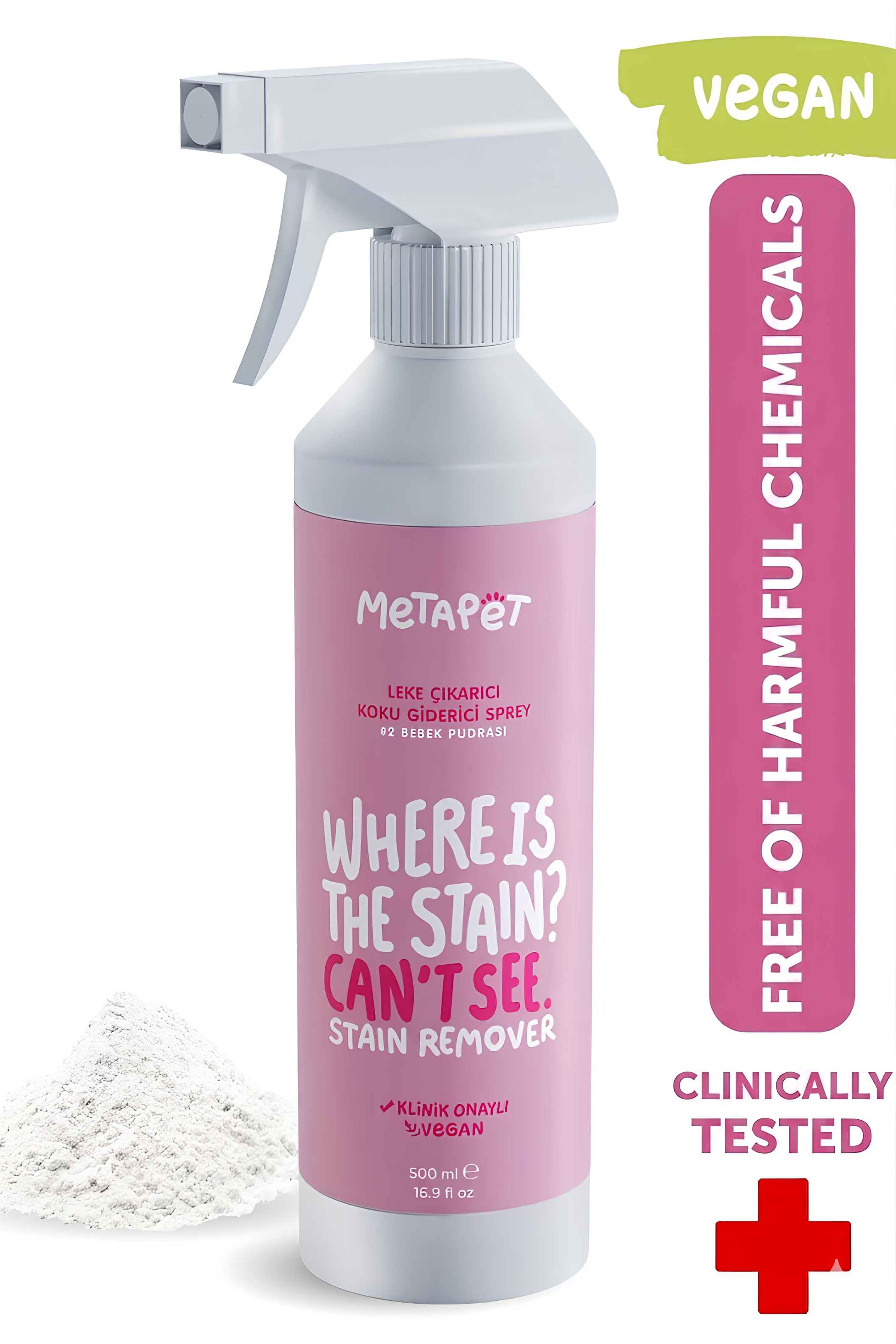
Household cleaning products should be used on surfaces and equipment only, away from the babies, with treated areas fully dry before the litter returns. A general-purpose surface product such as MetaPet Where Is The Stain I Can't See? Pet Stain Remover & Deodorizer Spray is intended for washable household surfaces such as floors and fabrics, not for use on animals; keep pets away during use and let treated areas dry. It is a cleaning product, not a medicine, and plays no part in the medical care of a neonatal litter.
Warning Signs That Need a Veterinarian
Neonates deteriorate quickly, and the window for successful intervention is short. Err strongly on the side of calling early.
- A cold, limp, or unresponsive baby. Begin gentle warming and contact a veterinarian immediately.
- Continuous crying or, conversely, unusual silence and stillness. Both can indicate a problem.
- Refusing to suckle, or a weak, ineffective suck. This is an urgent sign in a newborn.
- Diarrhoea, blood in stool, or repeated vomiting. Dehydration develops rapidly at this age.
- Milk coming from the nose during or after feeding. Stop feeding and seek advice; aspiration is serious.
- Laboured breathing, gasping, or blue-tinged gums. A true emergency.
- A distended, hard, or painful abdomen. Report the same day.
- Any baby that stops gaining weight. The earliest and most useful warning you will get.
If several babies in a litter fade in succession, tell your veterinarian — patterns across a litter carry information that a single case does not.
Moving Towards Weaning
Weaning is a gradual transition rather than a single event, and it typically begins several weeks into life once eyes are open, teeth are appearing, and babies are moving around confidently. Your veterinarian will advise on timing for your specific litter.
The usual approach is to start offering a thin gruel of species-appropriate growth food mixed with milk replacer in a shallow dish, alongside continued bottle feeds. Over a period of weeks the mixture is thickened and bottle feeds are reduced. Expect mess: early attempts involve walking through the food as much as eating it.
- Use a food formulated for growth. Puppy or kitten diets, not adult maintenance food.
- Reduce bottle feeds gradually. Rather than stopping abruptly.
- Provide fresh water in a shallow, tip-resistant dish. Once babies are eating solids.
- Continue daily weighing through the transition. Weaning is a common point for weight gain to stall.
- Keep feeding areas clean. Uneaten wet food should not be left out.
Discuss the deworming and vaccination plan with your veterinarian well before weaning is complete, along with socialisation — hand-reared babies miss some of the natural learning that littermates and a mother provide, and deliberate, gentle exposure to normal household life matters for their behavioural development.
Frequently Asked Questions
How often do newborns need feeding?
Very frequently, including through the night, with intervals lengthening as they grow. Exact frequency depends on species, age and weight — get a schedule from your veterinarian rather than a general figure from the internet.
Can I use cow's milk in an emergency?
It is not a suitable substitute and commonly causes digestive upset. Call a veterinary clinic for advice on what to do while you obtain proper species-specific milk replacer.
How do I know if a baby is dehydrated?
Reduced urine output, dry-feeling gums, and lethargy are concerning. Assessing hydration accurately in a neonate is difficult, so treat suspected dehydration as a reason to see a veterinarian rather than something to manage at home.
Do hand-reared pets have behaviour problems later?
They can miss important early learning, particularly bite inhibition and social signalling normally learned from a mother and littermates. Raising them alongside other suitable animals where possible, and deliberate, positive socialisation, helps considerably.
When should the first veterinary visit happen?
As soon as practical after the litter comes into your care, not weeks later. An early examination establishes baseline health, weight, and an age estimate, and gives you a tailored plan.
The Bottom Line
Hand-rearing orphaned puppies and kittens is rewarding, but it is real work: round-the-clock feeds, careful warmth management, meticulous hygiene, and daily record-keeping. Committing to it with your eyes open, and with veterinary support arranged from the start, gives the litter its best chance.
Remember the priorities in order: warmth first, then correct species-specific formula fed slowly and in the right position, then toileting help, then cleanliness, then daily weights. Almost every avoidable problem in neonatal care traces back to one of those five.
Above all, do not wait to ask for help. Neonates give very little warning before they become critically unwell, and an early phone call to your veterinary practice is always the right decision.