Paw Licking in Dogs and Cats: Causes and Care at Home

The soft, rhythmic sound of a dog licking a paw at midnight is one of the most familiar complaints in veterinary practice. Occasional paw grooming is completely normal — cats in particular use their paws as washcloths, and dogs tidy up after muddy walks. But persistent, focused licking, especially licking that leaves fur stained, skin red, or your pet unable to settle, is a symptom rather than a quirk.
Paw licking is the pet equivalent of scratching an itch you cannot reach. Something is causing discomfort, and the tongue is the only tool available. The cause might be a single grass seed lodged between two toes, an allergy affecting the whole body, painful joints, a secondary skin infection, or occasionally anxiety — and the licking itself often makes matters worse by keeping the skin damp and irritated.
This guide covers the main causes in dogs and cats, how to examine paws safely at home, the daily hygiene habits that genuinely help, and the point at which paw licking stops being a home-care matter and becomes a veterinary one.
Important: This article shares general educational information for pet owners and is not a substitute for an in-person veterinary examination, diagnosis, or treatment. For any medical concern or emergency, contact your veterinarian promptly.
Normal Grooming vs. Problem Licking
Distinguishing ordinary grooming from problem licking is mostly about persistence, focus, and consequences. A cat washing her front paws after a meal, or a dog licking mud off after a walk and then settling down, is behaving normally. The behavior is brief, it ends, and the paws look fine afterward.
Problem licking is repetitive and hard to interrupt. It often concentrates on one paw or one specific spot, continues for long stretches, resumes as soon as you distract your pet, and disturbs sleep — yours and theirs. The physical evidence follows: rust-coloured staining on white fur (from compounds in saliva), damp or matted fur between the toes, redness, swelling, thickened skin, and sometimes a distinctive musty smell that suggests secondary infection.
Allergies: The Most Common Culprit in Dogs
In dogs, environmental allergy — atopic dermatitis — is the leading cause of chronic paw licking. Dogs absorb allergens such as pollens, grasses, dust mites, and molds through the skin, and the paws, being in constant contact with the ground, take a heavy load. The classic picture is a dog licking all four paws, often with itchy ears, belly, armpits, and face as well, and frequently with a seasonal pattern.
Food allergy is less common but produces a similar picture, usually without seasonality and often alongside digestive signs. Contact irritation from lawn treatments, ice-melt salts, cleaning products, and pool chemicals can cause paw-focused irritation without whole-body itch.
Allergy is not something to self-diagnose or self-treat. Antihistamines that are safe and effective for people are frequently neither in pets, and dosing guesses can be dangerous. Your veterinarian has a genuine toolkit for allergic itch and can also identify the secondary infections that so often ride along with it — which brings us to the next point.
Secondary Infections: The Cycle That Keeps Going
The space between a pet's toes is warm, tight, and — once licking begins — permanently damp. That is an ideal environment for yeast and bacteria that normally live harmlessly on the skin to multiply. The resulting infection is itchy in its own right, which drives more licking, which keeps the area wetter still. This self-sustaining cycle is why paw licking so often fails to resolve on its own.
Signs pointing toward secondary infection include a musty or yeasty odor, brown or reddish discoloration between the toes, greasy or flaky skin, redness and swelling, and skin that thickens over time. Breaking the cycle usually requires treating both the infection and whatever started the licking in the first place — which is a job for your veterinarian, since the appropriate medication depends on which organism is involved.
Pain and Physical Problems
When a pet licks one paw persistently and leaves the others alone, think physical rather than allergic. Something is likely wrong with that specific foot. Grass awns and foxtails are notorious for burrowing between toes in summer, causing a swollen, painful, sometimes draining lump. Splinters, thorns, glass, and gravel do the same.
Other localized causes include torn or overgrown nails, cracked or burned pads from hot pavement or ice, insect stings, cuts, and interdigital cysts — inflamed nodules between the toes seen especially in short-coated, heavy-set breeds. Pain further up the limb matters too: dogs and cats sometimes lick a paw persistently when the real problem is arthritis in the wrist, elbow, or hip on that side.
Because licking a specific spot narrows the possibilities so usefully, always note for your veterinarian which paw, which toes, and whether the licking started suddenly or built up over weeks.
Behavioral Causes — and Why They're Rarely the Whole Story
Boredom, stress, and anxiety can absolutely drive licking, and in some pets the behavior becomes a self-soothing habit that persists even after an original physical cause is resolved. In dogs, a chronic, focused lesion on the wrist or lower leg — sometimes called a lick granuloma — can develop from this cycle.
However, behavior should be a diagnosis reached after medical causes are excluded, not before. Veterinary experience consistently finds an underlying physical trigger in the great majority of persistent paw lickers. If a behavioral component is present alongside a medical one, addressing both — with enrichment, exercise, predictable routines, and veterinary behavioral guidance where needed — gives the best outcome.
How to Examine Your Pet's Paws Safely
- Choose a calm moment. Examine paws when your pet is relaxed, and stop if they become distressed — sore feet make pets defensive.
- Look at the whole foot. Check the top, the pads, and the nails for cuts, cracks, swelling, redness, or foreign material.
- Separate every toe. Gently spread each pair of toes and look at the skin between them, where problems hide most often.
- Check the nails and nail beds. Look for cracks, overgrowth, discoloration, or swelling and discharge at the base.
- Note odor and moisture. A musty smell or persistently damp fur between toes suggests infection rather than simple licking.
- Compare with the other paws. Differences between feet are informative — one abnormal paw points toward a local problem.
- Photograph what you find. Photos help you track changes and give your veterinarian a clear before-and-after reference.
Do not attempt to dig out an embedded foreign body, lance a swelling, or apply human medications to your pet's paws. Deeply embedded grass awns in particular usually need veterinary removal, sometimes under sedation.
Everyday Paw Hygiene That Helps
For pets prone to environmental allergies, one of the most useful habits is simply reducing how much allergen and irritant stays on the paws after time outdoors. Wiping or rinsing the feet after every walk removes pollen, dust, lawn chemicals, and winter road salt before your pet has hours to lick at them, and it gives you a daily chance to spot problems early.
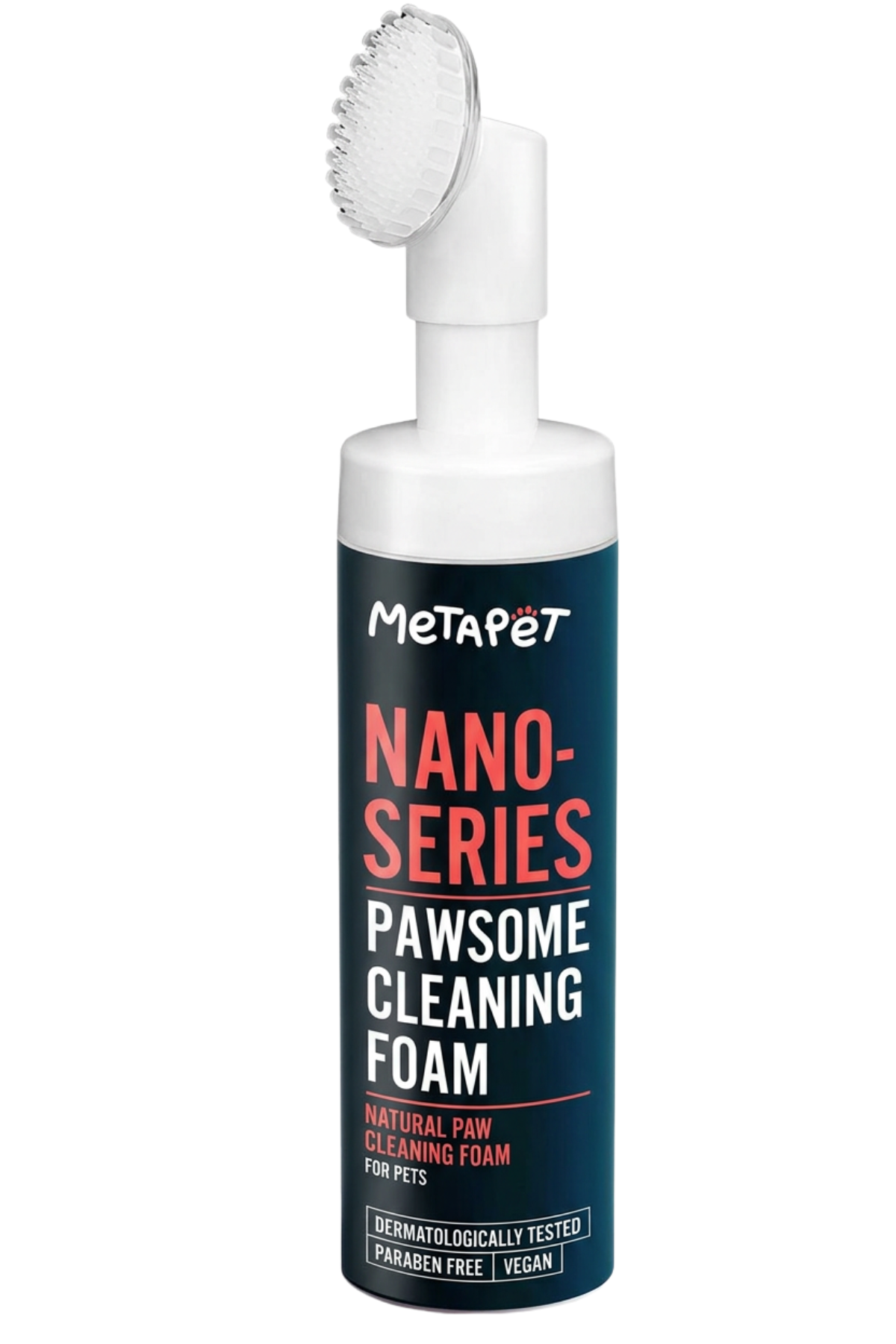
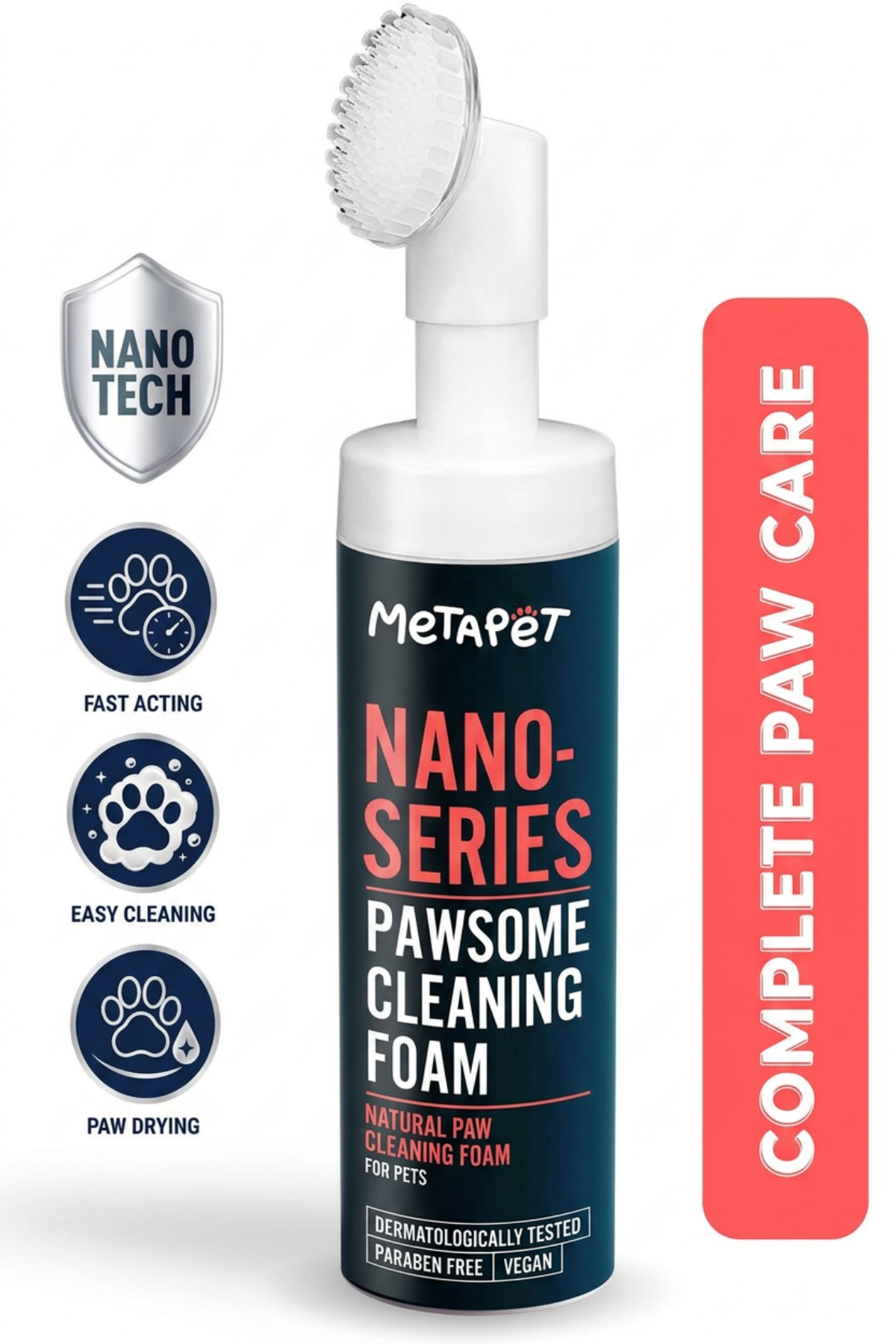
A dedicated paw-cleaning product can make this quick enough to actually do every day. MetaPet's Nano-Series Pawsome — Paw Cleaning Foam with Brush is designed to clean paws in seconds using a gentle, naturally derived formula with a practical brush cap, and MetaPet's Nano-Series Hygiene & Care Towel Wipes are handy for quick cleaning of paws and body between baths. Products like these are part of a general hygiene routine and a complement to — never a substitute for — veterinary diagnosis and care when a pet's paws are genuinely irritated.
- Dry thoroughly. Always dry between the toes after cleaning; residual moisture is exactly what encourages yeast.
- Keep paw fur trimmed. Trimming hair between the pads reduces trapped debris, moisture, and slipping on smooth floors.
- Maintain short nails. Regular trimming prevents cracked nails and abnormal foot loading that can drive licking.
- Mind the surfaces. Avoid hot pavement in summer and rinse paws after walks on salted winter roads.
- Wash bedding often. Reducing dust mites and allergens in sleeping areas helps allergic pets across the board.
- Check after every outing. A ten-second look after walks catches grass awns and cuts before they cause real trouble.
When to Call the Veterinarian
- Licking that persists for days. Anything beyond a brief tidy-up warrants an examination rather than watchful waiting.
- Visible skin damage. Redness, swelling, open sores, discharge, or thickened skin needs veterinary assessment.
- Limping alongside licking. Lameness suggests pain in the foot or limb and should be checked promptly.
- A foul or musty odor. This typically signals secondary infection requiring appropriate treatment.
- A swelling or lump. Especially between toes, where foreign bodies and cysts commonly lodge.
- Sudden intense licking after a walk. Often a foreign body — check immediately and seek care if you cannot resolve it.
- Any bleeding or a torn nail. Painful and prone to infection; have it treated properly.
For any medical emergency, contact your veterinarian or the nearest emergency animal hospital.
Frequently Asked Questions
Can I put a cone on my pet to stop the licking?
A protective collar can be a useful temporary measure to let damaged skin heal, but it treats the symptom, not the cause. Use it alongside a veterinary plan, not instead of one.
Is apple cider vinegar or coconut oil safe for itchy paws?
Home remedies frequently sting damaged skin, can worsen infection, and delay effective care. Ask your veterinarian before applying anything to irritated paws.
Why are my white dog's paws turning rusty brown?
That staining comes from compounds in saliva and simply reflects how much licking is happening. It is a useful marker of chronic licking rather than a problem in itself — the licking is what needs addressing.
My cat licks her paws constantly. Is that just grooming?
Cats groom their paws often, but focused licking that causes hair loss, redness, or damage is overgrooming and deserves a veterinary check for allergies, pain, parasites, or stress.
Persistent paw licking is your pet telling you something. Check the feet carefully, keep them clean and dry, and let your veterinary team find the cause — the licking almost always stops once the reason behind it is properly addressed.