
Osteochondritis Dissecans (OCD) in Young Dogs Explained

Few things worry a new puppy owner more than a young, otherwise healthy dog who starts to limp. When the limp appears in a fast-growing large breed puppy, worsens after a long play session, then quietly improves with rest, one condition a veterinarian will consider is osteochondritis dissecans, usually shortened to OCD.
OCD is a developmental joint condition, not an ordinary injury and not an infection. It happens while the skeleton is still being built, when growing cartilage is supposed to be turning into bone. When that process is disturbed, a patch of cartilage stays too thick and can crack away from the bone below it.
This guide explains what OCD is, which joints and dogs it affects, what owners notice at home, how veterinarians diagnose and treat it, and what prevention looks like. It is educational information only. Any limping puppy deserves a hands-on examination, so please contact your veterinarian.
Important: This article shares general educational information for pet owners and is not a substitute for an in-person veterinary examination, diagnosis, or treatment. For any medical concern or emergency, contact your veterinarian promptly.
What Osteochondritis Dissecans Actually Is
To understand OCD you have to picture how a puppy's bones grow. The ends of long bones are capped with cartilage, and beneath the smooth joint surface that cartilage is steadily converted into bone in a process called endochondral ossification. Cartilage cells mature, die off in a controlled way, and bone is laid down in their place as the puppy grows toward adult size.
In osteochondrosis, that conversion is disturbed in one small area. Instead of turning into bone on schedule, a patch of cartilage keeps thickening. Cartilage has no blood vessels of its own and relies on nutrients diffusing in from the joint fluid and the bone below, so an abnormally thick patch starves at its deepest layer and then cracks under the ordinary loads of running and jumping.
From osteochondrosis to osteochondritis dissecans
When that crack extends to the joint surface, a flap of cartilage lifts away, and that is the point at which the condition is called osteochondritis dissecans. Joint fluid gets underneath the flap, inflammation follows, and the joint becomes painful. Sometimes the flap detaches completely and floats free inside the joint, where it is nicknamed a joint mouse.
Which Joints OCD Affects Most Often
OCD has favorite locations, and knowing them helps explain why the limp shows up where it does. The lesion almost always forms on a weight-bearing convex surface, where cartilage is thickest and stress during growth is highest.
- Shoulder: the classic and most commonly recognized site, on the back of the humeral head. It typically produces front limb lameness in a young, large breed dog.
- Elbow: OCD of the inner part of the humeral condyle is one of several developmental problems grouped under elbow dysplasia, and often occurs alongside other elbow lesions.
- Stifle: the knee, usually on a femoral condyle. Lameness here can be subtle and is easy to mistake for a soft tissue strain.
- Hock: the ankle joint. Hock lesions tend to be less forgiving because the joint has little room to spare, and swelling can be obvious early.
Lesions are frequently present in the same joint on both sides of the body, even when the dog only limps on one leg. That is why veterinarians so often recommend imaging both limbs; a quiet lesion on the opposite side changes how the case is managed.
Which Dogs Get OCD, and Why
OCD is a disease of growth, so it belongs to young dogs. It typically affects rapidly growing large and giant breed dogs, most often during the first year of life, and is reported more frequently in males. There is a recognized inherited component, which is why responsible breeders screen and track affected lines.
Cats are rarely affected by OCD in the way dogs are. That is worth stating plainly, because owners of a limping young cat are almost always looking at something else. A limping kitten still needs veterinary assessment, but OCD is not the usual explanation.
General risk factors
- Rapid growth: pushing a puppy to grow as fast as possible loads immature cartilage before it is ready.
- Over-nutrition: free feeding a calorie dense diet and allowing a puppy to carry extra weight during growth.
- Excess calcium: over-supplementing calcium or minerals on top of a complete and balanced growth diet.
- Genetics: family lines and breed predisposition strongly influence risk.
- Repetitive high impact activity: long forced runs, repeated jumping, and hard surface work in a growing puppy.
Signs Owners Actually See at Home
OCD rarely announces itself dramatically. Owners usually describe a puppy who is a little off, who seems to warm out of it, or who looks fine on a lead walk but clearly favors a leg after an hour at the park. Because the signs come and go, it is easy to convince yourself the problem has resolved.
- A subtle limp that worsens after exercise: often most obvious when the dog first stands up after a nap that followed hard play.
- A shortened stride: the affected leg does not reach as far forward, so the gait looks choppy rather than obviously lame.
- Reluctance to jump: hesitating before getting into the car, onto a couch, or off a step.
- Muscle wasting: over weeks, muscles over the affected shoulder or thigh look flatter than the other side.
- Lameness that improves with rest and returns: the single most typical pattern owners report.
Any lameness in a growing dog that lasts more than a day or two, or that keeps coming back, deserves a veterinary appointment. Persistent limping is never something a puppy should simply grow out of, and early assessment gives you far more options than waiting does.
How Veterinarians Diagnose OCD
Diagnosis starts with a careful orthopedic examination rather than with a machine. Your veterinarian will watch your dog walk and trot, then work through each joint by feel, checking range of motion, looking for swelling or joint fluid, and noting where flexion or extension produces a pain response.
Radiographs are the usual next step. Positioning matters a great deal, and dogs are often sedated so the limb can be held at the precise angle that reveals the flattened or cratered area of bone beneath the lesion. Both limbs are commonly imaged.
When more detail is needed
- CT: gives excellent bone detail and is often used for elbows, where several developmental lesions can coexist in one joint.
- Arthroscopy: a camera placed inside the joint shows the cartilage surface directly and allows treatment during the same procedure.
- Joint fluid analysis: sometimes used to help rule out infection or immune mediated joint disease.
Because several conditions cause lameness in young dogs, including panosteitis, hip dysplasia, ligament injury, and infection, an accurate diagnosis matters. Ask your veterinarian to walk you through what the images show.
Conservative Management Compared With Surgery
There is no single right answer for every dog. The plan depends on which joint is involved, how large the lesion is, whether the flap is still attached, and how lame the dog actually is. Your veterinarian or a board certified surgeon will explain which approach fits.
Conservative management
This means strict activity restriction for a defined period, controlled leash walks instead of free running, weight control, and pain management prescribed and monitored by your veterinarian. It is more often considered for small lesions or joints where the flap has not separated. It requires real discipline at home, because a puppy who feels better will happily undo weeks of healing in one afternoon.
Surgical treatment
Surgery aims to remove the loose cartilage flap and any free fragments, and to prepare the underlying bone so the body can fill the defect with repair tissue. It is commonly performed arthroscopically through small portals, or through an open approach depending on the joint. Shoulder lesions in particular often respond well. All medication decisions belong with your veterinarian.
Home Care and Rehabilitation During Recovery
Whichever route is chosen, most of the work happens at home over the following weeks. Your job is to protect the joint while it heals, keep muscle from wasting away, and stop your dog from doing the one enthusiastic thing that undoes the progress. Ask your veterinary team for the plan in writing.
- Controlled leash walks: short, slow, on a fixed length lead, increasing only when your veterinary team says so.
- Non-slip flooring: runners and mats over tile and hardwood so the dog is not scrambling for grip.
- Ramps and blocked stairs: a ramp into the car and baby gates to prevent unsupervised climbing or jumping.
- Lean body condition: every extra pound is extra load on a healing joint; ask your veterinarian to score body condition at each visit.
- Physical therapy: guided range of motion work, balance exercises, and progressive strengthening from a qualified rehabilitation practitioner.
- Hydrotherapy: underwater treadmill or swimming where your veterinarian recommends it, because water supports body weight while muscles work.
- Mental enrichment: food puzzles, scent games, and training sessions to keep a restricted dog satisfied.
Recheck appointments matter. Progress is measured in gait, muscle mass, and comfort on examination, not in how happy the dog looks at home.
Everyday Routine Care While the Joint Recovers
Owners often ask whether a supplement should be part of the plan. Supplements are a supporting player, never a treatment, and never a reason to delay or decline surgery or veterinary care. Nothing bought off a shelf resolves a cartilage flap. A daily supplement can only fit into a broader routine built around veterinary treatment, controlled activity, and weight management.
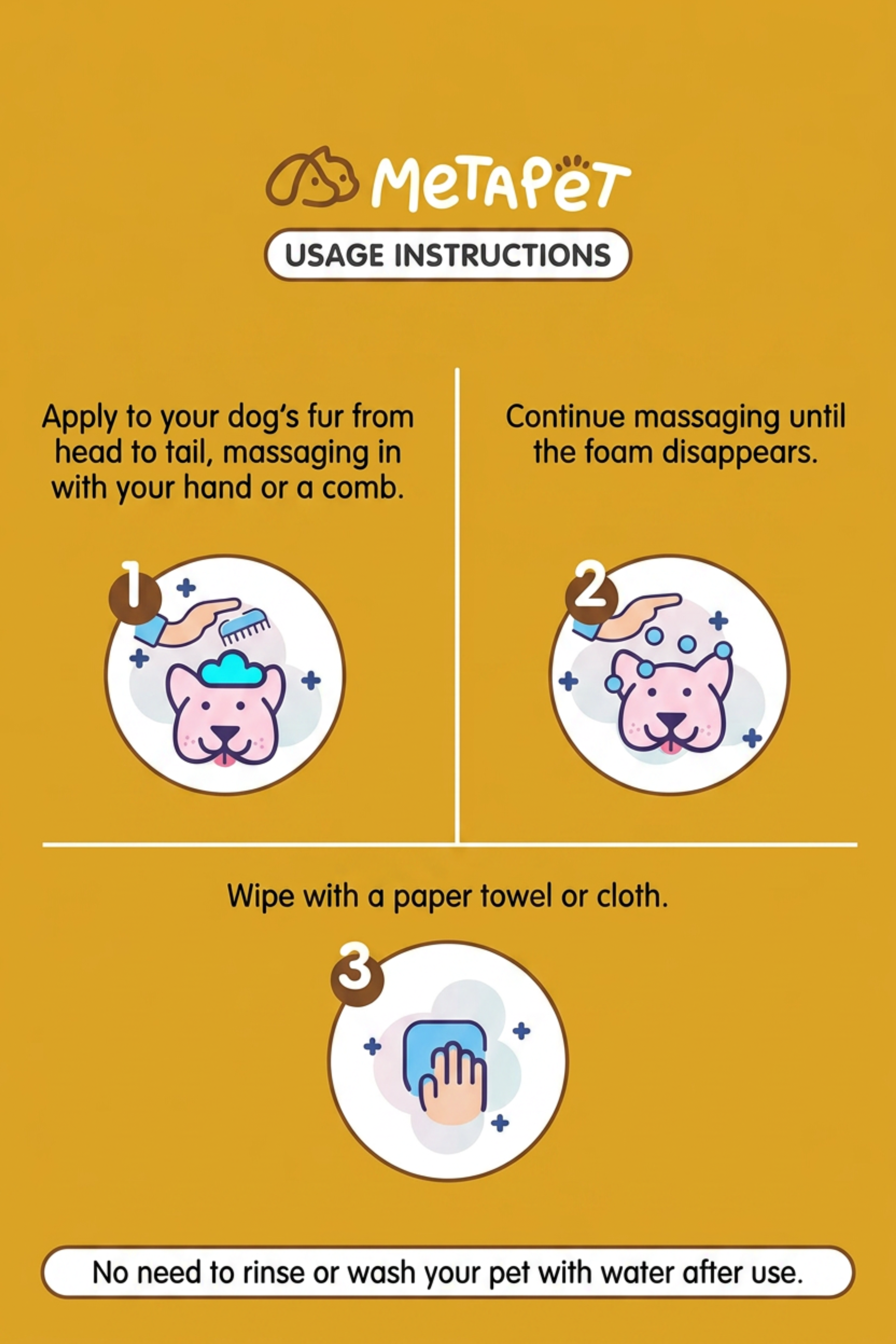
If your veterinarian is comfortable with the idea for your individual dog, a lickable daily option such as MetaPet Hip and Joint Drops for Dogs is designed to support normal joint comfort and mobility as part of a daily routine. It is a complement to proper veterinary care, not a substitute for it.
Beyond any supplement, the everyday routine matters more: a consistent, measured diet that keeps your dog lean, the controlled activity plan your veterinarian set out, non-slip footing at home, and short, frequent rest breaks rather than one long outing. None of these cost anything, and all of them do more for a recovering joint than anything you can buy. Bring a written list of everything your dog eats, including treats and any supplement, to each recheck so your veterinary team can see the whole picture.
Talk to your veterinarian before adding any supplement, and be especially careful with a growing puppy whose diet is already complete and balanced. Extra minerals and calories during growth can do harm rather than good, so the conversation with your veterinary team comes first.
Prevention in Large and Giant Breed Puppies
You cannot change a puppy's genetics, but you can change how that puppy grows. The most useful message for owners of large and giant breed puppies is that slower, leaner growth is healthier growth. A puppy who reaches adult size a little later, carrying less weight along the way, gives immature cartilage a better chance to convert to bone in an orderly way.
- Feed a complete and balanced diet formulated specifically for large breed growth, chosen with your veterinarian.
- Measure meals rather than free feeding, and adjust portions based on body condition rather than the number printed on the bag.
- Keep the puppy lean enough that you can feel ribs easily under a light covering.
- Do not add calcium, mineral blends, or bone meal to a diet that is already complete and balanced.
- Avoid forced repetitive exercise, especially long jogs and repeated jumping on hard surfaces during growth.
- Favor free play on soft, grippy footing in shorter sessions.
Prevention is not a guarantee. Some dogs develop OCD despite excellent management, which is why owners should never carry guilt about a diagnosis.
Outlook, Myths, and Common Questions
Many dogs treated appropriately return to comfortable, active lives, and shoulder lesions in particular are often reported to do well. At the same time, the affected joint has had its cartilage surface damaged during growth, and arthritis in that joint later in life is common. Lifelong weight control and sensible exercise are part of a responsible long-term view.
Myths and facts
- Myth: a puppy will grow out of it. Fact: lameness in a growing dog is a reason to be examined, not a phase to wait out.
- Myth: more calcium builds stronger joints. Fact: over-supplementing a balanced growth diet is considered a risk factor, not a protection.
- Myth: only one leg is ever involved. Fact: lesions are often present on both sides even when only one leg limps.
- Myth: a supplement can take the place of surgery. Fact: supplements support a routine and never replace veterinary treatment.
Frequently asked questions
- Is OCD painful? Yes. Inflammation inside a joint hurts, which is why affected dogs shorten their stride and avoid jumping.
- Can my dog still be neutered or vaccinated on schedule? Discuss timing with your veterinarian, since it may be coordinated around any planned procedure.
- Should I breed from an affected dog? Speak with your veterinarian, because there is a recognized inherited component.
- When is it an emergency? Sudden non weight bearing lameness, a hot swollen joint, or obvious distress warrants contacting your veterinarian or an emergency clinic right away.































































%20in%20Young%20Dogs%20Explained)