High Blood Pressure in Cats: Signs, Causes, and Care

High blood pressure sounds like a human problem — something for annual physicals and office stress. But hypertension is a well-recognized condition in cats, particularly seniors, and it has earned the same nickname in veterinary medicine that it carries in human medicine: the silent killer. It typically causes no obvious signs until it has already damaged something important.
The organs hypertension damages first in cats are the eyes, kidneys, heart and brain — and the most dramatic calling card is sudden blindness, when elevated pressure detaches the retina. It is a heartbreaking way to discover a condition that, found earlier, can often be managed well with veterinary care.
This guide explains what blood pressure does in a cat's body, why feline hypertension usually rides along with other diseases, the subtle signs worth noticing, how veterinarians actually measure a cat's blood pressure, and what living with a hypertensive cat looks like day to day.
Important: This article shares general educational information for pet owners and is not a substitute for an in-person veterinary examination, diagnosis, or treatment. For any medical concern or emergency, contact your veterinarian promptly.
What Blood Pressure Means in a Cat
Blood pressure is the force blood exerts against artery walls as the heart pumps. Every organ depends on that pressure staying within a workable range: too low and tissues are underserved, too high and delicate small vessels — exactly the kind found in the retina, the kidneys' filtering units and the brain — are damaged by the relentless force.
In cats, veterinarians focus mainly on systolic pressure (the peak of each heartbeat), measured in the same units as human readings. Broadly, readings in the neighborhood of 140 mmHg and below are considered normal, with risk of organ damage rising as values climb well above that — but single numbers matter less than patterns, because stress alone raises a cat's pressure temporarily. Your veterinarian interprets readings in context, often across repeat visits.
Why Cats Develop Hypertension
Feline hypertension is usually secondary — a consequence of another disease rather than a standalone condition. This is the single most useful fact for owners, because it means a hypertension diagnosis triggers a search for the underlying cause, and management of both conditions travels together.
- Chronic kidney disease: the most common partner; damaged kidneys disturb the body's pressure regulation, and high pressure further damages kidneys — an unkind loop.
- Hyperthyroidism: the overactive-thyroid disease of older cats drives up heart rate and pressure; treating the thyroid problem often helps the pressure.
- Other, less common contributors: certain heart and hormonal conditions can be involved; your veterinarian will assess the individual cat.
- Primary (idiopathic) hypertension: a minority of cats have elevated pressure with no underlying disease found — management still matters just as much.
Because the underlying diseases are diseases of aging, hypertension is overwhelmingly a condition of middle-aged and senior cats — one more reason the veterinary checkup rhythm should tighten, not relax, as a cat gets older.
The Eyes: Where Hypertension Shows Itself First
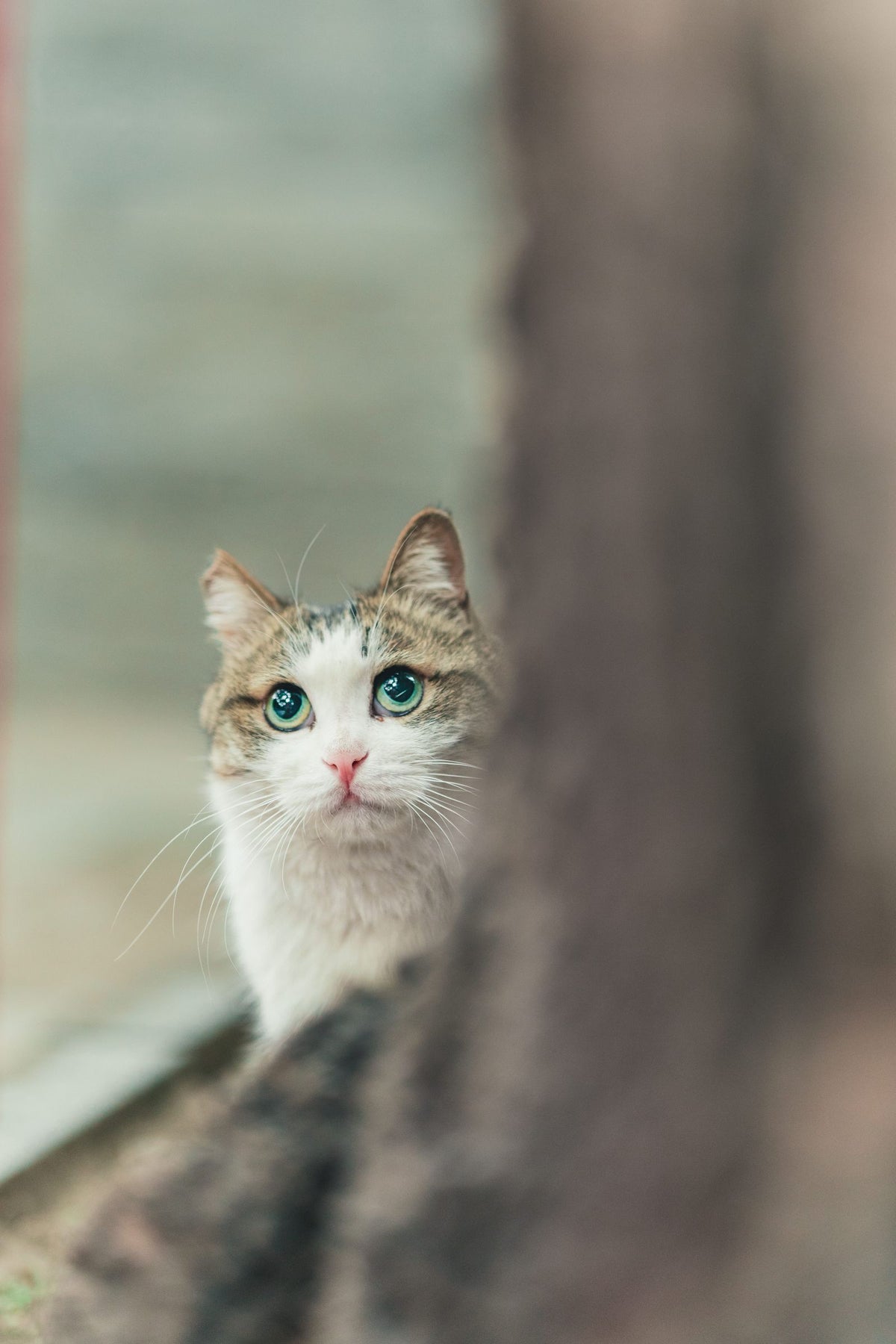
The retina's tiny vessels are exquisitely vulnerable to pressure. Damage can build silently — small bleeds and areas of swelling a veterinarian can see on an eye exam — until a threshold is crossed and part or all of the retina detaches, causing partial or complete blindness that can arrive overnight.
- Dilated pupils that stay large: especially pupils that respond sluggishly to bright light.
- Bumping into furniture: hesitance on stairs, missed jumps, or reluctance to move in dim light.
- Visible blood in the eye: a red or cloudy appearance within the eye is always urgent.
- A suddenly bold-eyed look: widely dilated, glassy eyes giving a startled expression.
Sudden vision changes in any cat are a same-day veterinary emergency. Acted on quickly, some vision can sometimes be preserved or partially recovered when pressure is brought under control — a genuine race worth running. Even when sight cannot be saved, controlling the pressure protects the kidneys, heart and brain from the same force.
Subtler Signs: Kidneys, Heart and Brain
Beyond the eyes, hypertension's signs are quiet and easily filed under just getting older. Damage to the kidneys can show as increased drinking and urination, weight loss and reduced appetite — signs shared with the kidney disease that often coexists. Effects on the heart may be detected by your veterinarian as a murmur or rhythm change before you notice anything at home.
Pressure effects on the brain can produce the strangest and most alarming signs: disorientation, unusual vocalization (especially at night), restlessness, a wobbly or drunken gait, seizures, or sudden behavior change. Any neurological sign in a senior cat deserves prompt veterinary attention, and hypertension is one of the conditions your veterinarian will consider. The theme across every organ is the same: vague senior-cat changes are worth investigating, not normalizing.
How Veterinarians Measure a Cat's Blood Pressure
Measuring feline blood pressure looks a lot like the human version, miniaturized: an inflatable cuff on a leg or the tail, and a sensor — commonly a Doppler ultrasound probe or an oscillometric device — to read the pulse as the cuff deflates. It is painless and usually takes minutes, with several readings averaged.
The main technical challenge is the patient's opinion of the process. Clinic stress raises blood pressure transiently — the well-known white-coat effect — so veterinary teams work to keep measurements calm and quiet: a dim room, time to acclimate, the owner present, and repeat visits before concluding that a borderline reading is real. This is also why a single elevated reading in a frightened cat is a prompt for follow-up rather than an instant diagnosis, unless eye damage or other evidence is already present.
Screening: Finding It Before It Finds the Retina
Because early hypertension is silent, screening is how it gets caught in time. Many veterinarians recommend blood pressure checks as part of routine senior wellness visits, and more frequent monitoring for cats already diagnosed with kidney disease, hyperthyroidism or heart disease — the very conditions that predispose to high pressure.
- Ask at the next visit: if your cat is middle-aged or older, ask your veterinarian whether a blood pressure check is part of the plan.
- Pair it with existing care: cats being monitored for kidney or thyroid disease are ideal candidates for regular pressure checks.
- Keep the checkup rhythm: regular wellness exams for seniors give quiet diseases fewer places to hide.
Living With a Hypertensive Cat
When hypertension is confirmed, veterinarians typically manage it with daily medication to relax blood vessels and lower the pressure, alongside treatment of any underlying disease. The specifics — drug, dose and monitoring schedule — belong entirely to your veterinarian; what belongs to you is consistency, because blood pressure control works only as well as the daily routine behind it.
- Give medication every day, as directed: build it into an anchor routine like breakfast; ask your clinic for tips or alternative forms if pilling is a battle.
- Keep recheck appointments: follow-up pressure measurements confirm the treatment is actually working and allow dose adjustments.
- Watch water, appetite and litter habits: changes are worth reporting, especially with coexisting kidney disease.
- Reduce chronic stress at home: predictable routines, quiet retreats and resources spread through the house are good for any cat, and especially a medically fragile one.
- Never stop or adjust medication on your own: changes should always run through your veterinarian.
Cats with well-controlled hypertension can live comfortably for years, and blind cats — should vision be lost — adapt remarkably well in a stable home where furniture stays put and food, water and litter remain findable by memory.
Coordinating Care When Diseases Overlap
Because feline hypertension so often travels with kidney disease or hyperthyroidism, care usually means managing two or three conditions at once — and the conditions talk to each other. Treating an overactive thyroid can change blood pressure; controlling blood pressure protects the kidneys; kidney values influence which medications are chosen and how they are dosed. This is why lab work, pressure checks and rechecks tend to cluster together into a monitoring rhythm rather than one-off events.
Owners can make this coordination dramatically easier. Keep a simple log — a notes app is enough — of medications and doses, appetite, water intake, body weight if you can weigh your cat at home, and anything unusual. Bring it to every visit. If multiple clinics are involved, for example a regular veterinarian and an emergency hospital after a blindness scare, make sure each has the other's records. And budget questions are legitimate medicine: if costs are a concern, say so — your veterinary team can often prioritize the monitoring and treatments that matter most for your situation.
- Keep one master medication list: including doses and times, updated at every change.
- Track trends, not single days: weight drifting down or drinking drifting up over weeks is exactly the kind of pattern that matters.
- Use the same scale and routine: home weight checks are most useful when done consistently.
- Ask what warning signs warrant a call: every cat's plan is different; leave each visit knowing what would count as urgent for yours.
Myth vs. Fact About Feline Hypertension
- Myth: Cats do not get high blood pressure. Fact: hypertension is well documented in cats, especially seniors with kidney or thyroid disease.
- Myth: A cat with high blood pressure would obviously seem sick. Fact: the condition is famously silent until organ damage appears — often as sudden blindness.
- Myth: One high reading at the clinic means lifelong medication. Fact: stress inflates readings; diagnosis usually rests on repeat measurements or accompanying evidence of organ damage.
- Myth: Salt restriction alone will fix a cat's blood pressure. Fact: feline hypertension management is medical and veterinarian-directed; diet questions belong in that same conversation, not in place of it.
Frequently Asked Questions
At what age should my cat's blood pressure be checked?
Ask your veterinarian — many begin including pressure checks in wellness visits as cats reach their senior years, and earlier for cats with kidney, thyroid or heart conditions. The right schedule is individual.
My cat went suddenly blind. Is there any hope?
Treat it as an emergency and go the same day: when a detached retina is caused by high pressure, prompt control offers the best chance of preserving or recovering some vision, and it protects other organs regardless. Even fully blind cats usually adapt to a stable home impressively well.
Is feline blood pressure medication forever?
Often, though not always — if an underlying cause such as hyperthyroidism is treated successfully, the pressure picture can change. Ongoing need is determined by recheck measurements, so follow-up visits are part of the treatment itself.
Can stress at the vet make the diagnosis wrong?
Stress raises readings temporarily, which veterinarians account for with calm technique and repeat measurements. If your cat is a clinic panicker, mention it — teams can adjust the setup, and some cases are rechecked on separate days before any decision.