Choosing the Right Cat Litter: A Practical Owner's Guide

The litter box is the least glamorous piece of equipment in a cat household and, by some distance, one of the most consequential. Cats are particular about where and on what they toilet, and litter that a cat dislikes is a frequent, entirely preventable reason that cats begin going elsewhere in the home. Get the litter right and the box largely takes care of itself.
There is no single best litter for every cat. There is, however, a best litter for your cat — determined by texture preference, depth, cleanliness, box design and location. This guide walks through the main litter types, the setup details that matter more than most owners realize, and how to change litters without triggering a protest.
Important: This article shares general educational information for pet owners and is not a substitute for an in-person veterinary examination, diagnosis, or treatment. For any medical concern or emergency, contact your veterinarian promptly.
Start With How Cats Actually Think About Litter
A cat approaching a litter box is running a quick, instinctive assessment: is this substrate comfortable under my paws, can I dig in it, can I cover afterwards, does it smell acceptable, is this location safe, and can I see anything approaching while I am vulnerable? If the answer to any of those is unsatisfying, the cat looks for a better option — and the better option is often your rug.
This is worth internalizing because it reframes litter-box problems entirely. A cat toileting outside the box is almost never being spiteful. They are making a rational choice based on how the box feels to them. Understanding that turns an emotional problem into a solvable one.
The Main Litter Types
Litters differ in material, clumping behavior, dust, weight, odor control and texture. Each has genuine trade-offs, and cats have clear preferences that do not always match ours.
- Clumping clay (bentonite): the most widely used type. Forms solid clumps around urine that lift out cleanly, making daily scooping simple. Fine-grained versions closely resemble the sandy substrate most cats instinctively prefer. Dust levels vary considerably between products.
- Non-clumping clay: absorbs moisture but does not form removable clumps, so the whole box needs changing more often. Generally cheaper, but harder to keep genuinely fresh.
- Silica crystal: highly absorbent granules that trap moisture and control odor well, with low dust. Some cats dislike the harder texture underfoot, and the granules feel very different from sand.
- Plant-based (corn, wheat, wood, paper, tofu): lighter, often more sustainable, and frequently flushable in some formats — though always check local guidance and your veterinarian's advice before flushing anything. Clumping quality varies by product.
- Wood pellets: break down into sawdust when wet. Very low dust, but the large pellet size is a texture some cats simply refuse.
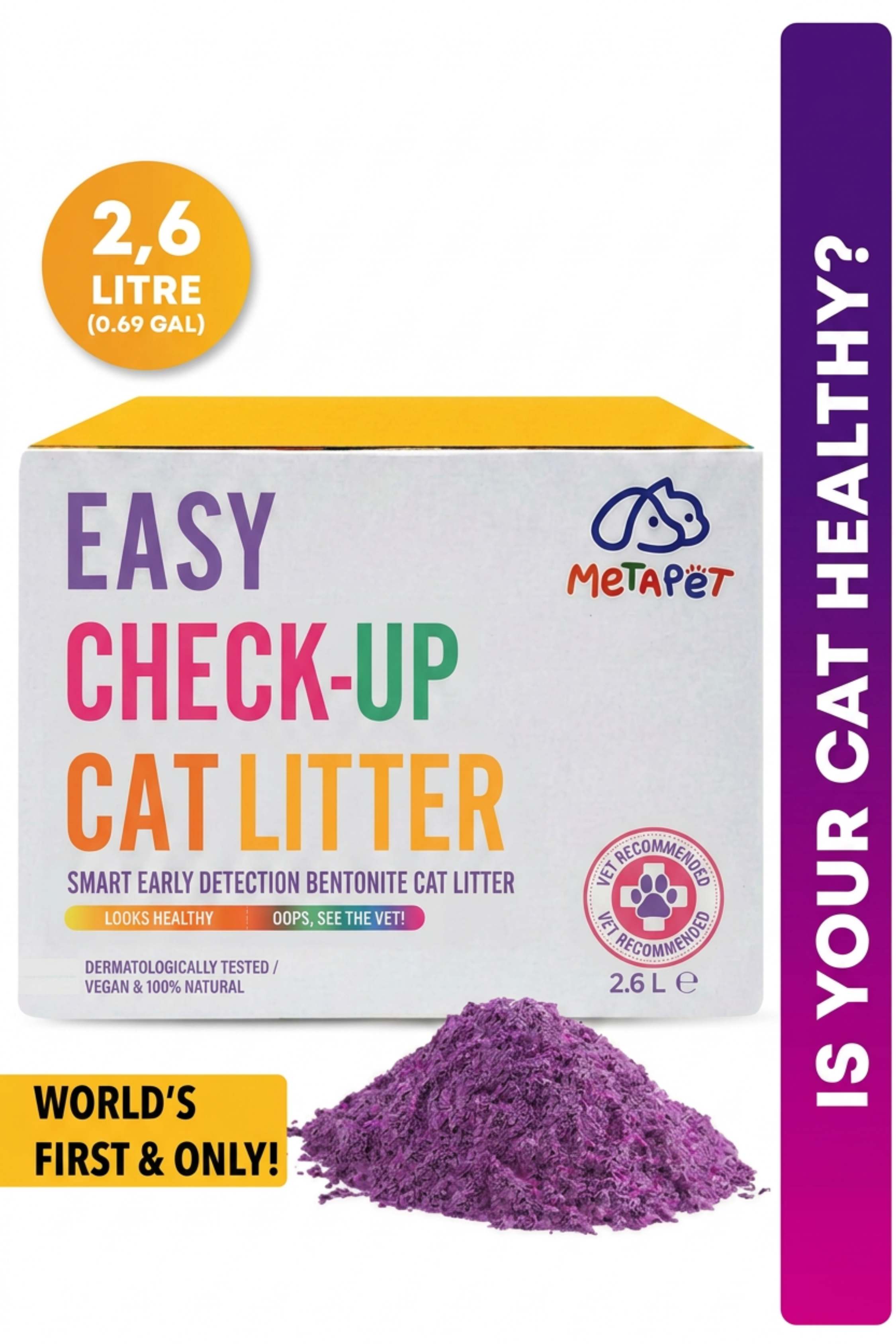
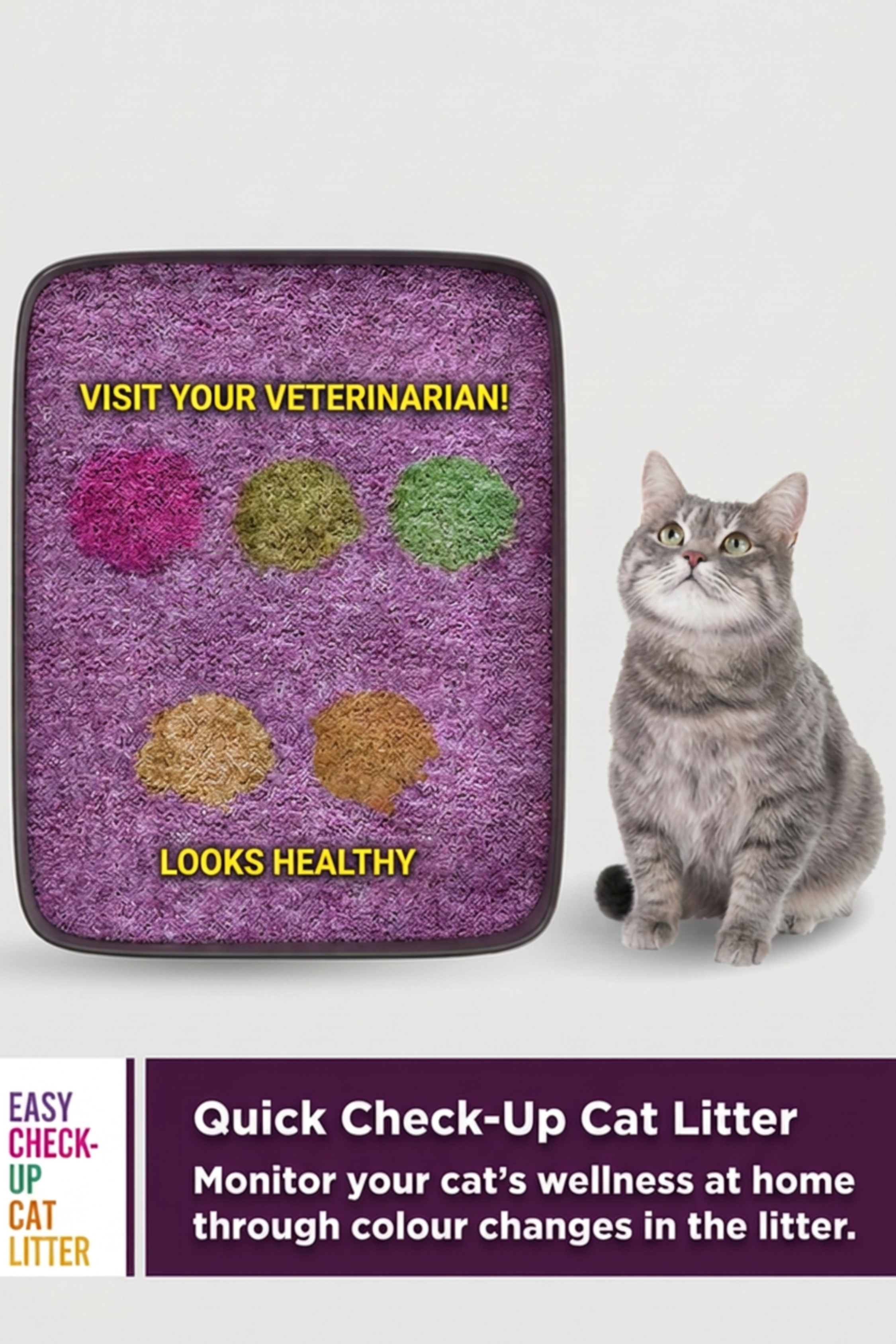
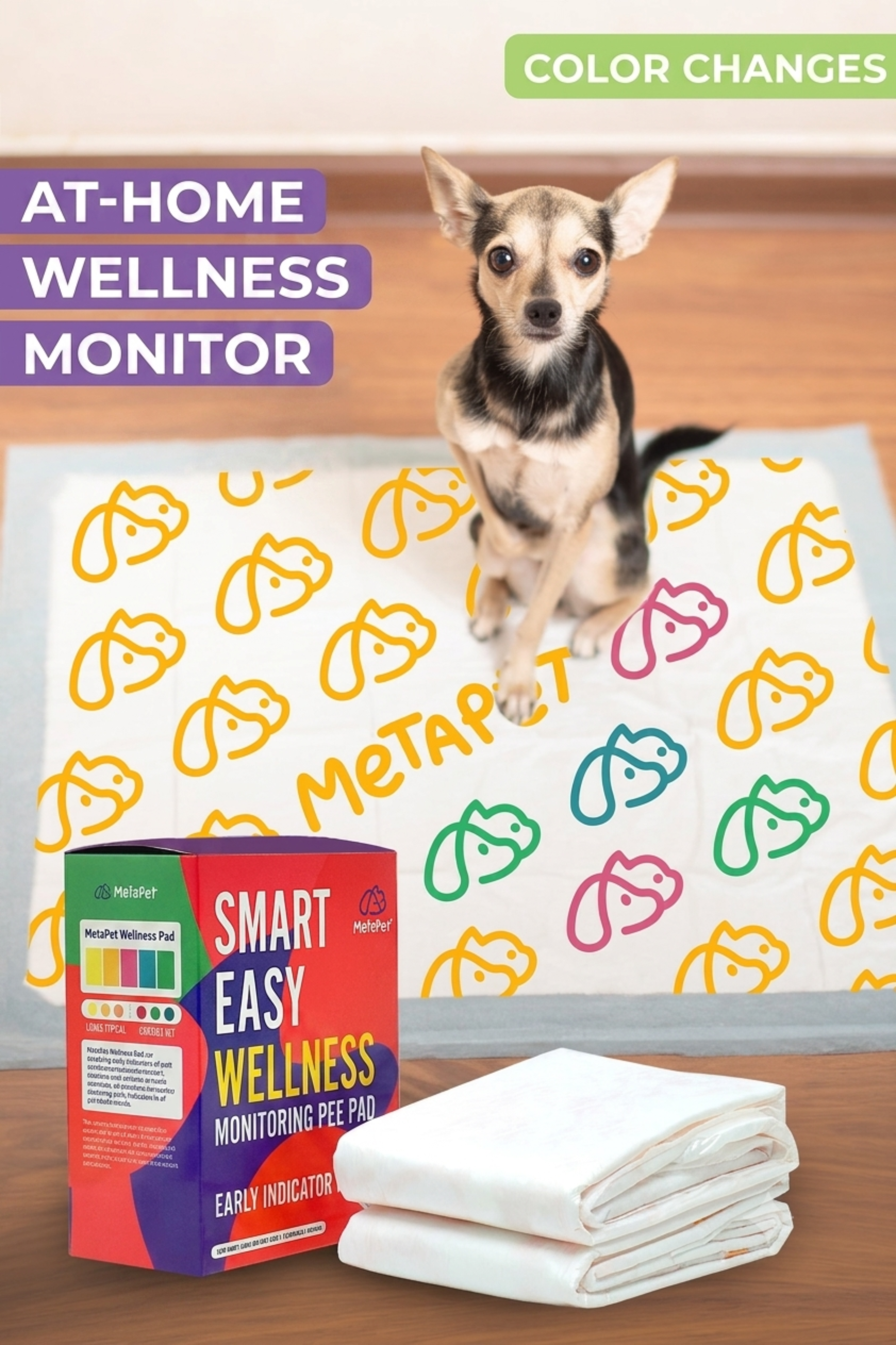
- Indicator litters: bentonite litter with a color-changing component that responds to urine, designed to help owners notice changes at home between veterinary visits.
Litter That Helps You Notice Changes
One useful development in litter is the color-changing indicator format. Products such as MetaPet Easy Check-Up Smart Cat Litter are natural bentonite litters with a built-in indicator: after your cat urinates, the litter in the contact area changes color, so you can compare it against the reference colors on the pack. It is a simple way to keep an eye on things at home between check-ups.
It is important to frame what this can and cannot do. An indicator litter is a home observation aid — a prompt to pay attention and to have a conversation with your veterinarian. It does not diagnose, treat or rule out any medical condition, and it is not a substitute for veterinary examination or testing. If you notice a change, or if your cat is straining, urinating outside the box, vocalizing, or producing little or no urine, contact your veterinarian promptly — a cat who cannot pass urine, particularly a male cat, is a genuine emergency.
Used sensibly, this kind of litter is a complement to routine veterinary care rather than a replacement for it. The most valuable monitoring tool in any household remains an owner who knows their cat's normal habits and notices when they shift.
Scented vs. Unscented
This one is close to a rule. Most cats prefer unscented litter. Heavy floral or perfumed additives are designed to appeal to human noses, and a cat's sense of smell is vastly more sensitive than ours. A litter that smells pleasantly fresh to you can be genuinely aversive to a cat, and scent aversion is a well-recognized reason for box avoidance.
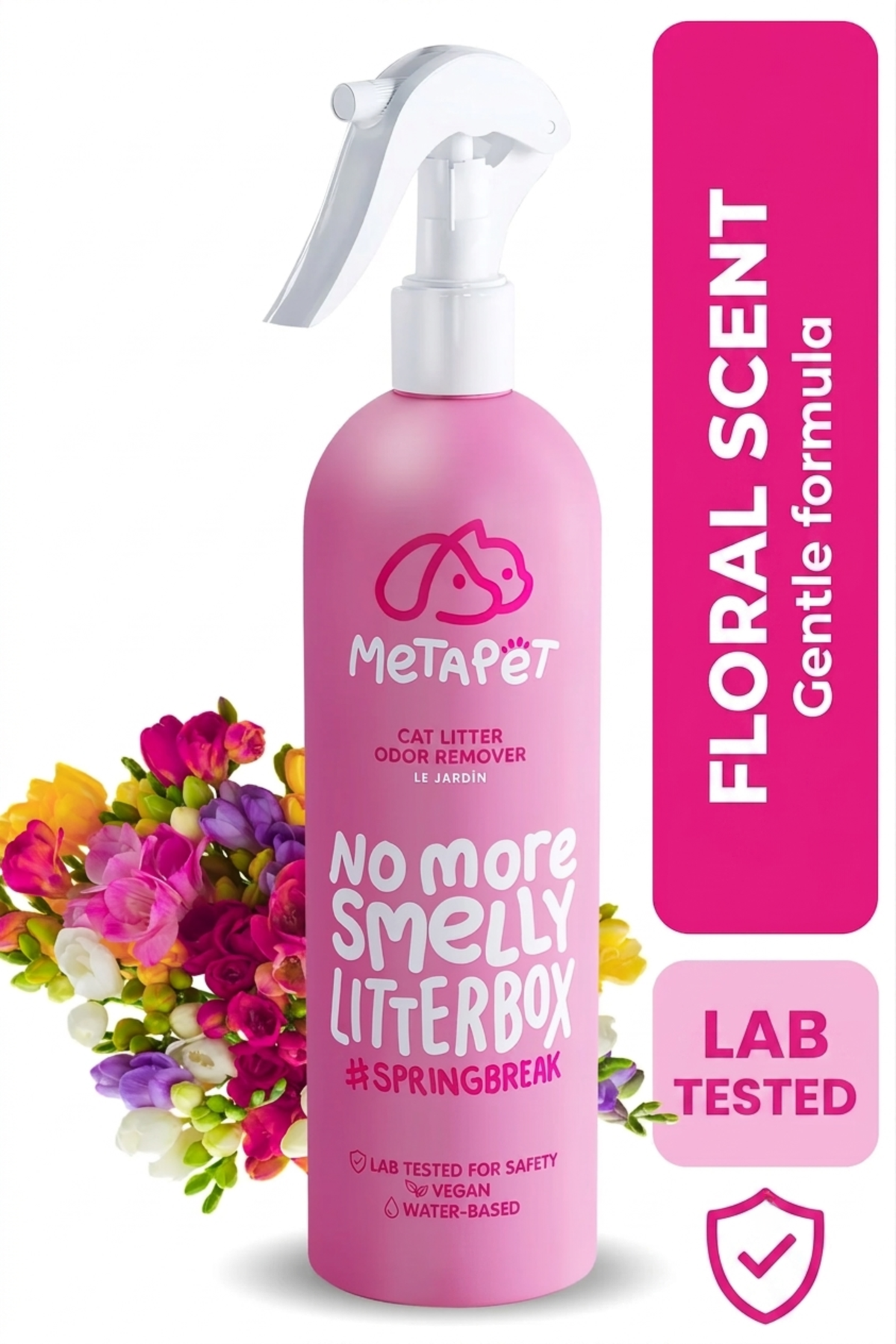
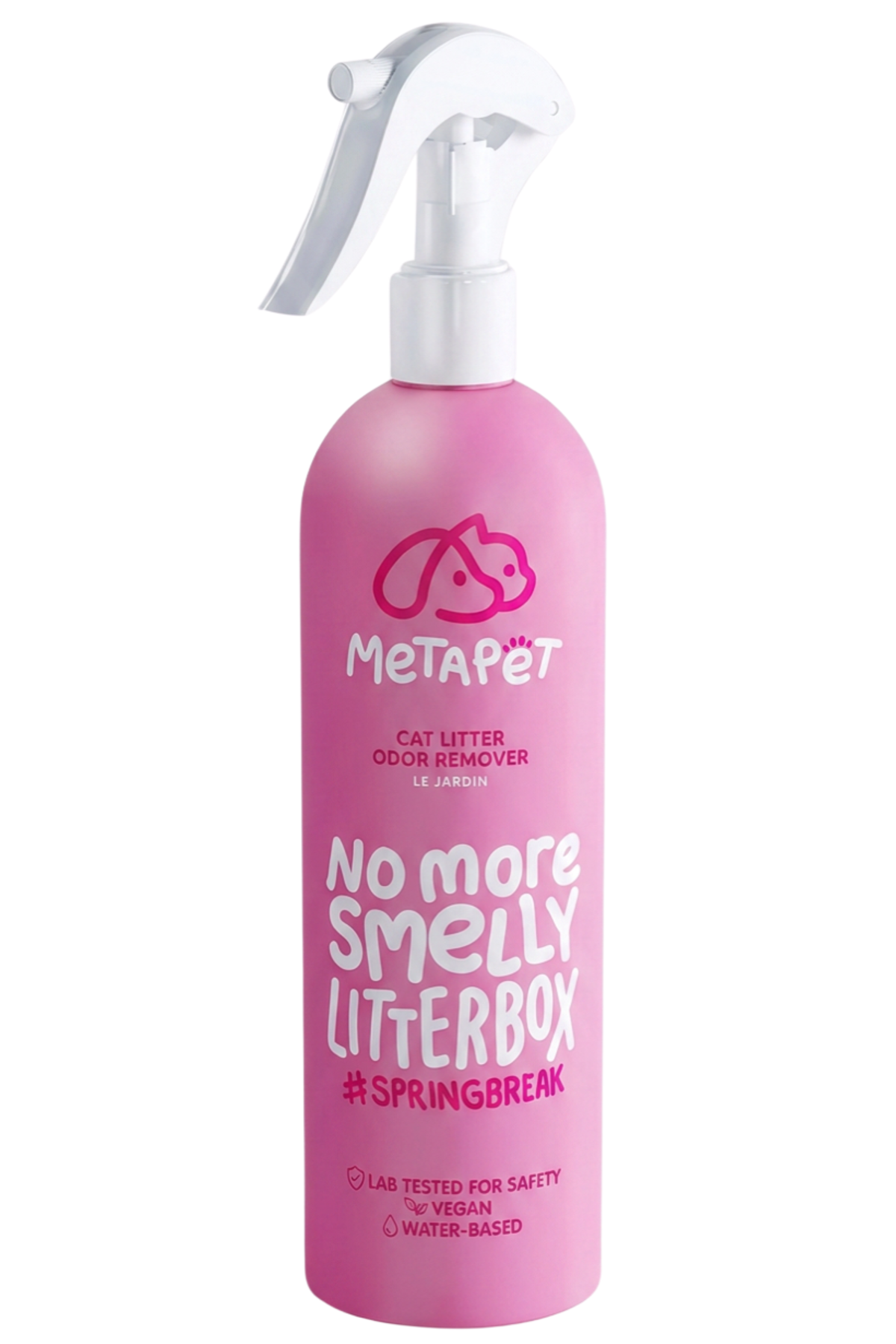
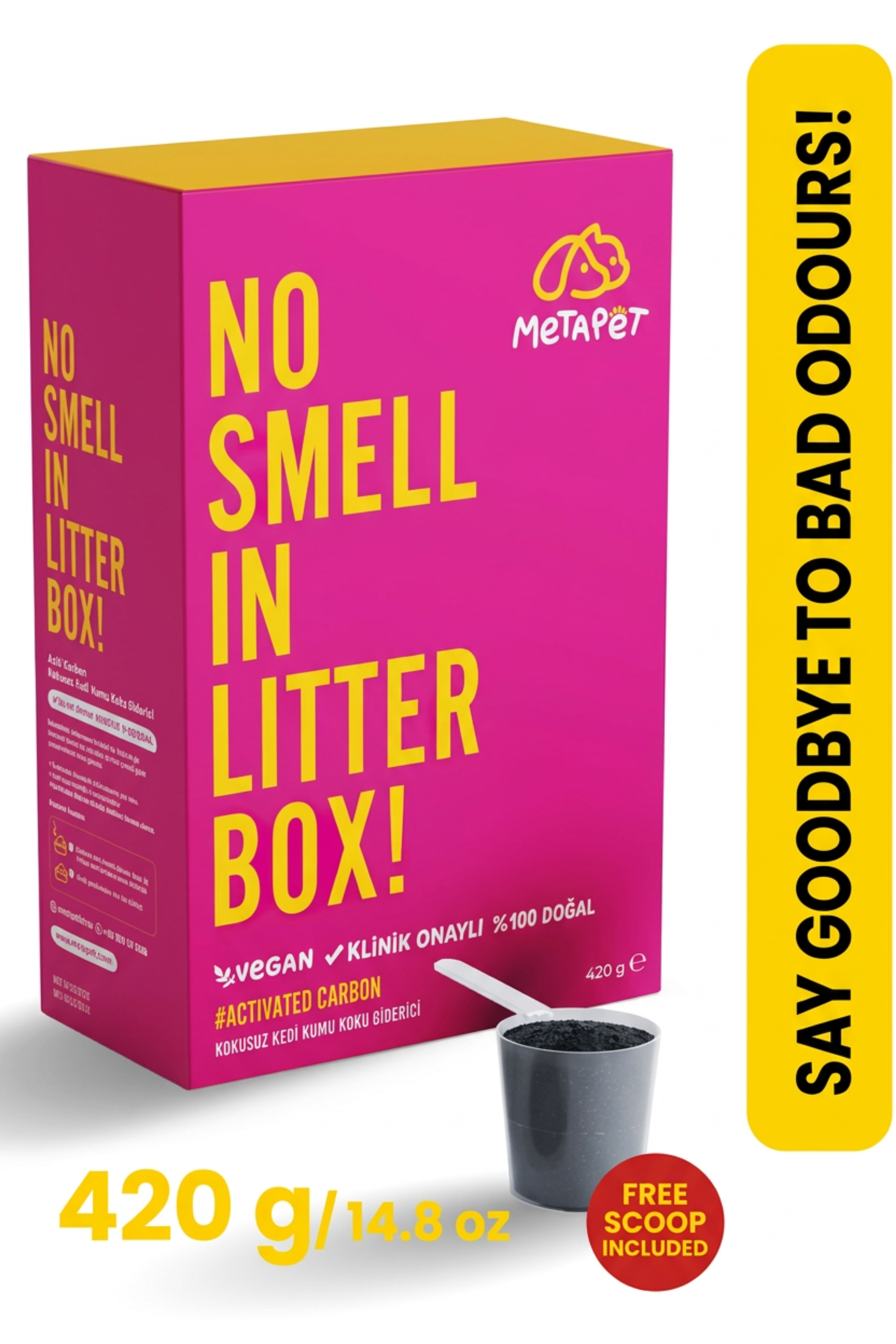
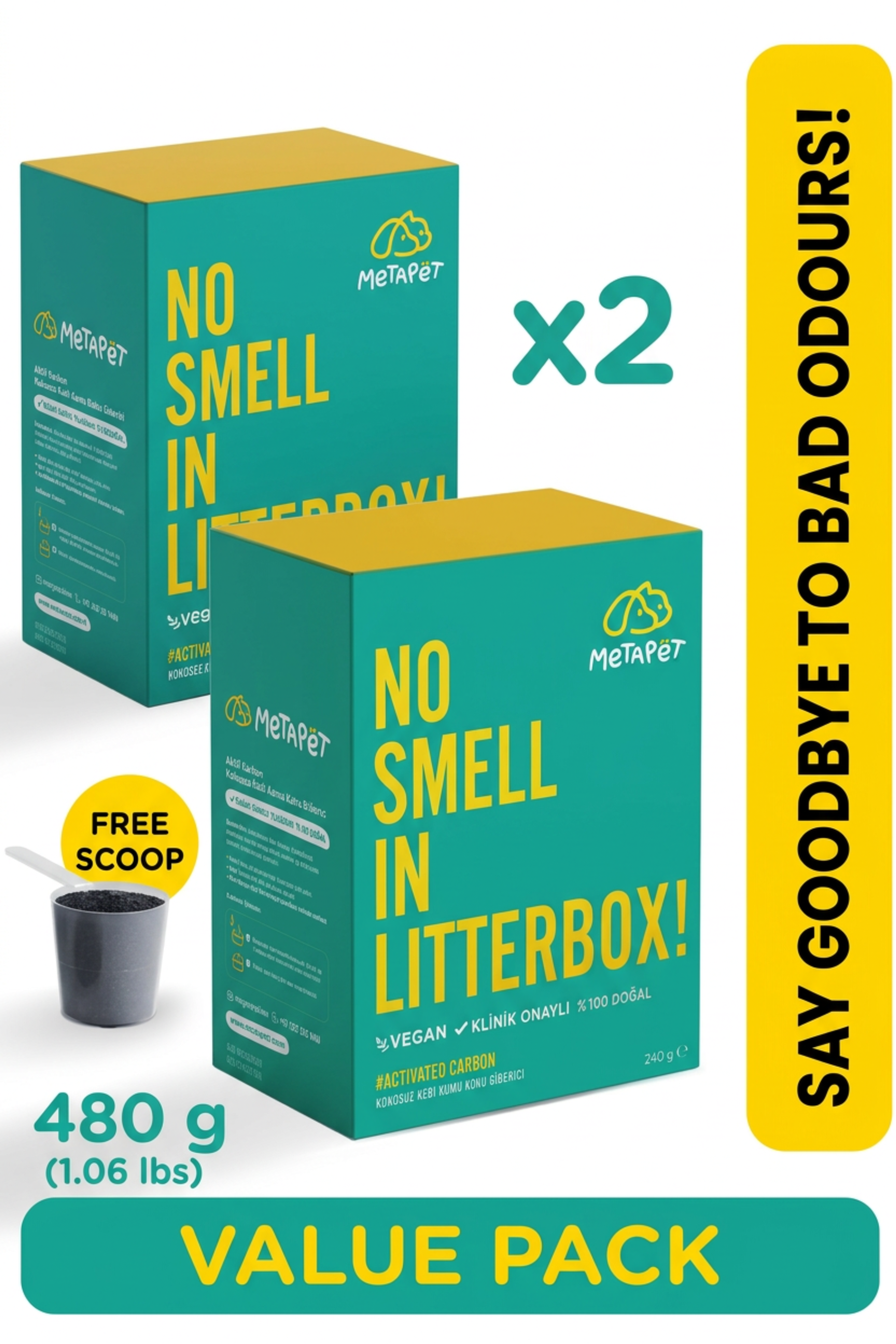
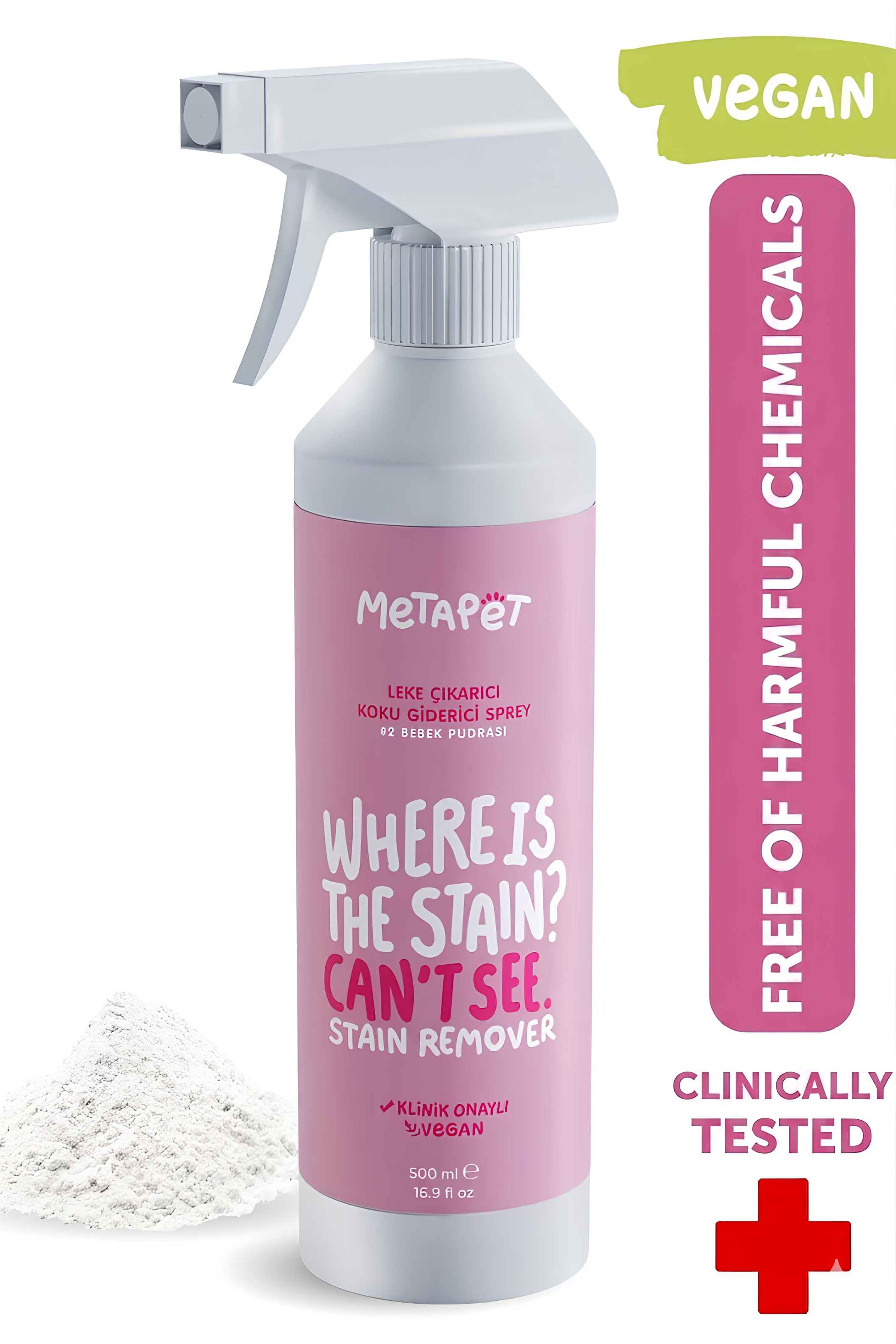
If odor is the underlying concern — and it usually is — the far more effective route is scooping frequency, box hygiene and the box itself, not fragrance. If you want additional odor support, an unscented approach works better with cats. A litter deodorizer such as MetaPet No Smell in Litterbox, made from natural coconut-shell activated carbon with no additives, is designed to help absorb and trap litter-box odors and works with every litter type. For surfaces around the box, a spray such as MetaPet No More Smelly Litterbox can help keep the area fresh.
These are hygiene and freshness products, not health products — they help manage odor and can be part of a clean routine, and they should never be relied on to prevent or address any medical or behavioral condition. If odor has suddenly increased, or if your cat's urine or stool has changed in smell, volume or appearance, that is a reason to call your veterinarian rather than to reach for a deodorizer.
Depth Matters More Than Owners Expect
Cats want to dig. A shallow scattering of litter frustrates that instinct, and a box filled to the brim is unstable and unpleasant to stand in. Most cats do well with a depth that allows comfortable digging and covering without the litter sliding under their paws — for most clumping litters, that means a good few inches, deep enough for a clump to form fully without touching the bottom.
Too shallow and urine reaches the base of the box, sticks, and creates odor and a mess to clean. Too deep and some cats become unsteady. Watch your cat: enthusiastic digging and thorough covering suggest you have it right; hesitant perching on the edge, or leaving without covering, suggests you do not.
The Box Itself, and Where You Put It
The finest litter in the world cannot rescue a badly chosen or badly placed box. Many box problems are location problems in disguise.
- Size: larger than most owners buy. A box should be comfortably longer than the cat from nose to base of tail, allowing them to turn around and dig freely.
- Uncovered, usually: many cats prefer an open box with clear sightlines. Hoods trap odor and can make a cat feel cornered — though some cats do like the privacy, so offer a choice if you can.
- Sides: high enough to contain digging, but with a low entry point for kittens, senior cats and any cat with joint stiffness.
- Location: quiet, low-traffic, easy to reach, never next to a noisy appliance, and with an escape route — never in a dead-end corner or a cupboard a cat can be trapped in.
- Distance from food and water: cats do not like to toilet where they eat. Keep the box well away from bowls.
- Number: the widely used guideline is one box per cat plus one spare, spread across different locations rather than lined up in a row.
- Multi-level homes: provide a box on each floor, particularly for older cats.
A Cleaning Routine That Actually Works
Cleanliness is the single biggest determinant of whether a cat keeps using a box. Cats have an entirely reasonable objection to a soiled toilet, and many box refusals resolve with nothing more than a better scooping habit.
- Scoop solids and clumps at least once daily — twice is better, particularly in multi-cat homes.
- Top up with fresh litter after scooping to maintain the depth your cat prefers.
- Wash the box periodically with warm water and a mild, unscented soap; rinse and dry thoroughly.
- Avoid strong-smelling cleaning products, and never use anything containing pine or citrus oils around cats without veterinary confirmation that it is safe.
- Replace plastic boxes when they become scratched, since scratches trap odor permanently.
- Check what you scoop — changes in volume, frequency, consistency or the presence of blood are important and should go to your veterinarian.
How to Switch Litters Without a Protest
Cats dislike abrupt change, and a sudden litter swap is a classic trigger for a cat deciding the bath mat is a better option. Transition gradually, and give your cat a way to opt out.
- Begin by mixing a small proportion of the new litter into the existing litter.
- Over a week or more, gradually increase the proportion of the new litter with each change.
- Watch closely for hesitation, reduced digging, less covering, or any accident outside the box.
- If your cat objects, slow the transition down or step back to a higher proportion of the old litter.
- Alternatively, offer a second box with the new litter alongside the original — and simply let your cat choose.
- Never change litter type at the same time as another big change, such as a house move, a new pet or a new box.
Dust, Tracking and Practical Housekeeping
Two of the most common owner complaints are dust and tracking. Both are manageable. Low-dust litters are worth seeking out, particularly in households with people or cats who have respiratory sensitivities, and pouring litter slowly and close to the box surface reduces airborne dust considerably.
- Use a litter mat: placed directly outside the box to catch granules from paws.
- Choose a higher-sided or top-entry box: if your cat is an enthusiastic digger and scatterer.
- Place the box on a hard, washable surface: rather than on carpet.
- Keep a small dustpan nearby: a thirty-second sweep each day prevents the spread through the house.
- Trim long paw fur: litter clings to it — an easy grooming step that reduces tracking noticeably.
When Litter Is Not the Real Problem
This is the caveat that matters most, and it belongs near the end because it should be the thought you leave with. If a previously reliable cat begins toileting outside the box, do not assume it is a litter preference issue and start experimenting with products. Inappropriate urination is a very common presenting sign of medical problems, particularly urinary tract disease, and it can also reflect stress, conflict with another cat, or pain that makes the box uncomfortable to enter.
- See your veterinarian first: any new house-soiling in an adult cat deserves a medical assessment before behavioral or product changes.
- Straining, frequent small visits, crying or blood: contact your veterinarian immediately — this can be an emergency, especially in male cats.
- Never punish: scolding a cat for house-soiling increases stress and makes the problem worse, and it damages your relationship.
- Clean accidents thoroughly: with an appropriate pet-safe cleaner, so residual scent does not invite a repeat.
Once a medical cause has been excluded by your veterinarian, then the litter, box and environment become the productive place to work — and that is where the guidance in this article does its best work.
Frequently Asked Questions
My cat has used the same litter for years. Should I change it?
If your cat is happily and reliably using the box, and the litter is low-dust and suits your household, there is no compelling reason to change. Cats value consistency. Change litter when there is a reason to — a problem, a preference, a practical or environmental consideration — not simply for the sake of it.
Is a covered litter box better for odor?
It contains odor for you, but it concentrates it for your cat — who has to go inside. Covered boxes can also make a cat feel trapped, particularly in a multi-cat household where another cat might be waiting outside. If odor is the issue, scoop more often and use an unscented deodorizing approach rather than adding a lid.
How many litter boxes do I really need?
The widely used guideline is one per cat plus one extra, placed in different areas of the home. It sounds like a lot, and in small homes it is a genuine inconvenience — but it is one of the most reliable ways to prevent house-soiling and inter-cat tension around a shared resource.
Can I flush cat litter down the toilet?
Only some litters are designed for it, and local wastewater rules vary. Clay litters should never be flushed. There are also public health reasons to be cautious about flushing cat waste in certain regions. Check the product guidance and, if you are unsure or if anyone in the household is pregnant or immunocompromised, discuss handling with your veterinarian and physician.