Service Dogs, Therapy Dogs and Support Animals Explained

The terms get used interchangeably, and the confusion causes real problems. A dog wearing a vest in a grocery store, a dog visiting a hospital ward, and a dog who helps its owner cope with anxiety at home are three different things with three different roles, three different training paths, and three different sets of expectations.
The distinctions matter practically. They affect what training a dog receives, what environments it is prepared for, what welfare considerations apply, and how members of the public should behave around it. They also matter for the growing number of people who genuinely rely on a trained assistance dog and who face difficulties when untrained dogs are presented as working animals.
This guide explains what each category actually involves, how the dogs are selected and trained, what the work asks of them, how to interact appropriately when you meet one, and what owners of working dogs should know about keeping them healthy across a demanding career. Legal definitions and access rights vary considerably between countries and regions, so this article focuses on the roles themselves rather than on any particular jurisdiction's rules.
Important: This article shares general educational information for pet owners and is not a substitute for an in-person veterinary examination, diagnosis, or treatment. For any medical concern or emergency, contact your veterinarian promptly.
Service and Assistance Dogs
A service dog — often called an assistance dog — is individually trained to perform specific tasks that mitigate a person's disability. The defining feature is task work. The dog does something concrete and trained that the handler cannot easily do themselves, and that work is directly connected to the disability.
- Guide dogs: navigate around obstacles, indicate curbs and steps, and practice intelligent disobedience — refusing a cue that would lead the handler into danger.
- Hearing dogs: alert a deaf or hard-of-hearing handler to specific sounds such as doorbells, alarms, and their name.
- Mobility assistance dogs: retrieve dropped items, open doors, provide steadying support where appropriate for the dog's size and structure, and press accessibility buttons.
- Medical alert and response dogs: trained to respond to specific medical events, for instance by fetching medication, activating an alarm, or seeking help.
- Psychiatric service dogs: trained tasks such as interrupting a repetitive behavior, guiding a handler out of a crowded space, or performing a room search.
- Autism assistance dogs: commonly working with children, providing anchoring, interrupting certain behaviors, and supporting safe navigation of public places.
Training is lengthy. A dog typically spends its first year or more with a puppy raiser building confidence and manners across many environments, then moves into formal task training, then into matched training with its intended handler. Programs assess public access behavior rigorously — a working dog must remain settled and unreactive amid noise, food, crowds, and other dogs.
Therapy Dogs
A therapy dog is a pet who, together with its handler, visits places such as hospitals, care homes, schools, libraries, and disaster response settings to provide comfort and interaction to people other than its own owner. The direction of benefit is the key difference: a service dog works for its handler, while a therapy dog works with its handler for the benefit of others.
Therapy dogs are typically assessed and registered through an organization that evaluates temperament, basic obedience, and tolerance of handling, medical equipment, unpredictable movement, and unfamiliar environments. They visit by invitation and by arrangement with the facility, rather than accompanying their handler everywhere.
- Selected for temperament: genuinely enjoying attention from strangers is essential and cannot be trained into a dog who does not.
- Handled by their owner: the human half of the team matters as much as the dog.
- Health screened: visiting healthcare settings usually requires up-to-date preventive care, and facilities often have specific requirements.
- Session-limited: visits are kept short because the work is genuinely tiring for a dog.
- Not the same as a service dog: therapy work does not confer the access arrangements that assistance dog partnerships involve.
Facility dogs are a related category — professionally trained dogs that work full time in a single setting such as a courthouse, hospital, or school, handled by a staff member. They typically receive training comparable in rigor to assistance dogs, but their work supports many people rather than one handler.
Emotional Support Animals
An emotional support animal provides comfort and companionship to its owner through its presence. There is no requirement for trained task work — the benefit comes from the relationship itself, which is real and valuable but is a different thing from trained mitigation of a disability.
Because no specific training is required, emotional support animals are not prepared for the demands that assistance dogs are trained for, and the arrangements around them differ substantially from those for service dogs. This is the distinction most often blurred in public discussion, and the blurring creates practical difficulties for people who depend on task-trained dogs.
None of this diminishes the genuine value of companionship. The bond between people and their pets supports wellbeing in ways that are widely recognized, and for many people an animal at home is an important part of daily life. The point is simply that comfort through companionship and trained task work are different categories, and treating them as identical helps no one — least of all the untrained dog placed in an environment it has not been prepared for.
How to Behave Around a Working Dog
This is the section most useful to the general public, and the guidance is refreshingly simple.
- Do not pet, call, or whistle: a distracted working dog may miss a cue that matters, and interrupting a task can have serious consequences.
- Do not offer food: even a small treat can break concentration and may conflict with a carefully managed diet.
- Do not let your own dog approach: keep your dog on a short leash and give the team room; this is one of the most common and most disruptive problems working teams report.
- Talk to the person, not the dog: address the handler directly as you would anyone else.
- Do not ask personal questions: what a dog is trained for relates to someone's medical circumstances.
- Do not take photos without asking: working teams get a great deal of unwanted attention.
- Give space in queues and doorways: the dog needs room to position itself.
- Teach children: a clear, calm 'that dog is working, so we do not touch' is enough.
If a working dog approaches you alone
A trained assistance dog that comes to a stranger persistently, and particularly one that nudges, barks, or tries to lead you somewhere, may be seeking help for its handler. Follow it, and call emergency services if you find someone who needs help. This is trained behavior in some programs and is not the dog being friendly.
What the Work Asks of a Dog
Assistance work looks calm from the outside, and that calmness is precisely the achievement. Remaining settled under a restaurant table for two hours, ignoring dropped food, tolerating crowds and noise, and staying attentive to a handler's needs represents sustained mental effort.
- Cognitive load: continuous attention and impulse control are tiring in a way physical exercise is not.
- Physical demands: vary by role; mobility work in particular places real demands on joints and requires careful matching of dog size to task.
- Environmental stress: slippery floors, elevators, loud public spaces, and confined transport all take adjustment.
- Restricted normal behaviors: working dogs still need to sniff, play, run, and simply be dogs off duty.
- Emotional attunement: dogs working with handlers who experience distress are exposed to that repeatedly.
Well-run programs build in genuine off-duty time, free play, unstructured sniffing walks, and social contact with other dogs. A dog who never gets to stop working is a dog heading for burnout, and behavior changes — reluctance to put on the harness, slowness to respond, increased startle — are important early signals that deserve attention rather than more training pressure.
Health Care for Working Dogs
A working dog's health directly affects a person's independence and safety, so preventive care carries extra weight. Working dog partnerships typically maintain a close relationship with a veterinary practice and a proactive rather than reactive approach.
- Regular wellness examinations: often more frequent than for a typical pet, at intervals your veterinarian advises.
- Orthopedic attention: joint health is central for mobility and guide work; early signs of stiffness or reluctance deserve prompt assessment.
- Weight management: excess weight increases joint load and reduces working life.
- Foot and pad care: working dogs cover a lot of hard surfaces in all weather.
- Dental care: dental pain affects behavior and performance, and dogs hide it well.
- Eye and ear checks: particularly for guide and hearing dogs, whose work depends on those senses.
- Current preventive care: vaccination and parasite prevention as advised, especially for dogs entering healthcare settings.
- Prompt attention to behavior change: in a working dog, a change in willingness to work is often the first sign of a physical problem.
Getting an Assistance Dog
For someone who might benefit from an assistance dog, the route matters. Established programs invest years and considerable resources in each partnership, and the outcome differs markedly from acquiring a dog and hoping it develops into the role.
- Discuss with your medical team whether a task-trained dog would realistically help with your specific needs.
- Research accredited programs, and ask about their assessment process, training standards, waiting times, and aftercare.
- Be honest in the application about your circumstances, household, and capacity to care for a dog.
- Expect a wait; well-run programs are oversubscribed and matching is deliberate.
- Prepare for team training, where you learn to work with the dog rather than the dog simply arriving trained.
- Plan for the dog as a dog: veterinary care, food, grooming, exercise, and years of ongoing training maintenance.
Owner-training is possible in some contexts and is a serious undertaking, usually requiring professional guidance, a dog with genuinely suitable temperament, and a realistic acceptance that many dogs — including lovely ones — are not suited to the work. Be cautious of anyone offering rapid certification or online registration, as documentation alone does not make a dog trained.
Retirement and What Comes After
Working dogs retire, usually somewhere in the later half of their life and sometimes earlier if health dictates. Signs that retirement is approaching include slowing down, increased stiffness, reduced enthusiasm for the harness, sensory decline, and reduced tolerance of busy environments.
Retirement is a significant transition for both halves of the team. Many handlers keep their retired dog as a pet, sometimes alongside a successor dog; others place the retired dog with family or with the program's rehoming arrangements. Either way the dog needs time to adjust to a completely different daily rhythm, and some retired dogs initially find being left behind confusing when the harness comes out for another dog.
Retired working dogs benefit from continued veterinary attention to joints, weight, and comfort, along with mental enrichment that replaces the stimulation the job provided. Scent games, gentle training, and steady routine help a great deal.
Common Misunderstandings
- Myth: a vest makes a dog a service dog. Equipment is available to anyone; training is what defines the role.
- Myth: service dogs are always Labradors or German Shepherds. Those breeds are common because of temperament and structure, but many breeds and mixes work successfully.
- Myth: service dogs never get to be dogs. Well-managed working dogs have substantial off-duty time and play.
- Myth: a therapy dog can go anywhere. Therapy dogs visit by invitation to specific facilities.
- Myth: any friendly dog can do therapy work. Enjoying strangers is necessary but not sufficient; assessment covers a great deal more.
- Myth: asking to pet is always fine. It puts the handler in the position of repeatedly declining. Admiring quietly is kinder.
Supporting Working Dogs in Your Community
Most people will not handle a working dog, but nearly everyone encounters one. The most useful contributions are small: keep your own dog under control and at a distance, resist the urge to interact, teach children the rule once and clearly, and treat the handler as you would any other person going about their day.
If you are interested in contributing more directly, assistance dog programs frequently need volunteer puppy raisers, and therapy dog organizations welcome suitable dog-and-handler teams. Both are substantial commitments and both come with real training support.
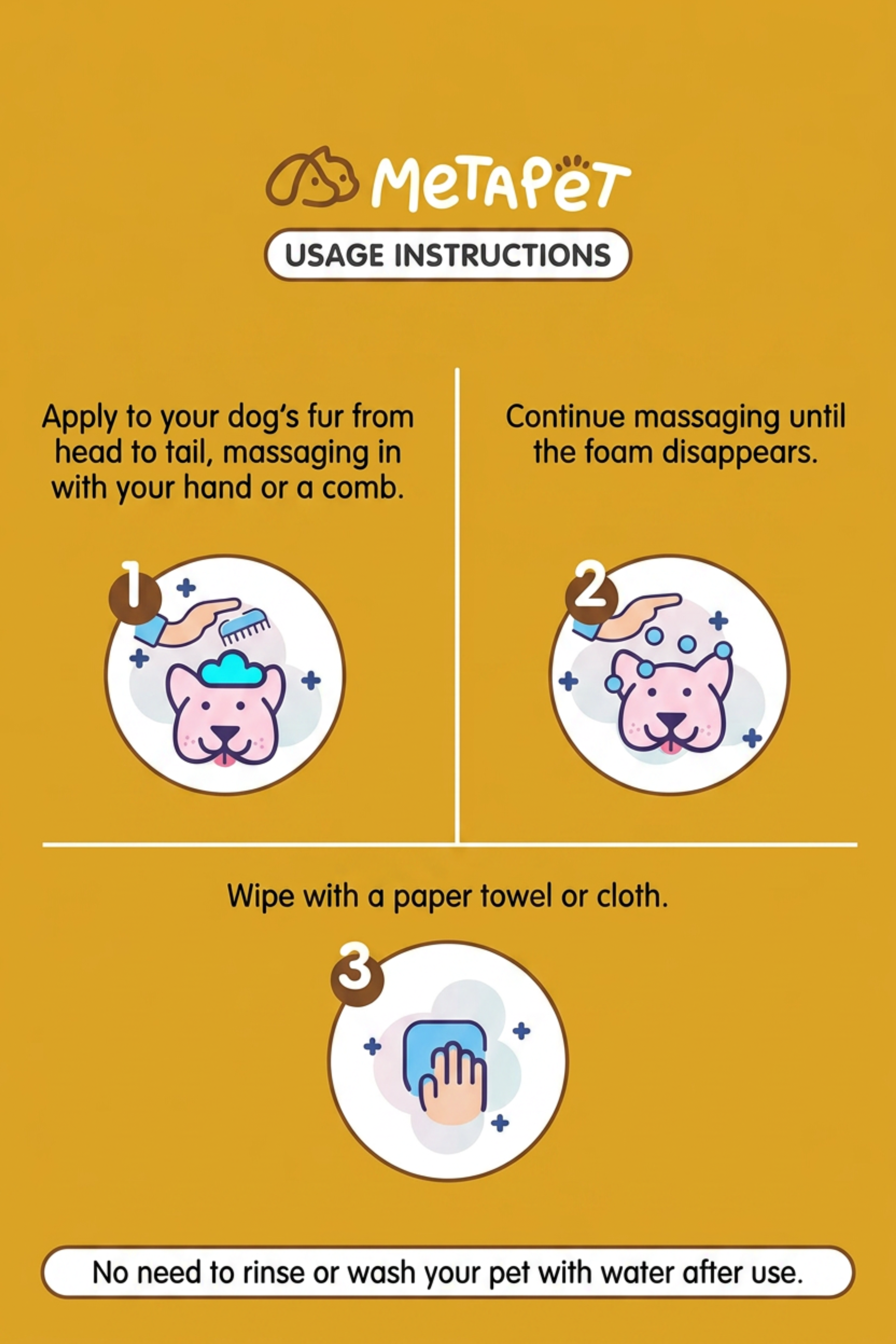
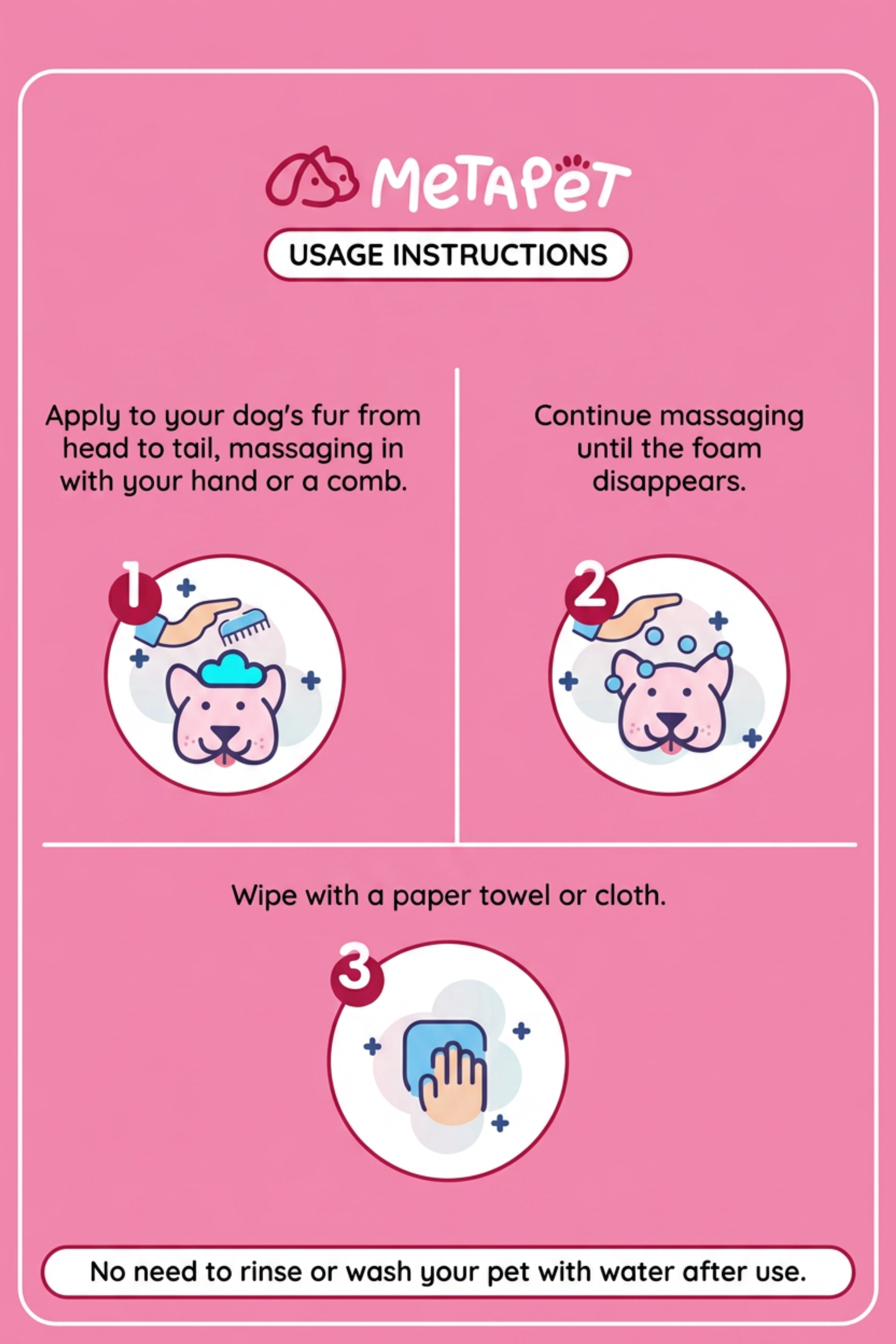
Off-duty coat and paw care is part of any working dog's everyday routine, and dogs who cover a lot of ground pick up plenty of dirt. General grooming products such as MetaPet's Nano-Series Hygiene & Care Towel Wipes and Nano-Series Pawsome paw cleaning foam are everyday cosmetic grooming aids for keeping coat and paws clean between baths. They are not medical products and do not replace veterinary care.
And if you have a dog of your own, the everyday foundation is the same one working dogs are built on: calm handling, consistent training, good preventive veterinary care, and attention to the small behavior changes that signal something is wrong. If you notice your dog becoming reluctant, stiff, withdrawn, or reactive in ways that are new, speak with your veterinarian — in working dogs and pets alike, that is very often a physical message rather than a behavioral one.