Prebiotics and Fiber in Dog and Cat Diets Explained

Fiber is one of the least glamorous words on a pet food label and one of the most misunderstood. It is not a nutrient in the conventional sense — dogs and cats cannot digest it the way they digest protein or fat — and yet the amount and type of fiber in a diet has a noticeable effect on stool quality, appetite regulation, and the population of bacteria living in the intestine.
Prebiotics sit inside this category. They are specific types of fermentable fiber that are not absorbed by the animal but are used as fuel by particular gut bacteria. The distinction between prebiotics and probiotics causes endless confusion: probiotics are live microorganisms, prebiotics are food for the microorganisms already present. Both appear on pet products, and they are not interchangeable.
This guide explains what fiber does in the digestive tract, how soluble and insoluble types differ, where common ingredients fit, what prebiotics are and are not, and how to approach a conversation with your veterinarian about your own pet's diet. It is educational background, not dietary advice for a specific animal.
Important: This article shares general educational information for pet owners and is not a substitute for an in-person veterinary examination, diagnosis, or treatment. For any medical concern or emergency, contact your veterinarian promptly.
What Fiber Is, in Plain Terms
Dietary fiber is the part of plant material that the animal's own digestive enzymes cannot break down. It passes through the stomach and small intestine largely intact and arrives in the large intestine, where two things can happen: it can add bulk and hold water, or it can be fermented by resident bacteria, or in many cases both to varying degrees.
Dogs and cats are not herbivores, and neither species requires large amounts of fiber. But both have gut bacteria, and those bacteria respond to what arrives in the large intestine. This is why fiber content influences digestive comfort even in animals that evolved on meat-heavy diets, and why manufacturers pay attention to it.
- Not digested by the pet: fiber passes the small intestine largely intact.
- Used by gut bacteria: fermentable types feed the microbial population in the colon.
- Affects stool: water-holding and bulking properties influence consistency directly.
- Species differences: cats are obligate carnivores and generally need less fiber than dogs.
Soluble Versus Insoluble Fiber
The traditional split describes how fiber behaves in water, and it maps reasonably well onto what each type does in the gut. Most real ingredients contain a mixture rather than being purely one or the other.
- Soluble fiber: dissolves or swells in water to form a gel. It slows transit somewhat, holds water in the stool, and is generally more readily fermented by gut bacteria. Psyllium and pectins are common examples.
- Insoluble fiber: does not dissolve. It adds bulk and tends to speed transit through the colon. Cellulose is the classic example.
- Fermentability: a more useful modern framing than solubility alone. Highly fermentable fibers produce more bacterial activity; poorly fermentable ones mostly add bulk.
- Mixed-source fibers: many pet food ingredients, such as beet pulp, sit in a moderate middle ground and are used precisely for that balance.
Neither type is better in the abstract. The appropriate amount and blend depends on the individual animal, and this is exactly the sort of judgment that belongs with a veterinarian who knows your pet's history rather than with a general article.
Where Prebiotics Fit
A prebiotic is a fermentable substrate that selectively supports particular groups of beneficial gut bacteria. In pet foods and supplements the terms you are most likely to encounter are inulin, chicory root, fructooligosaccharides (often written as FOS), and mannanoligosaccharides (MOS). Beet pulp is also commonly included for its moderate fermentability.
The distinction from probiotics is worth being clear about. Probiotics are live microorganisms intended to add to the existing population. Prebiotics are non-living food components intended to support the population already present. Some products contain both, which is sometimes described as a synbiotic. None of these are medicines, and none should be presented as treating a disease.
- Prebiotic: fermentable fiber that feeds resident gut bacteria.
- Probiotic: live microorganisms supplied in the product itself.
- Postbiotic: compounds produced by bacterial fermentation, an increasingly discussed category.
- Synbiotic: a combination of prebiotic and probiotic components in one product.
Common Fiber Ingredients on Pet Food Labels
Label reading gets easier once the common ingredients are familiar. Their presence is not a quality signal in itself — what matters is whether the overall diet suits your pet.
- Beet pulp: a moderately fermentable fiber widely used in commercial diets, valued for its balanced effect on stool consistency.
- Cellulose or powdered cellulose: largely insoluble, used to add bulk, and common in diets formulated for weight management.
- Psyllium husk: highly soluble and strongly water-holding, used in some therapeutic diets.
- Chicory root, inulin, FOS: included specifically for prebiotic fermentability.
- Pumpkin: a popular home addition; useful in small amounts for some pets, but ask your veterinarian about appropriateness and quantity.
- Pea fiber, oat fiber, tomato pomace: various plant fiber sources that appear in different formulations.
Guaranteed analysis panels typically list crude fiber, which is a laboratory measure that mostly captures insoluble fiber and understates total dietary fiber. Two foods with the same crude fiber figure can behave quite differently, which is one reason label numbers alone are a limited guide.
Signs That Diet and Digestion Are Worth Discussing
Owners often reach for a fiber supplement when something about their pet's digestion seems off. That instinct is understandable, but changes in stool or appetite can have many causes, and adding fiber to an undiagnosed problem can delay finding out what is actually going on.
- Persistently loose stool: more than a day or two warrants a veterinary conversation.
- Straining or difficulty passing stool: this needs prompt veterinary attention, particularly in cats.
- Blood or mucus in the stool: always a reason to call your veterinarian.
- Sudden changes in appetite or weight: these should be investigated rather than managed at home.
- Repeated vomiting: contact your veterinarian rather than adjusting the diet independently.
- Frequent hairballs in cats: worth discussing, as this can relate to grooming, skin, or digestive factors.
A veterinary examination can distinguish between a dietary issue, a parasite, an inflammatory condition, and a range of other possibilities. Fiber adjustments made without knowing which applies are guesswork.
How to Change a Diet Safely
If, after discussion with your veterinarian, a dietary change is appropriate, how it is introduced matters as much as what is introduced. Abrupt changes commonly cause digestive upset even when the new food is entirely suitable.
- Confirm the plan with your veterinarian, including the target food and any specific quantities.
- Mix roughly a quarter new food with three quarters current food for two to three days.
- Move to half and half for a further two to three days if all is well.
- Move to three quarters new food for two to three days.
- Complete the transition, taking longer than a week if your pet is sensitive.
- Keep notes on stool quality and appetite throughout so you have something concrete to report.
Change one thing at a time. Adding a new food and a new supplement simultaneously makes it impossible to tell which produced any effect, and if there is a problem you will not know what to stop.
Supplements as a Complement to Veterinary Care
Supplements marketed around digestive support are widely available, and they sit alongside good daily care rather than replacing any part of it. They do not diagnose, treat, cure, or prevent disease, and they are not a substitute for veterinary examination, an appropriate complete diet, parasite prevention, or vaccination.
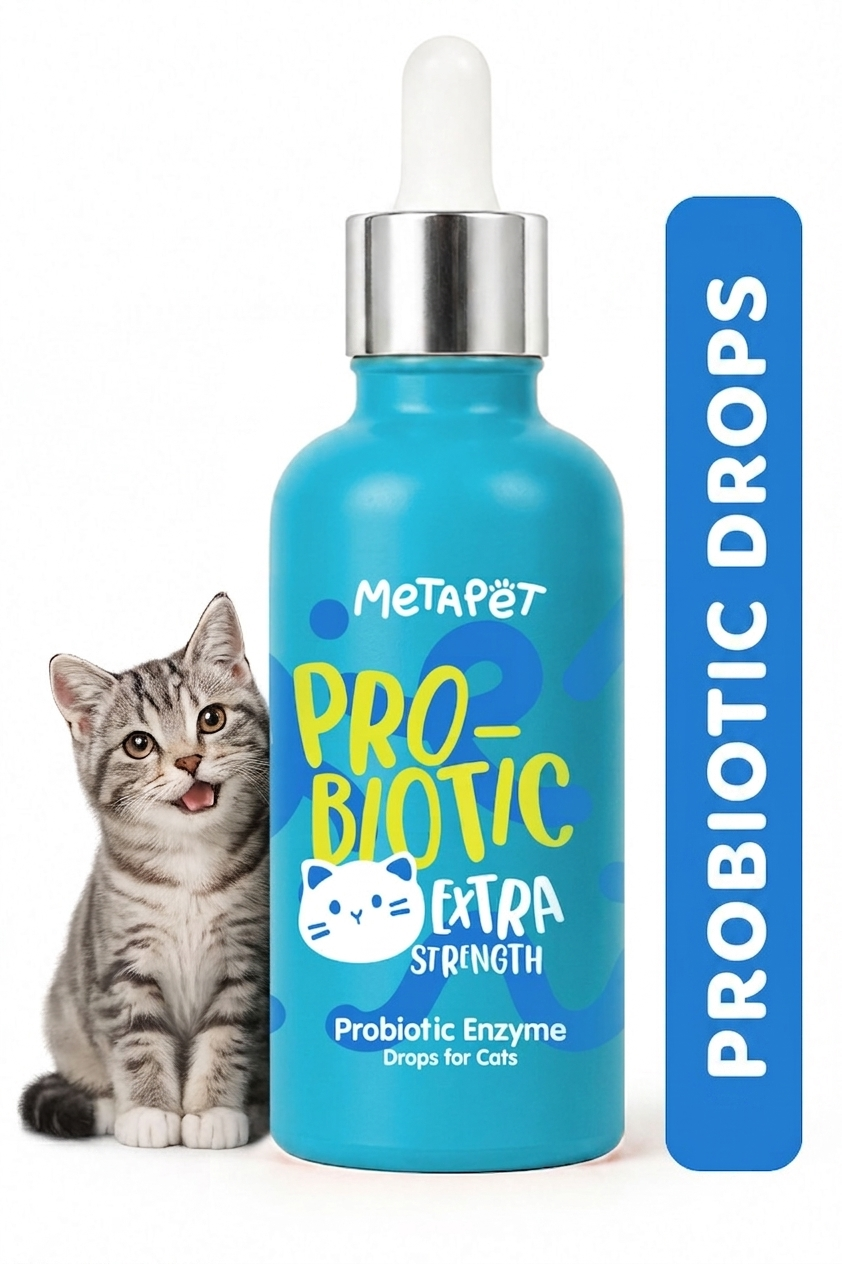
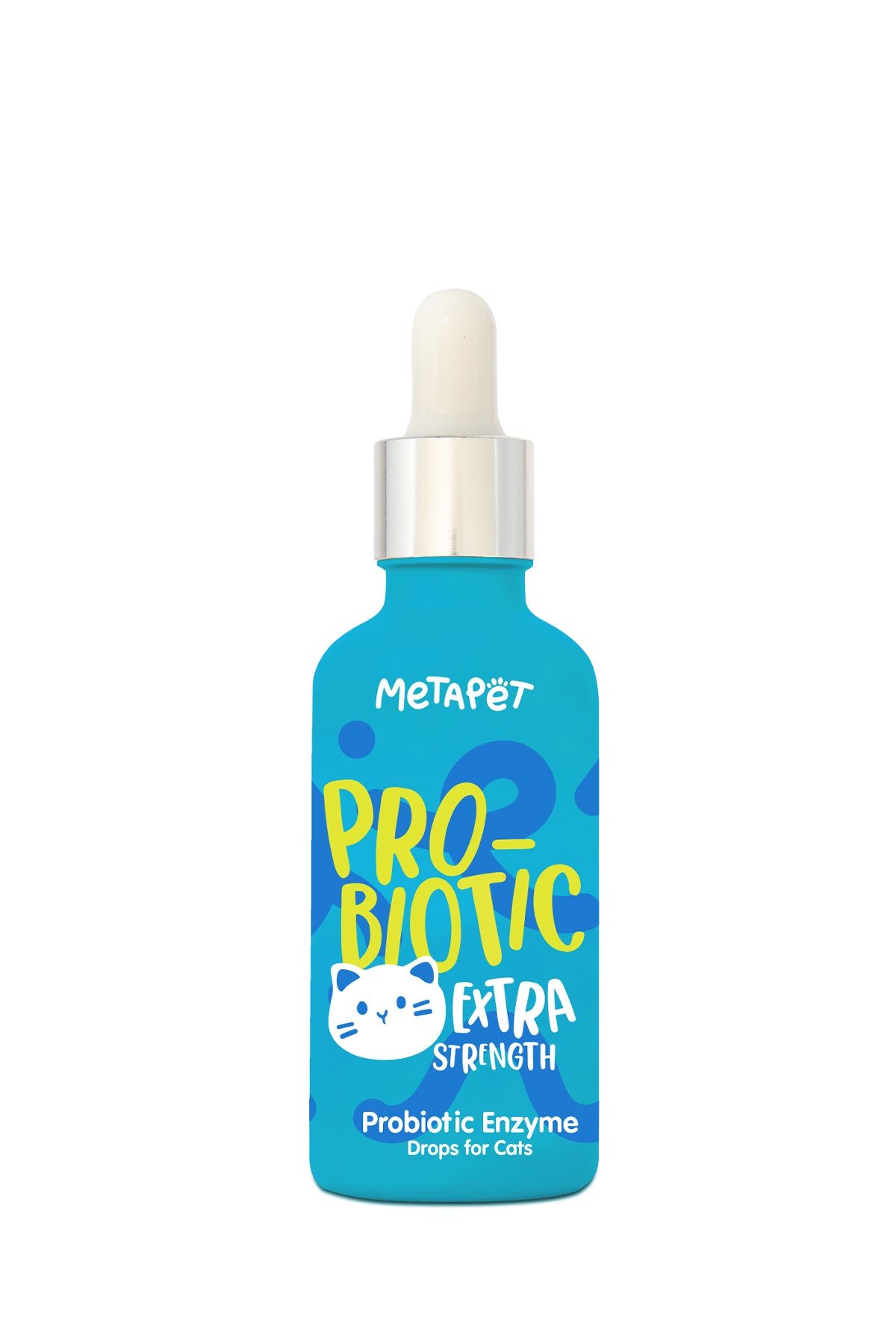
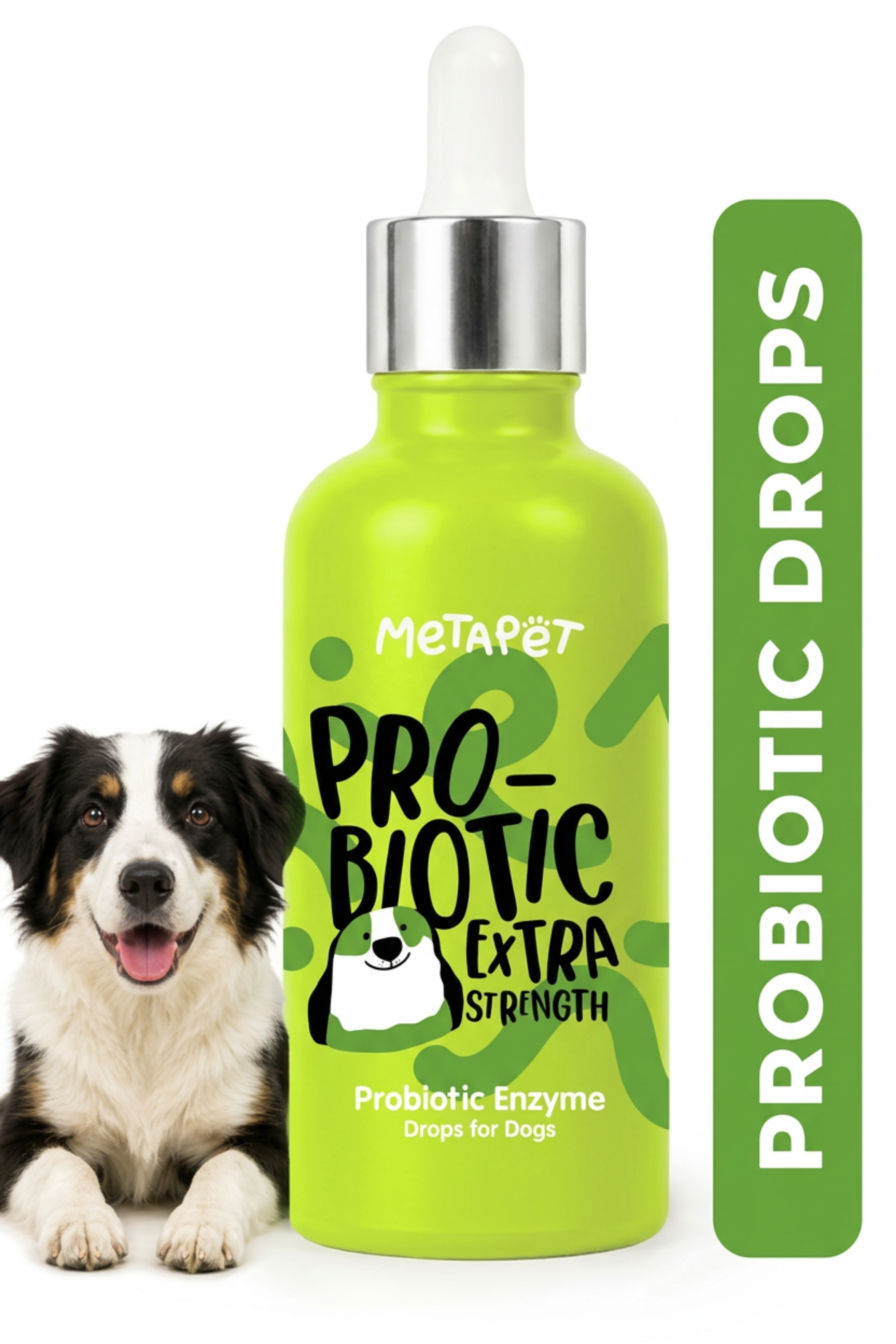
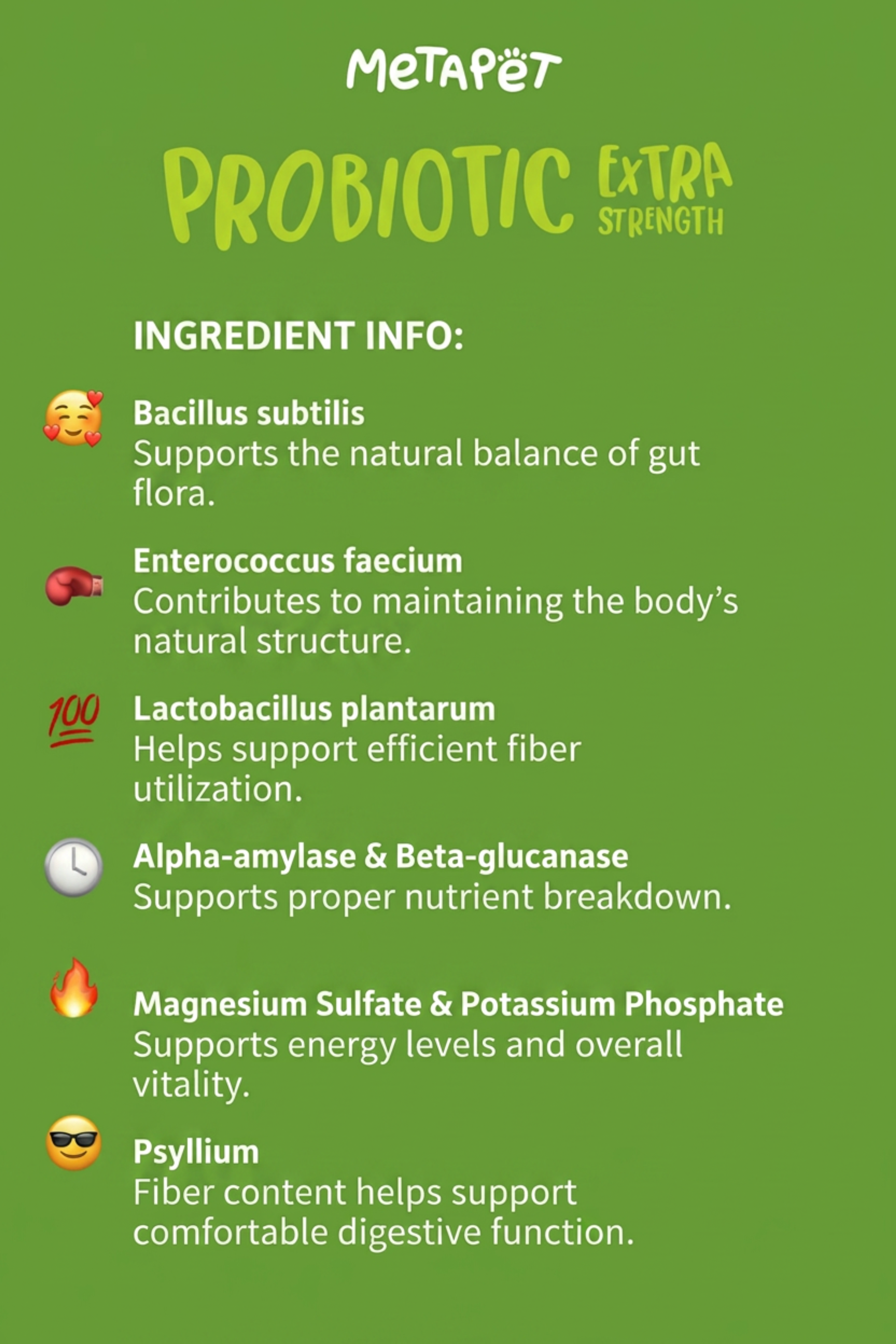
MetaPet's Probiotic Drops for Dogs and Probiotic Drops for Cats are supplement products formulated to be given as part of a regular care routine and can be considered as an optional complement to a balanced diet. As with any supplement, speak with your veterinarian before adding one, particularly if your pet is unwell, is on medication, or is fed a prescribed diet. Follow the product instructions, introduce anything new gradually, and stop and contact your veterinarian if you notice any change you were not expecting.
- Ask first: your veterinarian knows your pet's history and current medications.
- One change at a time: so you can tell what, if anything, made a difference.
- Follow the label: dosing instructions exist for a reason.
- Never delay care: a supplement is not a reason to postpone an examination.
Frequently Asked Questions
Do cats need fiber at all?
Cats are obligate carnivores and generally require less fiber than dogs, but commercial cat foods still contain some, and gut bacteria are present in cats as in any mammal. The appropriate level for an individual cat is a question for your veterinarian.
Is more fiber always better?
No. Excessive fiber can reduce the digestibility of a diet and dilute its nutrient density, which matters particularly for growing, underweight, or convalescing animals. More is not automatically better.
Can I just add pumpkin?
Plain pumpkin is commonly suggested and is used by many owners, but the appropriate amount varies a great deal with the size and situation of the pet. Ask your veterinarian rather than following a general figure from the internet.
Are prebiotics the same as probiotics?
No. Prebiotics are fermentable fibers that feed existing gut bacteria; probiotics are live microorganisms added by the product. Some products contain both.
The Short Version
Fiber is plant material the pet cannot digest but the gut bacteria often can. Soluble and fermentable types hold water and feed bacteria; insoluble types add bulk and speed transit. Prebiotics are the fermentable fibers included specifically to support the resident microbial population, and they are distinct from probiotics, which supply live organisms.
The right level and blend for any individual pet depends on species, age, body condition, and health status, which is precisely why it is a conversation to have with your veterinarian rather than a decision to make from a label. When a change is agreed, introduce it gradually and change one thing at a time.
This article is general educational information and not a substitute for an in-person veterinary examination. If your pet has ongoing digestive signs, a change in appetite or weight, or difficulty passing stool, contact your veterinarian rather than adjusting the diet on your own.