Sanitary Trims and Hygiene Clips for Dogs and Cats

There is a small grooming job that almost nobody talks about and that prevents a disproportionate number of unpleasant problems. It goes by several names — a sanitary trim, a hygiene clip, a sanitary clip — and it simply means keeping the fur short and tidy in the areas around the anus, the genitals, and the inner thighs.
For a short-coated dog or a healthy young cat who grooms well, it is entirely unnecessary. For a long-coated dog, a fluffy cat, an older animal who can no longer twist to reach behind, an overweight pet, or any animal with recurrent loose stools, it is one of the most useful things an owner can arrange.
It is also a job with real potential to go wrong at home. The skin in this region is thin, loose, and unforgiving, the anatomy is not always where you expect it to be under a thick coat, and clipper injuries here are painful and slow to heal. This guide covers who benefits, what is actually removed, how it is done safely, what to leave to a professional, and how to maintain the area between appointments.
Important: This article shares general educational information for pet owners and is not a substitute for an in-person veterinary examination, diagnosis, or treatment. For any medical concern or emergency, contact your veterinarian promptly.
What a Sanitary Trim Involves
A sanitary trim removes hair from a small, defined area: a neat margin around the anus, the fur on the inner thighs adjacent to it, and — in females — the area around the vulva. In males, the fur around the prepuce is often tidied at the same time. It is a functional trim rather than a stylistic one, and in most animals it is barely noticeable once done.
The purpose is straightforward. Long fur in these areas catches feces and urine. Once soiled, it holds moisture and bacteria against thin skin, becomes matted, and gives the animal something to lick at persistently. What starts as a hygiene inconvenience turns into skin inflammation, and skin inflammation in a warm, moist, constantly soiled area turns into infection.
A related trim, often done at the same appointment, is clearing the fur between and around the paw pads. Long pad hair traps grit, ice, and moisture, and it reduces traction on hard floors — which matters a great deal for an older dog who is already unsteady.
- Small area: a defined margin, not a full clip-out.
- Functional: about hygiene and comfort, not appearance.
- Not the same as a full body clip: which is a much bigger decision with its own considerations.
- Usually quick: a few minutes for a cooperative animal in experienced hands.
- Regular: most animals who need it need it every few weeks, not once.
Which Pets Benefit Most
Not every animal needs this. Working out whether yours does is largely a matter of looking, which most owners never do.
- Long-coated dogs: breeds with dense feathering around the rear are the classic candidates.
- Long-haired cats: Persians, Ragdolls, Maine Coons, and similar coats mat quickly in this area.
- Overweight pets: an animal who cannot physically reach behind to groom will not stay clean.
- Senior animals: reduced flexibility from arthritis makes self-grooming in this area difficult or painful.
- Arthritic cats: often the first place a cat stops grooming, and a useful early clue that a cat is sore.
- Pets with chronic loose stools: soiling is repeated and matting develops fast.
- Dogs with skin folds near the tail: particularly in breeds with tightly curled or screw tails.
- Animals recovering from illness or surgery: temporarily unable to groom normally.
- Pets with urinary incontinence: where urine scald is a real risk.
- Brachycephalic and short-legged breeds: anatomy sometimes makes clean urination harder.
One point deserves emphasis because it is so often missed. When a previously fastidious cat develops a grubby, matted rear end, that is very frequently not a grooming problem — it is a medical sign. Cats stop grooming their backside when it hurts to twist, when they are unwell, when they are overweight, or when arthritis has crept up on them. A cat whose coat condition has deteriorated at the back end deserves a veterinary examination, not just a trip to the groomer.
The same logic applies to a dog who suddenly starts soiling the fur around the anus when they never did before. Loose stools, anal gland problems, reduced mobility, and pain are all worth excluding.
What Goes Wrong Without It
The problems that follow from a neglected rear end range from mildly unpleasant to genuinely serious, and they escalate faster than owners expect.
Matting is the first stage. Fur soiled with feces dries into a hard clump that pulls on the skin beneath, and each subsequent soiling adds to it. Mats in this area are painful, because they tug at thin skin every time the animal moves or sits.
In the worst cases, particularly in long-haired cats, the accumulated mat can form a solid plug that physically blocks the passage of feces. This is a recognized condition, it is an emergency, and it requires prompt veterinary attention rather than an attempt to cut it away at home.
Skin disease follows close behind. Trapped moisture, warmth, and bacteria produce inflamed, infected skin under the mat. Because the mat covers it, owners frequently do not see how bad it has become until the mat is removed — and groomers regularly find raw, ulcerated skin beneath a mat that looked merely untidy from outside.
Persistent licking is another consequence, sometimes misinterpreted as anal gland trouble or worms. And in the summer months, soiled fur is an attractant for flies, which is the beginning of a distinctly nastier problem that needs urgent veterinary care.
Doing It Safely at Home
Some owners can manage a basic sanitary trim at home on a calm, cooperative animal. Many should not, and there is no shame in the second category. If you are going to try, these are the ground rules.
- Use proper pet clippers with a guard, never scissors. Scissors are a leading cause of home grooming injuries in this area, because loose skin tents up into the blades and is cut before you see it.
- Work only on clean, dry, brushed-out fur. Never attempt to clip through an existing mat.
- Have a second person hold and reassure the animal wherever possible.
- Trim in the direction of hair growth with short, light passes rather than pushing against the skin.
- Keep the clipper flat against the body rather than digging in at an angle.
- Stop frequently and check the blade temperature against your own wrist — clipper blades get hot quickly and cause burns.
- Leave a sensible margin; you are not trying to shave the area bare.
- Stop immediately if the animal becomes distressed, and finish another day or hand it to a professional.
Never attempt to clip an animal who is struggling, growling, or frightened. This region is sensitive and the potential for both injury and a lasting negative association is high. An animal who learns that grooming means being pinned down will be harder to handle for years afterward.
And if you find matting rather than simple soiling, stop. Mats need to be clipped out from underneath by someone who can distinguish skin from mat by feel, and doing it wrongly is one of the most common causes of accidental lacerations in pet grooming.
When to Use a Professional Groomer
For a great many animals, a professional is simply the right answer, and the cost is modest for a job done in a few minutes by someone who does it many times a day.
Use a groomer if your pet has any matting, if the coat is dense or long, if the animal is anxious or wriggly, if you are not confident with clippers, or if you have tried and it did not go well. A professional groomer has proper equipment, restraint techniques that keep the animal safe without force, and — importantly — the experience to recognize skin problems under the coat and tell you about them.
When booking, describe what you want specifically. Ask for a sanitary trim and a paw pad trim rather than assuming they are included; grooming packages vary. Mention any medical issues, any areas your pet dislikes being touched, and any recent surgery or skin problem.
For severely matted animals, particularly cats, the appropriate route is often the veterinary practice rather than the grooming salon. A badly matted cat may need sedation to be de-matted safely and comfortably, and attempting it awake is distressing and risks injury. This is a legitimate veterinary procedure, not an admission of failure, and cats are usually visibly happier afterward.
- Tell the groomer: about arthritis, recent surgery, skin conditions, or areas that cause pain.
- Ask them to report: any redness, sores, lumps, or unusual smell they find under the coat.
- Book regularly: a routine every four to eight weeks prevents the problem rather than fixing it.
- Ask for a demonstration: most groomers will happily show you basic maintenance for between visits.
Keeping the Area Clean Between Trims
A trim removes the fur that causes the problem; day-to-day maintenance is what keeps the area comfortable in between.
Check the area regularly — a quick look every few days for a pet who is prone to soiling. Catching a small amount of soiling early takes thirty seconds; catching it a week later means a mat. Brush the surrounding fur through with a suitable brush or comb to prevent tangles forming at the trim margin.
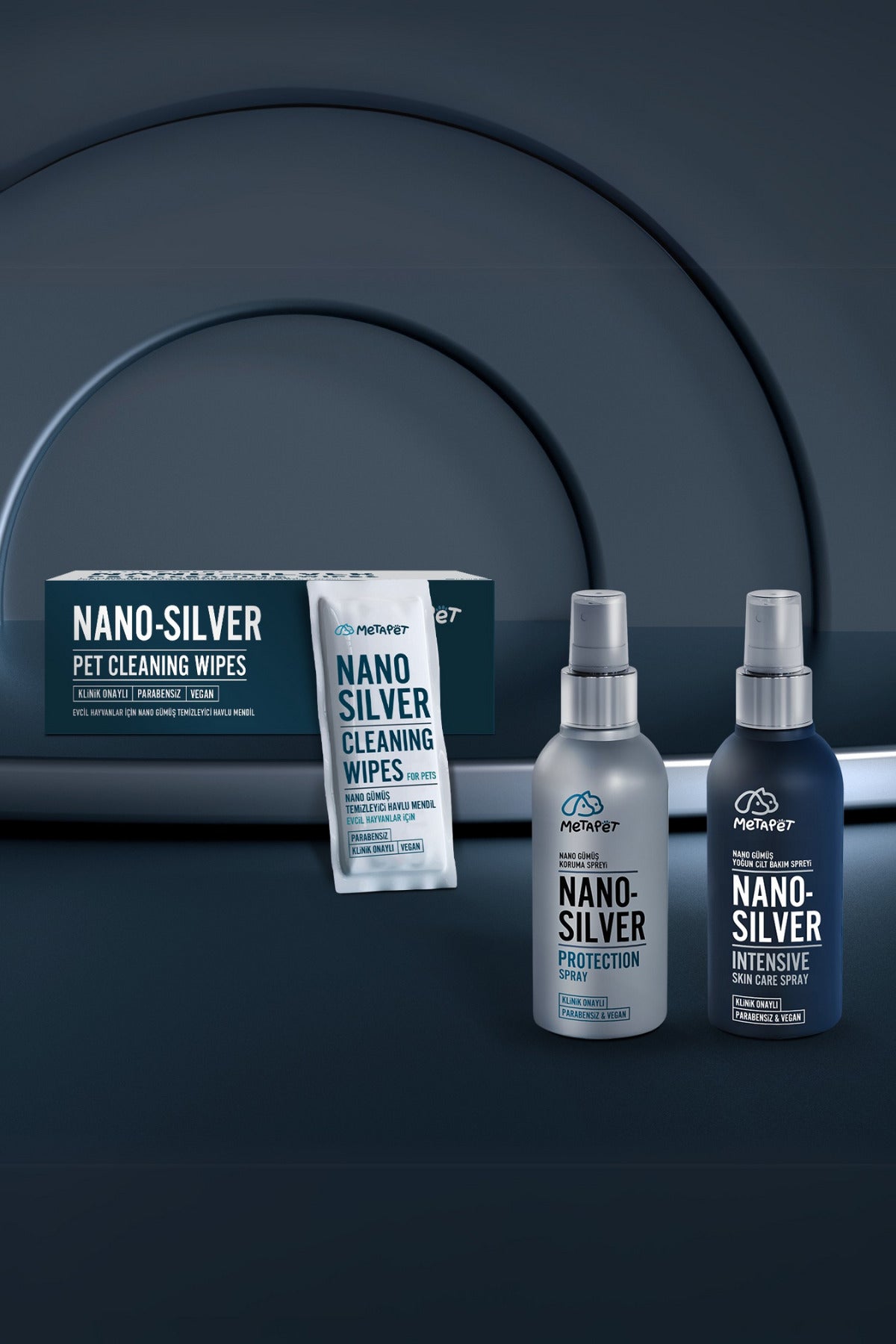
For light soiling, a soft cloth moistened with warm water is usually enough. Wipe gently, work outward, and dry the area thoroughly afterward, because leaving it damp defeats the purpose entirely. Where a wipe is more convenient, cosmetic grooming wipes such as the MetaPet Nano-Series Hygiene & Care Towel Wipes are designed to help clean and tidy the coat between baths. They are cosmetic grooming aids, not medicated products, and they are not intended to treat, prevent, or manage any skin condition, and they are a complement to veterinary care rather than a substitute for it — if the skin is red, broken, or sore, that needs a veterinary opinion rather than a wipe.
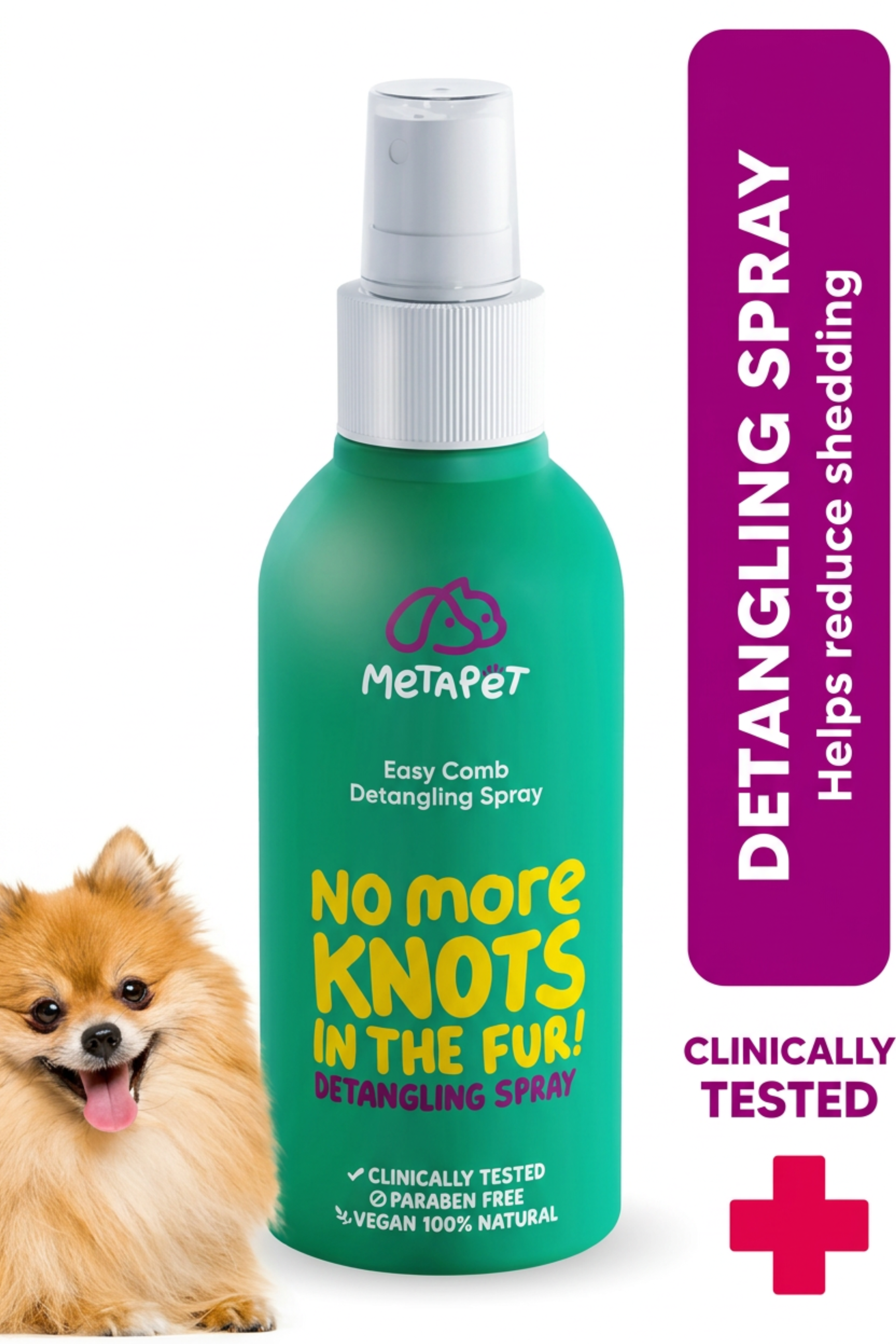
Where tangles are forming at the edges of the trimmed area, a detangling product used with a comb can make combing easier and reduce pulling. Products such as the MetaPet No More Knots in the Fur Detangling & Easy-Combing Spray are cosmetic grooming products formulated to help make combing easier; they are a complement to regular brushing, professional grooming, and veterinary care rather than a substitute for any of them, and they will not resolve an established mat. Always check with your veterinarian before applying any product to broken or inflamed skin.
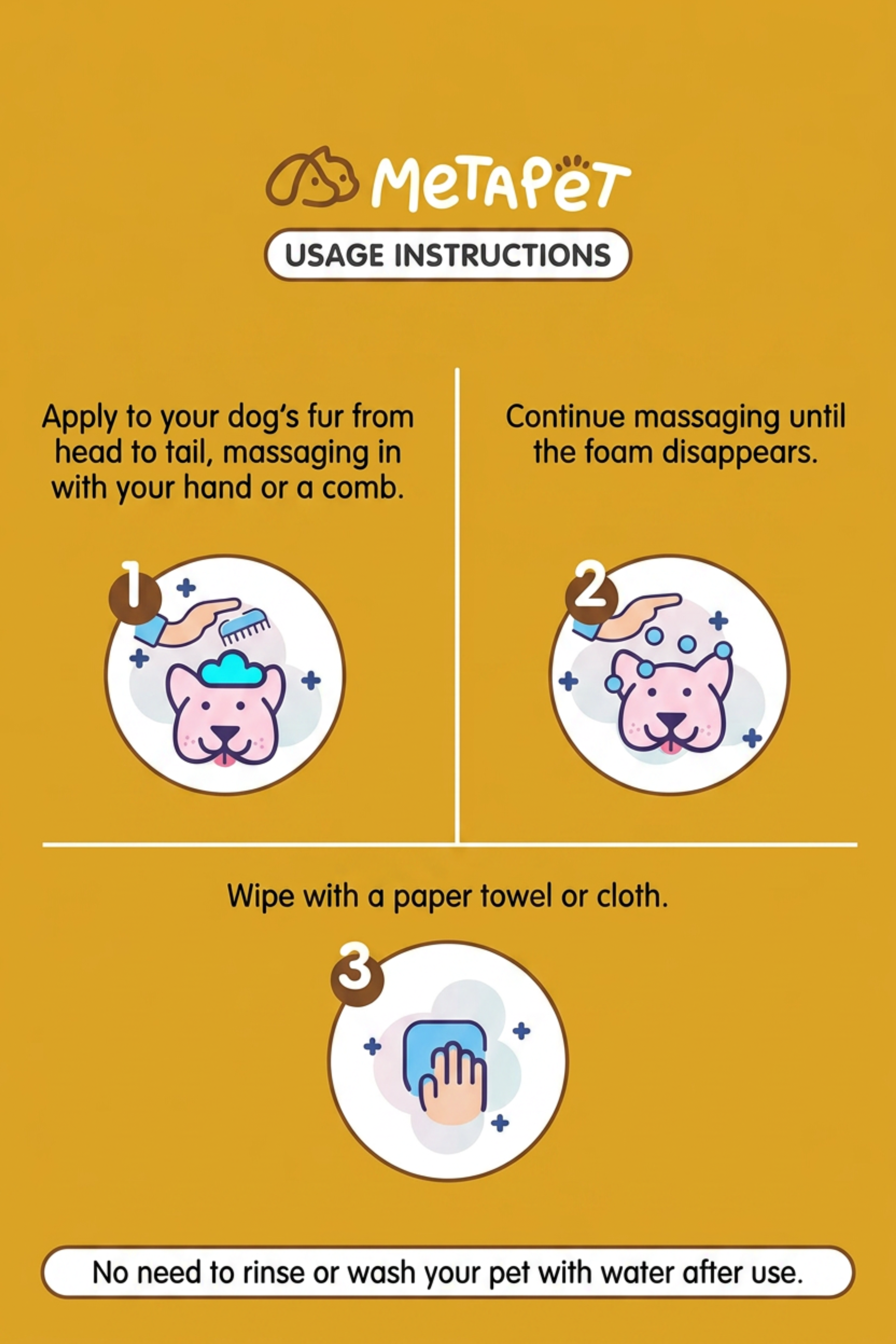
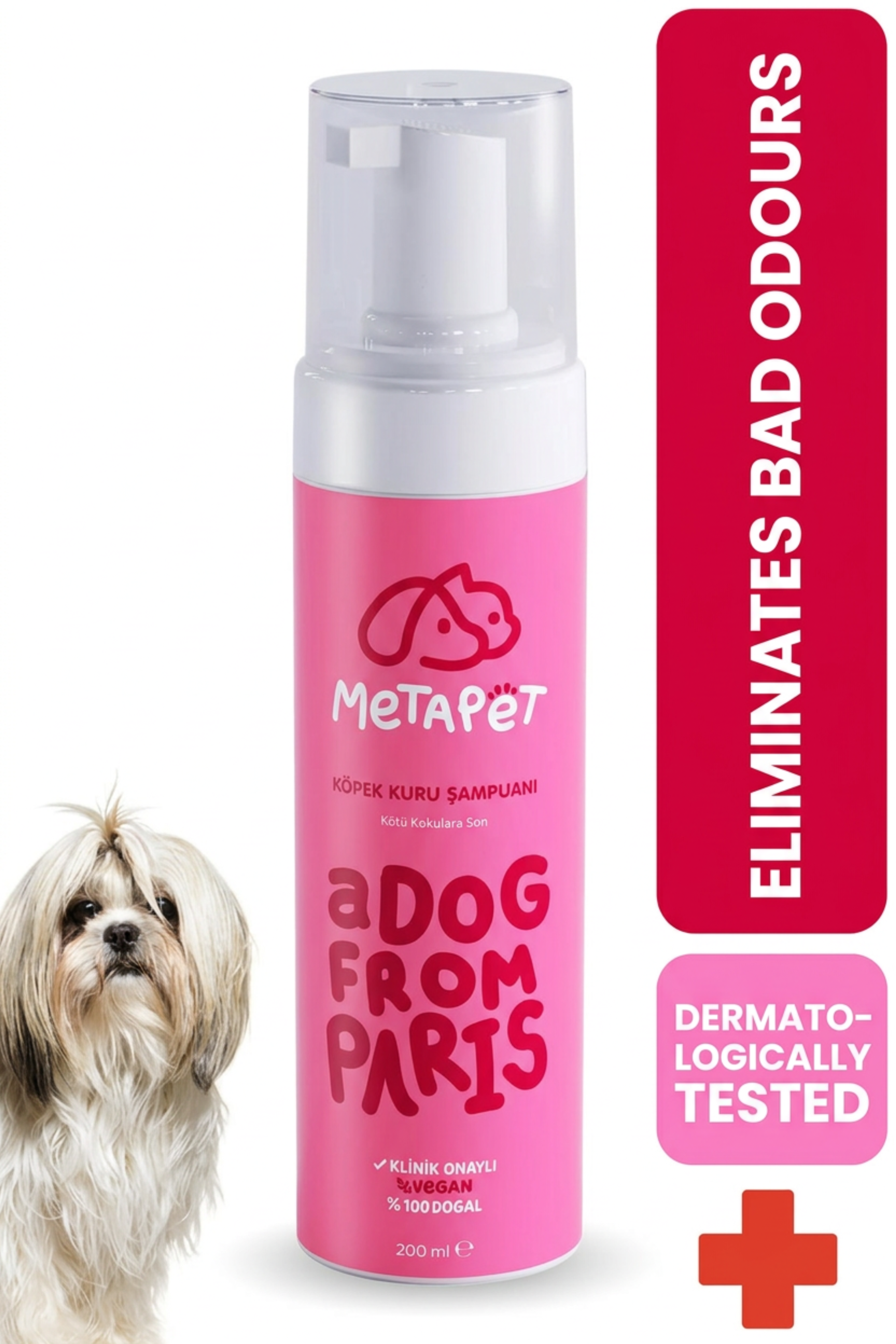
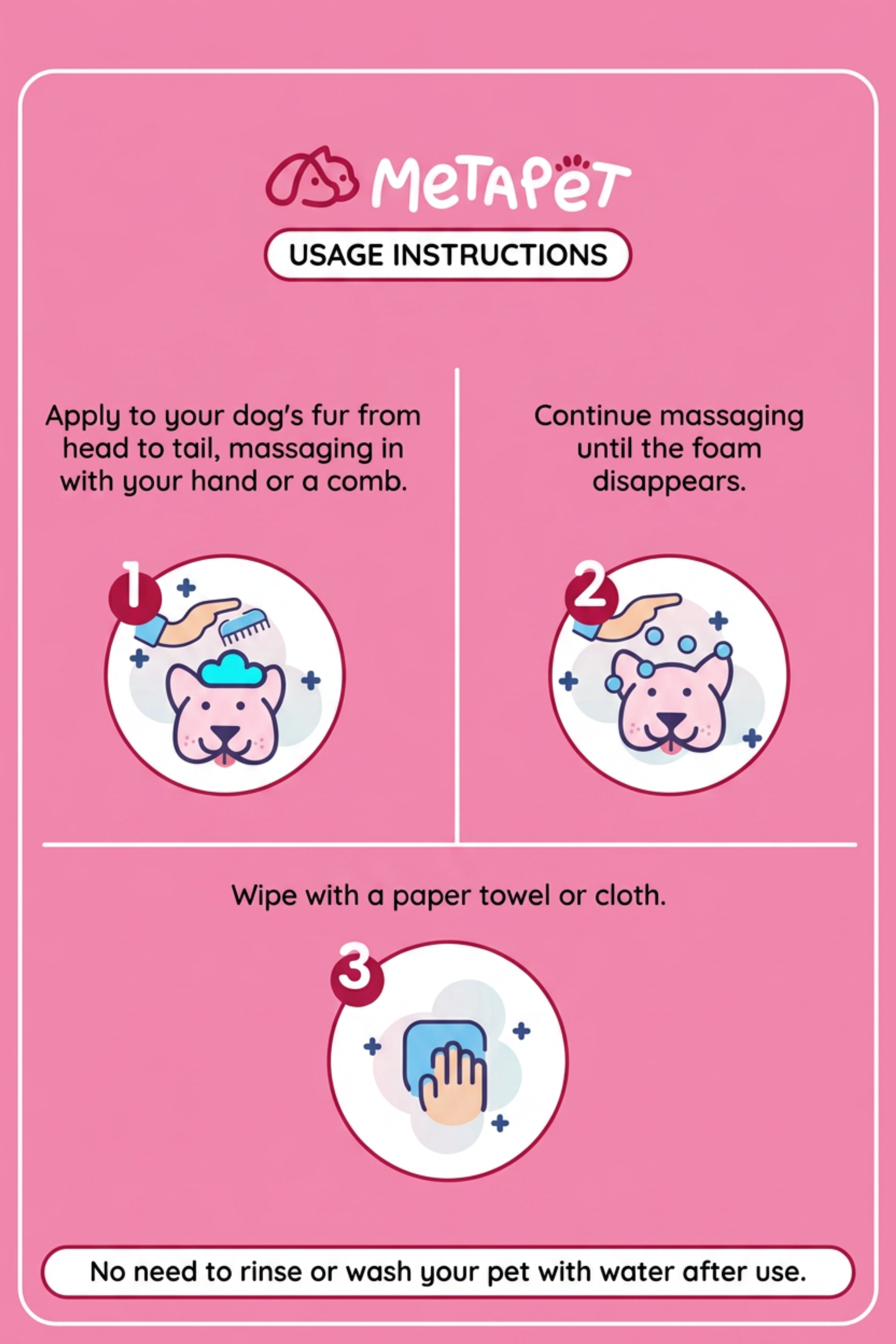
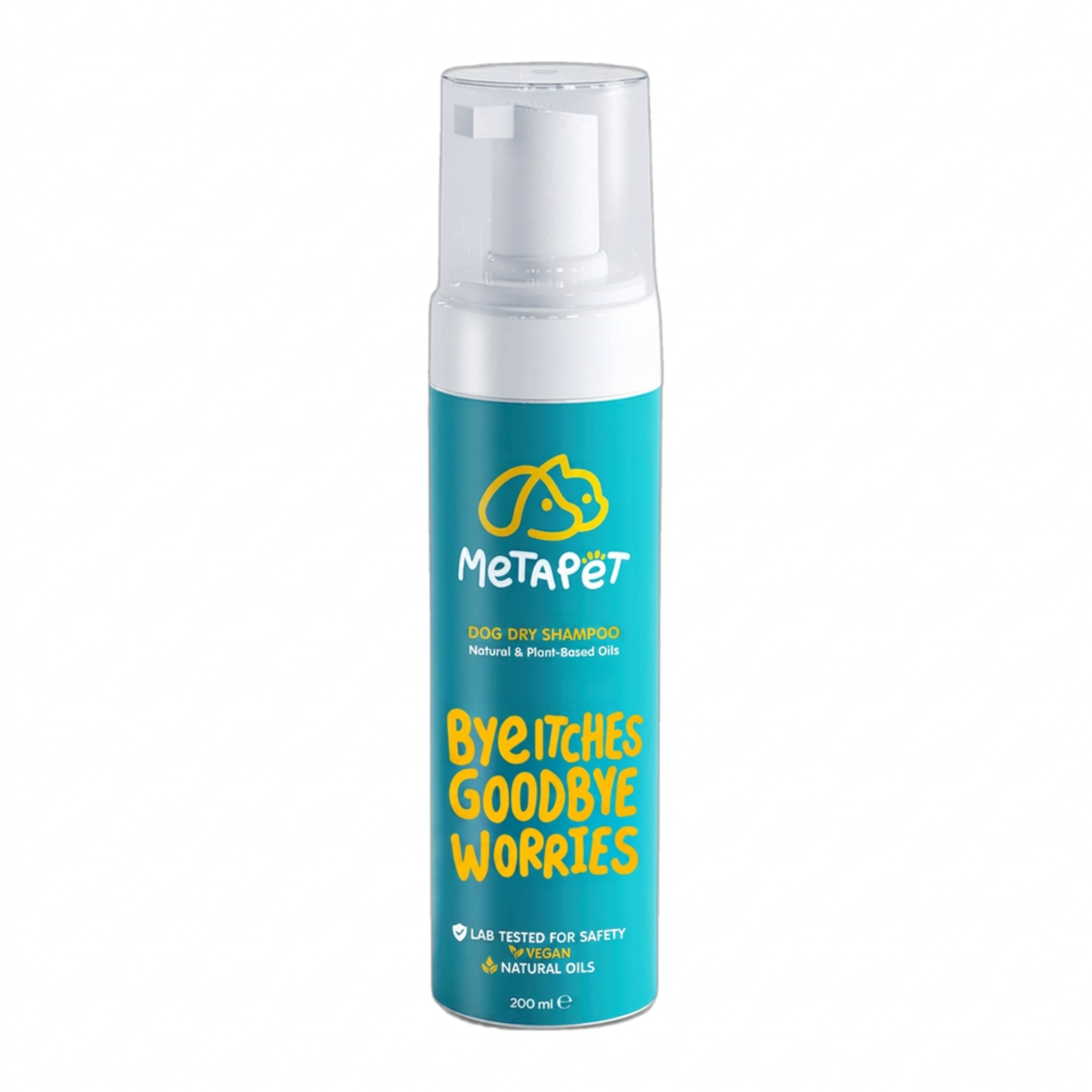
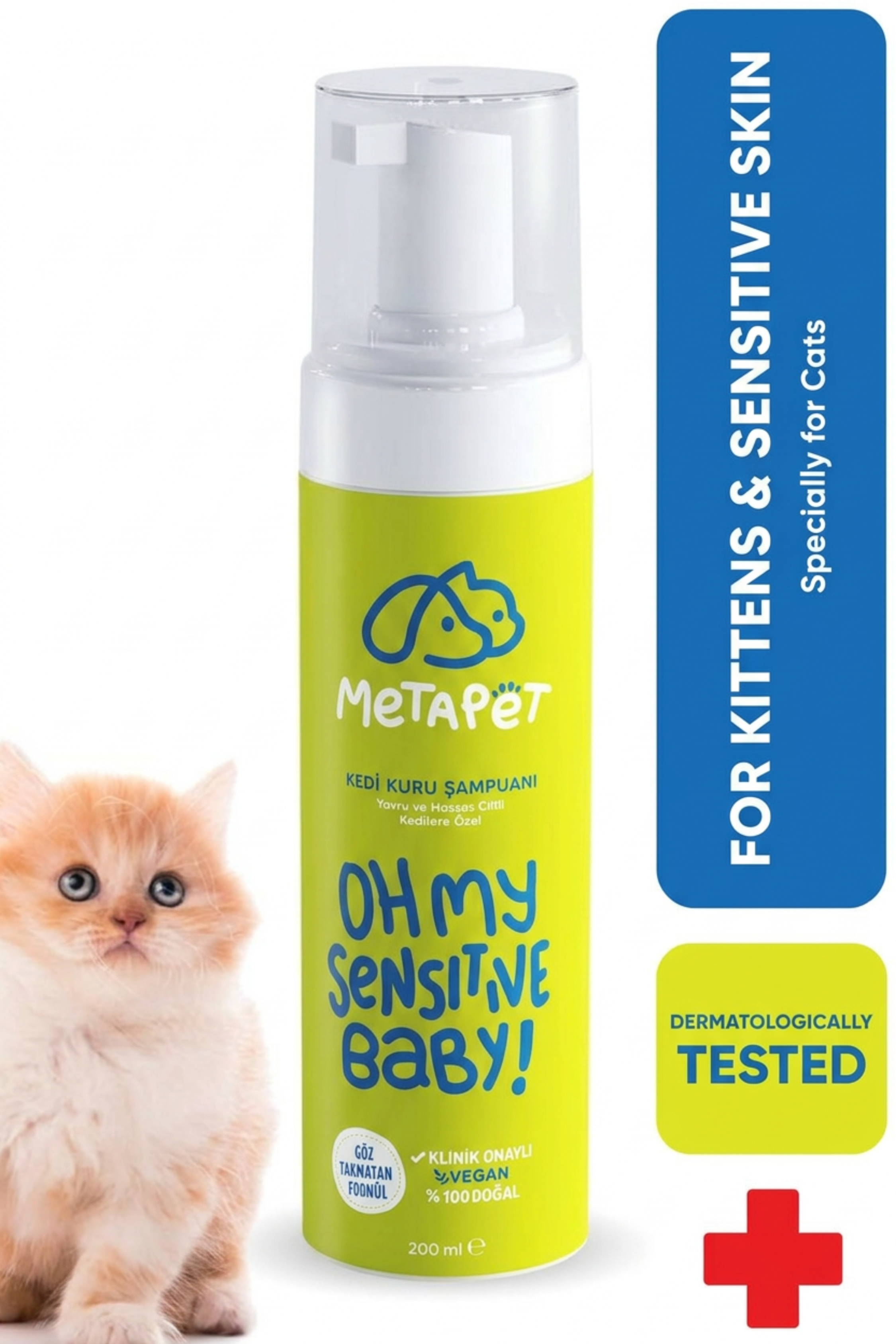
For a full-body wash where a bath is not practical — an older animal, a cat who cannot be bathed, or a pet recovering from illness — waterless foam products such as the MetaPet A Dog From Paris Waterless Dry Foam Shampoo for Dogs or the MetaPet Oh My Sensitive Baby Waterless Dry Foam Shampoo for Cats are cosmetic grooming products designed to help clean and freshen the coat without rinsing. They are cosmetic grooming products, not medicated products, they are not intended to treat, prevent, or manage any skin condition, and they are a complement to veterinary care and to any prescribed bathing routine rather than a substitute for either.
Cats: A Few Specific Points
Cats deserve their own section because the practicalities differ substantially from dogs.
Cat skin is markedly thinner and more mobile than dog skin, and it tears with alarming ease. This is the main reason home clipping of a cat's rear end is discouraged for anyone without training, and why scissors near a cat's skin should be avoided entirely. Groomers and veterinary nurses who work with cats develop a specific feel for where skin ends and mat begins.
Cats also tolerate restraint poorly and remember bad experiences vividly. A short, calm, positive session is worth far more than a thorough one that leaves the cat frightened of being handled. Break the job into small pieces across several days if necessary, and stop before your cat wants to stop rather than after.
The most useful preventive step for a long-haired cat is a regular, brief combing routine established young — a minute or two a day rather than a battle once a month. Comb right down to the skin rather than skimming the surface, since surface brushing on a long coat can leave the mat forming underneath entirely untouched.
And return to the point that matters most: a cat who has stopped keeping their rear end clean has told you something. Arthritis, obesity, dental pain, kidney disease, and hyperthyroidism can all reduce grooming, and the coat is frequently the earliest visible sign. Book the veterinary appointment as well as the groomer.
Signs the Skin Underneath Needs a Vet
A grooming task turns into a medical one at a fairly clear line, and these are the findings that cross it.
- Red, raw, or weeping skin: under or around a mat, or in the trimmed area.
- A bad smell: beyond the odor of soiling itself.
- Persistent licking or biting: at the area after it has been cleaned and trimmed.
- Scooting: dragging the bottom along the ground, which often indicates anal gland problems.
- Swelling near the anus: which needs same-day assessment.
- Visible wounds or sores: including any nick from home grooming that does not close.
- Maggots or fly eggs in the fur: an emergency requiring immediate veterinary care.
- Straining to pass feces: or an inability to do so.
- Blood on the fur or in the stool: from any source.
- A cat who has abruptly stopped grooming: always worth a health check.
If you nick the skin during home grooming, clean the area gently with warm water, keep your pet from licking it, and contact your veterinary practice for advice. Small wounds in this region become infected easily because of where they are.
Building a Routine That Sticks
Grooming maintenance fails for the same reason most routines fail — it is not scheduled, so it happens when someone notices a problem rather than before one develops.
Pick a frequency and put it in the calendar. For most long-coated animals who need it, a sanitary trim every four to eight weeks and a check every few days is about right. Pair the check with something you already do — a Sunday brush, or the evening the bins go out — so it does not depend on remembering.
Make the handling itself pleasant. Every session should end with something the animal enjoys, and any session that is going badly should be shortened rather than pushed through. Animals who are handled routinely around the rear end from a young age are far easier to groom, and far easier for a veterinarian to examine, for the whole of their lives.
Keep a note of what you find. A pattern of increasing soiling, more frequent matting, or a pet becoming more reluctant to be handled at the back end is worth mentioning at the next veterinary appointment. These are exactly the slow changes that get normalized at home and that turn out to have a medical explanation.
Myths and Facts
Myths, Corrected
- Myth: sanitary trims are purely cosmetic. They prevent matting, skin infection, and in severe cases obstruction.
- Myth: scissors are safer than clippers. The opposite is true here; loose skin tents into scissor blades easily.
- Myth: cats groom themselves so never need help. Older, overweight, arthritic, or unwell cats frequently cannot.
- Myth: a mat can be cut out at home if you are careful. Skin is often pulled into the mat; this is a leading cause of grooming lacerations.
- Myth: shaving the whole animal solves it. A full clip is a separate decision with different implications; a targeted trim is usually all that is needed.
- Fact: clipper blades get hot fast. Check the temperature frequently to avoid burns.
- Fact: a matted cat may need sedation. This is appropriate care, not excessive.
- Fact: a suddenly grubby cat is a medical question. Reduced grooming is an early sign of several conditions.
When to Contact Your Veterinarian
Thresholds for Calling
Most of this is grooming. Some of it is not.
- Seek urgent care for: inability to pass feces, a solid mat blocking the anus, or maggots in the fur.
- Call the same day for: swelling near the anus, bleeding, raw or ulcerated skin, or a wound from home grooming.
- Book an appointment for: a cat who has stopped grooming, recurrent scooting, or persistent licking at the rear.
- Book an appointment for: severe matting in an animal who will not tolerate grooming awake.
For any medical emergency, contact your veterinarian or your nearest emergency veterinary hospital immediately rather than waiting for regular opening hours.
The Practical Takeaway
What to Remember
A sanitary trim is a five-minute job that most owners have never heard of and that prevents a category of problems nobody enjoys dealing with. If you have a long-coated dog, a fluffy cat, a senior pet, or an animal carrying extra weight, it belongs in your routine.
The safety message is worth repeating because the injuries are avoidable. Clippers with a guard, never scissors. Clean, dry, brushed-out fur, never through a mat. A calm animal, never a struggling one. And if any of those conditions is not met, a groomer or a veterinary nurse will do the job properly in less time than it takes to worry about it.
Finally, treat the rear end as an information source rather than an inconvenience. It is one of the first places a cat's or dog's declining health shows up — in reduced grooming, in mobility that no longer allows twisting, in stools that have changed. An owner who looks there every few days notices those things weeks before anyone else would.