Moving to a New Home With Pets: A Low-Stress Guide

For humans, moving is boxes, paperwork and logistics. For dogs and cats, it is something stranger: the only territory they have ever trusted is dismantled piece by piece, loaded onto a truck and replaced with a building full of unfamiliar smells. It is no surprise that moving ranks among the most stressful events in a pet's life — or that a little planning dramatically softens it.
Cats and dogs experience moves differently. Dogs mostly anchor to their people: if you are there and the routine survives, the address matters less. Cats anchor to territory itself, which makes the loss of the old home and the strangeness of the new one a bigger event, and explains why most post-move problems — hiding, escape attempts, litter box lapses — are feline.
This guide walks through the packing weeks, moving day itself, the first hours in the new home and the settling-in period, with practical steps for both species and the safety details — identification, escape prevention, updated records — that matter most exactly when everything is in chaos.
Important: This article shares general educational information for pet owners and is not a substitute for an in-person veterinary examination, diagnosis, or treatment. For any medical concern or emergency, contact your veterinarian promptly.
Weeks Before: Pack Slowly, Keep Routines Sacred
Start packing earlier than you need to, precisely so it can happen gradually. A house that fills with boxes over three weeks is a mild curiosity; a house dismantled in one frantic weekend is an alarm bell. Leave the pet's own zone — beds, bowls, litter boxes, favorite resting spots — untouched until the very end, so a familiar island remains as the sea of cardboard rises.
- Guard the daily rhythm: feed, walk and play at the usual times through the whole process; routine is the one thing you can move for free.
- Let boxes become furniture: for cats especially, boxes standing around for weeks lose their menace — many become beloved hideouts.
- Book veterinary logistics early: refill any medications, request records, and ask your veterinarian for advice tailored to your pet — especially if previous moves or car rides have been rough.
- Line up an anchor person: identify a pet sitter, friend or daycare for moving day itself; the best place for most pets on the loudest day is elsewhere.
If your pet is a known worrier, this is also the time to build a calming toolkit and rehearse it. Some owners like to include MetaPet's Heyy Calm Down natural calming drops for cats (https://metapet.care/products/heyy-calm-down-natural-calming-drops-for-cats-50-ml) or the dog version (https://metapet.care/products/heyy-calm-down-natural-calming-drops-for-dogs-50-ml) as part of a broader wind-down routine during busy periods — these are designed to support calm, settled behavior as a complement to, never a substitute for, gradual preparation and your veterinarian's guidance. Introduce any new supplement well before the move and check with your veterinarian first, particularly for pets with health conditions.
Paperwork and Identification: Do This Before the Truck Comes
More pets go missing during moves than almost any other time, because doors stand open, routines collapse and the animal's mental map points to a home that no longer exists. Identification is your safety net, and it must be updated before the chaos, not after.
- Update the microchip registration: new address and phone number with the chip registry — this is the single most important item on this list.
- New ID tags: order tags with the new address early and switch them on moving day.
- Recent photos: keep current photos of each pet on your phone, including distinctive markings.
- Records and registration: carry vaccination certificates in your own luggage, and check licensing rules in the new city or state.
- Find the new veterinary clinic: identify a clinic — and the nearest emergency hospital — near the new home before you need either.
Moving Day: One Closed Door Saves the Whole Day
The heart of moving-day safety is a single decision: the pet spends the loud hours in one secure, clearly labeled room — or better, offsite with a sitter. Empty a small room the night before, furnish it with bed, water, litter box or pad, toys and something that smells of you, and put a large sign on the door: PET INSIDE — DO NOT OPEN. Tell every mover and helper personally.
Transport the pet in your own vehicle, never in the moving truck — cats in secure carriers, dogs harnessed or crated. For long drives, plan leash-only breaks for dogs and keep cats in their carriers except in fully closed rooms; a frightened cat loose at a rest stop is a catastrophe. Feed lightly before travel, keep the car ventilated and never leave animals alone in a parked car in warm weather.
Arrival: Set Up a Base Camp Room First
Resist the urge to release the pet into the whole new house. Before anything else is unpacked, set up one quiet base camp room: familiar bed, bowls, litter box, scratching post, toys — arranged roughly as they were in the old home. Unwashed items that smell of the old house and of you are the most valuable cargo on the truck; scent is how a cat decides a place might be survivable.
Let the pet decompress in this room while the unloading thunders on. Cats may hide for hours or days — this is normal, and the correct response is patience, quiet visits and food, not extraction from under the bed. Dogs can usually begin supervised, leashed tours of the house and yard the same day, expanding as confidence grows. Check the whole property first for escape routes: gaps in fences, loose screens, gates that do not latch.
Helping a Cat Claim the New Territory
A cat expands its territory in slow, concentric circles from the base camp, and the process cannot be rushed. Open one or two additional rooms at a time over several days, keeping food, litter and refuge in the original room until the cat is visibly relaxed in the larger space. Cat-owning households should wait several weeks before permitting any outdoor access at a new address, and many choose the move as the moment to transition to indoor-only life.
- Keep litter boxes predictable: same litter, same box style, quiet locations; add a second box in the expanded territory before you think you need it.
- Spread scent deliberately: gently rub a soft cloth on the cat's cheeks and dab it at cat height on corners and furniture — you are helping the cat mark the house as its own.
- Build vertical territory: perches and cat trees near windows give a nervous cat safe observation posts.
- Watch eating and elimination: a cat who does not eat for more than a day, or stops using the box, needs a call to the veterinarian rather than more waiting.
Helping a Dog Learn the New Neighborhood
Dogs settle fastest when the new life looks suspiciously like the old one: same walk times, same feeding schedule, same bedtime rituals, same rules. Walk the same modest route for the first days so it becomes familiar, then expand gradually. Keep greetings with new neighbors and their dogs calm and brief at first — a dog processing a whole new world does not need a packed social calendar.
Expect some regression and forgive it: house-trained dogs may have an accident or two while the map updates, quiet dogs may bark at new sounds, and independent dogs may shadow you from room to room. Reward calm behavior, refresh house-training basics as if the dog were younger, and keep departures short at first so the dog learns that being alone in the new house also ends with you coming back.
Accidents, Odors and Keeping the New House Fresh
Even well-trained pets can have accidents in the first weeks, and how you clean them matters more than most owners realize: residual odor invites repeat visits to the same spot. Clean promptly and thoroughly, and skip harsh-smelling cleaners that simply layer perfume over the evidence.
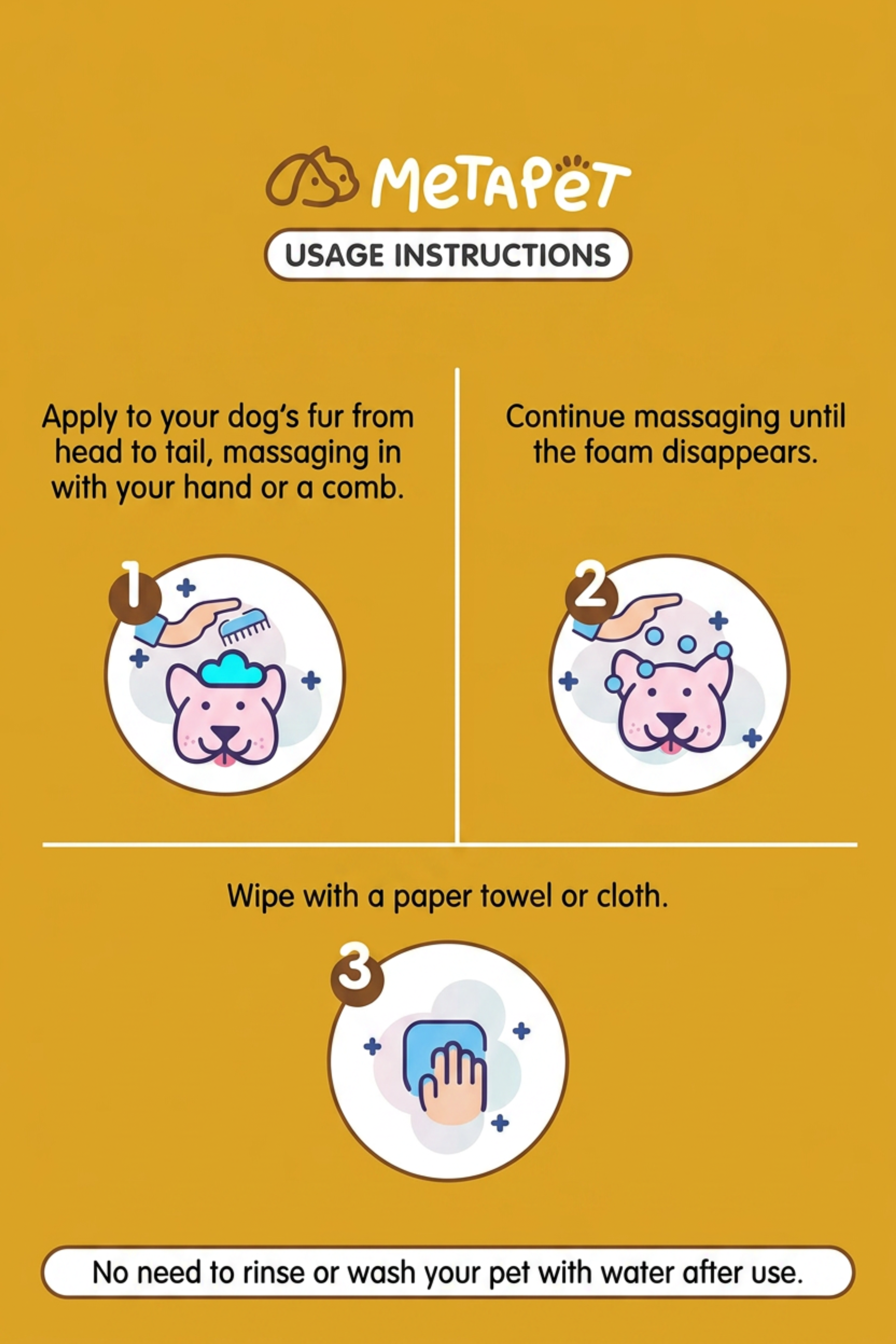
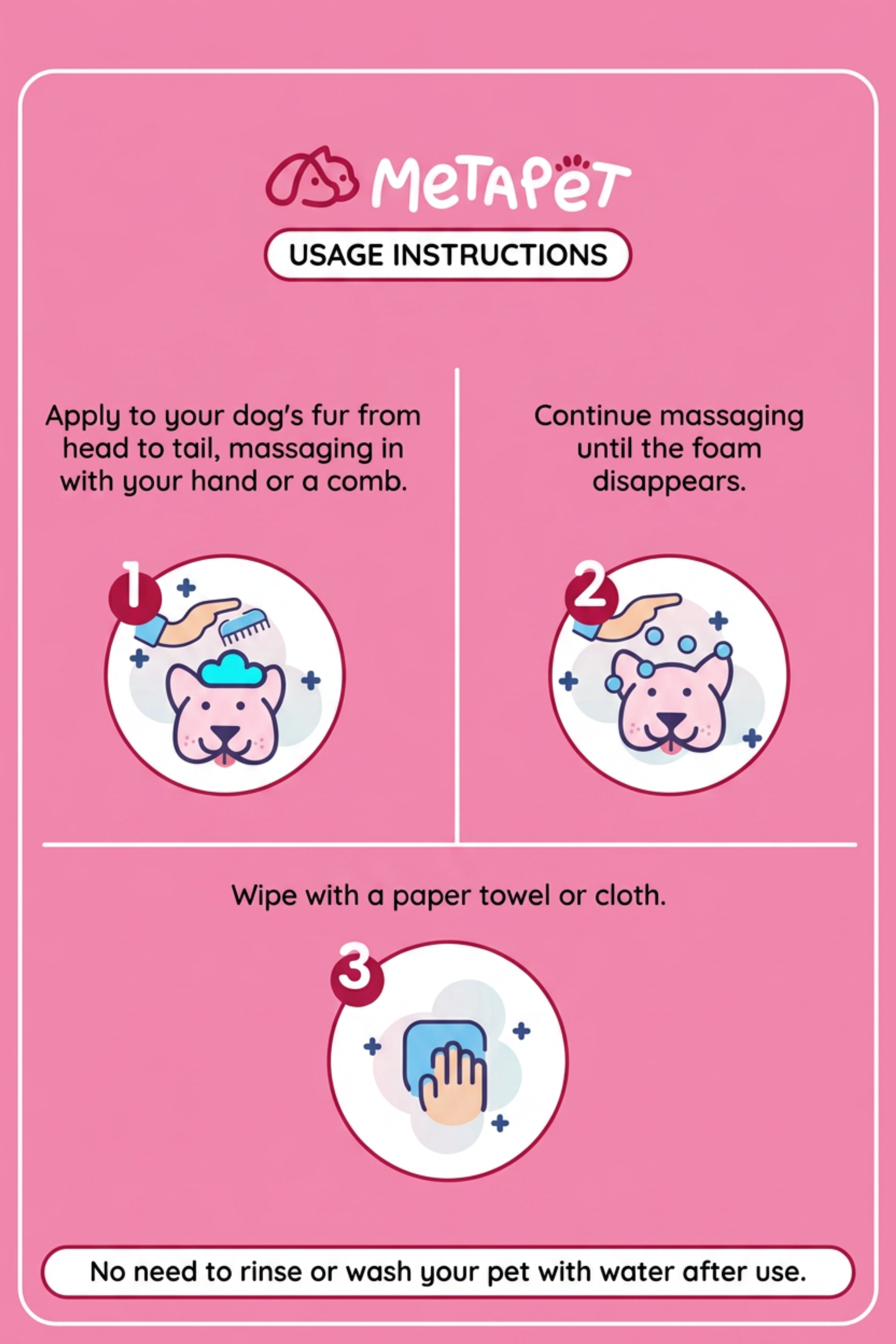
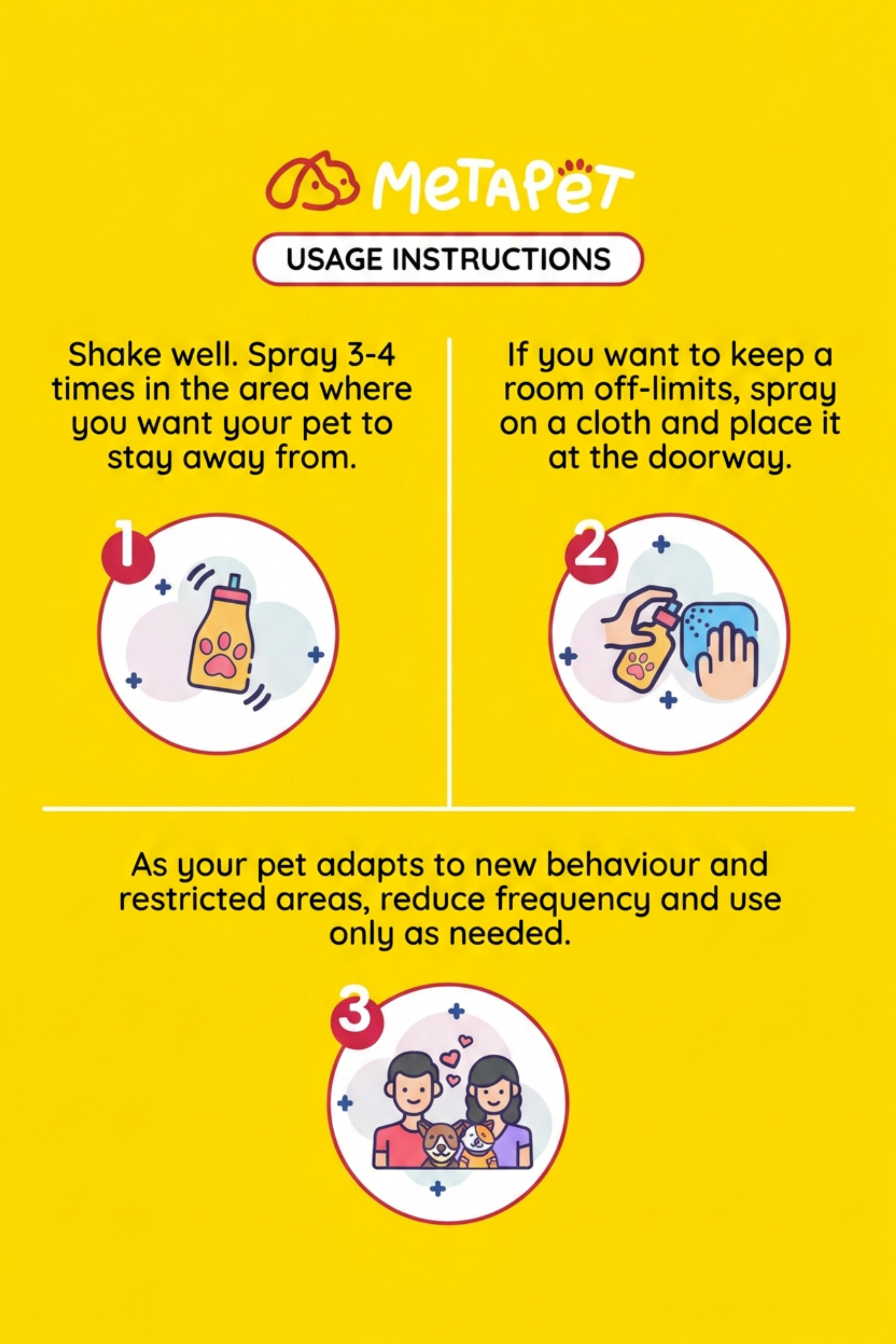
An enzymatic or odor-neutralizing cleaner is the practical tool here — for example, MetaPet's Where Is The Stain I Can't See? pet stain remover and deodorizer spray (https://metapet.care/products/where-is-the-stain-i-cant-see-pet-stain-remover-deodorizer-spray-500-ml) is formulated to help lift pet stains and neutralize odors on washable surfaces, which can make the reset after an accident quicker. For households where the new sofa or fresh doorframes are proving too interesting, a deterrent such as MetaPet's How to Say No training spray (https://metapet.care/products/how-to-say-no-pet-training-spray-for-cats-dogs-150-ml) is designed to help discourage scratching and chewing on treated spots — always alongside real outlets like scratching posts and chew toys, since deterrents redirect behavior rather than replace the need for it. Test any product on a small hidden area first and follow label directions.
The First Month: Reading the Adjustment Curve
Most dogs feel at home within days to a couple of weeks; most cats need two to four weeks, with some cautious souls taking longer. The trajectory matters more than the speed — each week should look a little more like your pet's normal self: appetite steady, play returning, exploration widening, sleep in the open rather than under furniture.
- Normal early on: hiding, clinginess, reduced appetite for a day or so, extra vocalizing, patrolling and scent-marking behaviors like cheek rubbing.
- Worth a veterinary call: not eating beyond a day (especially cats), litter box avoidance that persists, digestive upset that does not settle, or hiding that is not gradually improving.
- Worth behavior help: destructiveness when alone, panic at departures, or fear that plateaus rather than fades — early help beats entrenched habits.
Above all, be patient with the animal who did not choose this adventure. A calm owner, a sacred routine and a house that slowly fills with familiar smells will do most of the work — the rest is time.
Myth vs. Fact About Moving With Pets
- Myth: Butter on a cat's paws helps it settle in a new home. Fact: folklore — what actually settles a cat is a secure base room, familiar scent and unhurried territorial expansion.
- Myth: Dogs do not care about moving as long as you are there. Fact: people are the biggest anchor, but routine collapse and new-neighborhood overload still stress many dogs; structure helps them too.
- Myth: Letting the cat explore everything immediately gets it over with faster. Fact: flooding a cat with the whole territory usually lengthens the adjustment; gradual expansion is genuinely quicker.
- Myth: An escaped pet will find its way to the new house. Fact: a pet lost mid-move is navigating toward the old territory or nothing at all — prevention, microchips and updated tags are the real safety net.
Frequently Asked Questions
How long should I keep my cat indoors after moving?
Several weeks at minimum, and only after the cat is fully relaxed indoors. Many owners use a move as the natural moment to switch to indoor-only living, which sidesteps the risk entirely — discuss what fits your cat with your veterinarian.
Should I wash my pet's bedding before the move?
No — pack it dirty. Familiar scent is the most reassuring thing you can install in the new house. Wash it weeks later, once the home already smells like the family.
My dog keeps having accidents in the new house. Is something wrong?
A brief relapse is common; treat it as a house-training refresher with generous rewards for outdoor success and thorough odor cleanup indoors. If accidents persist beyond a couple of weeks or come with other changes — increased drinking, straining, lethargy — book a veterinary check.
Can I use calming products for the move?
Calming supplements and pheromone products can be a reasonable part of a wider plan built on routine, base-camp setup and gradual exposure — they support the plan rather than replace it. Introduce anything new before moving week and clear it with your veterinarian first.