Dew Claws in Dogs and Cats: Care, Injuries, Facts

Most owners can point to the four nails on each of their pet's feet without thinking about it. Rather fewer can immediately say where the dew claw is, what it does, or why the one on the back leg of their dog looks so different from the front. It is a small piece of anatomy that most people ignore completely until the day it gets torn, at which point it becomes very hard to ignore indeed.
The dew claw is the nail that sits higher up on the inside of the leg, above the paw and away from the ground. On the front legs it corresponds roughly to a thumb, and in many animals it retains a proper bone structure, joints and its own tendons. On the back legs, where they are present at all, dew claws are frequently attached by little more than skin.
This guide explains the anatomy in plain language, why front and rear dew claws differ so much, which breeds carry extra ones, how these nails become overgrown or torn, what to do when an injury happens, and the simple trimming and paw-care habits that prevent the great majority of problems from ever developing.
Important: This article shares general educational information for pet owners and is not a substitute for an in-person veterinary examination, diagnosis, or treatment. For any medical concern or emergency, contact your veterinarian promptly.
What a Dew Claw Actually Is
Look at the inside of your dog's front leg, a little way above the paw, and you will usually find a fifth nail sitting proud of the others. That is the dew claw. In evolutionary terms it corresponds to the first digit — the thumb in a human hand — and in many dogs it is a fully formed toe with bones, joints, ligaments and tendons rather than a vestigial flap.
Cats have them too, and in cats the front dew claw is genuinely functional. It is the claw a cat uses to grip prey, to hold a toy, and to help stabilise their grip when climbing. If you have watched a cat wrap both front paws around a wand toy, the dew claws were doing much of the holding.
Because they sit higher on the leg, dew claws do not usually contact the ground during normal walking. That single fact explains most of the practical issues that follow: nails that never touch the ground do not wear down naturally, so they keep growing until somebody trims them.
Front Versus Rear: A Real Difference
Front dew claws in dogs are typically well attached, with a proper bony connection to the leg. They are not decorative. Research and slow-motion footage have shown that dogs engage the front dew claw when turning at speed, when gripping objects such as chews, and when pulling themselves up a slope or out of water. Sighthounds in particular appear to use them during tight cornering.
Rear dew claws are a different story. Many dogs have none at all. Where they exist, they are frequently attached by skin alone, without a solid bony connection, which makes them floppy and much more prone to catching on things. Some breeds have two on each hind leg, described as double dew claws.
- Front dew claws: usually bony, well attached and functionally useful in many dogs.
- Rear dew claws: often absent; when present they may be loosely attached by skin alone.
- Double dew claws: a breed characteristic in some working and mountain breeds.
- Cats: front dew claws are functional gripping claws; rear dew claws are not usually present.
- Growth pattern: because they do not touch the ground, they wear far less and need trimming more often.
Breeds Where Extra Dew Claws Are Standard
In several livestock-guarding and mountain breeds, double rear dew claws are not an anomaly but a defining trait written into the breed standard. The Great Pyrenees is the best known example, and the Beauceron, Briard, Icelandic Sheepdog and Norwegian Lundehund are also associated with extra digits.
The Lundehund is the most remarkable case of all: this Norwegian breed was developed to climb sea cliffs after puffins and has a genuinely polydactyl foot, with extra functional toes that give it grip on rock. In these breeds, the extra claws are not a defect to be removed.
If you own a breed with double dew claws, the practical implication is simply that there is more nail to look after. These extra claws sit close together, can grow in unusual directions, and benefit from being checked at every grooming session rather than occasionally.
The Removal Debate
Dew claw removal in puppies has historically been performed in some breeding programmes and in some working-dog contexts, usually within the first few days of life. Attitudes have shifted considerably in recent years, and in a number of countries the routine removal of front dew claws for non-medical reasons is discouraged or restricted.
The arguments run in both directions. The case for removal centres on preventing future injury, particularly for loosely attached rear dew claws on dogs working in dense cover. The case against points out that front dew claws are functional structures with tendons attached, and that removing a healthy toe carries its own costs.
This is genuinely a decision for a veterinarian to discuss with an owner or breeder in the specific context of that animal, that breed and that country's regulations. What is not in dispute is that removal of a dew claw in an adult animal is a surgical procedure requiring anaesthesia, and is undertaken for a medical reason such as repeated severe injury rather than convenience.
Why Dew Claws Get Overgrown
This is the single most common problem, and it is entirely preventable. A nail that never touches the ground never wears down. Meanwhile the nail keeps growing in its natural curve, which is a spiral. Left long enough, the tip curls all the way round and grows back into the pad or the skin of the leg.
An ingrown dew claw is painful, becomes infected readily, and often requires veterinary attention to release and clean. Owners are frequently shocked when it is discovered, because the dew claw sits under the fur on the inside of the leg where it is easy to miss during casual petting.
Older and less active animals are at particular risk, as are long-coated dogs and cats whose leg fur hides the nail entirely. Indoor cats who use a scratching post regularly still tend to leave the dew claw untouched, because the post only strips the sheaths from the claws that make contact.
Trimming Dew Claws Safely
Trimming a dew claw is much the same as trimming any other nail, with one advantage: it is easier to see and to hold away from the other toes. The aim is to remove the sharp curved tip without cutting into the quick, the living tissue inside the nail that contains blood vessels and nerves.
- Handle the leg and paw gently and reward calmly before you pick up the clippers at all.
- Part the fur so you can see the whole nail, and look for the pink quick if the nail is pale.
- On dark nails, take very small slivers off the tip rather than one large cut.
- Cut at a slight angle following the curve of the nail, keeping well clear of the quick.
- Stop while your pet is still relaxed, even if that means doing one leg today and one tomorrow.
- Check every dew claw at each session, including any second claw on breeds that have them.
Keep styptic powder or a clotting product intended for pets in your grooming kit before you start, so that if you do nick the quick you can stop the bleeding quickly. A little bleeding is unpleasant but not usually serious; what makes it worse is scrambling for a solution while your pet becomes distressed.
If your pet will not tolerate nail trims, do not force it. Ask your veterinary practice or a professional groomer to demonstrate technique, or to carry out the trims. A dog that has one bad experience with clippers may resist for years, which makes the long-term problem harder, not easier.
Torn and Ripped Dew Claws
Because rear dew claws often stand out from the leg on a loose attachment, they catch. Common scenarios include a dog running through undergrowth, a claw hooking on bedding or carpet loops, a cat catching a front dew claw in a knitted blanket, or an overgrown nail snagging on a crate door.
A torn dew claw is genuinely painful, because the quick is exposed. Signs include sudden limping or holding the leg up, persistent licking at the inside of the leg, bleeding, a nail hanging at an angle, or a nail that appears split down its length. Some animals will yelp when the leg is touched.
- Stay calm and restrain gently: a painful animal may snap even if they never normally would.
- Control bleeding: apply gentle pressure with clean gauze for several minutes without repeatedly lifting to peek.
- Do not pull the nail: a partially detached nail should be dealt with by a veterinarian, not at home.
- Prevent licking: licking reopens the wound and introduces bacteria.
- Call your veterinarian: most torn nails need proper assessment, cleaning and pain relief.
- Watch for infection: swelling, heat, discharge or worsening lameness over the following days.
Torn nails frequently become infected because the exposed nail bed is difficult to keep clean and animals want to lick it. Do not apply human antiseptic creams or ointments without veterinary advice, as several are not appropriate for pets and some are harmful if licked off.
Everyday Paw and Nail Checks
A thirty-second check once a week prevents the majority of dew claw problems. Run your hand down each leg, part the fur above the paw, and look at the nail. You are checking that it is not curling toward the skin, that there is no swelling or redness at the base, and that the nail itself looks intact rather than split.
Include the paws in the same routine: look between the pads for grit, seeds, matted fur or cracks, and check the pads themselves for dryness or damage. Pets that are handled regularly from a young age accept this readily, and it doubles as an early-warning system for lumps, thorns and skin problems anywhere on the lower leg.
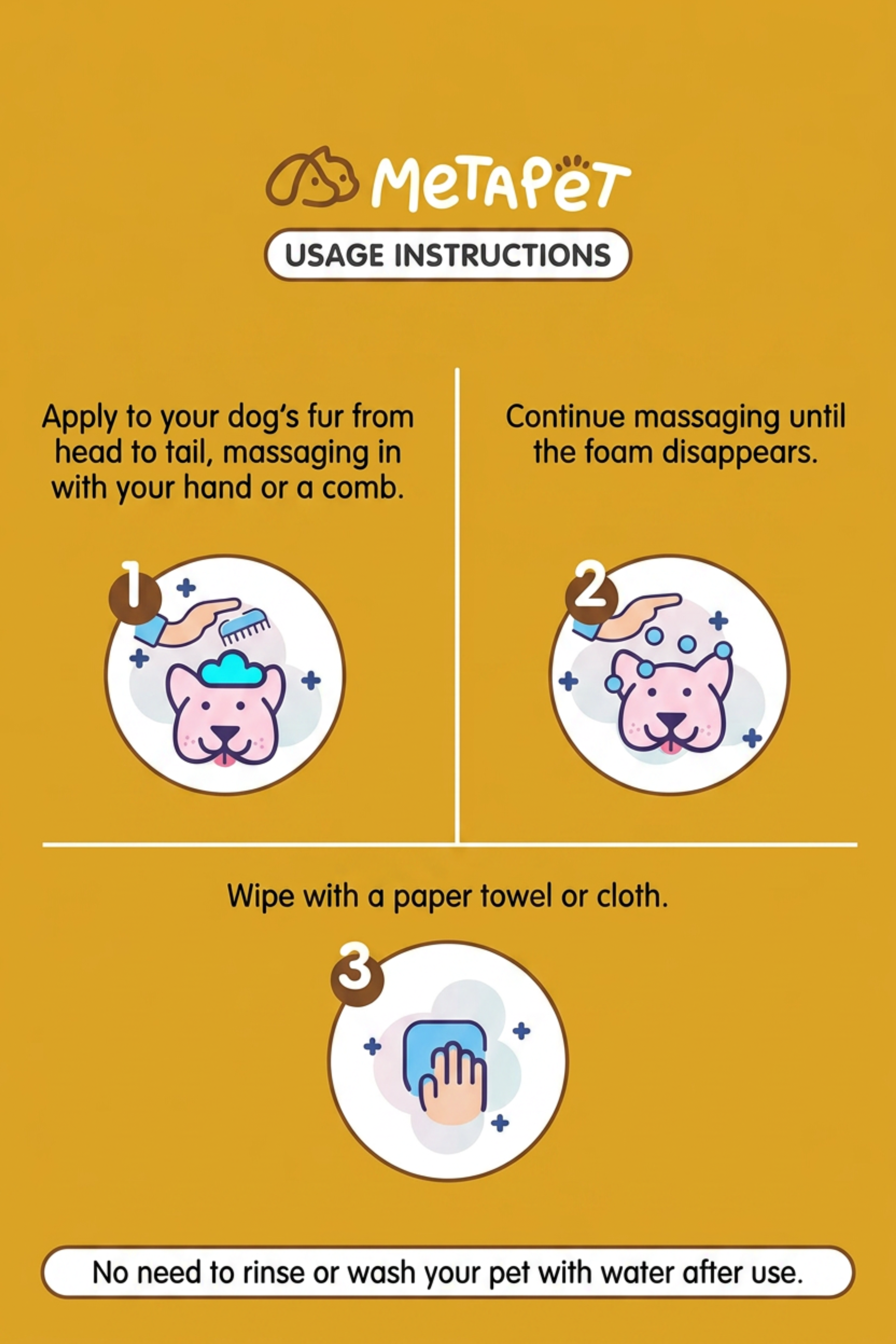
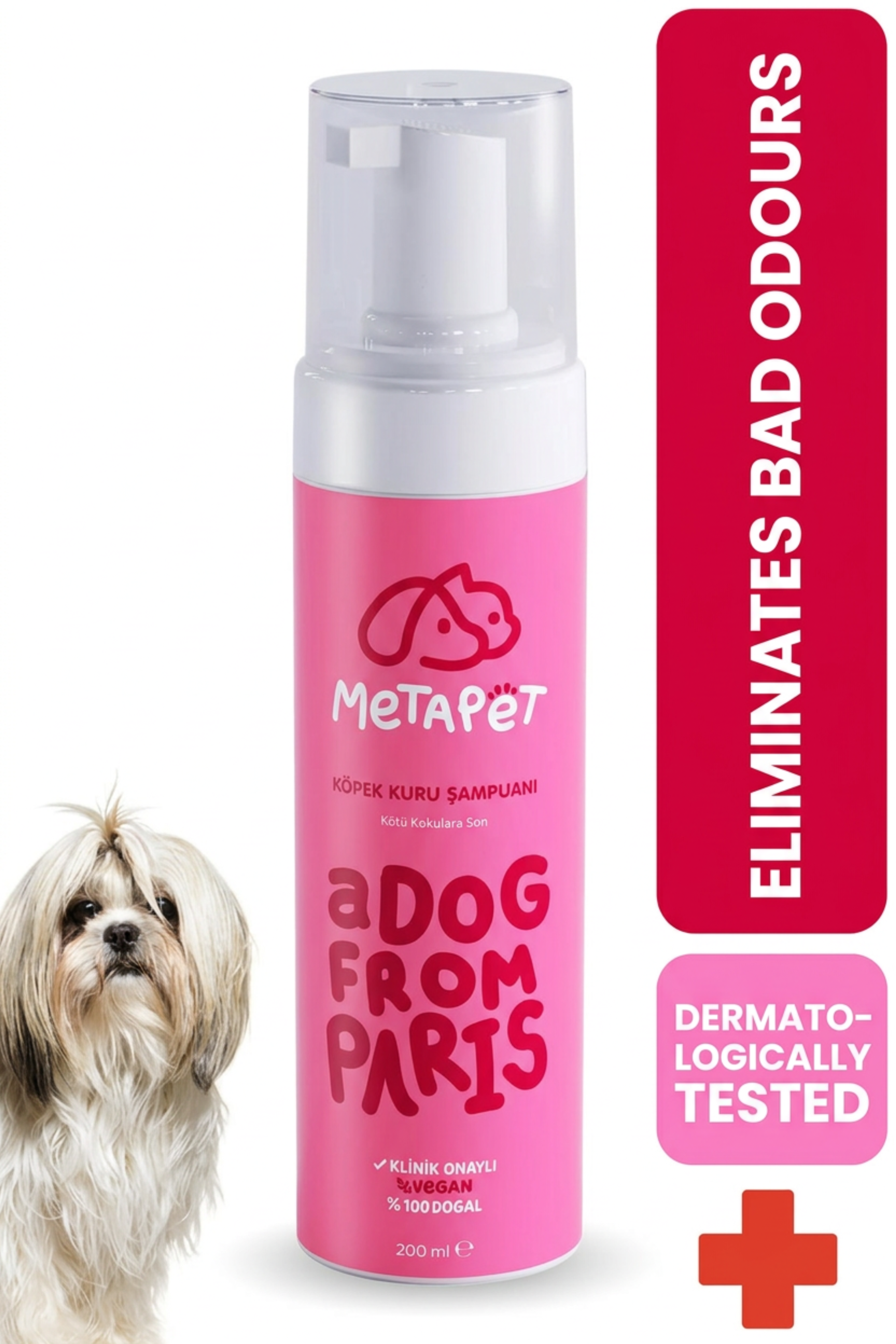
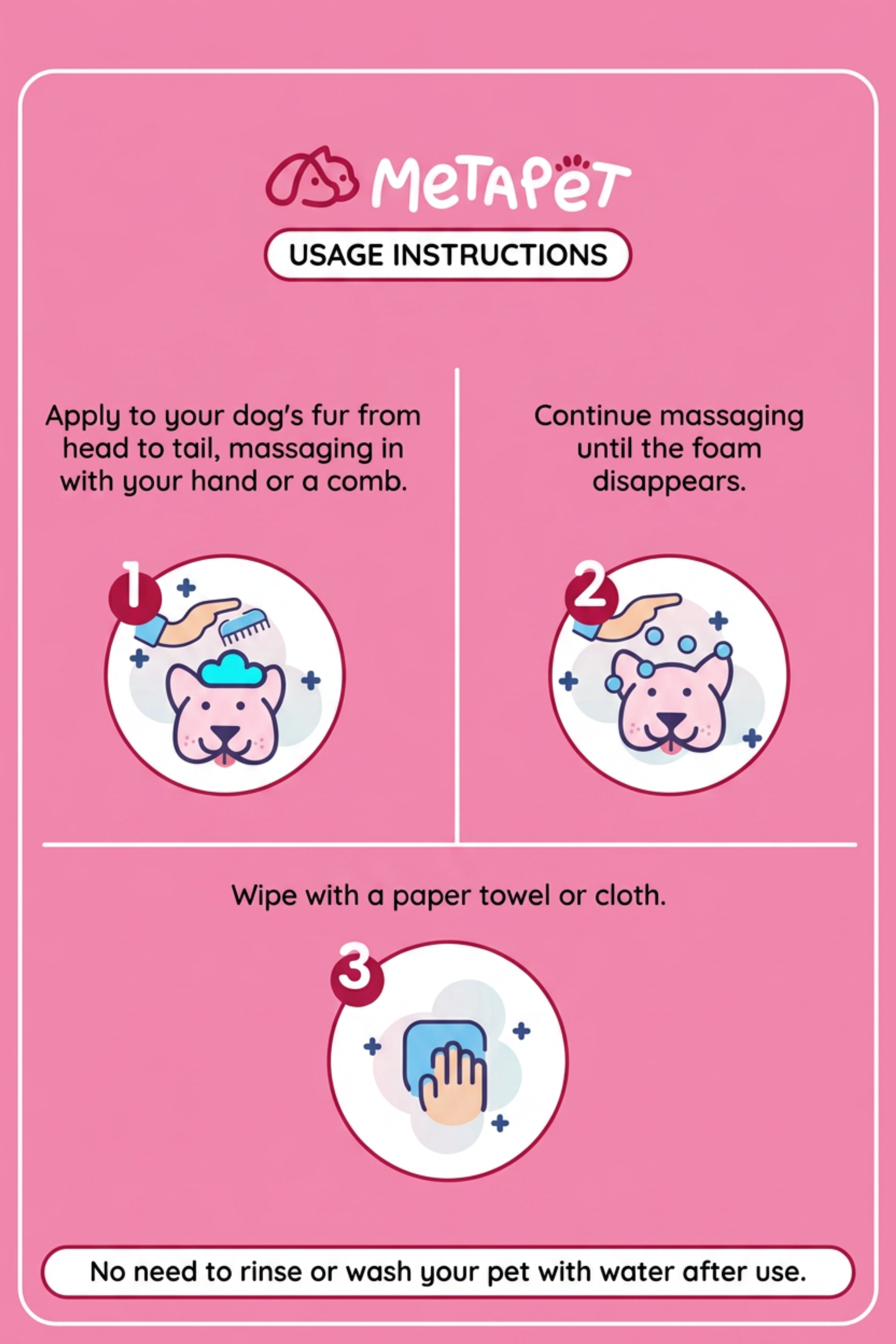
Keeping paws clean supports that routine, particularly for dogs walking on gritted winter pavements or muddy trails. Some owners use a rinse-free product between full washes; MetaPet's Nano-Series Pawsome Paw Cleaning Foam with Brush and Nano-Series Hygiene & Care Towel Wipes are cosmetic grooming products designed for routine external cleaning of paws and coat between baths. They are grooming aids only — not medicines, not wound treatments, and not intended to diagnose, treat, cure or prevent any condition. Never apply any cleaning product to a torn nail, a cut pad or broken skin; those need veterinary attention.
Special Considerations for Older Pets
Nail problems increase with age for a simple reason: older animals move less, so nails wear less. At the same time, arthritis makes handling the legs more uncomfortable, and reduced flexibility means cats can no longer groom their own claws as thoroughly as they once did.
Senior cats in particular commonly develop thickened, brittle claws that grow in tight spirals, and the front dew claw is often the first to grow into the pad. Because cats hide discomfort, an ingrown claw may only be discovered when someone finally checks the paw during an unrelated examination.
Shorten the interval between checks as your pet ages. Handle the legs gently and support the limb rather than extending the joint, and if your pet resists in a way that seems new, mention it — reluctance to have a leg handled can itself be a sign of joint pain rather than simple grumpiness.
Common Questions Owners Ask
Do dew claws serve any purpose at all?
Front dew claws do, in most dogs and in cats: they help with gripping and with stability during fast turns. Rear dew claws in dogs are more variable and often serve little practical purpose, particularly when loosely attached.
How often should they be trimmed?
More often than the other nails, because they do not wear down. A common interval is every few weeks, but this varies with the individual animal, activity level and nail growth rate. Check weekly and trim when the tip begins to curve.
My dog has a dew claw on one back leg but not the other. Is that a problem?
Asymmetry is quite common and is not usually significant in itself. The present claw simply needs the same routine care as any other.
Can I remove a loose dew claw myself?
No. Even a claw that appears to be hanging by skin has a blood and nerve supply. Removal or trimming back of a damaged nail should be done by a veterinarian with appropriate pain control.
When to Contact Your Veterinarian
Contact your veterinarian if a dew claw is torn, split or hanging, if there is bleeding you cannot stop with several minutes of gentle pressure, if the nail has grown into the pad or skin, if the area around the nail base is swollen, red, hot or discharging, or if your pet is limping or repeatedly licking the inside of a leg.
Book a routine appointment if nails are difficult to trim at home, if your pet has become resistant to having legs handled, or if you have an older animal whose claws have become thick and brittle. A veterinary nurse can often demonstrate technique in a short consultation, which pays for itself many times over.
This article shares general educational information for owners and does not replace an in-person veterinary examination. Nail and paw problems can look minor from the outside while an infection develops underneath, so when in doubt, have it checked.