Eosinophilic Granuloma Complex in Cats Explained

Eosinophilic granuloma complex is one of the more confusing diagnoses a cat owner can receive, mostly because of the name. It sounds like a single disease. It is not. It is a grouping of three related skin reaction patterns that share an underlying immune mechanism — and, crucially, it is a reaction, not a root cause.
That distinction shapes everything about how it is managed. Addressing the lesion alone tends to produce a cat whose sores clear and then return. Finding what is driving the reaction is what produces lasting improvement. This guide explains the three presentations, the usual triggers, and what an investigation looks like in practice.
Important: This article shares general educational information for pet owners and is not a substitute for an in-person veterinary examination, diagnosis, or treatment. For any medical concern or emergency, contact your veterinarian promptly.
What the Name Actually Describes
Eosinophils are a type of white blood cell heavily involved in allergic and parasitic responses. When large numbers of them accumulate in a cat's skin or mucous membranes, they create characteristic lesions. "Granuloma complex" refers to the group of lesion patterns this produces.
So the diagnosis tells you what kind of inflammatory reaction is happening. It does not tell you why. The "why" is the part that determines whether the problem is solved or merely paused.
- It is a pattern, not a cause: similar to being told a cough is a cough.
- It is not contagious: not to other cats, not to dogs, and not to people.
- It is often recurrent: because the underlying trigger usually persists.
- It responds to inflammation control: which is helpful, but relief alone is not a long-term plan.
The Three Presentations
Indolent ulcer (the "rodent ulcer")
A well-defined, often glossy erosion on the upper lip, usually near a canine tooth. It can affect one side or both, and it can enlarge until the lip looks distorted. The old name is a historical misnomer with nothing to do with rodents. Most cats seem surprisingly untroubled by it, which is one reason it is often left too long.
Eosinophilic plaque
Raised, red, moist, often oozing patches, most commonly on the belly and inner thighs. These are typically very itchy, and cats lick and chew them intensely. Because the licking is hidden and quiet, owners often notice the bald, inflamed skin before they notice the behavior.
Eosinophilic (linear) granuloma
Firm, raised, often yellowish-pink lesions. On the back of the thighs they classically form a long narrow stripe, which is where "linear" comes from. They also occur on the chin — producing the "fat chin" or "pouty" look — on the lips, on the tongue, and on the roof of the mouth, where they can interfere with eating.
What Triggers It
In most cats, an underlying hypersensitivity is driving the reaction. Identifying which one is the central task of the investigation.
- Flea allergy: the single most common trigger, and it does not require a visible flea infestation — a small number of bites can be enough in a sensitized cat.
- Environmental allergy: pollens, dust mites, and molds, often with a seasonal pattern.
- Food allergy: a genuine cause in a proportion of cats, usually to a protein the cat has eaten for a long time.
- Mosquito bite hypersensitivity: typically affecting the nose and ear tips, often seasonal.
- Other parasites: mites and lice can provoke the same response.
- Genetic predisposition: some cats and some family lines appear more prone to react this way.
It is entirely possible for a cat to have more than one trigger, which is why control sometimes improves in stages rather than all at once.
How Veterinarians Investigate
Because several conditions can look similar — including infection, other tumors, and autoimmune disease — investigation is systematic rather than assumed.
Confirming the lesion type
Cytology from an impression or fine needle sample often shows the eosinophils. Biopsy is used where the appearance is atypical, where lesions are not responding as expected, or to rule out other conditions with confidence.
Ruling out parasites first
Because flea allergy is the most common trigger and is easily addressed, a strict, veterinarian-directed parasite control trial across all pets in the household is usually the first step — regardless of whether you have ever seen a flea. Skin scrapes and coat combings check for mites and lice at the same time.
Working through allergy
If parasite control alone does not resolve things, your veterinarian may propose a strict elimination diet trial over a period of weeks, and may discuss testing or referral for environmental allergy. This stage requires patience — shortcuts here are the usual reason cases stall.
General Management Approaches
Management usually runs on two tracks at once: settling the current inflammation so the cat is comfortable, and pursuing the underlying trigger so the problem stops returning. All medication decisions belong to your veterinarian.
- Rigorous parasite control: year-round, on every pet in the home, using a product your veterinarian recommends for cats.
- Anti-inflammatory therapy: prescribed to control the immune reaction; your veterinarian will discuss options, duration, and monitoring.
- Addressing secondary infection: chewed and open lesions frequently become infected, which needs handling in its own right.
- Dietary trial where indicated: a strict elimination diet with no other foods or flavored products, exactly as directed.
- Long-term allergy management: for environmental allergy, your vet may discuss immunotherapy or other long-term strategies.
Never give a cat human anti-inflammatory or allergy medication. Several are seriously toxic to cats even in small amounts, and cats metabolize many drugs differently from dogs and people.
Why Lesions Keep Coming Back
Recurrence is the most common frustration owners report, and it usually has a logical explanation rather than a mysterious one.
- The trigger was never identified: inflammation was controlled but the cause continued.
- Parasite control lapsed: a missed month in summer is enough for a flea-allergic cat.
- Only some pets were treated: untreated housemates maintain the environmental flea population.
- The diet trial was not strict: one flavored treat or a shared bowl invalidates weeks of effort.
- Seasonal triggers returned: environmental allergy follows the calendar.
- Medication was stopped early: lesions can look healed on the surface before the underlying inflammation has settled.
If your cat's lesions keep returning, that is information rather than failure — bring the pattern back to your veterinarian, including dates and what was happening at the time. It often points directly at the trigger.
Supporting Your Cat at Home
Home care will not resolve the underlying allergy, but it makes a real difference to comfort and to how quickly lesions settle.
- Reduce self-trauma: your veterinarian may recommend a soft collar or body suit while plaques heal, since licking maintains the inflammation.
- Keep bedding clean: wash regularly at a warm temperature to reduce allergen and flea egg load.
- Vacuum thoroughly and often: particularly along baseboards and under furniture where flea larvae live.
- Handle gently around lesions: these areas are often sore even when a cat is stoic.
- Keep a photo diary: dated photographs make progress objective and are genuinely useful at recheck appointments.
- Do not apply anything unprescribed: including essential oils, human creams, or antiseptics, all of which cats will lick off.
Nutrition and General Skin Support
Good general nutrition supports skin barrier function and coat condition, and a complete, balanced diet appropriate to your cat's life stage is the foundation. Where a food trial is under way, follow it exactly — no treats, no flavored medications, no shared bowls with other pets.
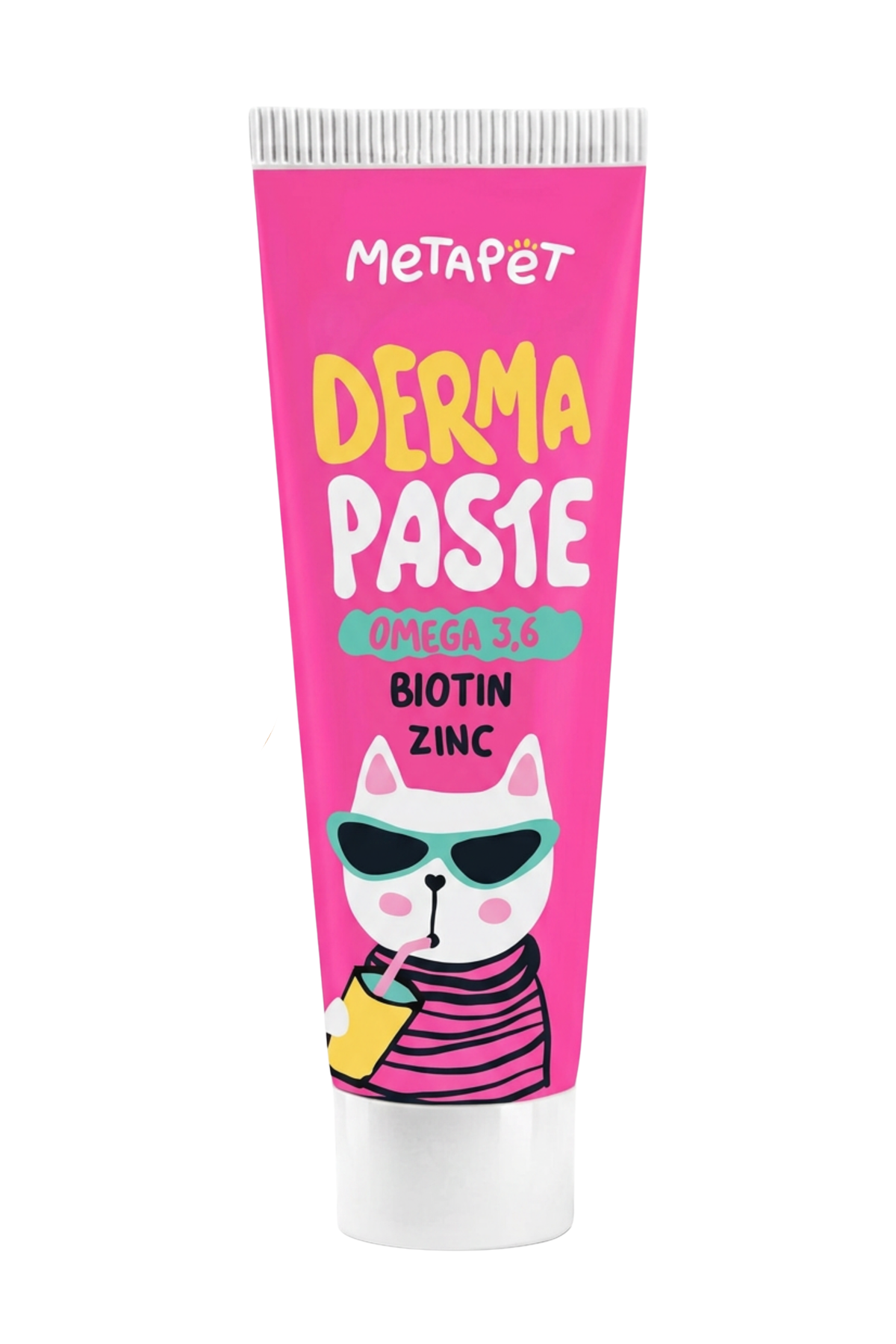
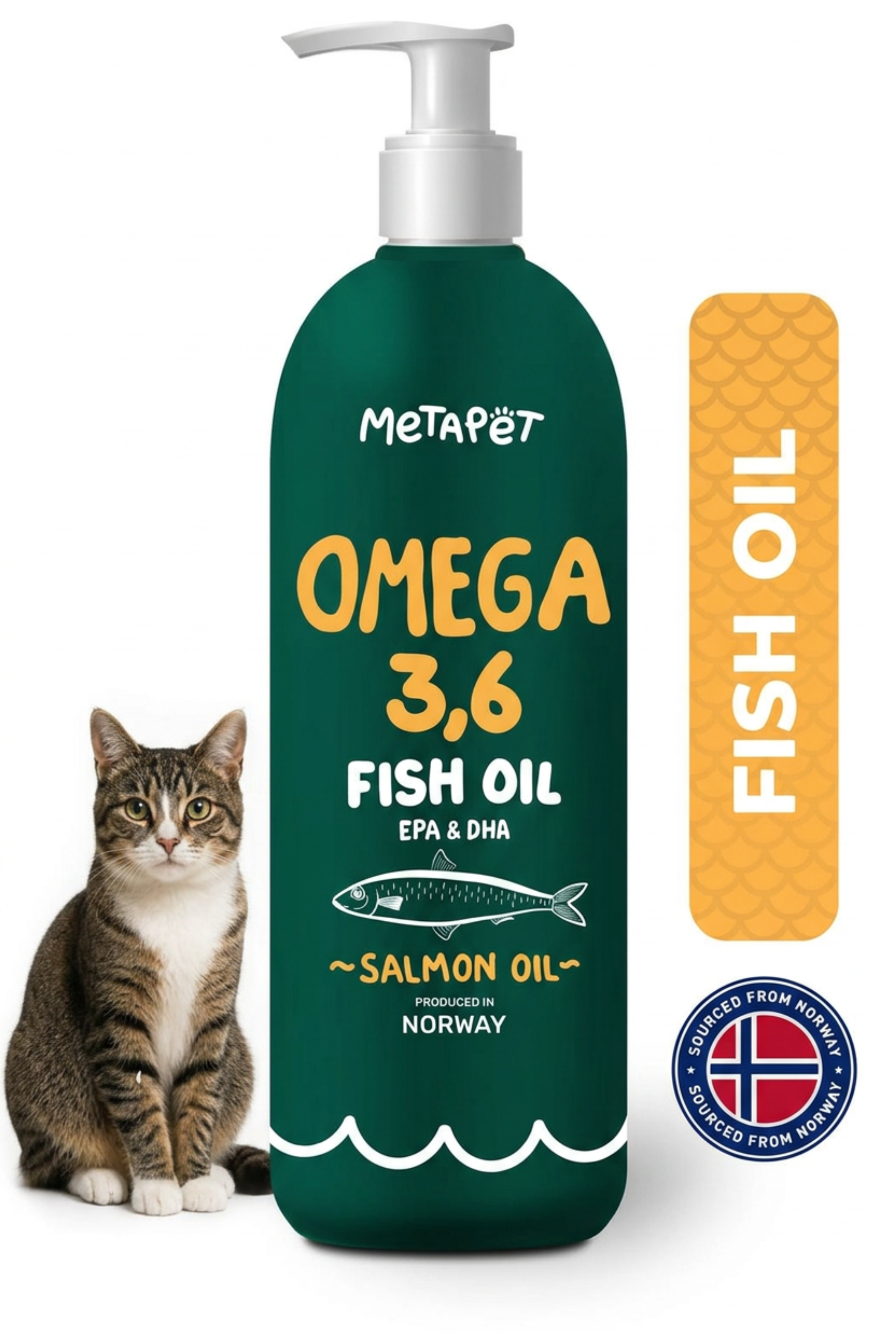
Some owners ask about skin and coat supplements. Products such as omega oil supplements are commonly used as part of a general grooming and wellness routine, and your veterinarian can advise whether one is appropriate for your cat and whether it would interfere with a diagnostic diet trial. Supplements complement veterinary care — they do not diagnose, address, or replace treatment for any skin condition, and they should never delay an appointment for a cat with active lesions.
How to Run a Diet Trial Properly
If your veterinarian recommends an elimination diet trial, it is worth understanding why the rules are so strict. The point is to remove every protein your cat's immune system has previously met, so a single stray mouthful can genuinely invalidate weeks of work. Most failed trials fail on discipline rather than on diagnosis.
- Use only the diet your veterinarian has specified, for the full period they set — often several weeks or more.
- No treats, table scraps, dental chews, flavored supplements, or flavored medications unless your vet has approved them.
- Feed other pets separately, and pick up their bowls afterward, since cats will help themselves.
- Keep an indoor-outdoor cat indoors for the trial period if possible, or discuss alternatives with your vet — hunting and neighborhood feeding both break a trial.
- Record lesions with dated photographs every week so improvement is measurable rather than remembered.
- Complete the challenge phase if your veterinarian recommends it, reintroducing foods deliberately to confirm what matters.
It is a demanding few weeks, and it is normal to find it hard. If something goes wrong — a stolen treat, a neighbor feeding your cat — tell your veterinarian rather than quietly continuing. Knowing about it lets them interpret the result correctly instead of drawing the wrong conclusion.
Myths and Misunderstandings
- "Rodent ulcers come from hunting mice." The name is historical. There is no connection to rodents at all.
- "It must be plastic bowl allergy." Chin lesions have several possible causes; switching bowls is easy and harmless to try, but it is not a diagnosis.
- "No fleas seen, so it isn't flea allergy." Allergic cats groom fleas off efficiently. Absence of visible fleas proves very little.
- "It cleared with medication, so it's resolved." The reaction was suppressed. Without addressing the trigger, expect recurrence.
- "It's contagious to my other cat." It is not. If two cats in a home have lesions, they most likely share an environmental or parasite trigger.
When to Contact Your Veterinarian
- Any new lip, chin, or mouth lesion: these need examination rather than observation.
- Lesions your cat is chewing or licking raw: self-trauma escalates quickly.
- Difficulty eating or drooling: oral granulomas can interfere with swallowing.
- Signs of infection: increasing swelling, discharge, odor, or your cat seeming unwell.
- Lesions returning after treatment: a signal that the trigger is still active.
- Any lesion in an older cat that is unusual for them: several serious conditions can mimic this pattern and need ruling out.
Eosinophilic granuloma complex is very manageable once the underlying trigger is found, and many cats go on to live entirely comfortable lives with a stable routine. The work is in the investigation. Give the process time, follow the trial protocols strictly, and keep your veterinarian informed about the pattern you see at home.