Pet-Safe Cleaning Products for Dog and Cat Households

Homes shared with dogs and cats need cleaning more often, and that creates an obvious tension: the surfaces we most want to disinfect are exactly the surfaces our pets walk on, lie on and lick. Animals groom themselves constantly, so anything left on a floor or a paw is eventually swallowed.
The good news is that safe cleaning is mostly about method rather than buying specialist products for everything. Knowing which ingredients deserve caution, ventilating properly, rinsing thoroughly and keeping pets away until surfaces are dry solves the large majority of the risk.
Important: This article shares general educational information for pet owners and is not a substitute for an in-person veterinary examination, diagnosis, or treatment. For any medical concern or emergency, contact your veterinarian promptly.
Why Cats Are Especially Sensitive
Cats differ from dogs and people in how their livers process certain compounds. They have a reduced capacity for a particular metabolic pathway used to clear many aromatic chemicals, which means substances a dog might tolerate can accumulate more readily in a cat.
On top of that, cats groom obsessively. A cat that walks across a damp treated floor will ingest whatever is on its paws within minutes, so a residue that seems harmless on a surface becomes an oral exposure. Cats also spend more time on the surfaces we clean — counters, windowsills, sinks and baths.
This is why advice that is perfectly reasonable for a dog household needs an extra layer of caution in a cat household, and why it is always worth checking a product with your veterinarian if you are unsure.
Ingredients That Deserve Caution
A handful of categories come up repeatedly in veterinary toxicology discussions. Phenol-based disinfectants, often recognizable because they turn cloudy or milky in water, are a particular concern for cats. Products containing pine oil and similar compounds fall into the same cautious category.
Concentrated quaternary ammonium disinfectants deserve real respect around cats: contact with the mouth and tongue after a cat grooms them off its paws has been reported to cause ulceration and chemical burns, not merely mild irritation. Undiluted bleach produces irritating fumes and should never be mixed with ammonia-containing cleaners. Strong drain and oven cleaners are corrosive and belong in a locked cabinet.
- Phenol-based disinfectants. Turn milky in water; treat with particular caution around cats.
- Pine and similar oils. Common in older cleaning formulas; ventilate and rinse well.
- Concentrated quats. Can irritate the mouth and tongue if groomed off paws.
- Bleach and ammonia. Never mix; always dilute and ventilate.
- Corrosive drain products. Store locked away and use only when pets are elsewhere.
Essential Oils and Diffusers
Essential oils are widely marketed as natural, which many people read as automatically safe. In pet households they warrant real caution. Concentrated oils can be irritating to skin and airways, and several — including tea tree, citrus, pine, wintergreen, eucalyptus and peppermint — come up frequently in veterinary poison-control discussions involving cats.
Active diffusers that disperse micro-droplets into the air are the bigger concern, because the oil settles onto fur and is then groomed off. Cats are particularly susceptible, and cats with asthma or other airway sensitivity can react to airborne irritants of any kind.
If you use scent at home, prefer good ventilation over strong fragrance, keep any diffuser in a room your pets cannot access, and never apply undiluted essential oils to an animal's skin or coat. If your pet drools, paws at the mouth, becomes wobbly or has difficulty breathing after exposure, contact your veterinarian immediately.
Reading Labels Sensibly
Marketing language on cleaning products is largely unregulated. Phrases such as natural, eco, non-toxic and pet friendly carry no consistent legal meaning and do not guarantee anything about how a product behaves around a cat that licks its paws.
What is useful on a label is the ingredient list, the dilution instructions and the safety directions. A product that specifies a dilution ratio and a contact time is telling you how it is meant to be used, and following those instructions matters far more than the claim on the front of the bottle.
- Read the ingredients. The back of the bottle is more informative than the front.
- Follow dilution ratios. Stronger is not better and increases residue.
- Note contact times. Disinfectants need time on the surface to work.
- Ignore vague claims. Natural and pet friendly are marketing terms, not standards.
Safe Cleaning Method Beats Product Choice
How you clean matters more than which bottle you pick. Almost any household cleaner used correctly — diluted properly, applied to an empty room, rinsed where appropriate and allowed to dry completely before pets return — presents far less risk than a gentle product used carelessly.
Shut pets out of the room you are cleaning and keep them out until surfaces are fully dry. Open windows. Rinse floors with clean water after using any disinfectant, particularly in kitchens and bathrooms where cats walk and then groom.
- Move pets to another room and close the door.
- Open windows and ventilate throughout.
- Dilute exactly as the label instructs and observe the contact time.
- Rinse floors and surfaces with clean water afterwards.
- Let everything dry completely before letting pets back in.
- Store all products in a closed, latched cabinet.
Dealing With Accidents on Carpet and Fabric
Urine, vomit and fecal accidents need a different approach from general cleaning. Ordinary detergents mask the smell to a human nose while leaving the organic residue that pets can still detect, and a spot that still smells like a toilet to a cat or dog invites repeat use in exactly the same place.
Blot rather than rub, using plenty of dry paper or cloth and firm pressure to lift as much liquid as possible before any product is applied. Rubbing pushes material deeper into the pile and spreads the stain. Then treat the area, allow proper dwell time, and blot again.
Enzymatic cleaners are designed for this job because they break down the organic material itself rather than covering it. Avoid ammonia-based cleaners on urine, since ammonia is a component of urine odor and can encourage a pet to return to the spot.
- Blot, never rub. Lift the liquid before applying anything.
- Choose enzyme formulas. They target the organic residue rather than masking it.
- Give it dwell time. Enzymes need minutes, not seconds.
- Avoid ammonia. It can smell like urine to your pet and encourage repeat marking.
A Practical Product Routine
Many households find it simplest to keep a small set of products they trust rather than a cabinet full of half-used bottles. A general surface cleaner, a dedicated enzymatic product for accidents, and something for odor control usually covers day-to-day needs.
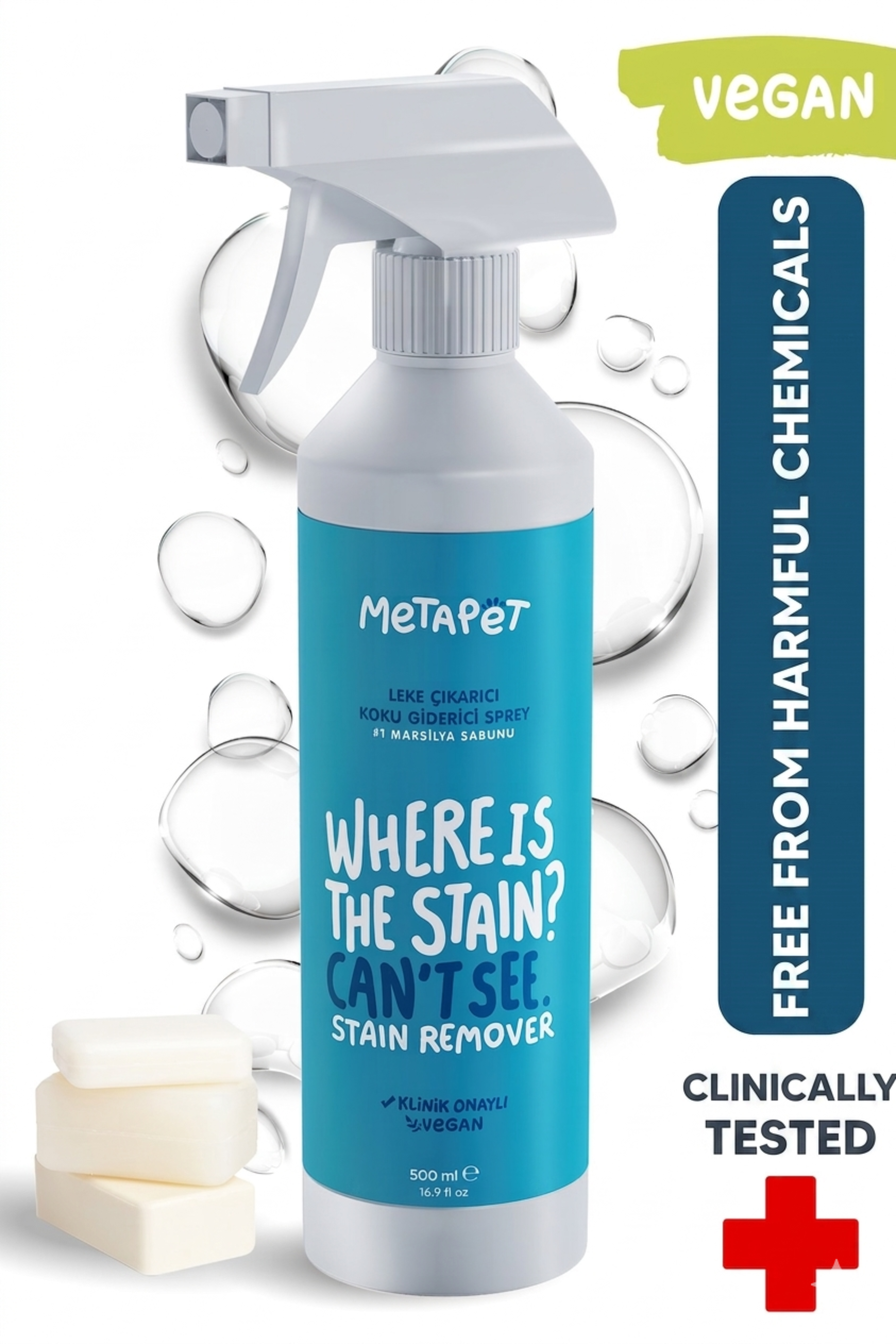
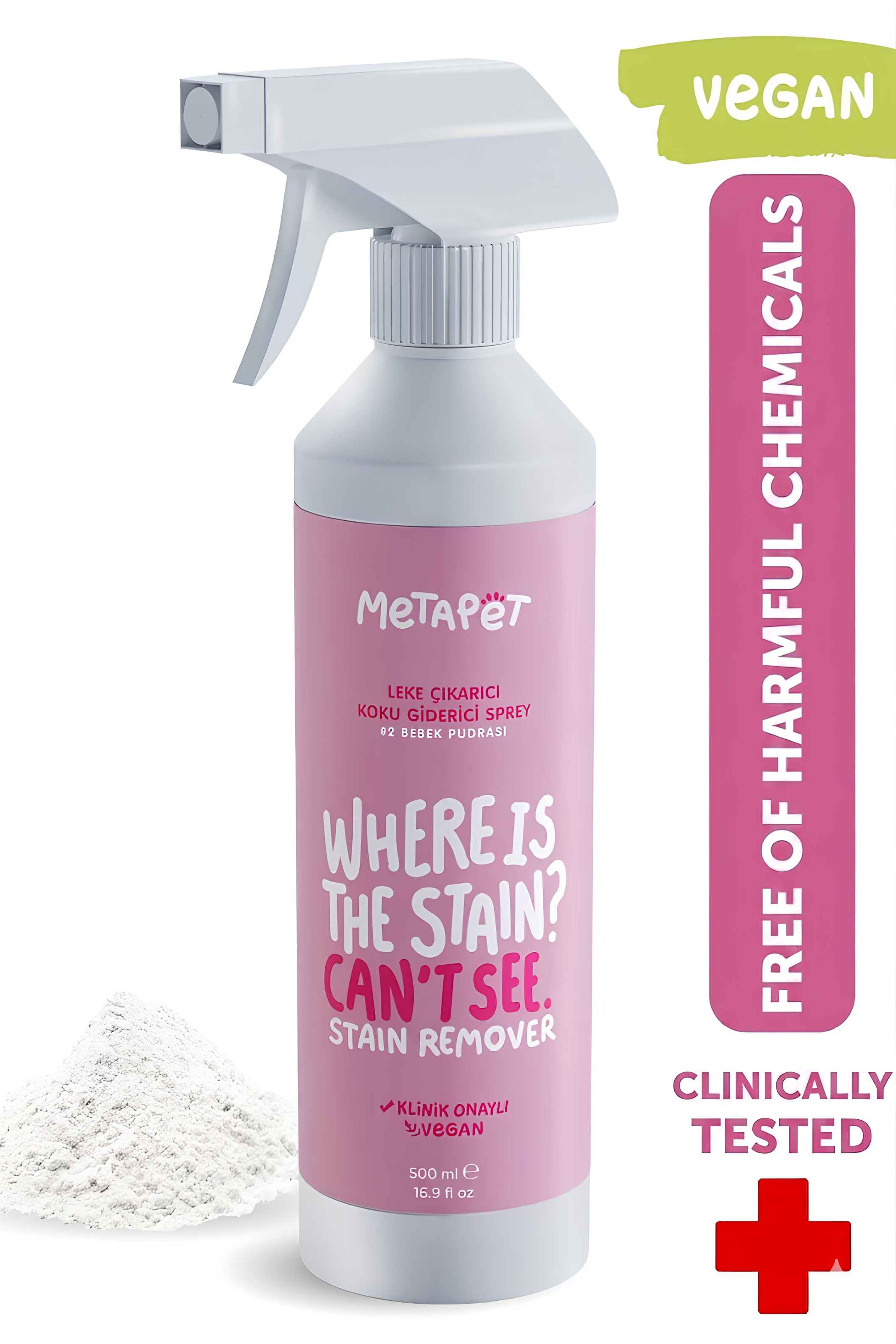
For accidents on carpet, upholstery and hard floors, MetaPet's Where Is The Stain I Can't See? — Pet Stain Remover & Deodorizer Spray is formulated for household surfaces in pet homes and is designed to help lift stains and reduce lingering odors. As with any cleaning product, apply it to surfaces rather than to your pet, test on an inconspicuous area first, follow the label directions, and let the treated area dry fully before your pet returns to it. Cleaning products of this kind support a hygienic home as a complement to routine veterinary care; they are not a substitute for veterinary advice if accidents become frequent or if your pet's toileting habits change.
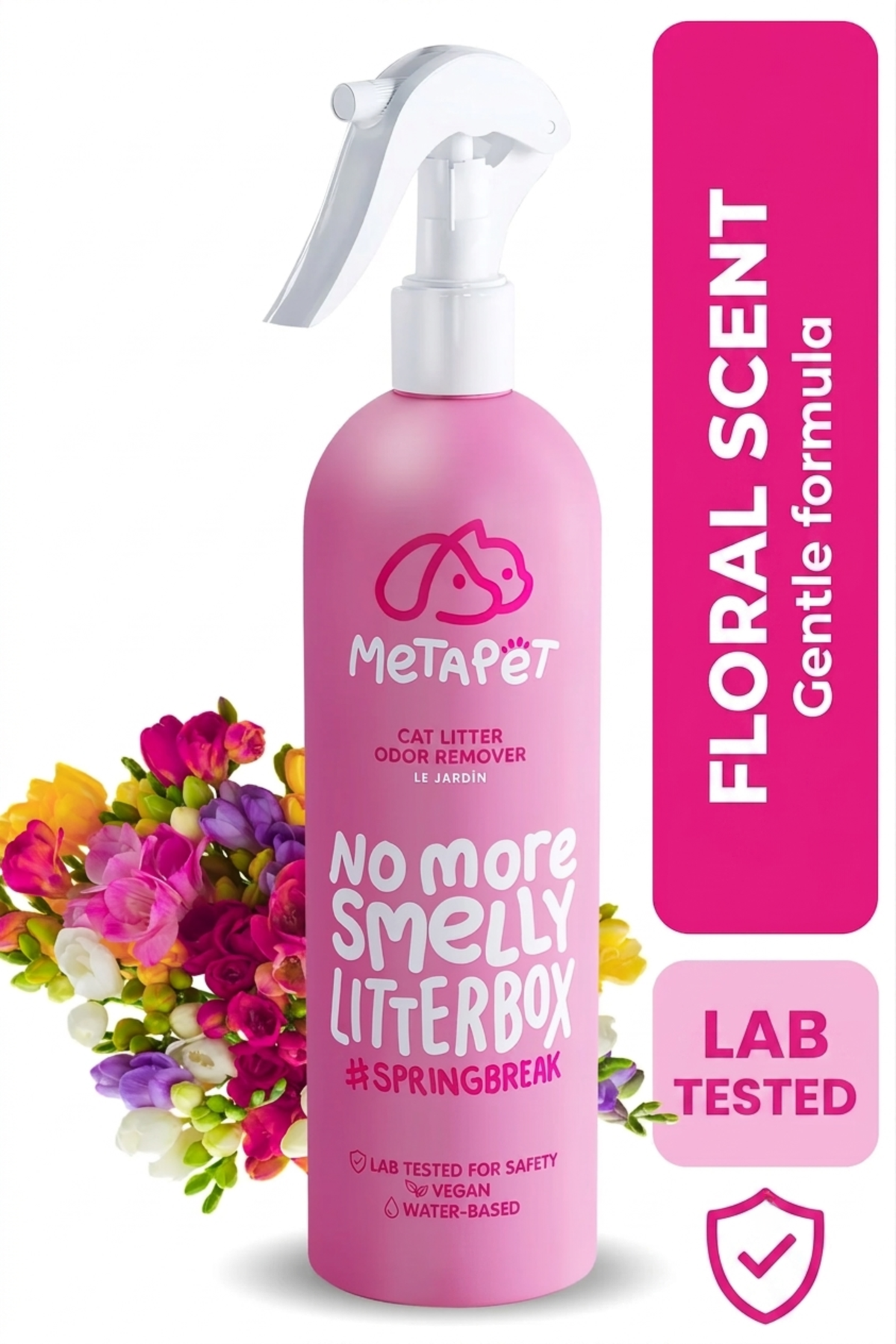
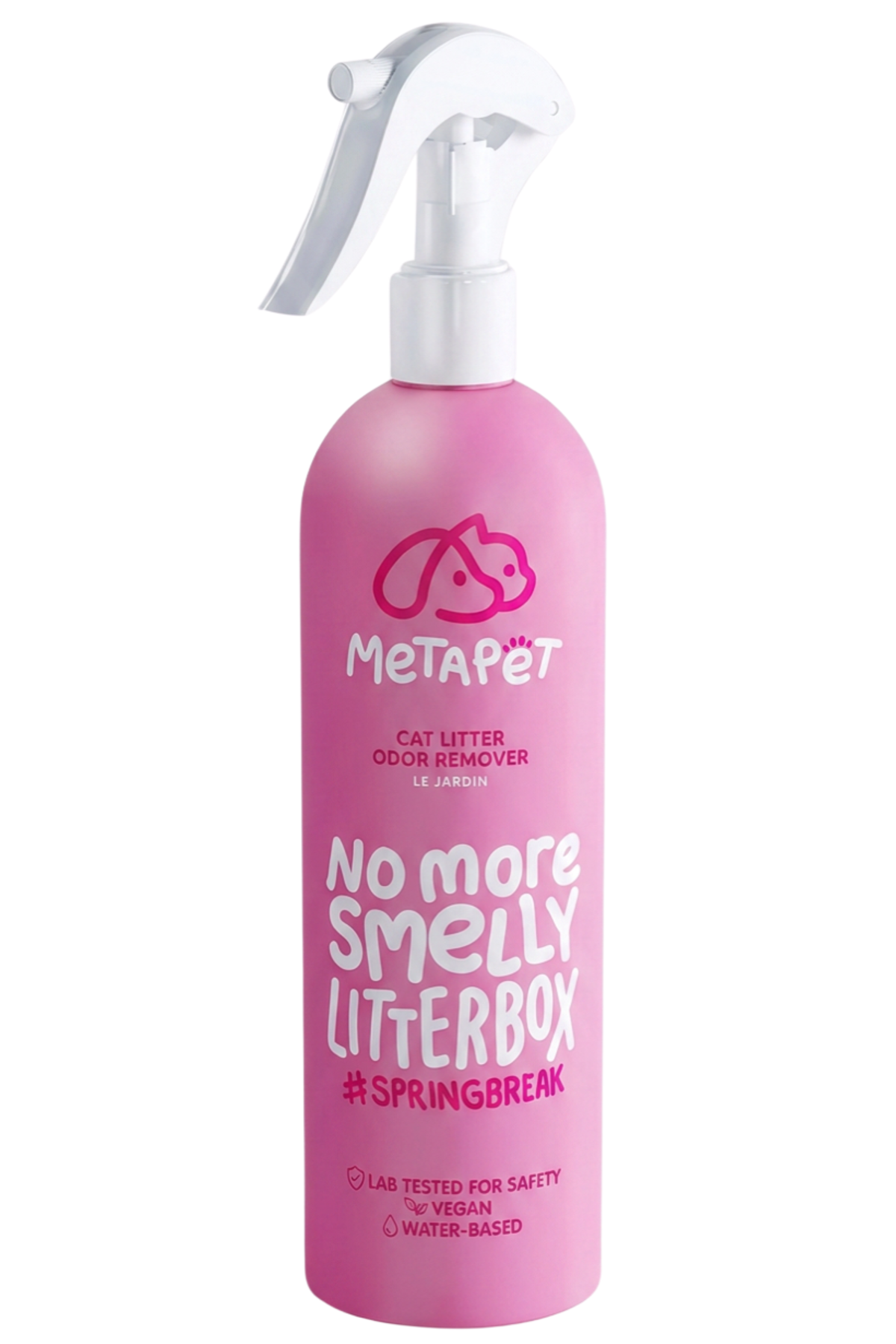
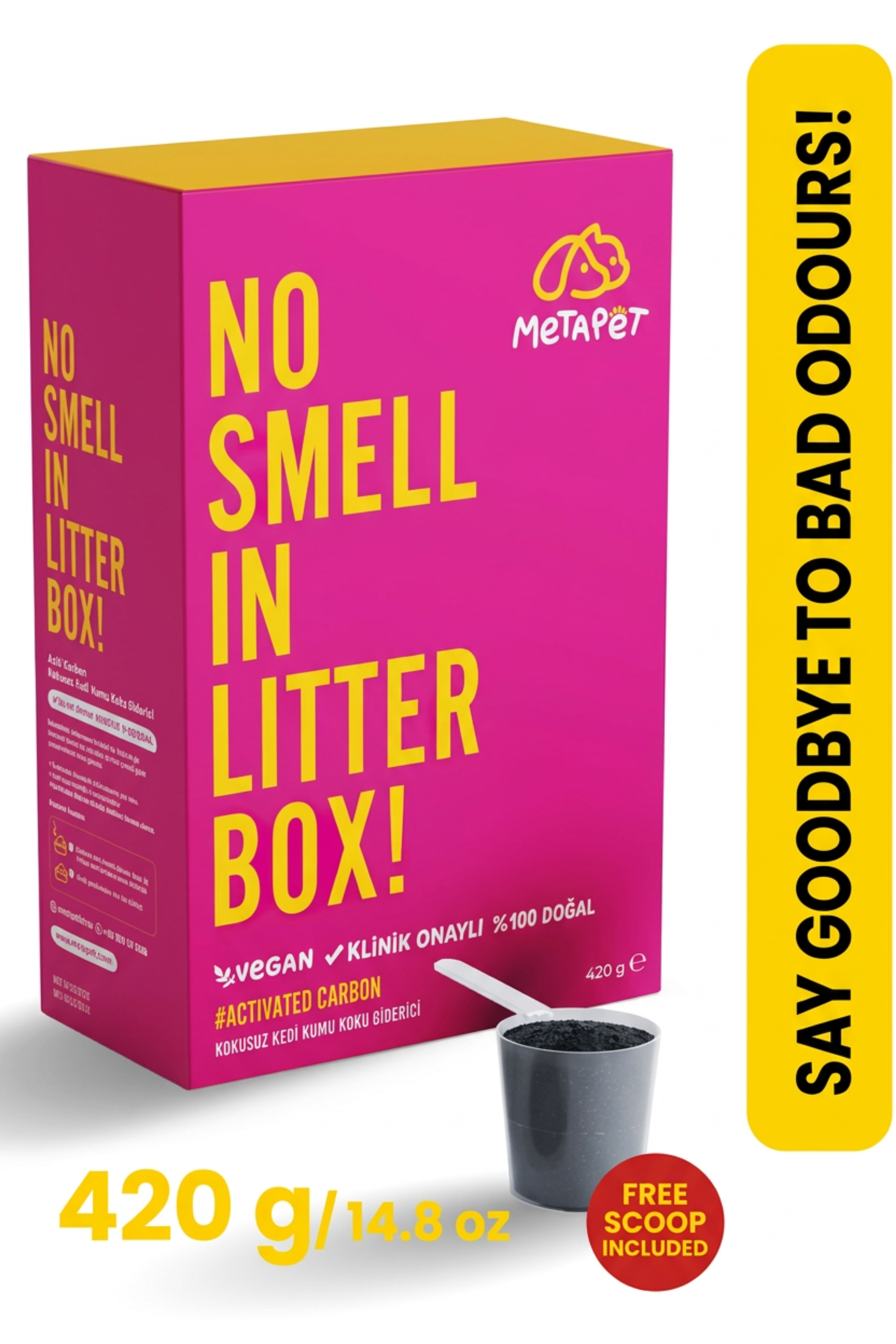
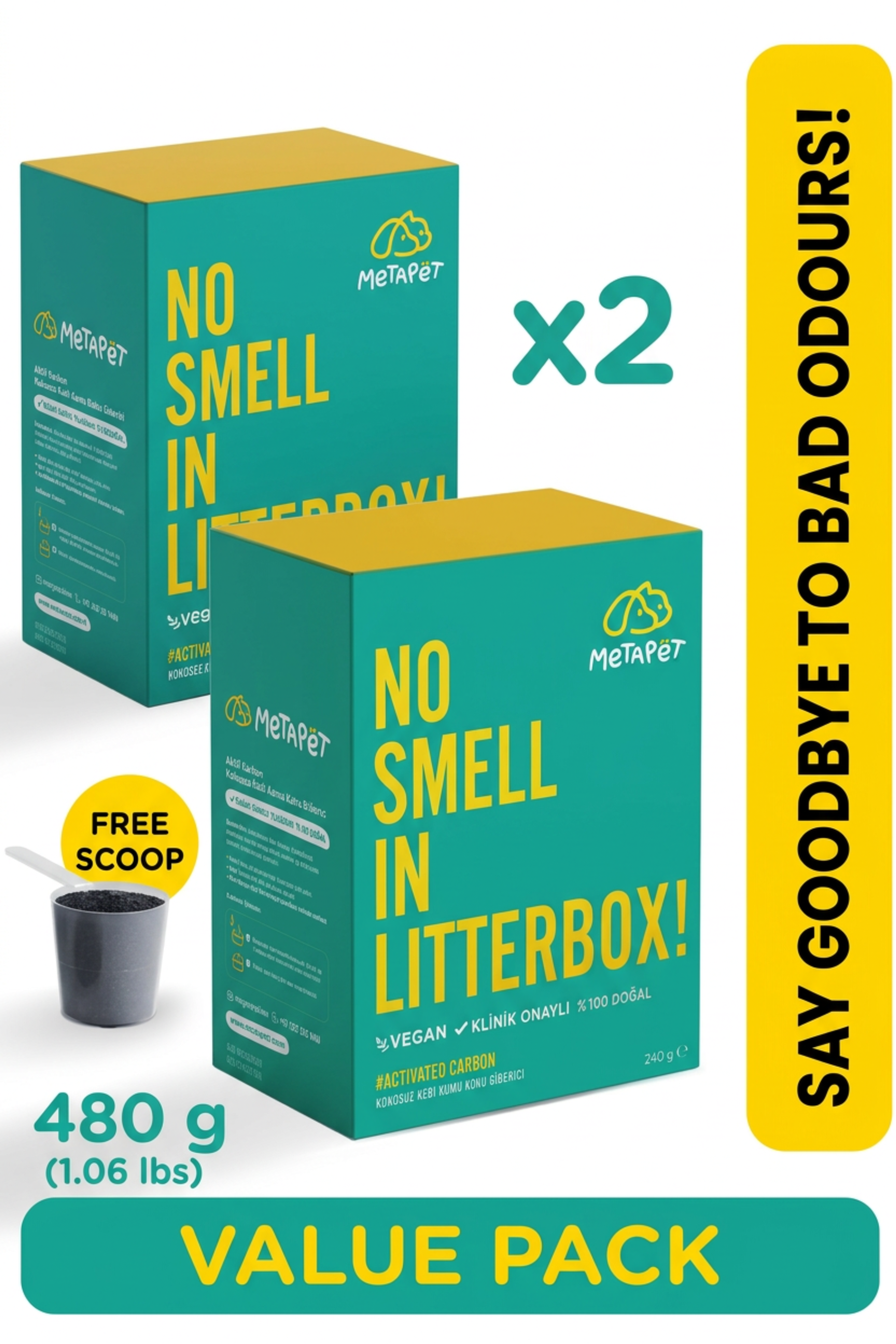
Around the litter box, odor is usually a hygiene issue rather than a product issue, but a deodorizing step can help between full changes. The No Smell in Litterbox — Activated Carbon Litter Deodorizer and No More Smelly Litterbox — Litter & Toilet Deodorizer Spray are made for use in and around the litter area. Products of this kind are a complement to regular scooping, full litter changes and tray washing — never a replacement for them, and never a substitute for veterinary advice if your cat's toileting habits change.
Litter Box Hygiene Without Harsh Chemicals
The litter box is the one item that genuinely needs frequent, thorough cleaning, and also the one where strong chemical smells are most likely to put a cat off using it. Many litter box avoidance problems begin with a tray that was scrubbed with something powerfully scented.
Scoop at least once daily, and empty and wash the tray completely on a regular schedule. Hot water and a mild unscented detergent handle most of the job. Rinse extremely thoroughly, and dry the tray fully before adding fresh litter, since damp trays hold odor.
Replace plastic trays periodically. Over time the surface becomes scratched, and those scratches trap material that no amount of washing removes, which is a common reason a scrupulously cleaned tray still smells.
- Scoop daily. The single most effective odor control measure.
- Wash regularly. Hot water and mild unscented detergent, rinsed well.
- Skip strong scents. Heavy fragrance is a common cause of tray avoidance.
- Replace scratched trays. Worn plastic holds odor permanently.
Laundry, Bedding and Soft Furnishings
Pet bedding, blankets and washable covers should be laundered regularly on the warmest cycle the fabric tolerates. This handles hair, dander and odor, and is also a routine part of parasite control, since flea eggs and larvae accumulate readily in bedding fibers.
Use a fragrance-free detergent where possible, and avoid fabric softeners and scented dryer sheets on pet bedding, as the residue coats fibers and sits against skin. Run an extra rinse cycle for anything your pet sleeps on directly.
Vacuum thoroughly and often, including under furniture and along baseboards where hair and debris collect. Empty the vacuum outdoors rather than indoors, and dispose of the contents promptly if you are dealing with a flea problem.
Safe Storage and Emergency Preparation
Most cleaning-product incidents involving pets are not caused by cleaning at all — they happen when a bottle is left on the floor, a bucket of solution is left standing, or a cabinet is left open. Dogs in particular will investigate and sometimes chew containers.
Store everything in a latched or high cabinet, never decant products into unlabeled bottles, and never leave a mop bucket unattended. Keep the number for your veterinary practice and an animal poison-control service saved in your phone before you ever need them.
- Latched cabinets. Many dogs can open an ordinary cabinet door.
- Original containers only. Never decant into drinks bottles or unlabeled jars.
- Never leave buckets standing. Pets drink from them.
- Save the numbers now. Your vet and a poison-control line, in your phone.
When to Contact Your Veterinarian
Contact your veterinary practice immediately if your pet has licked, chewed or walked through a cleaning product and shows drooling, pawing at the mouth, vomiting, unsteadiness, difficulty breathing, redness of the skin or paws, or any change in behavior. Do not wait to see whether it settles.
Take the product container or a clear photograph of the label with you. Knowing the exact ingredients and concentration allows your veterinary team to act far more precisely, and it is often the single most useful thing an owner can bring.
Do not attempt to make your pet vomit unless a veterinarian specifically instructs you to. With corrosive products in particular, vomiting can cause additional injury on the way back up. Always call first and follow professional direction.