Dental Chews and Dental Diets for Dogs and Cats

Walk down any pet aisle and dental products occupy an impressive amount of shelf space: chews shaped like toothbrushes, kibble with unusual texture, powders to sprinkle, additives to pour into the water bowl, and gels promising fresher breath. The marketing is confident. What is less clear to most owners is which of these things genuinely contributes to a dental routine, and which are mostly reassurance.
The underlying biology is simple enough. A film of bacteria called plaque forms on teeth continuously. Left in place, it mineralizes into hard tartar and irritates the gum line, and over time that inflammation can affect the tissues that hold teeth in place. Dental disease is extremely common in adult dogs and cats, and much of it develops quietly below the gum line where no product can reach.
This article looks at what dental chews, dental diets and water additives can reasonably contribute, what they cannot do, how to choose products sensibly, and why none of them replaces brushing at home or professional veterinary assessment. It is general educational information and not a substitute for an examination by your veterinarian, who is the only person who can tell you what is happening beneath your pet's gum line.
Important: This article shares general educational information for pet owners and is not a substitute for an in-person veterinary examination, diagnosis, or treatment. For any medical concern or emergency, contact your veterinarian promptly.
What Actually Causes Dental Disease
Plaque begins forming on a clean tooth surface within hours. It is soft and can be physically disrupted, which is why brushing works. If it stays, minerals from saliva harden it into tartar, which is rough, holds more plaque, and cannot be brushed away. The gum responds to the bacteria at the margin with inflammation, and the process can progress from there.
The critical point is location. The damage that matters most happens at and below the gum line, in the space between tooth and gum. Products that scrape or polish the visible crown of a tooth may make it look cleaner without addressing what is happening a few millimeters deeper.
This is also why breath odor is an unreliable measure of success. A product that masks smell has not changed anything about the bacteria under the gum. Persistent bad breath is a reason to have your pet's mouth examined, not a reason to buy a stronger-smelling chew.
How Dental Chews Are Meant to Work
Dental chews work primarily through mechanical action: as the pet chews, the texture of the product contacts tooth surfaces and disrupts soft plaque. Some also contain ingredients intended to interfere with plaque mineralization. The effect is concentrated on the surfaces the chew actually touches, which in practice means the larger cheek teeth on the chewing side.
Two limitations follow from that. Chews reach the outer surfaces of some teeth far better than the inner surfaces or the front teeth, and a pet who swallows a chew in three enthusiastic gulps gets almost no mechanical benefit at all. If your dog inhales chews rather than chewing them, they are functioning as calories rather than as dental support.
Calories are worth taking seriously. Dental chews are food, sometimes a substantial amount of it. Factor them into the daily ration rather than adding them on top, particularly for smaller dogs and cats where a single chew can represent a meaningful share of daily intake.
Reading the Evidence: The VOHC Seal
The Veterinary Oral Health Council awards a seal to products that have submitted data meeting its standards for reducing plaque or tartar accumulation. It is a voluntary program, and the seal specifies which claim the product met - plaque control, tartar control, or both.
This is the most practical shortcut available to owners. Rather than assessing marketing language, look for the seal and check what it was awarded for. A product without the seal is not necessarily ineffective, but a product with it has at least been assessed against a published standard.
Be aware of what the seal does not claim. It does not indicate that the product treats existing dental disease, that it reaches below the gum line, or that it removes tartar already present. It addresses accumulation, which is prevention rather than treatment.
Dental Diets
Dental diets are designed differently from ordinary kibble. Rather than shattering on first contact, the pieces are larger and structured so the tooth sinks into them, increasing contact with the tooth surface. Some also include ingredients intended to reduce mineralization of plaque.
For pets who will not tolerate brushing, a veterinary-recommended dental diet can be a useful component of a routine, and because it is fed at every meal it does not add extra calories on top of normal feeding. Discuss suitability with your veterinarian; these diets are not appropriate for every pet, particularly those with other dietary needs.
Cats deserve a specific mention. Feline dental disease is common and often painful, and cats hide oral pain well. Some cats develop tooth resorption, a condition no diet or chew can prevent or manage. A cat that has stopped eating hard food, chews on one side, drops food, or paws at its mouth needs a veterinary examination rather than a change of kibble.
Water Additives and Gels
Water additives are poured into the drinking bowl and are intended to support oral hygiene as part of a daily routine. Their appeal is obvious - no restraint, no cooperation required, nothing for the pet to object to. Their limitation is equally obvious: there is no mechanical action at all.
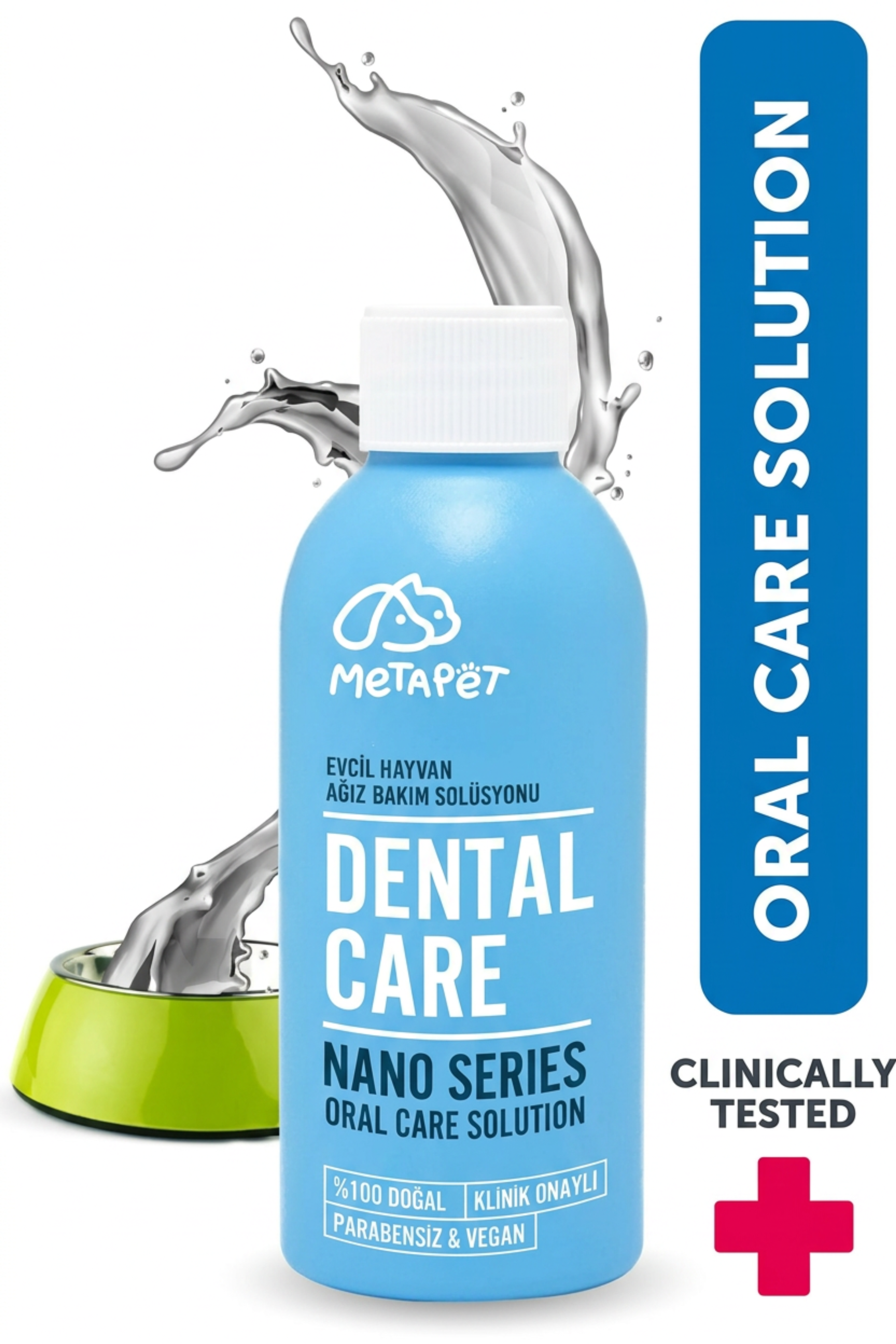
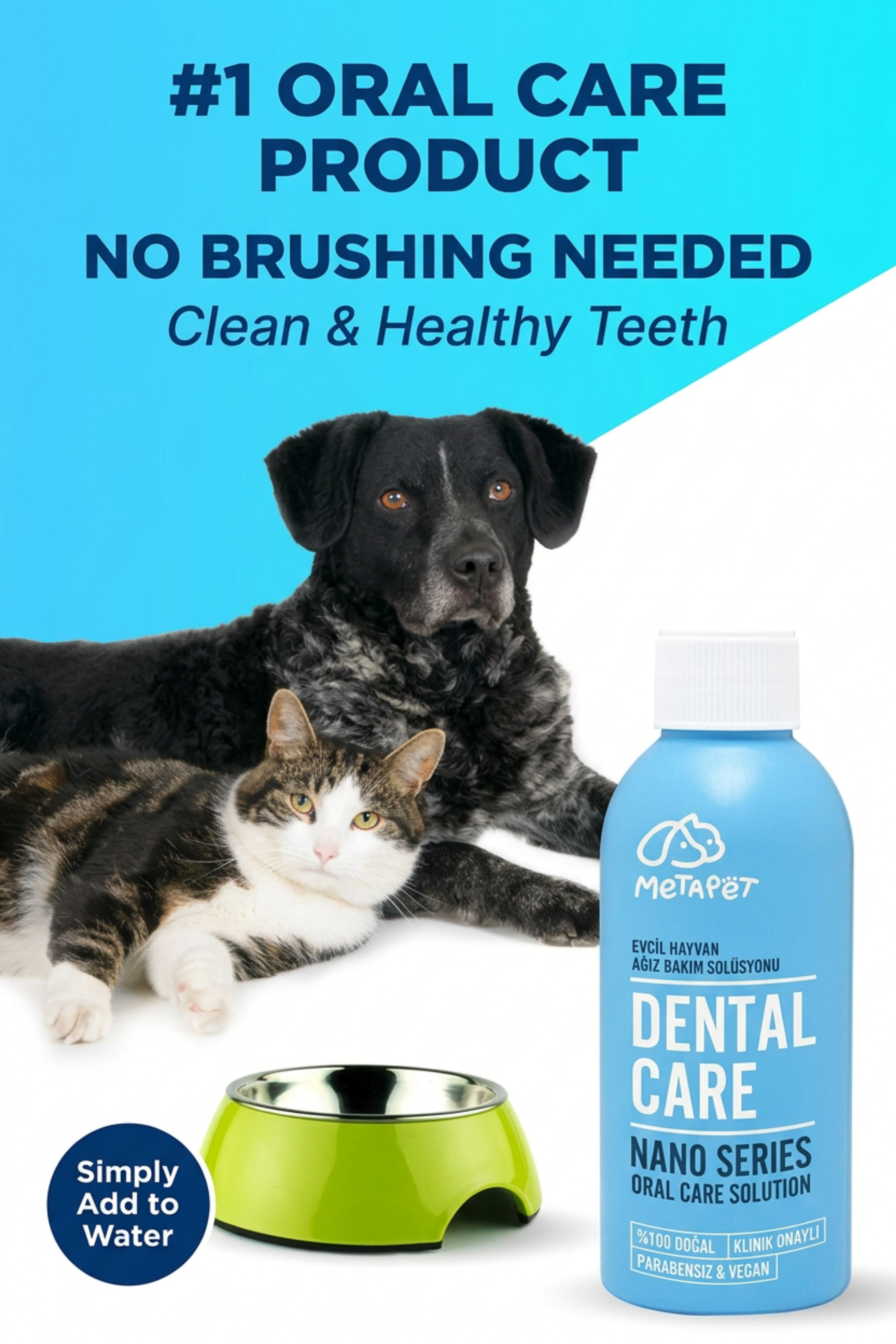
MetaPet's Nano-Series Dental Care Water Additive for Cats & Dogs is designed to be added to the water bowl as part of an everyday oral care routine. Products of this kind are a complement to proper veterinary care - they are not intended to diagnose, treat, cure or prevent any disease, and they do not replace brushing or professional veterinary dental assessment and cleaning.
Whatever additive you use, monitor water intake after introducing it. Some pets object to a change in the taste or smell of their water and drink less, which is not a trade worth making. If your pet drinks less, stop and go back to plain water. Always provide a second bowl of plain water alongside, so your pet always has an untreated option.
Chews to Approach With Caution
- Very hard bones and antlers. Hard objects are associated with tooth fractures, particularly of the large upper cheek teeth.
- Hooves and hard nylon. Same concern - if you cannot indent it with a thumbnail, it is worth reconsidering.
- Small chews for large dogs. A swallowing and obstruction risk.
- Rawhide. Discuss with your veterinarian; concerns include swallowing large softened pieces.
- Anything given unsupervised. Chews should be a supervised activity.
- Chews given to pets with existing dental disease. A painful mouth is not the place for a hard chew.
A useful rule of thumb is whether you would be comfortable being hit on the knee with the object. If not, it may be harder than a tooth can safely handle. When in doubt, ask your veterinarian which chews they consider appropriate for your individual pet.
Why Brushing Still Sits at the Top
Brushing is the most effective home measure because it physically disrupts plaque at the gum line - exactly where it matters - and reaches surfaces no chew contacts. Daily is ideal; several times a week is meaningfully better than nothing.
Use a toothpaste formulated for pets. Human toothpaste is not appropriate for dogs and cats, both because it is not intended to be swallowed and because some human products contain ingredients that are dangerous to pets. Your veterinary practice can advise on suitable options.
Introduce it gradually rather than all at once. Let your pet lick paste from your finger for a few days, then touch the outer surfaces of the teeth briefly, then introduce a soft brush or finger brush, building up over a couple of weeks. Keep sessions short and end them while your pet is still relaxed. Focus on the outer surfaces, which is where most accumulation occurs and where cooperation is easiest to maintain.
Building a Realistic Home Routine
- Brush as often as you can manage. Consistency beats intensity.
- Add a dental diet or VOHC-accepted chew if it suits your pet. Counted within daily calories.
- Consider a water additive as a low-effort extra. Alongside a plain water option.
- Look in your pet's mouth weekly. Lift the lip, check gum color and look for redness at the margin, broken teeth or growths.
- Book regular veterinary check-ups. Oral examination is part of a wellness visit.
- Follow professional cleaning recommendations. These are performed under general anesthesia so that below-the-gum-line cleaning and dental radiographs are possible.
Anesthesia-free scaling is sometimes offered but cannot clean below the gum line or allow radiographs, which is where most significant disease is found. Discuss any such service with your veterinarian before booking it.
Signs That Need a Veterinary Appointment
- Persistent bad breath. The most commonly ignored early sign.
- Red, swollen or bleeding gums.
- Visible tartar, or a tooth that looks discoloured or broken.
- Dropping food, chewing on one side, or turning away from hard food.
- Pawing at the mouth or face rubbing.
- Drooling, especially if blood-tinged.
- Facial swelling, particularly below an eye. This can indicate a tooth root abscess and needs prompt attention.
Pets rarely stop eating because of dental pain until it is advanced; they adapt. A pet who is still eating is not necessarily a pet with a comfortable mouth.
The Honest Summary
Dental chews, dental diets and water additives are supporting players. Used sensibly, they can be a useful part of a daily routine, particularly for pets who will not accept a toothbrush. They are inexpensive, easy and generally well tolerated, and something consistent is better than an ambitious plan you abandon in a fortnight.
What they are not is a substitute for brushing, and they are certainly not a substitute for veterinary dental care. Disease below the gum line cannot be reached by anything that passes through the mouth, and diagnosing it requires examination and radiographs under anesthesia.
So use the products if they help you keep a routine going - but keep the routine anchored to a toothbrush and to regular veterinary check-ups. That combination protects a mouth far better than any chew on the shelf.