Anesthesia-Free Dental Cleaning: What Owners Should Know

Anesthesia-free dental cleaning is marketed as a gentler, cheaper alternative to a veterinary dental procedure, and the appeal is obvious. Many owners are genuinely anxious about general anesthesia, particularly for older pets, and a service that promises clean teeth without it sounds like an ideal compromise.
The reality is more complicated, and it comes down to where dental disease actually lives. Understanding that one point makes the whole debate much clearer, and it also explains why the veterinary dentistry community holds the position it does.
Important: This article shares general educational information for pet owners and is not a substitute for an in-person veterinary examination, diagnosis, or treatment. For any medical concern or emergency, contact your veterinarian promptly.
Where Dental Disease Actually Happens
The visible crown of a tooth is only part of the picture. Below the gumline sits the root, the periodontal ligament that anchors it, and the surrounding bone. Periodontal disease — by far the most common dental problem in dogs and cats — develops in that subgingival space.
Plaque accumulates on the tooth surface, mineralizes into calculus, and works its way beneath the gum margin. There it drives inflammation, destroys the attachment holding the tooth in place, and can lead to bone loss and tooth loosening. All of that happens where nothing is visible from outside.
This is the crux of the issue: a tooth that looks clean from the outside can have significant disease beneath the gum, and a tooth that looks stained may be perfectly healthy underneath. Appearance is a poor guide to dental health.
What Anesthesia-Free Cleaning Can Do
An anesthesia-free procedure typically involves restraining a conscious animal and scaling visible calculus from the outer surfaces of the crowns with hand instruments. Done gently by an experienced person, it removes visible deposits from the parts of the teeth that are easy to reach.
The result is teeth that look noticeably cleaner, and for many owners that is the outcome they were seeking. It is genuinely a cosmetic improvement, and nobody disputes that the teeth appear better afterwards.
- Can do: remove visible calculus from the outer surfaces of the crowns.
- Can do: improve how the teeth look from the front.
- Cannot do: clean below the gumline where disease develops.
- Cannot do: assess tooth roots, bone or hidden pathology.
What It Cannot Do
A conscious animal cannot be safely scaled below the gumline, cannot have the inner surfaces of the teeth thoroughly cleaned, cannot have each tooth probed for pockets of attachment loss, and cannot have dental radiographs taken. Every one of those steps requires stillness that a conscious dog or cat cannot provide.
This matters because dental radiographs frequently reveal disease invisible on examination — resorptive lesions in cats, root abscesses, retained root fragments, bone loss around apparently normal-looking teeth. Studies of dental imaging in veterinary practice have repeatedly shown that a meaningful proportion of clinically significant findings would have been missed without radiographs.
There is also a real risk of false reassurance. An owner whose pet's teeth look clean may reasonably conclude that the dental problem has been addressed, and therefore not pursue an examination that would have found active disease. That delay is the concern veterinary dentists raise most often.
Why Veterinary Dentistry Uses Anesthesia
General anesthesia is not used for the operator's convenience. It permits several things that are simply impossible otherwise: thorough cleaning below the gumline on every surface of every tooth, full-mouth radiographs, probing and charting of each tooth, and extraction of diseased teeth where needed.
It also protects the airway. During scaling, water and aerosolized bacteria are produced in quantity, and an anesthetized patient has a cuffed tube in the airway preventing that material from reaching the lungs. A conscious animal has no such protection.
And it prevents injury. Sharp instruments in a moving mouth risk lacerating gums, cheeks and tongue, damaging enamel, or injuring the handler. It also spares the animal an experience that many find genuinely frightening.
- Subgingival access. The only way to clean where disease actually develops.
- Radiographs. Reveal disease invisible to the naked eye.
- Airway protection. Prevents inhalation of water and bacteria.
- Safety. Protects gums, tongue and handler from sharp instruments.
- Welfare. Avoids a frightening experience for the animal.
Understanding Anesthetic Risk Honestly
Anesthetic anxiety is completely understandable and deserves a straight answer rather than dismissal. Modern veterinary anesthesia involves individual assessment, pre-anesthetic examination and often blood testing, tailored drug protocols, intravenous fluids, and continuous monitoring of heart rate, blood pressure, oxygen levels and temperature.
Age itself is not a disease. Older animals are anesthetized routinely and safely with appropriate assessment and support, and many of them are precisely the patients who most need dental treatment. A blanket refusal on grounds of age alone often means leaving painful dental disease untreated for years.
If you are worried, the productive conversation is with your own veterinarian: ask what pre-anesthetic testing they recommend, what monitoring they use, who stays with your pet throughout, and how they would tailor the protocol to your individual animal. Those questions usually resolve far more anxiety than avoiding the procedure does.
Recognizing Dental Pain in Dogs and Cats
Animals rarely stop eating because of dental pain, which misleads a great many owners. Eating is a strong drive, and most dogs and cats will keep eating through significant discomfort, simply adjusting how they do it.
Look instead for subtler changes: chewing predominantly on one side, dropping food, swallowing kibble whole, turning the head oddly while eating, pawing at the mouth, reduced interest in chew toys, or a cat that has stopped grooming as thoroughly. Bad breath is one of the most reliable early markers and is not normal in a healthy mouth.
- Chewing on one side. A common early sign of localized pain.
- Dropping food. Especially with harder kibble or treats.
- Persistent bad breath. Not normal, and worth investigating.
- Reduced grooming in cats. Grooming becomes uncomfortable.
- Withdrawal from chew toys. A previously enjoyed activity stops.
Home Care Is Where the Real Work Happens
No professional cleaning, with or without anesthesia, substitutes for daily home care. Plaque begins reforming on a cleaned tooth within hours and mineralizes into calculus within a few days, so what happens between appointments determines long-term oral health far more than the appointments themselves.
Toothbrushing is the most effective home measure by a considerable margin, and daily is meaningfully better than a few times a week. Use a toothpaste formulated for pets; human toothpaste is not suitable for dogs and cats and should not be used.
Introduce brushing gradually over weeks rather than days. Start by letting your pet lick a little pet toothpaste from your finger, progress to touching the outer surfaces of the teeth with a finger, then to a soft brush on a few teeth, and build from there. Aim for the outer surfaces, where most calculus accumulates, and keep each session short and positive.
- Let your pet lick pet toothpaste from your finger for several days.
- Progress to rubbing a finger along the outer gumline briefly.
- Introduce a soft pet toothbrush on just two or three teeth.
- Build up gradually to the full outer surfaces of both sides.
- Aim for daily, and always end the session on a positive note.
Other Home Dental Options
For pets that will not tolerate brushing, other measures can form part of a routine, though none matches brushing for effectiveness. Dental diets, appropriately designed chews, and water additives are all used as supporting elements alongside — not instead of — regular veterinary dental examinations.
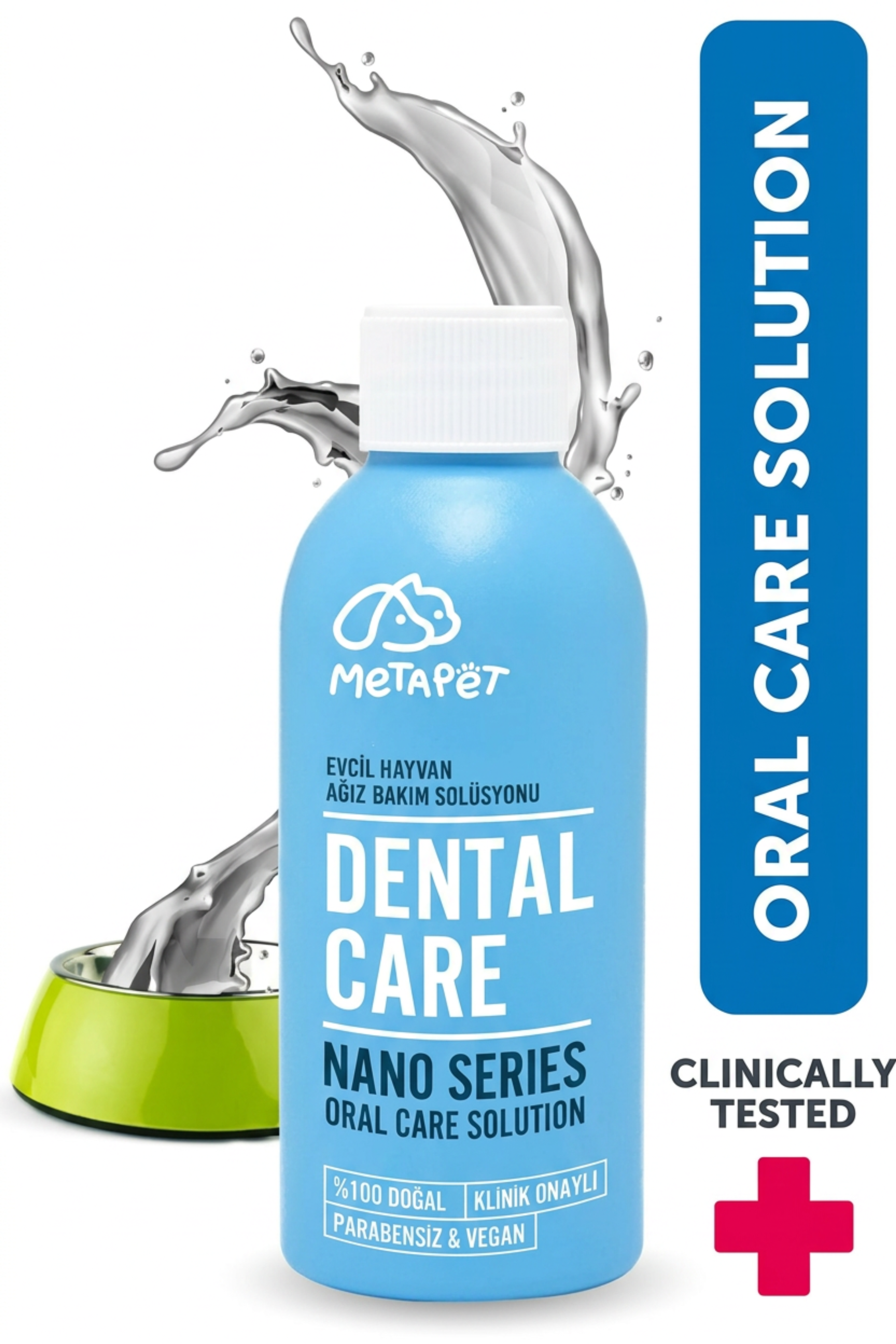
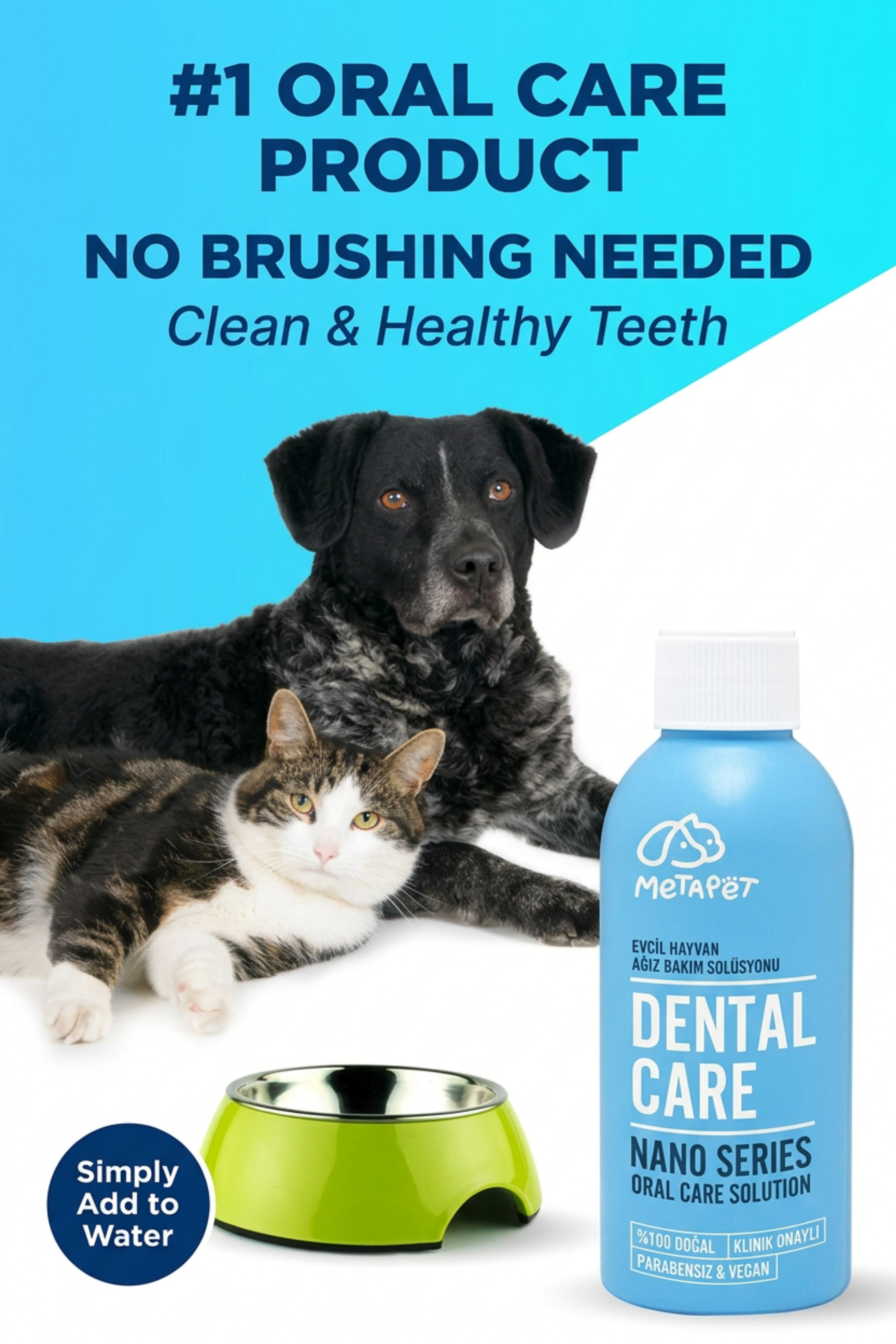
MetaPet's Nano-Series Dental Care — Water Additive for Cats & Dogs is designed to be added to drinking water as a simple daily step in an oral care routine, which some owners find more practical than brushing with a reluctant pet. Follow the label directions for dosing, introduce it gradually so your pet accepts the change to their water, and always keep a second bowl of plain fresh water available. A water additive is a complement to a home dental routine and to regular veterinary care — it does not clean below the gumline, does not replace toothbrushing, and is not a treatment for dental disease.
When choosing chews, avoid anything genuinely hard — bones, antlers, hooves and very hard nylon products are associated with fractured teeth in dogs. A reasonable rule of thumb used by many veterinary dentists is that if you cannot make an indentation in it with your thumbnail, it is too hard for your dog's teeth.
Questions Worth Asking Any Provider
If you are considering any dental service for your pet, a few direct questions clarify matters quickly. Who is performing the procedure, and what are their qualifications? Is a veterinarian present and supervising? What will be done below the gumline? Will radiographs be taken?
Ask what happens if disease is found. A service that can only clean visible surfaces cannot treat a fractured tooth, a resorptive lesion or a root abscess, and it is worth knowing in advance what the plan would be in that situation.
- Who performs it? Qualifications and veterinary supervision.
- What happens below the gumline? This is where disease lives.
- Are radiographs taken? Essential for finding hidden disease.
- What if disease is found? Ask what the treatment pathway would be.
Building a Sensible Long-Term Plan
A practical dental plan has three components: daily home care, a professional oral examination at least once a year as part of a routine health check, and veterinary dental procedures under anesthesia when your veterinarian assesses that they are needed.
How often that third component is required varies enormously. Small breeds, brachycephalic breeds with crowded teeth, and cats prone to resorptive lesions typically need more frequent attention than large-breed dogs with well-spaced teeth. Your veterinarian will advise based on what they see in your individual animal.
Consistency beats intensity. A pet whose teeth are brushed most days and examined annually generally needs fewer, simpler interventions over a lifetime than one that receives no home care and periodic dramatic clean-ups.
When to Contact Your Veterinarian
Book an appointment if you notice persistent bad breath, red or bleeding gums, visible calculus, a broken or discolored tooth, a lump or swelling in the mouth, or any change in how your pet eats or chews. Facial swelling, particularly beneath an eye, needs prompt attention as it can indicate a tooth root problem.
Contact your practice urgently if your pet stops eating entirely, drools excessively or with blood present, paws persistently at the mouth, or seems painful when the face or jaw is touched. Cats in particular may show only subtle signs alongside significant oral disease.
And if anesthesia is what is holding you back, say so plainly at the appointment. Your veterinary team would far rather discuss your concerns and explain their protocols than have a pet go untreated for years because a worry was never raised out loud.