Tear Stains in Dogs and Cats: Causes and Gentle Care

Anyone who has owned a white or light-coated dog or cat knows the look: two reddish-brown tracks running from the inner corner of each eye down the face, standing out sharply against pale fur. Tear staining is one of the most frequent cosmetic complaints owners bring to veterinarians and groomers, and it generates an enormous amount of confident but unreliable advice online.
The important thing to understand from the outset is that staining is a visible sign of something, not a condition in its own right. Tears are always produced; the question is why they are spilling onto the face instead of draining away normally. Sometimes the answer is harmless facial anatomy. Sometimes it is a painful eye problem that needs treating today.
This guide explains what causes the colour, the range of reasons tears overflow in dogs and cats, how to tell cosmetic staining apart from a medical problem, how to clean the area safely as part of a daily routine, and which popular remedies are genuinely unsafe.
Important: This article shares general educational information for pet owners and is not a substitute for an in-person veterinary examination, diagnosis, or treatment. For any medical concern or emergency, contact your veterinarian promptly.
What Causes the Reddish-Brown Colour
Tears contain naturally occurring pigments called porphyrins, which are iron-containing compounds the body produces and excretes through tears, saliva, and urine. Porphyrins are colourless in the tear film itself, but when they sit on fur and are exposed to air and light, they oxidise and take on a characteristic rust-red or brown tint.
This is why the stain shows dramatically on a white Maltese or a cream Persian and is essentially invisible on a black Labrador. The amount of pigment may be identical; only the contrast differs. It is also why the discolouration is so stubborn — the pigment is bound to the hair shaft, and no amount of gentle wiping removes colour that has already set into the fur.
A second, separate process can layer on top of this. Fur that stays constantly damp becomes a hospitable environment for yeast and bacteria, and yeast overgrowth in particular can produce a darker brown discolouration, a distinctly musty smell, and skin irritation beneath. This second problem is a genuine health issue rather than a cosmetic one and needs veterinary attention.
Why Tears Overflow in the First Place
In a normal eye, tears wash across the surface and drain through small openings at the inner corner of each eyelid into the nasolacrimal duct, which carries them into the nose. Staining happens when either too many tears are produced or the drainage system is not working, so the excess spills over the eyelid onto the face.
- Facial anatomy. Flat-faced dogs and cats often have distorted or narrowed tear ducts and shallow eye sockets, so normal drainage simply does not work well.
- Blocked or narrow ducts. Ducts can be congenitally narrow, or become blocked by debris or inflammation.
- Hair irritating the eye. Long facial hair, or eyelashes growing in an abnormal direction, constantly irritate the eye surface and increase tear production.
- Eyelid conformation. Eyelids that roll inward or outward disrupt both the spread and the drainage of tears.
- Allergies and irritants. Dust, smoke, pollen, and strong household products increase tearing.
- Teething in puppies. Some puppies show temporary increased tearing during teething, which often settles.
- Infections and eye disease. Conjunctivitis, corneal injury, and other painful conditions all increase tear production sharply.
Telling Cosmetic Staining From a Medical Problem
This distinction is the most useful thing an owner can learn, because it determines whether you reach for a damp cloth or the phone.
Long-standing, symmetrical, pale staining on a breed known for it, in a comfortable animal with clear, open, non-red eyes and clear watery tearing, is usually cosmetic. It has typically been there for months or years and has not changed.
- Squinting or holding one eye closed suggests pain and needs same-day veterinary attention.
- Redness of the eye or surrounding tissue points to inflammation or infection rather than simple overflow.
- Thick, coloured, yellow or green discharge is a sign of infection, not staining.
- Cloudiness or a change in the eye's surface requires urgent assessment.
- Pawing or rubbing at the face indicates discomfort.
- Sudden onset, or one side only, is far more likely to be a medical problem than a cosmetic one.
- Swelling, sensitivity to light, or a visible change in the eye should be seen promptly.
Any of the above warrants a veterinary examination rather than a cleaning routine. Eye problems can progress quickly, and conditions such as corneal ulcers are both painful and time-sensitive.
Breeds That Are Particularly Prone
Staining is not distributed evenly across the pet population. Two factors stack up: how much tearing occurs, and how visible the result is.
Among dogs, small white breeds such as Maltese, bichon frisé, shih tzu, Pekingese, poodles, and Lhasa apso are the classic cases, combining pale coats with facial structures that predispose to overflow. Brachycephalic breeds of any colour tend to tear more because of shallow sockets and compressed tear ducts.
Among cats, Persians, Himalayans, and exotic shorthairs are the most commonly affected, for exactly the same reasons — flattened faces distort the tear drainage pathway. In these cats, staining is often accompanied by damp fur that never fully dries, which is why daily attention matters more in these breeds than in others.
A Safe Daily Cleaning Routine
The realistic goal of home care is to keep the area clean, dry, and comfortable, and to prevent new staining from setting in. Existing colour bound to the hair shaft will generally only disappear as that hair grows out and is trimmed away.
- Choose a calm moment, not straight after a stressful event, and let your pet see what you are holding.
- Use a soft, clean cloth or cotton pad dampened with plain warm water, or a product your veterinarian has approved for use around the eyes.
- Wipe gently outward and downward, away from the eye — never toward it, and never with anything that could touch the eye surface.
- Use a fresh section of cloth for each eye to avoid moving anything from one side to the other.
- Dry the area thoroughly afterwards. This step matters as much as cleaning, because damp fur is what allows yeast and odour to develop.
- Reward with a treat so the routine builds a positive association and stays easy to repeat.
- Repeat once or twice daily for pets prone to staining.
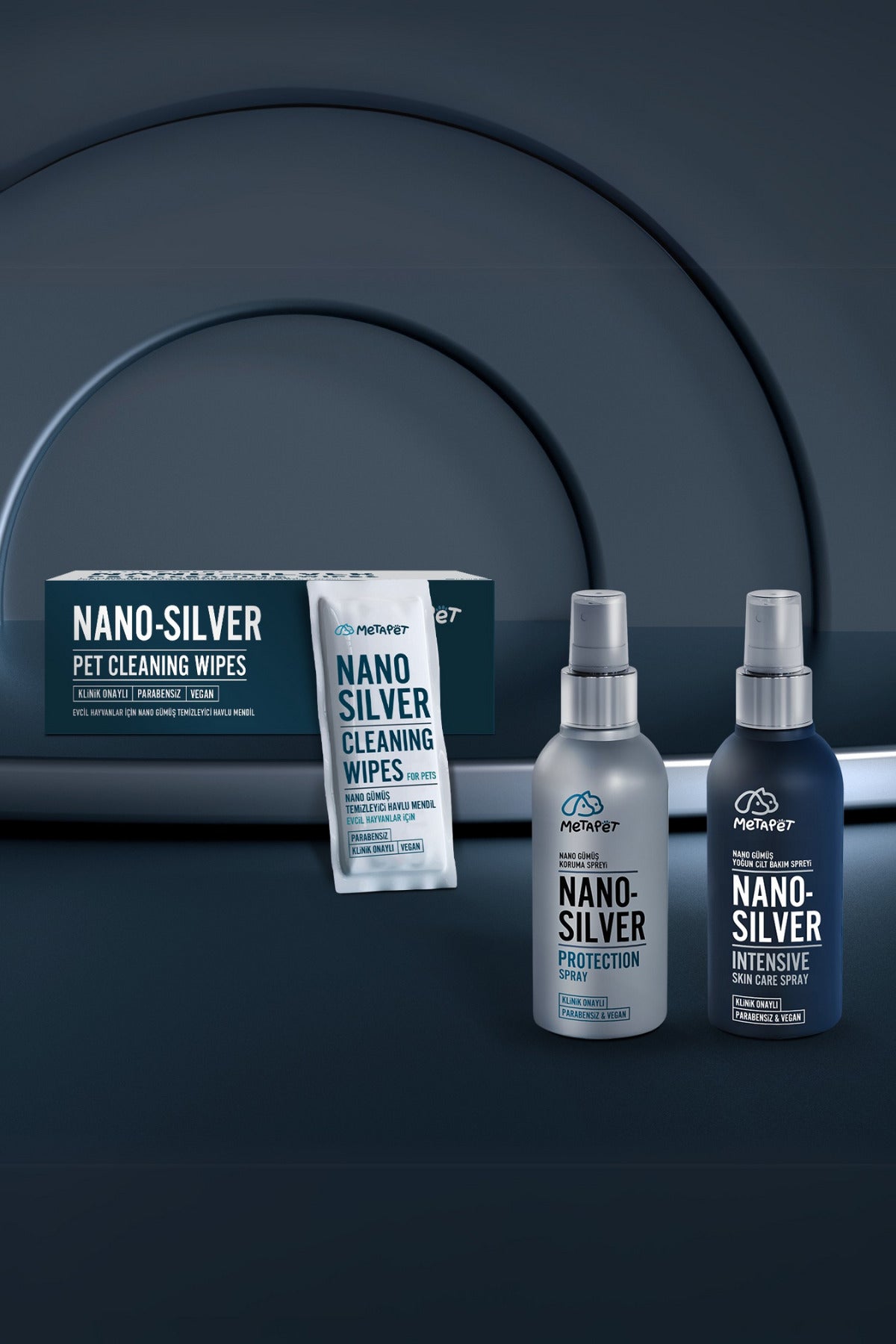
MetaPet's Nano-Series Hygiene & Care Towel Wipes are described by the brand as wipes for quick, gentle external cleaning of a pet's coat and skin between baths, including sensitive areas. They are a cosmetic grooming aid for routine hygiene, not a medicine, and they do not treat eye or skin conditions. Never wipe the eye surface itself, use a fresh wipe for each side, and discontinue use if irritation occurs. Any discharge, redness, or discomfort needs veterinary examination rather than more cleaning.
Keeping the Hair Under Control
Trimming the hair around the eyes reduces the wicking effect that draws tears across the face and stops long hair from irritating the eye surface and driving further tearing. It is one of the more effective practical measures available.
This is genuinely delicate work. Blunt-ended scissors, excellent lighting, a second person holding the pet still, and short careful snips are the minimum. A pet that moves suddenly while pointed scissors are near its eye can be seriously injured, and if there is any doubt at all, a professional groomer or your veterinary clinic should do it.
Never attempt to trim around the eyes of a wriggling, frightened, or unwilling animal. It is far better to book a groomer than to risk an eye injury, and many clinics will do a quick face trim as part of a routine appointment.
What Not to Do
Tear staining attracts more dangerous home remedies than almost any other cosmetic pet issue, largely because owners are frustrated by how stubborn the colour is. Several widely shared suggestions carry real risk.
- Do not use hydrogen peroxide or bleach. These can cause severe chemical injury to the eye and surrounding skin.
- Do not use human make-up removers or facial products. They are not formulated for use near an animal's eye and can be irritating or harmful.
- Do not give antibiotics for cosmetic reasons. Some remedies sold online contain antibiotic residues. Antibiotics are prescription medicines with real risks, including contributing to resistance, and should only be used when a veterinarian has diagnosed an infection.
- Do not use apple cider vinegar in or near the eye. Acidic substances near the eye can cause pain and damage.
- Do not use scissors on a moving pet. One of the more common causes of preventable eye injuries at home.
- Do not ignore a sudden change. New staining, one-sided staining, or staining with discharge is a medical sign, not a grooming problem.
Diet, Water, and Other Contributing Factors
Owners often ask whether diet causes tear staining. The honest position is that this is frequently claimed and not well established. Some owners report improvement after a diet change, but individual reports are difficult to interpret, and the underlying anatomy that causes overflow does not change with food.
If you suspect a food sensitivity, the right approach is a proper elimination trial designed and supervised by your veterinarian, not switching products repeatedly based on marketing claims. Random diet changes can cause digestive upset and rarely answer the question.
Environmental factors are worth reviewing too. Dusty homes, cigarette smoke, strong cleaning sprays, air fresheners, and scented candles all irritate eyes. Some pets show noticeable improvement simply from better ventilation and fewer aerosols in the rooms they use. No supplement or grooming product should be expected to treat an eye condition; supplements are complements to, never substitutes for, veterinary diagnosis and care.
When to Book a Veterinary Appointment
Because tear staining sits so firmly in the cosmetic category in most owners' minds, genuine problems are often left far too long. Use the list below as your threshold.
- Sudden onset. Staining that appears over days rather than months needs assessment.
- One eye only. Asymmetry strongly suggests a localised problem such as a blocked duct, foreign body, or injury.
- Any sign of pain. Squinting, pawing, rubbing on furniture, or reluctance to be touched around the face.
- Coloured or thick discharge. Yellow, green, or sticky discharge suggests infection.
- Red, swollen, or cloudy eyes. Requires prompt examination.
- Skin problems underneath. Sore, smelly, or inflamed skin beneath the stain needs treatment, not cleaning.
- No improvement with hygiene. If diligent daily care changes nothing, an underlying cause is likely and worth investigating.
Your veterinarian can examine the eye surface, check tear production and drainage, look for abnormal eyelashes or eyelid conformation, and determine whether the tear ducts are open. Many causes are straightforwardly manageable once identified.
Frequently Asked Questions
Will tear stains ever go away completely?
The pigment already bound to the hair generally does not wash out. What consistent care achieves is preventing new staining and allowing stained hair to be trimmed away over time as it grows. Managing the cause of the overflow is what makes the difference long term.
Are tear stains painful for my pet?
The staining itself is not painful. However, the causes behind it sometimes are, and constantly damp skin beneath can become sore. Any sign of discomfort means the cause needs investigating.
Are commercial tear stain removers safe?
It varies considerably by product, and some have contained ingredients that are not appropriate for use near the eyes. Ask your veterinarian before applying anything to the face, and never use a product on the eye surface.
Do puppies grow out of tear staining?
Some do, particularly if the tearing related to teething or a temporary irritation. Staining tied to facial structure or duct anatomy generally persists and is managed rather than cured.
Can I use contact lens solution or saline to clean the area?
Sterile saline made for eyes is sometimes recommended by veterinarians, but contact lens solutions can contain cleaning agents that are not suitable. Ask your veterinary clinic what they recommend for your pet rather than assuming.
My cat's face is always damp under the eyes. Is that normal?
Persistently damp fur is worth having examined, particularly in flat-faced breeds where it is common but not harmless. Constant moisture can lead to skin irritation, so your veterinarian should confirm the cause and advise on a routine.
Tear staining is usually a cosmetic issue with a simple management routine — keep the area clean, keep it dry, keep the hair trimmed, and be patient with colour that has already set. The one thing worth taking seriously is change: anything sudden, one-sided, or uncomfortable belongs in front of a veterinarian rather than in a grooming routine.