Slow Blinking in Cats: What a Slow Blink Really Means

You glance across the room and your cat is looking at you, eyes narrowing slowly, closing for a moment, then opening again just as slowly. Many owners call it a cat kiss or a cat smile. It is one of the gentlest messages a cat can send, and it is something you can learn to send back. This guide explains what a slow blink is, what behavior science suggests it communicates, how it differs from a stare or a sleepy droop, how to use it to build trust, and why a squint that does not open again can be a reason for a veterinary exam rather than a compliment.
Important: This article shares general educational information for pet owners and is not a substitute for an in-person veterinary examination, diagnosis, or treatment. For any medical concern or emergency, contact your veterinarian promptly.
What a Slow Blink Looks Like
A slow blink is not the quick, reflexive blink that keeps the eye moist. It is a deliberate, unhurried narrowing of both eyes, usually while the cat is looking toward you. The upper and lower lids drift together, the eyes may close fully or stay as soft slits for a moment, and then they open again just as gradually.
The rest of the face matches the eyes. The whiskers sit relaxed rather than pulled tight or fanned stiffly forward, the ears face forward, and the body is often curled, loafed, or stretched out. The slow blink usually arrives as part of a calm, settled picture.
If you want a refresher on the rest of that picture, our guide to cat body language walks through ears, tail, posture, and whiskers.
Why Eyes Matter So Much in Cat Communication
To understand why a slow blink feels so meaningful, it helps to know how cats use eye contact in general. Among cats, a direct, unbroken stare is a confrontational signal. Two cats squaring off over a doorway will often lock eyes, and the one who looks away first usually backs down.
Softening the gaze does the opposite. Looking away, narrowing the eyes, or closing them briefly in front of another individual signals that the cat is not preparing to act and does not see that individual as a threat. Closing the eyes is also a small act of vulnerability: for a moment, the cat is choosing not to monitor you. A cat that feels unsafe rarely does that.
Seen this way, a slow blink is a stretched-out, exaggerated version of looking away. It takes the most natural de-escalation signal a cat has and turns it into something clear and friendly.
What the Research Suggests About Slow Blinks
For years, the slow blink was mostly folk wisdom. More recently, university behavior scientists have studied it directly.
Cats tend to blink back
In published experiments, owners were asked to slow blink at their own cats at home. The cats were more likely to narrow their eyes in return when their person slow blinked than when the person simply sat nearby without interacting. That suggests a two-way exchange.
Slow blinks can make a stranger seem friendlier
The same research team found that cats were more inclined to approach an unfamiliar person who had slow blinked at them than one who kept a neutral expression. Plenty of cats still stayed put, but the pattern pointed toward a signal of friendly, non-threatening intent.
What scientists are careful not to claim
Researchers describe the slow blink as a likely form of positive communication between cats and people. They do not claim it means exactly the same thing as a human smile or a declaration of love. It is best read as "I am comfortable with you right now," which is meaningful on its own.
What Your Cat May Be Telling You
Context helps you interpret any single slow blink. In general, cats tend to offer it in a few common situations.
- Settling in: a cat that has just curled up on the couch and slow blinks toward you is often signaling that it is relaxed and content with you nearby.
- Greeting from a distance: some cats slow blink when you walk into a room instead of trotting over. It can be a quiet hello that does not require getting up.
- Answering your blink: if you slow blink first and your cat narrows its eyes in reply, that exchange is about as close to a mutual acknowledgment as you can get.
- Checking you out: a newer or shy cat may offer a brief, partial slow blink while still keeping its distance. That can be an early sign of growing comfort.
Purring, a raised tail on approach, and head rubs tend to show up in the same relaxed moods. Our article on why cats purr explains why even a purr needs context, and the same principle applies to the eyes.
Slow Blink, Stare, or Sleepy Droop? Telling Them Apart
Not every narrowing of the eyes is a slow blink, and not every long look is a challenge. A few details help separate them.
- Slow blink: both eyes narrow and reopen gradually while the cat looks toward you; face, whiskers, and body are loose.
- Hard stare: eyes wide and fixed, pupils may be narrowed or very dilated, body still or crouched; often a sign of tension or focus on a target.
- Soft gaze: eyes open but relaxed, lids slightly lowered, the cat looking at you without fixing on you; generally friendly.
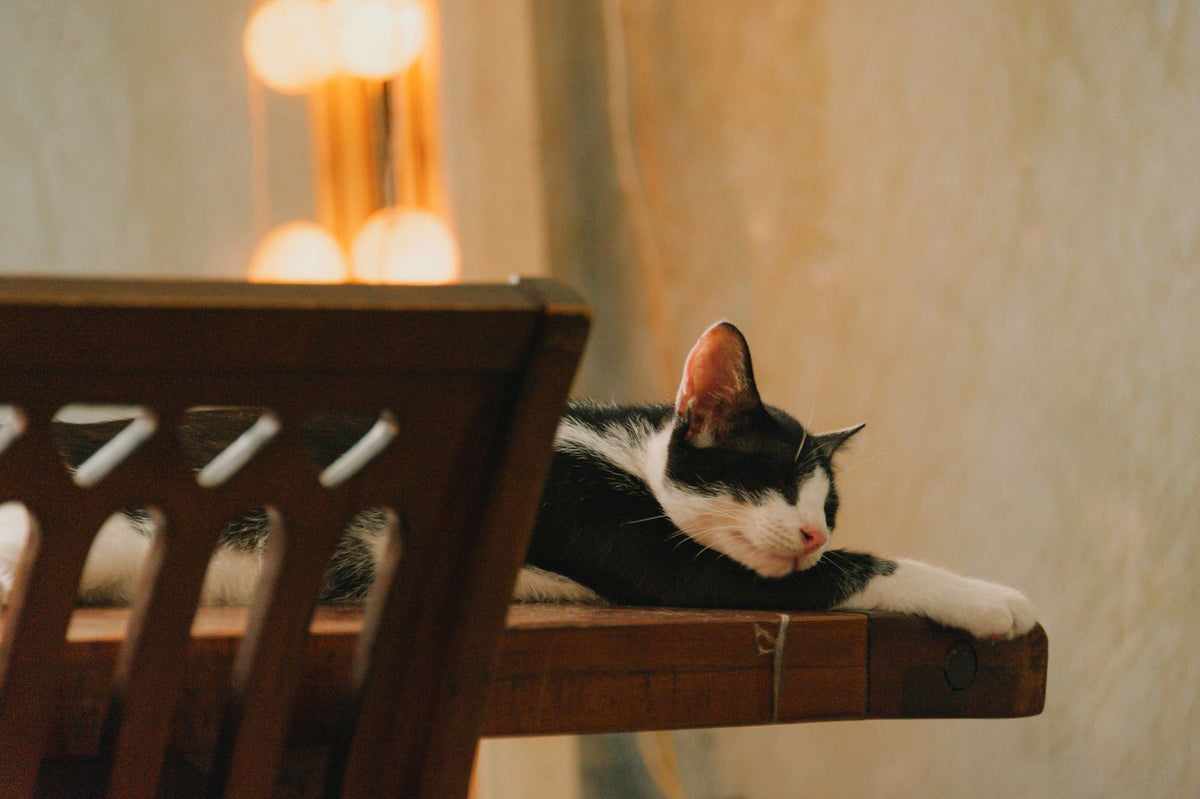
- Drowsy droop: lids sink slowly and stay closed as the cat drifts off; the head may lower and the body sink into rest.
- Averted eyes: the cat turns its head or looks away from you or another pet; a polite way of avoiding conflict.
- One eye held narrow: one eye squinted or half closed for a long time while the other stays open is not a slow blink and warrants a veterinary exam.
Pupils naturally widen in dim light and narrow in bright light, so consider the lighting before reading too much into pupil size.
How to Slow Blink at Your Cat
Slow blinking back is an easy, low-pressure way to communicate. It works best when your cat is already calm.
- Pick a calm moment: sit or lie down at a comfortable distance, ideally at or below your cat's eye level so you seem less looming.
- Soften your face: relax your forehead and jaw. Let your gaze rest on your cat without fixing on it as if you were staring.
- Narrow your eyes slowly: let your eyelids drift down until your eyes are almost closed, hold for a moment, then open them just as slowly.
- Wait and watch: give your cat time to respond. Narrowed eyes or a relaxed shift in posture are good answers.
- Let your cat choose what comes next: if your cat walks over, offer a hand to sniff before petting. If it stays put, that is fine too.
Keep sessions short and casual. A long, intense attempt can start to feel like a staring contest.
Using Slow Blinks With Shy, New, or Fearful Cats
Slow blinking lets you communicate with a nervous cat without reaching, approaching, or making noise.
Let distance do the work
Sit quietly in the same room, avoid walking straight toward the cat, and offer occasional slow blinks from across the space.
Pair your presence with good things
Slow blinks fit well with tossing a favorite food reward a short distance away, playing gently with a wand toy, or simply reading nearby.
Respect the hiding spot
Never pull a frightened cat out from under a bed or out of a carrier to practice blinking. Let it observe you from its safe place. See our guide to helping a shy or fearful cat gain confidence for a full plan.
When Squinting Is Not a Slow Blink: Eye Pain and Discomfort
Cats hide discomfort well, and a painful eye can masquerade as a relaxed expression. A true slow blink involves both eyes and reopens fully within moments. Squinting that lingers, affects only one eye, or comes with other changes is different and should be checked by your veterinarian.
Signs that warrant a veterinary exam include:
- One eye held partly or fully closed, or squinting that lasts more than a short time
- Tearing, a wet patch of fur below the eye, or discharge that is clear, cloudy, yellow, or green
- Redness of the eye, or a visible third eyelid partly covering it
- Cloudiness, a bluish haze, or a change in the color of the eye
- Pawing at the face, or keeping the eye shut in bright light
- Pupils that look different in size from each other
A painful eye can have many causes, from a scratch on the clear surface of the eye to inflammation inside it. Our article on corneal ulcers in dogs and cats explains one common reason for squinting. Your veterinarian may examine the eye under magnification, apply a dye that highlights surface injuries, and check eye pressure. Use any eye medication only as prescribed by your veterinarian, never leftover drops.
When to Call Your Veterinarian
Changes in how your cat holds its eyes are not something to watch for days. Contact your veterinarian promptly, ideally the same day, if you notice squinting, tearing, discharge, redness, or a visible third eyelid.
Contact your veterinarian or an emergency clinic right away if
- Your cat suddenly cannot or will not open one or both eyes
- The eye looks injured, bulging, sunken, bloody, or has something stuck in or near it
- The eye turns cloudy or changes color quickly
- Your cat seems suddenly unable to see, bumps into objects, or misjudges jumps
- Anything has splashed into the eye, such as a household cleaning product
Eye problems can worsen quickly, so do not wait. If a household product has splashed into the eye, flush it gently with lukewarm water while you call. Do not try to force the eye open at home.
Common Myths and Mistakes
Myth: A cat that never slow blinks does not love its family.
Fact: cats vary widely in how they express comfort. Some show it by sleeping nearby or following you around instead.
Mistake: Staring at a cat to get its attention.
A long, direct look can feel like pressure, especially to a nervous cat. Soften your eyes and glance away instead.
Myth: Any squint is just a cat looking content.
Fact: squinting with one eye, or holding the eyes half closed for long periods, can be a sign of discomfort and warrants a veterinary exam.
Frequently Asked Questions
Do cats slow blink at each other?
Cats do narrow their eyes and look away around familiar housemates, and these softer gazes seem to help keep interactions calm. How deliberately cats use the slow blink with one another is still being studied.
Can I slow blink at a cat I do not know?
Yes, as long as you keep your distance and let the cat decide whether to approach. Research suggests that many cats find a slow-blinking stranger more approachable than one with a neutral expression.
My cat slow blinks and then walks away. Is that rude?
Not at all. The cat has signaled that it feels relaxed around you. Leaving afterward simply means it has other plans.
Key Takeaways
A slow blink is a deliberate, gradual narrowing and reopening of both eyes, usually offered when a cat feels relaxed and safe. Because a direct stare signals tension in cats, softening the gaze or closing the eyes communicates the opposite: no threat, no worry. Research suggests cats often return a slow blink. Blink back in calm moments, at a respectful distance, and let your cat choose what happens next. Remember that squinting with one eye, eyes held half closed for long periods, tearing, redness, or cloudiness are not compliments; they are signs that warrant a veterinary exam, and sudden or severe eye changes call for your veterinarian or an emergency clinic right away.