Puppy and Kitten Proofing Your Home: Room by Room

The day you bring home a puppy or a kitten, your house quietly stops being a house and becomes an obstacle course. Everything at floor level is now a chew toy. Everything dangling is now a target. Everything small enough to swallow is now, in your new pet's mind, a snack.
Foreign body ingestion — swallowing something that should not be swallowed — is one of the most common emergency presentations in young animals, and a great deal of it is preventable. So is accidental poisoning. The most effective tool you have is not vigilance, because you cannot watch a baby animal every second. It is environment management: removing the hazard before the animal finds it.
This guide walks your home room by room, from the perspective of an animal who is twenty centimetres tall, endlessly curious, and equipped with teeth. Get down on the floor and look at eye level — you will be astonished what you find.
Important: This article shares general educational information for pet owners and is not a substitute for an in-person veterinary examination, diagnosis, or treatment. For any medical concern or emergency, contact your veterinarian promptly.
The Universal Rules Before You Start
Some principles apply everywhere in the house, regardless of the room. Get these right and you have already prevented most incidents.
- If it is small enough to swallow, it is a hazard. Coins, buttons, hair ties, earrings, batteries, bottle caps, corks, small toys, bones from the bin.
- If it dangles, it will be pulled. Cords, blind cords, tablecloths, phone chargers, plant leaves, curtain ties.
- Height is not safety for cats. Cats climb. A shelf is not out of reach; it is a destination.
- Closed doors are your friends. The simplest pet-proofing tool ever invented.
- Supervise or confine. When you cannot watch, use a crate, a pen or a safe room. This is kindness, not punishment.
Also: get the number for your veterinary practice and your nearest emergency clinic, and put it somewhere everyone in the house can find it in a panic. Do this before you need it.
The Living Room
This is where your pet will spend most of their time, and it is dense with hazards that owners stop seeing because they are so familiar.
- Electrical cords: chewing a live cord can cause serious burns and worse. Use cord covers, run cables behind furniture, unplug what is not in use, and consider a deterrent spray on the ones you cannot hide.
- Blind and curtain cords: a genuine strangulation risk, especially for playful cats. Tie them up high or fit safety cleats.
- Houseplants: many common indoor plants are toxic to pets. Lilies in particular are extremely dangerous to cats — even pollen or vase water. If you have a cat, the safest option is not to have lilies in the house at all.
- Small objects: sweep under and behind the sofa. Coins, batteries and children's toys collect there.
- Candles and diffusers: open flames and knocked-over reed diffusers are both risks; some essential oils are not safe around pets, particularly cats.
- Recliner chairs: pets have been seriously injured in the mechanism. Check before you recline.
The Kitchen
The kitchen combines food, chemicals, sharp objects and heat. It rewards a careful audit.
- Toxic foods: chocolate, grapes and raisins, onions, garlic, macadamia nuts, alcohol, and xylitol (also labelled birch sugar) found in sugar-free gum, sweets and some peanut butters. All should be kept firmly out of reach.
- Bins: a bin with an open top is a buffet of cooked bones, packaging, fat and mouldy food. Use a lidded, weighted or enclosed bin.
- Cleaning products: store under a childproof latch, not simply under the sink.
- Hot surfaces: cats jump on hobs. Use hob covers and keep pan handles turned inward.
- Dishwasher: an open dishwasher door is an invitation to lick knives and detergent residue. Close it.
- Cling film, foil and food packaging: greasy wrappers smell delicious and cause obstructions. Bin them properly.
If you think your pet has eaten something toxic, do not wait to see what happens and do not try to make them vomit unless a veterinary professional has told you to. Contact your veterinarian or an emergency clinic straight away with details of what, how much and when.
The Bathroom
Small, tiled and full of chemicals — the bathroom is more dangerous than it looks.
- Medications: human medicines are a leading cause of pet poisoning. Common painkillers can be extremely toxic to dogs and cats. Store everything in a closed cabinet, and never leave a pill on the counter or in a handbag on the floor.
- Cleaning chemicals: toilet cleaners, bleach and drain unblockers all need to be behind a closed door.
- Toilet lid: keep it down, particularly if you use in-cistern cleaning blocks.
- Hair ties and dental floss: classic cat hazards. Linear foreign bodies like string and floss are especially dangerous when swallowed and often require surgery.
- Razors and cotton buds: bin them in a closed bin, not an open one.
And never assume a pet cannot open a cupboard. Many can, and the ones who can are extremely proud of it.
The Bedroom
Bedrooms feel safe, which is exactly why they get overlooked.
- Handbags and rucksacks: these are treasure chests of hazards — medication, chewing gum with xylitol, hand sanitiser, mints, headphones. Hang them up, do not leave them on the floor.
- Jewellery and hair accessories: small, swallowable, and often shiny enough to be interesting.
- Charging cables: bedside charging cables are chewed constantly.
- Laundry: socks and underwear are among the most commonly retrieved foreign bodies in dogs. Use a lidded laundry basket.
- Under the bed: a magnet for lost objects. Check it, and consider blocking access.
If a puppy or kitten is going to sleep in the bedroom, it should still be in a crate or carrier at first — both for their safety and to prevent the middle-of-the-night surprise of a chewed cable.
The Garage, Shed and Utility Room
These spaces are, frankly, the most dangerous in the entire property, and the simplest rule is the best one: pets should not have unsupervised access at all.
- Antifreeze: extremely toxic and, because it tastes sweet, animals will drink it voluntarily. Even a very small amount can be fatal. Clean spills immediately and store containers sealed and high.
- Rodenticides and slug pellets: these are designed to be palatable to animals. If you must use them, take veterinary advice on placement, and know that pets can also be poisoned by eating a poisoned rodent.
- Paints, solvents, oils and screenwash: all hazardous, all stored at floor level in most homes.
- Sharp tools and heavy objects: obvious risks that are easy to knock over.
- Washing machines and tumble dryers: cats climb into them. Always check before you close the door and start a cycle. This is not a hypothetical — it happens.
If you suspect any exposure to antifreeze or rodenticide, treat it as an emergency and contact your veterinarian immediately. With these substances, waiting for symptoms is waiting too long.
Balconies, Windows and Stairs
Falls are a serious and underappreciated risk, particularly for cats, who are drawn to high vantage points and whose reputation for always landing on their feet is dangerously overstated.
- Balconies: never assume a cat will not jump or fall. Secure balconies with cat-safe netting or mesh if your cat has access.
- Windows: fit restrictors or secure screens. An open upstairs window is a hazard, and flimsy insect screens do not reliably hold a cat's weight.
- Stairs: use a stair gate for small puppies. Tumbling down a full flight can cause real injury, and repeated stair use is not ideal for very young joints in some breeds — ask your vet.
- Railings and banisters: check the gaps. Small puppies and kittens fit through smaller spaces than you expect.
The Garden
Outdoor space is wonderful for a young animal, and it needs the same audit as the inside of the house.
- Fencing: walk the boundary and look for gaps at ground level, loose panels and gaps under gates. Puppies escape through openings you would not believe.
- Toxic plants: several common garden plants and bulbs are toxic to pets. Check your specific plants against a reliable list, and ask your vet if unsure.
- Garden chemicals: fertilisers, weedkillers, pesticides and cocoa mulch all need to be considered. Follow product guidance on keeping pets away from treated areas.
- Ponds and pools: a young puppy can drown. Cover, fence or supervise.
- Compost heaps: mouldy food waste can be genuinely dangerous. Keep them enclosed.
- Sharp garden tools and glass: clear before letting a puppy loose.
Managing the First Weeks Practically
You cannot pet-proof away every risk. What you can do is shrink the world your young animal has access to, then expand it as they earn it.
- Choose one or two "safe rooms" that have been thoroughly proofed, and start there.
- Use baby gates, pens and closed doors to control access to everywhere else.
- Use a crate or carrier for genuine down-time, so your pet has a safe place and you have peace of mind.
- Give appropriate chew outlets — a teething puppy will chew something, and your job is to make sure it is a suitable chew toy rather than a power cable. Supervise all chews.
- Expand access gradually as your pet matures and demonstrates they can be trusted.
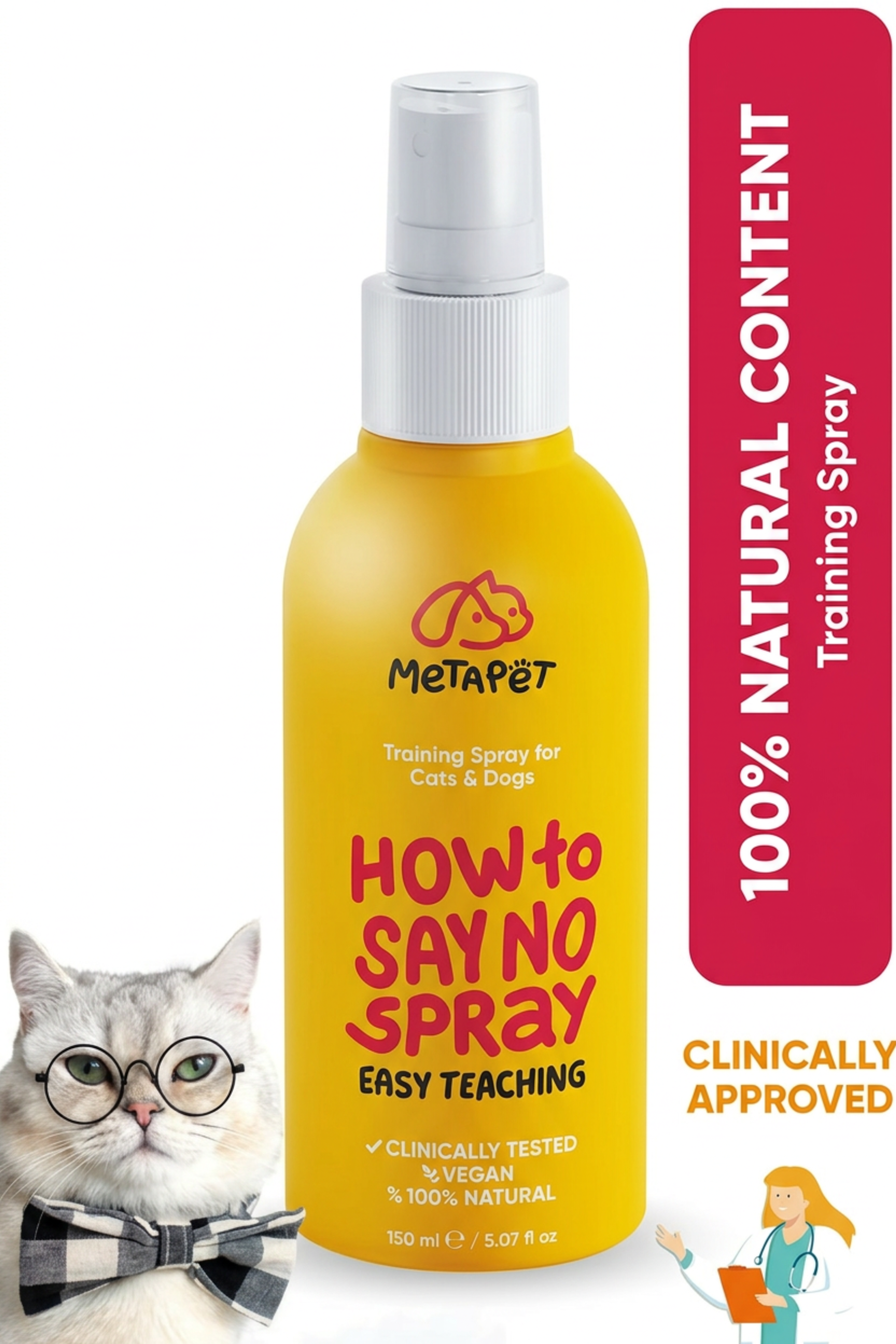
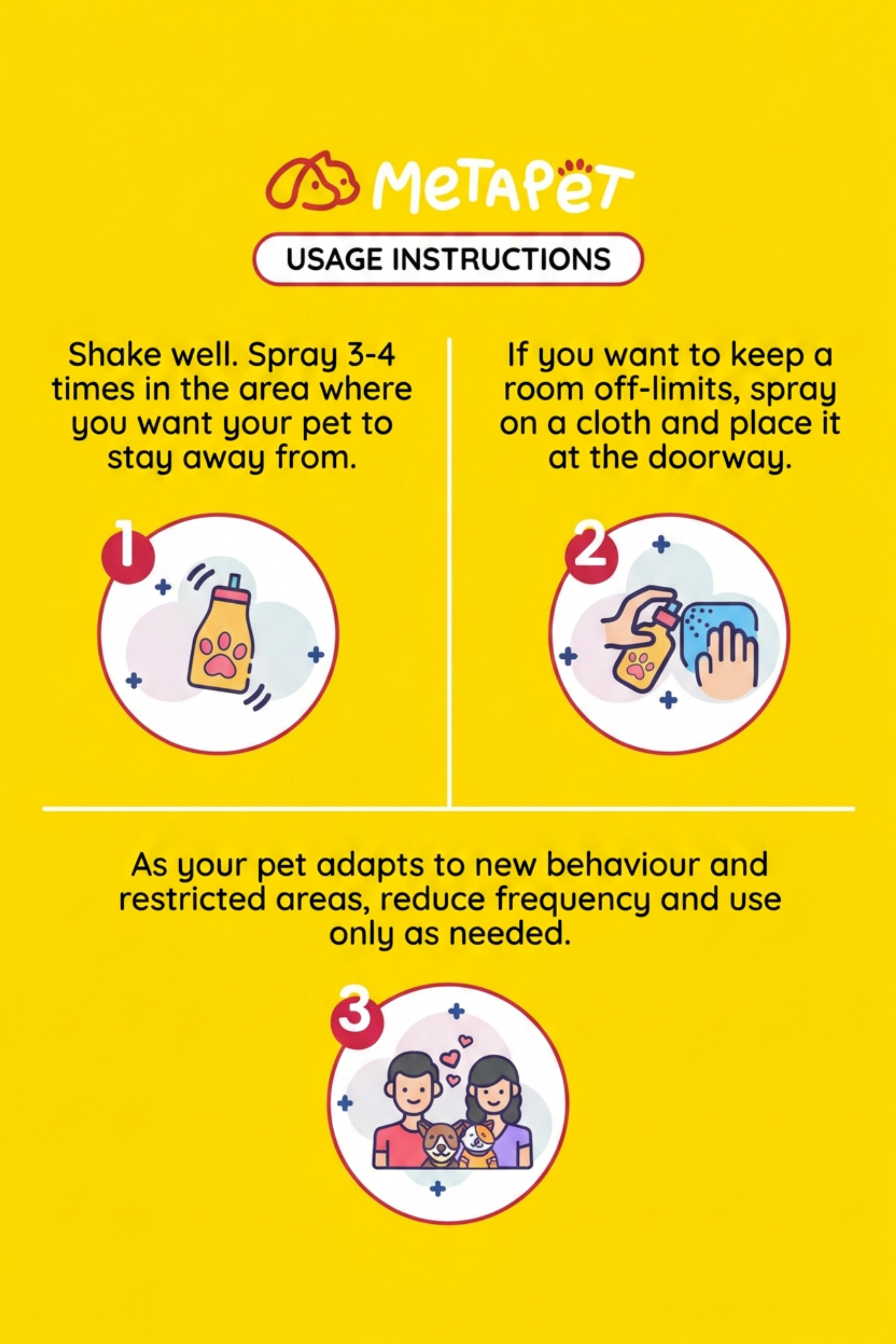
Training deterrent behaviours helps, too. A training spray formulated to discourage chewing or scratching, such as MetaPet's How to Say No training spray, can be one part of a management plan alongside physical barriers and redirection to appropriate items. It is a training aid designed to help discourage unwanted chewing and scratching, and it works best combined with supervision and providing something better to chew — it is not a substitute for proper pet-proofing.
Emergency Preparedness: Before You Need It
However well you proof, something will eventually happen. What separates a scare from a disaster is usually how quickly and how calmly you act.
- Save the numbers: your veterinary practice, the out-of-hours emergency clinic, and an animal poison helpline. Put them on the fridge and in your phone.
- Know the route: find your nearest emergency clinic now, while you are calm.
- Keep the packaging: if your pet eats something, bring the box, wrapper or plant with you. It tells the vet exactly what they are dealing with.
- Do not induce vomiting unless a veterinary professional specifically instructs you to. With some substances it makes things considerably worse.
- Act early. With most ingestions, the window for effective intervention is narrow. Do not wait for symptoms.
Pet-proofing is a few hours of tedious work that buys you months of peace of mind. Get on the floor, look at the world from their height, and remove what you find. Then, when the inevitable happens anyway, call your veterinarian promptly — they would always rather hear from you early than late.