Minor Wound Care for Dogs and Cats at Home: A Guide

Pets get scraped. They catch a paw on a bramble, scuff a pad on hot pavement, nick an ear on a fence, or come home from a scuffle with a small mark that was not there this morning. Not every one of these needs an emergency dash to the clinic — but the difficulty for owners is knowing which ones do.
The honest truth is that the wounds most likely to cause serious trouble are frequently the ones that look least alarming. A small puncture from a cat's tooth is a far bigger deal than a long, dramatic-looking graze. And a great deal of well-intentioned home wound care actively slows healing, because owners reach for products that are not appropriate for animals.
This guide covers what genuinely counts as minor, how to provide sensible first aid safely, what never to put on a wound, why certain injuries are always a veterinary matter, and the red flags that mean stop and call now. When in doubt, call — it is always the right answer.
Important: This article shares general educational information for pet owners and is not a substitute for an in-person veterinary examination, diagnosis, or treatment. For any medical concern or emergency, contact your veterinarian promptly.
Safety First: An Injured Animal Can Bite
Before you touch a wound, think about your own safety. Pain and fear change behaviour dramatically, and even the gentlest, most tolerant animal can bite or scratch when hurt. This is not misbehaviour; it is a reflex.
- Approach calmly and slowly, speaking quietly. Do not loom over the animal.
- Have a second person help where possible — one to hold and reassure, one to look.
- Watch the body language: growling, hissing, stiffening, whale eye, ears back and a hard stare all mean stop.
- Consider a towel wrap for a cat to restrain them safely and gently.
- Do not put your face near the wound or the animal's head.
- If your pet will not let you look, do not force it. That in itself is a reason to go to the vet.
If you are bitten or scratched by any animal, including your own, clean the wound thoroughly and seek medical advice for yourself. Animal bites in humans carry a real infection risk.
What Actually Counts as Minor
A wound can reasonably be managed at home only if it is genuinely superficial and everything else about your pet is normal. The bar is higher than most owners assume.
- Minor may include: a small, shallow scrape or graze that does not go through the full thickness of the skin.
- Minor may include: a small nick with minimal bleeding that stops quickly with gentle pressure.
- Minor may include: a superficial scratch with clean edges and no gaping.
- It is not minor if: the wound is deep, gaping, or you can see fat, muscle or bone.
- It is not minor if: it is a puncture — including any bite wound.
- It is not minor if: it is bleeding heavily, or bleeding that does not stop with a few minutes of pressure.
- It is not minor if: it is near an eye, in the mouth, on the abdomen or chest, or involves a joint.
- It is not minor if: your pet is limping badly, dull, painful, or not themselves.
And crucially: if you are not sure, treat it as not minor. A phone call to your practice costs nothing.
Bite Wounds Are Never Minor
This deserves its own section because it is the mistake owners make most often. A bite wound — from a dog, a cat, or wildlife — should always be assessed by a veterinarian, no matter how tiny the visible mark.
Here is why. A tooth is a narrow, dirty spike. It drives bacteria deep into the tissue and then withdraws, and the small hole in the skin seals over within hours. What is left behind is a warm, sealed, bacteria-filled pocket beneath intact skin — which is the ideal environment for an abscess to develop. Cat bites in particular are notorious for this, and cats who fight frequently present days later with a hot, painful, swollen area or a burst abscess.
A bite may also have caused far more damage underneath than the skin suggests. Crushing, tearing and tissue damage under an apparently intact surface is common, especially when a larger dog bites a smaller one.
So: any bite, however small, means a call to your veterinary practice — ideally the same day. Early treatment is far simpler and far cheaper than treating an established abscess.
Sensible First Aid for a Genuinely Minor Wound
If the wound is superficial, your pet is otherwise well, and you have decided it is manageable, the aim is simple: control any bleeding, keep the wound clean, and prevent your pet from making it worse.
- Control bleeding with gentle, steady pressure using a clean cloth or gauze pad. Hold it for several minutes without lifting to peek — lifting disrupts the clot that is forming.
- If bleeding does not stop after several minutes of firm pressure, keep the pressure on and contact your veterinarian immediately.
- Gently clear obvious debris — grass, grit — from the surface if it comes away easily. Do not dig at anything embedded.
- Rinse the surface with lukewarm water, or with a sterile saline solution if you have it. Saline is gentle, effective and cheap.
- Pat the area dry with clean gauze. Do not rub.
- Prevent licking. This is the single most important step, and a cone or recovery suit is far more reliable than supervision.
- Monitor the wound twice daily and watch your pet's overall demeanour.
Do not bandage unless you have been shown how by a veterinary professional. Badly applied bandages are a genuine cause of harm — too tight and they cut off circulation, too loose and they slip and trap moisture. If a wound truly needs covering, it needs a vet.
What Never to Put on a Pet's Wound
This list matters more than the first-aid list, because well-meaning owners cause a great deal of avoidable damage here.
- Hydrogen peroxide: damages healthy tissue and can delay healing. It has largely fallen out of favour for routine wound cleaning.
- Rubbing alcohol: painful and damaging to tissue.
- Human antiseptic creams and ointments: not formulated for animals, and your pet will lick them off and ingest them.
- Human painkillers: never. Common human anti-inflammatories and painkillers are toxic to dogs and cats and can cause severe or fatal harm.
- Essential oils and "natural" remedies: many are not safe for pets, particularly cats, and can be harmful when applied to broken skin or licked.
- Powders, flour or dubious internet remedies: these introduce contamination into an open wound.
- Anything left over from a previous prescription or borrowed from another pet.
Water or sterile saline. That is your whole list of safe home wound-cleaning agents. Anything else should come from your veterinarian, prescribed for this wound, on this animal, now.
Specific Injuries Worth Knowing About
Torn or broken nails
Extremely painful and often surprisingly bloody. The nail bed is richly supplied with blood vessels and nerves. Apply gentle pressure, and contact your veterinarian — a partially torn nail usually needs proper attention rather than being left to catch on things.
Paw pad cuts
Pads bleed heavily and are hard to keep clean, because your pet walks on them constantly. Even a modest pad laceration frequently needs veterinary attention. Apply pressure, keep your pet off the foot, and call.
Ear tip injuries
Ear flaps bleed dramatically, and every head shake reopens the wound and sprays blood across your kitchen. It looks far worse than it is, but it is very hard to resolve at home and usually needs veterinary help.
Grass seeds and foreign bodies
A grass awn that has entered the skin — commonly between the toes — can migrate through tissue and cause significant problems. A small hole with a discharge, particularly on a paw after a walk in long grass, is a veterinary matter, not a home one.
Burns and scalds
Cool the area with cool (not ice-cold) running water and contact your veterinarian promptly. Burns are frequently worse than they initially appear.
Stopping the Licking
A pet's tongue does not clean a wound in any useful sense. Licking mechanically irritates the tissue, introduces bacteria from the mouth, keeps the surface wet, and can turn a small graze into a large, angry lick granuloma that takes weeks to resolve.
- A cone (Elizabethan collar) remains the most reliable option. Keep it on continuously, not just when you are out.
- Recovery suits and medical bodysuits can work well for body wounds and are often better tolerated.
- Soft or inflatable collars suit some pets, but check they actually prevent access to the specific site.
- Do not rely on supervision alone. It takes seconds, and it usually happens the moment you look away.
- Do not apply bitter-tasting products to an open wound unless your veterinarian has advised a specific product for that purpose.
Yes, your pet will look aggrieved. They will bump into doorframes and give you reproachful stares. A week of this beats a fortnight of treating a self-inflicted infection.
Signs a Wound Is Getting Infected
Check the wound at the same times each day and take a photograph on day one so you have something to compare against. Infection signs generally develop over one to three days.
- Increasing redness spreading outward from the wound edges.
- Swelling that grows rather than settles.
- Heat in the area compared with the surrounding skin.
- Discharge that is thick, yellow, green, or smells unpleasant.
- Increasing pain — your pet becomes protective of the area or reacts to a light touch.
- Systemic signs: lethargy, loss of appetite, fever, or a pet who is simply "off".
Any of these means a veterinary call. Infection is far easier to manage early, and a wound that has become infected under the skin can develop into an abscess that requires drainage.
Building a Sensible Pet First-Aid Kit
A modest, well-chosen kit is genuinely useful. A giant kit full of things you do not know how to use is not.
- Sterile saline solution for flushing wounds.
- Sterile gauze pads and a roll of soft bandage material for applying pressure — not for unsupervised bandaging.
- Blunt-ended scissors and tweezers.
- A digital thermometer and a lubricant, if your vet has shown you how to use it.
- An Elizabethan collar sized for your pet, bought in advance rather than in a panic.
- A clean towel for restraint and for pressure.
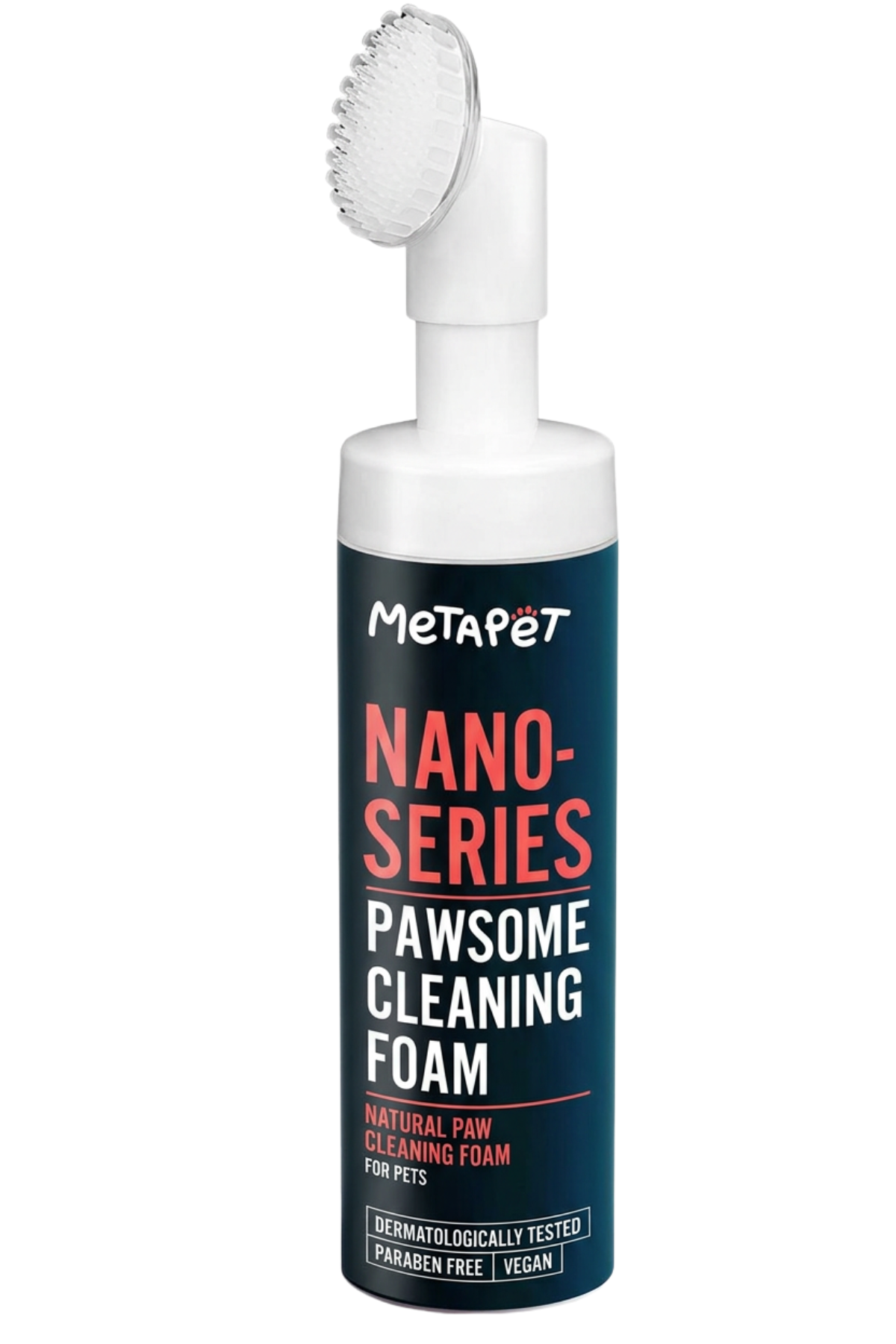
- Hygiene wipes for cleaning around — not inside — a wound, and for general paw and coat cleaning after outdoor time.
- Your veterinary practice's number, the out-of-hours emergency number, and your pet's microchip number, written down.
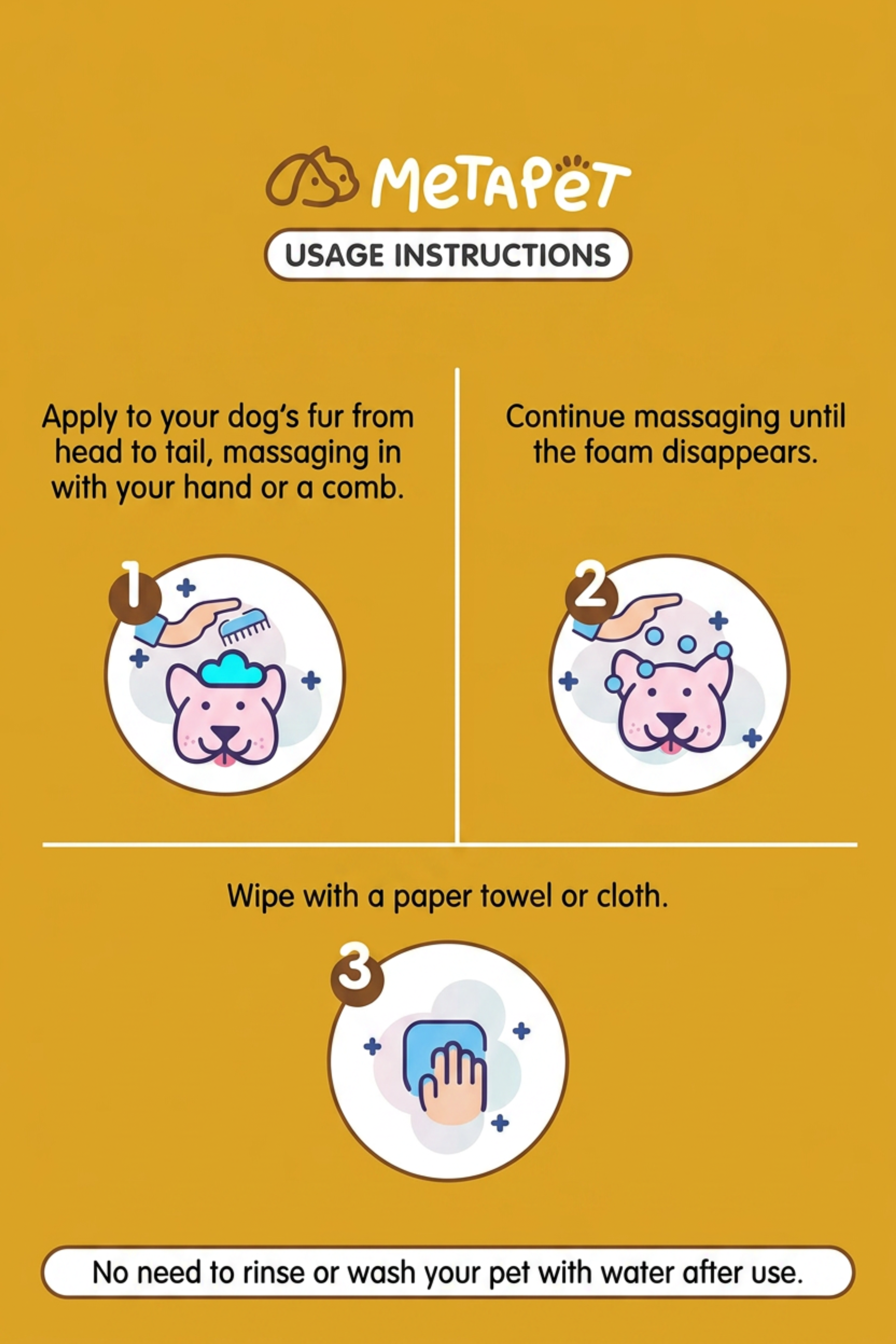
Grooming and hygiene products such as wipes or paw-cleaning foams are useful for routine cleanliness and for keeping the area around a wound tidy. They are cosmetic hygiene aids — they are not wound treatments and should not be applied into an open wound.
When to Stop Reading and Call
Some situations are not a judgement call. Contact your veterinarian — or your emergency clinic if out of hours — immediately for any of the following.
- Any bite wound, from any animal, however small it looks.
- Bleeding that will not stop with several minutes of firm pressure.
- A deep, gaping wound, or any wound where you can see tissue beneath the skin.
- Wounds to the eye, mouth, chest or abdomen.
- Any wound with an object embedded in it — do not remove it, as it may be tamponading a vessel.
- A pet who is collapsed, pale, breathing rapidly, or very dull.
- A wound that is not steadily improving, or that is looking worse after a day or two.
- Any wound in a pet who is unwell, elderly, immunosuppressed, or on medication.
Minor wound care at home is a real and useful skill. But its most important component is knowing its own limits. A quick phone call to your veterinary practice, describing what you are seeing, will tell you in two minutes which side of the line you are on — and that is always time well spent.