Cryptorchidism in Dogs and Cats: Retained Testicles

It is one of the more common findings at a puppy or kitten check, and one of the most frequently underestimated. The veterinarian examines the young animal, checks the scrotum, and mentions that only one testicle is present — or neither. The owner, understandably, asks whether it matters.
It does. Cryptorchidism, the failure of one or both testicles to descend into the scrotum, is not simply a cosmetic quirk or a breeding technicality. A retained testicle sits at a higher body temperature than it was designed for, and over years that environment substantially increases the risk of tumour development. Retained testicles are also prone to twisting on their blood supply, which is an acutely painful surgical emergency.
The condition is also inherited, which means it carries implications well beyond the individual animal. This guide covers what normally happens during development, why descent sometimes fails, what the genuine risks are, why the standard recommendation is surgical removal, and what owners should expect from the procedure and recovery.
Important: This article shares general educational information for pet owners and is not a substitute for an in-person veterinary examination, diagnosis, or treatment. For any medical concern or emergency, contact your veterinarian promptly.
What Normally Happens
Testicles develop inside the abdomen, near the kidneys, during fetal life. Before or shortly after birth they begin a journey downwards through the abdomen, through a passage in the body wall called the inguinal canal, and into the scrotum.
The reason for that journey is temperature. Sperm production requires a temperature slightly cooler than core body temperature, and the scrotum's position outside the body cavity provides exactly that. A testicle left inside the abdomen sits several degrees warmer than it should, which is why retained testicles do not produce viable sperm.
In most puppies and kittens, both testicles can be felt in the scrotum within the first weeks of life. Descent occurring later than this becomes progressively less likely, and by the time an animal reaches a few months of age, a testicle that has not arrived is generally not going to.
Your veterinarian will check for both testicles at each puppy or kitten vaccination appointment, which is one of several practical reasons those visits are worth attending in full rather than treating as a vaccine transaction.
- Cryptorchid: one or both testicles have not descended into the scrotum.
- Unilateral: one retained, one descended — the most common presentation.
- Bilateral: both retained, which means the animal is infertile.
- Inguinal: retained within the canal, sometimes palpable under the skin in the groin.
- Abdominal: retained inside the abdomen, not palpable from outside.
Why Descent Fails
The condition is inherited, and this is the most important single fact about it. The trait is passed genetically, and although only males show the condition, females can carry and transmit it.
Certain breeds are notably over-represented, particularly small and toy breeds among dogs, and the condition is recognised in cats though less commonly diagnosed — partly because unowned or free-roaming cats are less likely to have had the check done in the first place.
Because it is hereditary, the consistent recommendation across veterinary and breeding organisations is that affected animals should not be bred. Breeding a cryptorchid animal perpetuates the trait in the line, and the same reasoning applies to repeating a mating that has produced affected offspring.
Owners occasionally hope that a retained testicle can be encouraged down with massage, medication, or simply time. Massage does nothing. Hormonal treatment is not considered appropriate, both because efficacy is poor and because it would allow an inherited defect to be masked in an animal that might then be bred. Time is the only variable that helps, and only within the first few months.
The Real Risks
This is where owners often revise their view of how significant the condition is.
The most serious concern is tumour development. A retained testicle carries a substantially increased risk of developing testicular cancer compared with a normally descended one, and that risk climbs with age. Some of these tumours produce hormones that cause additional problems beyond the tumour itself — a syndrome of feminisation with symmetrical hair loss, attraction of other male dogs, mammary development, and in some cases suppression of bone marrow function, which is serious in its own right.
The second concern is torsion. A testicle inside the abdomen is not anchored the way a scrotal one is, and it can twist on its own blood supply. This causes sudden, severe abdominal pain, vomiting, and collapse, and it is a surgical emergency.
There is also a practical detection problem. A tumour in a scrotal testicle is visible and can be felt as a change in size, shape, or firmness. A tumour in an abdominal testicle is entirely hidden and typically causes no signs until it is large or until the hormonal effects appear. By that point the animal is often older and the surgery more involved.
Behaviour is a smaller consideration but worth mentioning. A retained testicle still produces testosterone, so a cryptorchid animal is not functionally neutered and will show intact male behaviours regardless of whether the descended testicle is removed.
What Owners Might Notice
In most cases the answer is nothing at all, which is precisely why examination matters more than observation here.
- An empty or half-empty scrotum: the most common finding, usually noticed by a veterinarian.
- A small lump in the groin: where an inguinal testicle can be felt under the skin.
- Intact male behaviour after neutering: if only the descended testicle was removed.
- Symmetrical hair loss: particularly on the flanks, associated with hormone-producing tumours.
- Attracting other male dogs: a recognised consequence of feminising tumours.
- Enlarged nipples or mammary tissue: in an older cryptorchid male dog.
- A pendulous prepuce: another sign associated with hormonal tumour effects.
- Abdominal swelling or discomfort: where a tumour has become large.
- Sudden severe abdominal pain with vomiting: suggesting torsion — an emergency.
The feminisation signs deserve particular attention because they are so easily attributed to something else. An older male dog with symmetrical flank hair loss who was never fully neutered, or whose neutering history is unclear, should have that history clarified rather than being investigated as a straightforward skin problem.
If you have adopted an adult male animal and the neutering history is uncertain, tell your veterinarian. There are ways to establish whether functional testicular tissue remains, and it is a question worth answering rather than assuming.
Why Removal Is Recommended
The standard veterinary recommendation is removal of both testicles — the retained one and the descended one — and the reasoning has several strands.
It eliminates the cancer risk associated with the retained testicle, and it does so before a tumour develops rather than after. It removes the possibility of torsion. It prevents the animal from breeding and passing on an inherited defect. And it means the animal is genuinely neutered rather than partially so, which addresses the behavioural and hormonal considerations.
Removing only the descended testicle is not an acceptable compromise. It leaves the higher-risk testicle in place, leaves the animal producing testosterone, and — because the animal appears neutered — creates a real risk that the retained testicle is forgotten entirely and any later signs are not connected to it.
Timing is worth discussing individually with your veterinarian, since the optimal age for neutering varies with species, breed, and size. But the general principle holds: earlier surgery is technically simpler and carried out on a young healthy animal, whereas surgery years later may involve a tumour, an older patient, and a more complex procedure. Waiting rarely improves anything.
What Surgery Involves
The procedure is more involved than a routine neuter, and it is helpful to understand why before discussing cost and recovery.
The descended testicle is removed in the usual way. Locating and removing the retained one depends on where it sits. An inguinal testicle can often be reached through a small incision in the groin. An abdominal testicle requires entering the abdomen, which is a larger procedure comparable in scale to a spay.
Finding an abdominal testicle can occasionally take time, since a small retained testicle in a large animal is not always immediately obvious. Your veterinarian may use ultrasound beforehand to locate it, which can shorten the procedure. Laparoscopic techniques are available at some practices and offer a less invasive route in suitable patients.
Your veterinary team will discuss anaesthesia, expected recovery, and cost in advance. Pre-anaesthetic blood testing is commonly recommended, and it is reasonable to ask what is included and whether pain relief for the days at home is provided.
Any retained testicle removed should ideally be submitted for laboratory examination, particularly in an older animal, since early tumour changes are not always visible to the naked eye.
Recovery at Home
Recovery is usually smooth, and most animals are noticeably brighter within a couple of days. Your veterinary team's specific instructions always take precedence over general guidance.
- Give all prescribed pain relief for the full course rather than stopping when your pet seems comfortable — comfort is the point, not the endpoint.
- Keep a protective collar on continuously until your veterinarian confirms it can come off; licking is the most common cause of wound complications.
- Restrict activity for the period specified, which is usually longer after abdominal surgery than after a routine neuter.
- Avoid stairs, jumping, running, and rough play with other pets during the restriction period.
- Check the wound daily for redness, swelling, discharge, or gaping, and photograph anything you are unsure about.
- Keep the wound dry, and avoid bathing until your veterinarian says it is safe.
- Offer small, easily digested meals for the first day or two if appetite is reduced.
- Attend the scheduled post-operative checks and any suture removal appointment.
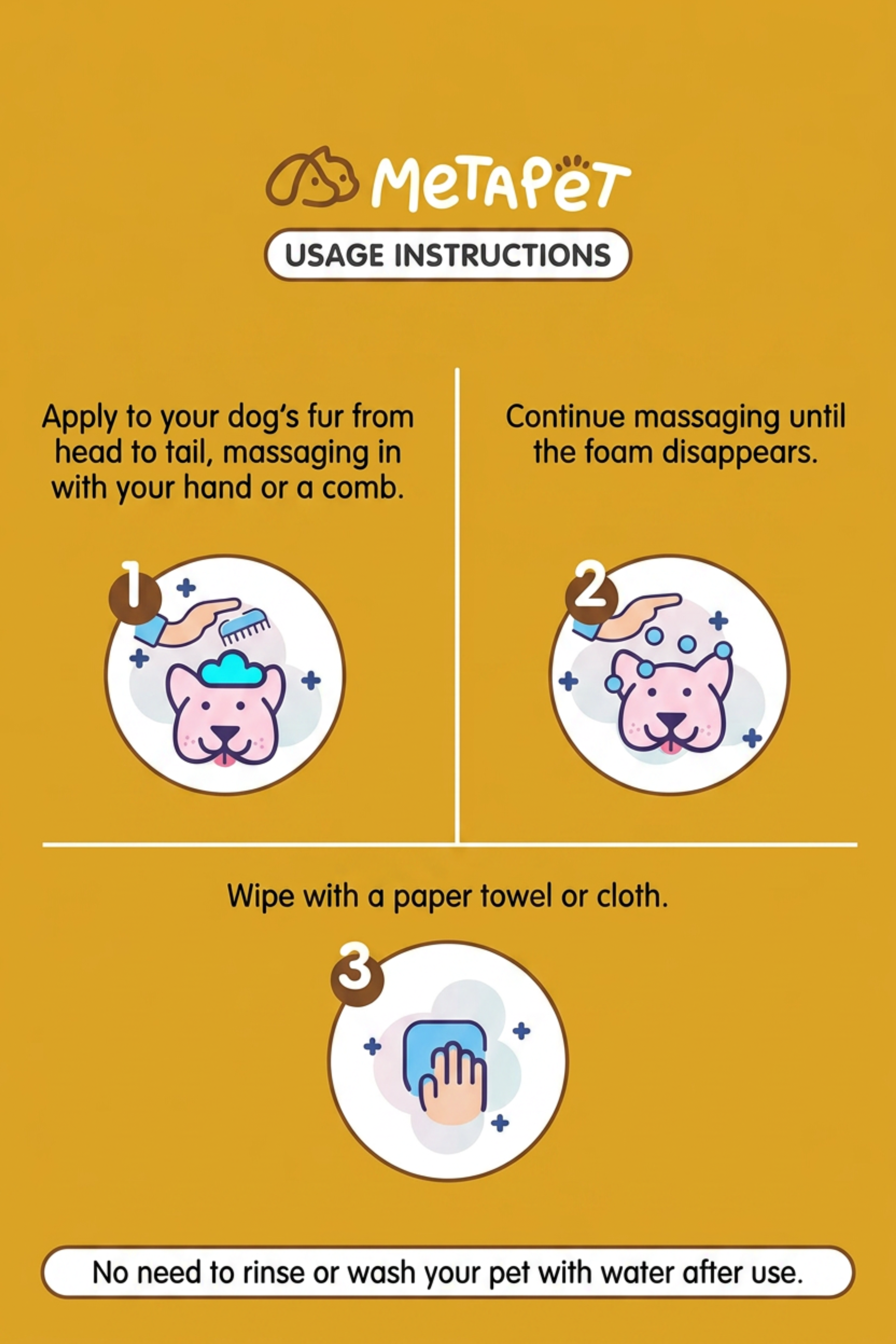
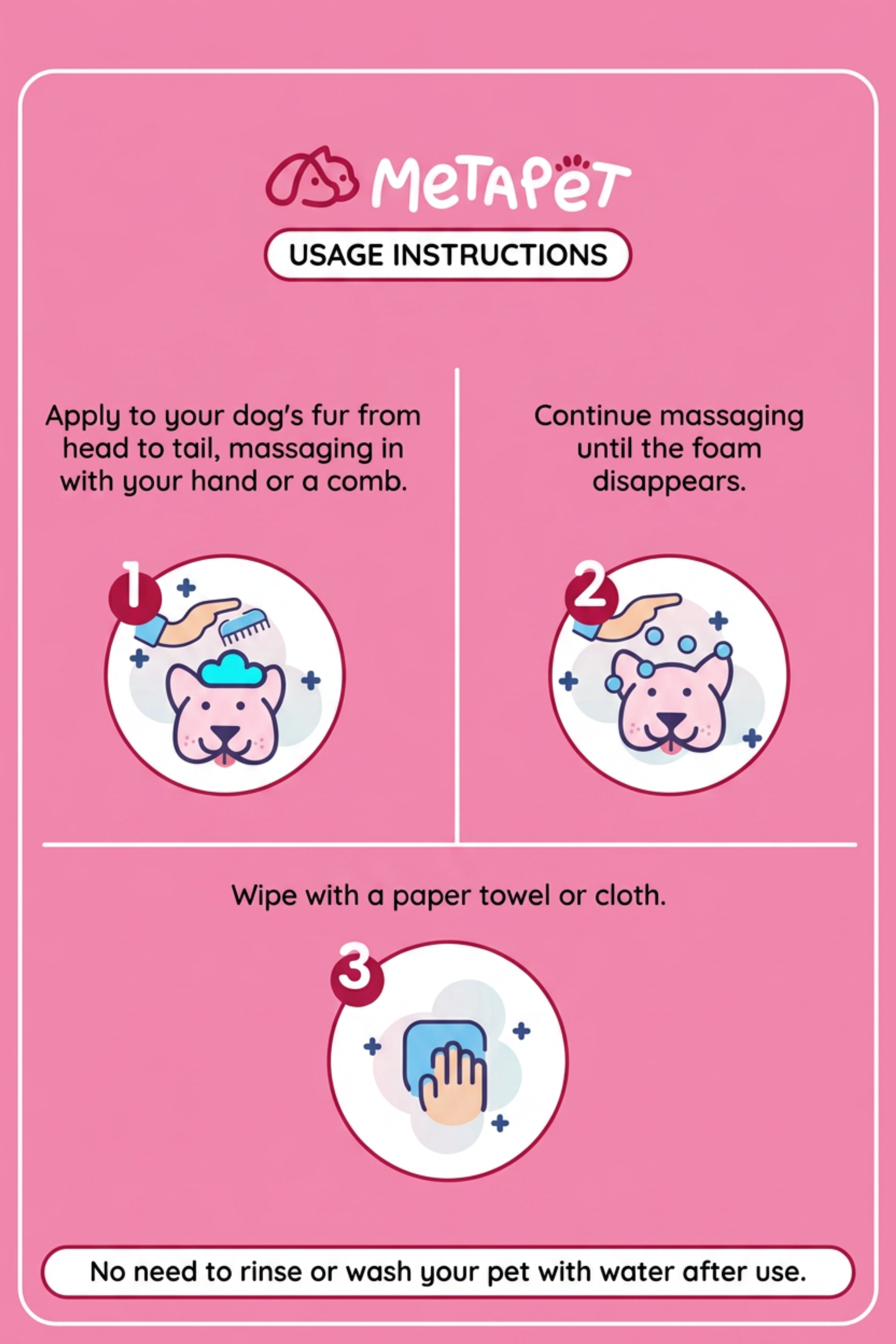
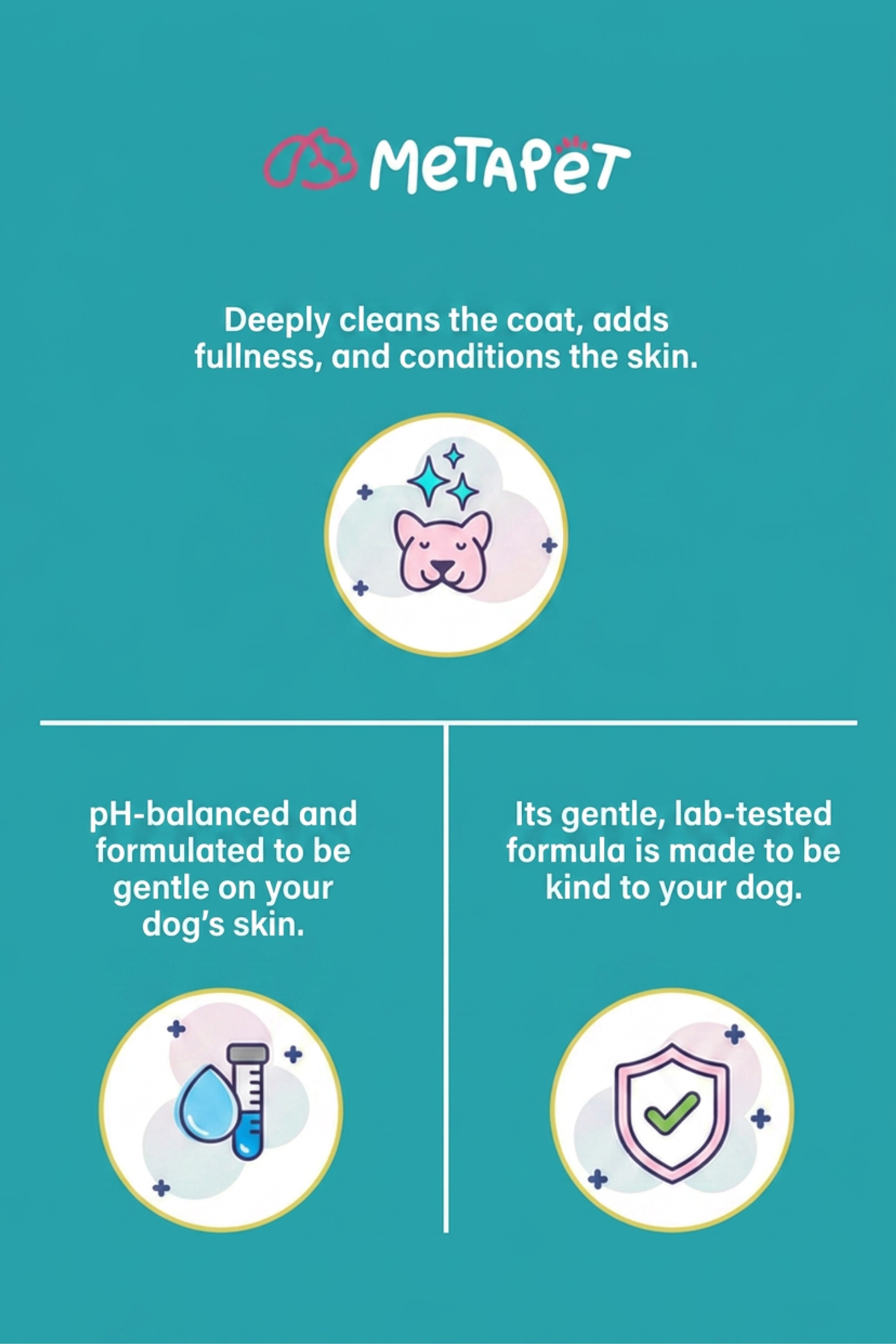
For general cleanliness during the restriction period, when bathing is off the table, a waterless grooming product can help keep the coat fresh — options such as the MetaPet A Dog From Paris Waterless Dry Foam Shampoo for Dogs or the MetaPet Oh My Sensitive Baby! Waterless Dry Foam Shampoo for Cats are cosmetic grooming aids designed for tidying the coat between baths. They are a complement to veterinary care rather than a substitute for it, and nothing should be applied near a surgical wound without your veterinarian's approval.
Contact your veterinary practice if the wound opens, discharges, or smells, if swelling increases after the first couple of days, if your pet will not eat, becomes lethargic, or vomits repeatedly.
Breeding Responsibilities
Because cryptorchidism is inherited, it carries obligations that extend beyond one animal, and this is where honesty in the breeding community makes a genuine difference.
Affected animals should not be bred. Where a mating has produced cryptorchid offspring, repeating it is inadvisable, and the parents' breeding value should be reconsidered. Buyers of male puppies and kittens should be told about affected relatives, and breeders should check every male in a litter before homing them.
If you have bought a puppy or kitten and cryptorchidism is found at the first health check, it is worth telling the breeder. Not as an accusation — descent status genuinely cannot always be confirmed at the age most animals go to new homes — but because it is useful information for their future breeding decisions. Many reputable breeders will want to know and some will have a policy on it.
For the individual pet, the condition has no bearing on temperament, trainability, or how good a companion they will be. A cryptorchid puppy is a perfectly good puppy who needs a slightly bigger operation than average.
Myths and Facts
- Myth: it will drop down eventually. Descent after the first few months of life is very unlikely.
- Myth: massage or hormones can help. Neither is effective, and hormonal treatment is not considered appropriate.
- Myth: one testicle is enough, so just leave it. The retained testicle carries the higher cancer and torsion risk.
- Myth: removing only the descended one is fine. It leaves the risk in place and makes it easy to forget later.
- Myth: he can still be bred if he is otherwise excellent. The trait is inherited and breeding perpetuates it.
- Fact: retained testicles do not produce viable sperm. The abdominal temperature is too high for sperm production.
- Fact: torsion is a genuine emergency. Sudden severe abdominal pain in a cryptorchid animal needs immediate care.
When to Contact Your Veterinarian
Most of the timeline here is elective, with one important exception.
- Book an appointment if: you cannot feel both testicles in a young male dog or cat, or you are unsure about an adopted animal's neutering history.
- Call promptly for: symmetrical hair loss in an older male, enlarged nipples, attracting other male dogs, a swelling in the groin, or intact behaviour after apparent neutering.
- Seek emergency care for: sudden severe abdominal pain, repeated vomiting with a painful abdomen, collapse, or a rapidly enlarging abdominal swelling.
For any medical emergency, contact your veterinarian or your nearest emergency veterinary hospital immediately. Testicular torsion is acutely painful and requires urgent surgical treatment.
The Practical Takeaway
Cryptorchidism is common enough that most veterinary practices see it regularly, and straightforward enough that it should not cause alarm. But it is not nothing. A retained testicle is a small piece of tissue in the wrong place, at the wrong temperature, carrying a meaningfully raised risk of a tumour that will be invisible until it is well advanced.
The recommendation is consistent and the reasoning is sound: remove both testicles, ideally while the animal is young and healthy and the surgery is simplest. Doing it early costs less, recovers faster, and closes the risk before it opens.
And check. If you have a young male dog or cat, feel for two testicles, or ask your veterinarian to confirm at the next visit. If you have adopted an adult male with an unclear history, raise it. It takes seconds, and it is the kind of small question that occasionally prevents a much larger problem several years later.