Why Dogs Yawn: Sleepiness, Stress, and Calming Signals

Your dog stretches out on the couch and lets out a long, squeaky yawn. Usually that means exactly what you think: someone is ready for bed. But dogs also yawn where nobody is sleepy, such as on the exam table, in the middle of a training session, or while being hugged by a well-meaning relative. Those yawns can carry a different message. This guide explains the main reasons dogs yawn, what trainers mean by "calming signals" and what the research actually shows, how to read a yawn alongside the rest of your dog's body language, how to respond to stress, and which mouth, jaw, or stomach signs warrant a veterinary exam.
Important: This article shares general educational information for pet owners and is not a substitute for an in-person veterinary examination, diagnosis, or treatment. For any medical concern or emergency, contact your veterinarian promptly.
Yawning Basics: A Normal, Everyday Behavior
Yawning is a reflex dogs share with people: the mouth opens wide, the jaw stretches, a deep breath comes in, and the eyes often squint. Dogs of every age and size yawn many times a day without anything being wrong.
Scientists still debate exactly why yawning happens. Commonly discussed ideas include shifting between states of alertness, stretching the jaw and facial muscles, and helping regulate brain temperature. None is fully settled, so think of yawning as a normal body function that shows up in several situations rather than a signal with one fixed meaning. For owners, what a particular yawn means right now comes from context: where your dog is, what just happened, and what the rest of the body is doing.
Sleepy Yawns: Tiredness and Waking Up
The most familiar yawns are tied to rest. You will often see them:
- At bedtime: when activity winds down and your dog settles into a favorite spot.
- Right after waking: often paired with a full-body stretch and a shake.
- After exercise or a busy day: a long walk or play session can leave a dog ready to nap.
- During quiet stretches: a dog lying on the floor while you work may yawn simply because nothing is happening.
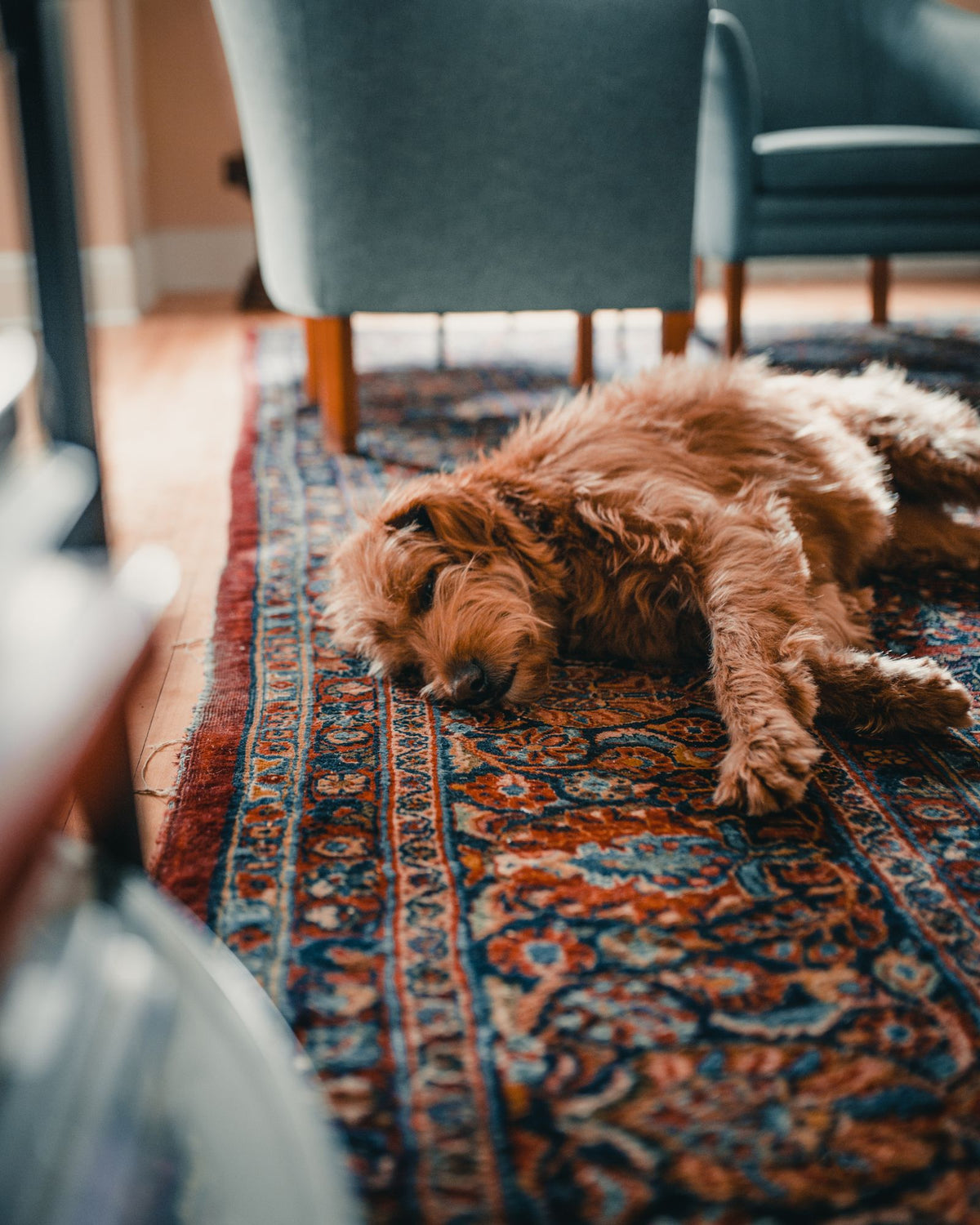
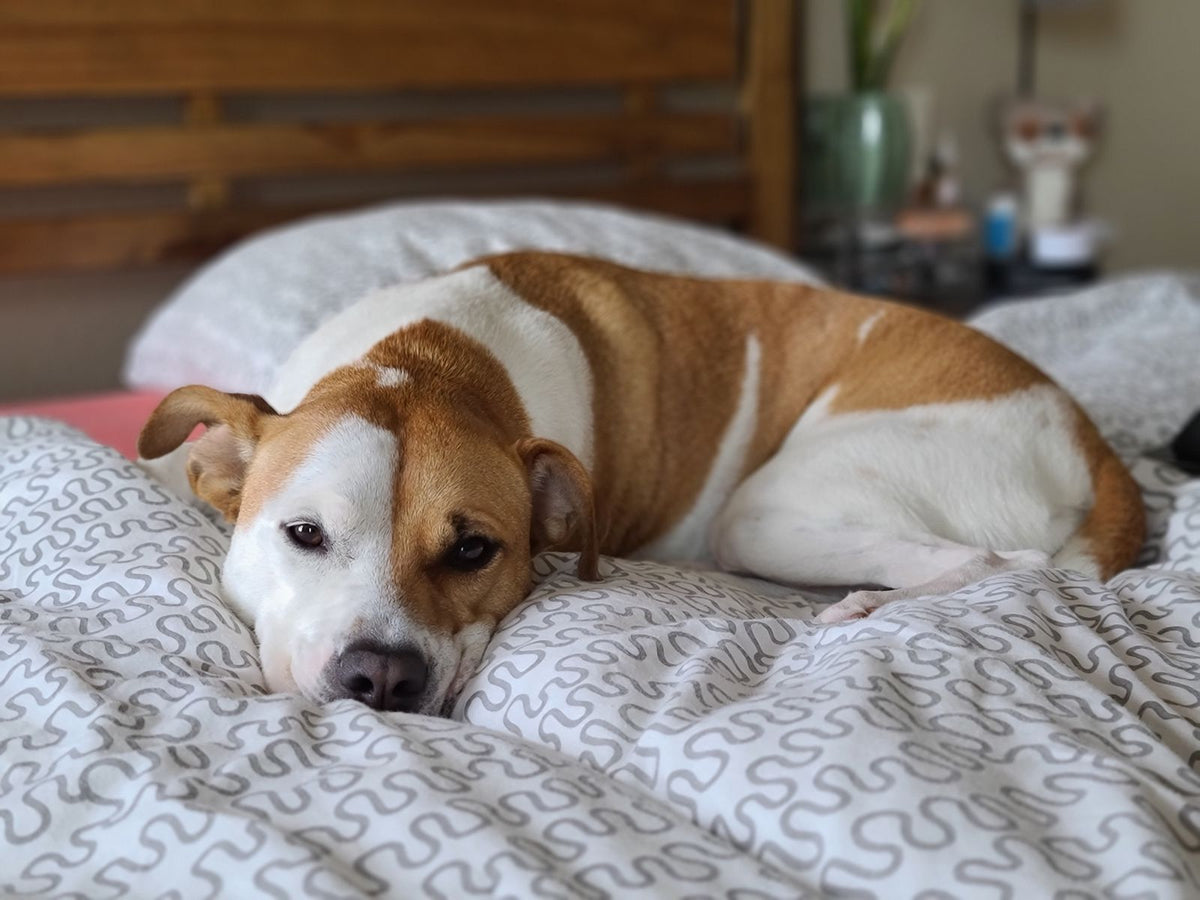
A sleepy yawn comes with a loose, relaxed body: soft or drooping eyes, ears in their natural position, a relaxed tail, and perhaps a sigh or a curl into a ball. If that is the picture, simply let your dog rest.
Stress and Conflict Yawns
Many dogs also yawn when they feel uneasy or caught between competing feelings, such as wanting to approach something and wanting to avoid it. These stress or conflict yawns tend to be quicker and more tense than sleepy ones, and often appear with other subtle signs of discomfort.
Common situations for stress yawns
- At the veterinary clinic: in the waiting room, on the scale, or on the exam table. Our guide to stress-free vet visits has ideas for easier trips.
- During hugs and close handling: many dogs tolerate hugs rather than enjoy them. Yawning, turning the head, or stiffening while being squeezed often means the dog wants more space.
- Under training pressure: repeating a cue the dog does not understand, leaning over the dog, or a frustrated tone can all produce yawns.
- In tense social moments: an unfamiliar dog approaching, a stranger reaching over the head, or raised voices at home.
A stress yawn does not mean your dog is about to bite. It is an early clue that your dog is not fully comfortable, giving you a chance to make a change before discomfort builds.
"Calming Signals": What Trainers Describe and What Research Shows
Many trainers and behaviorists describe yawning as one of a group of calming signals or appeasement behaviors. The idea, popularized in dog training books, is that dogs use small gestures such as yawning, turning away, sniffing the ground, licking the lips, or slowing down to reduce tension and avoid conflict.
The framework is widely used and helpful because it encourages owners to watch subtle body language. But it is worth being clear about the evidence: research on whether dogs deliberately yawn to calm other dogs or people is limited and the results are mixed. Some studies link yawning and lip licking with stressful situations, but the idea that dogs intentionally send these signals has not been firmly established.
A balanced takeaway: a yawn in a tense moment is a reasonable sign your dog may be uneasy. Whether it is a message, self-soothing, or a side effect of arousal, the practical response is the same: look at the whole dog and lower the pressure.
Excitement, Anticipation, and Contagious Yawns
Excited or anticipatory yawns
Some dogs yawn when something good is about to happen: as you pick up the leash, while waiting for dinner, or before a game of fetch. These yawns come with a wiggly body, wagging tail, bright eyes, and sometimes whining. Excitement and stress are both forms of arousal, so the yawn can look similar; the surrounding body language makes the difference clear.
Do dogs catch yawns from people?
Several studies have asked whether dogs yawn after seeing or hearing their owners yawn. Some reported that dogs did seem to catch yawns, sometimes more readily from familiar people, while others found little or no effect. Possible links to social bonding remain uncertain. If your dog yawns after you do, it may be contagious yawning or simply that you are both relaxed. It is not a reliable test of your dog's attachment.
Reading the Yawn in Context
A single yawn tells you little on its own. Watch the whole body for a few seconds before and after, and compare it with how your dog looks when truly relaxed. Our guide to dog body language covers this in more depth. Signs that often accompany a stress yawn include:
- Lip licking: quick tongue flicks over the nose or lips when no food is around.
- Half-moon eye: the whites of the eyes showing as the head turns away but the eyes stay on something.
- Turning away: turning the head or body aside, avoiding eye contact, or suddenly sniffing the ground.
- Tucked tail: the tail held low or between the hind legs.
- Pinned ears: ears pulled back flat against the head.
- Tense body: stiff stillness, a closed mouth, a lowered or crouched stance, panting when not hot, or a raised front paw.
One yawn in a relaxed dog at bedtime means little. Several yawns with lip licking, a tucked tail, and pinned ears in a crowded waiting room point strongly toward stress. The more signs appear together, the more confident your reading can be.
How to Respond When Your Dog Yawns From Stress
When context suggests your dog is uncomfortable, lower the pressure and give your dog more choice.
- Give space: step back, stop leaning over your dog, and let it move away if it wants to.
- Release from hugs: let go and switch to a gentle chest scratch, or no touch at all.
- Lower training pressure: make the task easier or move to a quieter spot.
- End the session on a win: if yawning, sniffing, and looking away continue, finish with an easy cue, reward it, and take a break.
- Create distance from triggers: cross the street, or ask visitors to ignore your dog until it chooses to approach.
Never punish a dog for showing stress signals. When quiet signals are ignored or punished, some dogs stop showing them and move more quickly to growling or snapping.
Helping a Stressed Dog Feel Safer Over Time
If stress yawns keep appearing in the same situations, work on them gradually rather than simply enduring them.
- Identify the triggers: note where and when stress signs appear.
- Find the comfort threshold: the distance or intensity at which your dog notices the trigger but stays relaxed enough to take food.
- Pair the trigger with good things: at that level, follow each appearance of the trigger with high-value food rewards or play.
- Progress slowly: move closer only while your dog stays relaxed; if stress signs return, go back a step.
- Practice handling: gentle handling of paws, ears, and mouth at home, paired with rewards, can make real exams easier.
If stress is frequent or worsening, talk with your veterinarian. They can check for medical contributors, discuss whether anti-anxiety medication is appropriate, as prescribed by your veterinarian, and refer you to a qualified behavior professional. See when to see a veterinary behaviorist.
When to Call Your Veterinarian
Most yawning is normal, but frequent yawning or yawn-like mouth movements can sometimes be connected to mouth, jaw, or stomach discomfort. These signs warrant a veterinary exam, especially when new:
- Possible mouth pain: odd mouth opening along with bad breath, chewing on one side, dropping food, pawing at the face, or bleeding gums.
- Possible nausea: repeated yawning with frequent lip licking, drooling, gulping, restlessness, or loss of appetite.
- Jaw problems: trouble opening or closing the mouth, crying out when yawning or chewing, or swelling around the jaw.
- A sudden change: far more yawning than usual with no clear reason, or alongside lethargy or hiding.
Our guide to recognizing signs of pain lists other subtle clues. At the exam, your veterinarian will usually examine the mouth, teeth, jaw, and abdomen, and may recommend bloodwork, dental X-rays, or a dental exam under anesthesia.
Contact your veterinarian or an emergency clinic right away if your dog
- Cannot close its mouth, or the jaw appears stuck
- Is retching without bringing anything up, especially with a swollen belly
- Has trouble breathing, pale gums, or collapses
- Vomits repeatedly or vomits blood
Common Mistakes and Myths
Myth: A yawning dog is always tired or bored.
Fact: dogs also yawn when stressed, conflicted, or excited. Check the context.
Myth: Every yawn is a calming signal.
Fact: the research is mixed, and many yawns are simply physical. Reading every yawn as a message can lead to overinterpreting normal behavior.
Mistake: Pushing on through repeated yawns.
Continuing a hug or training session while a dog shows several stress signs teaches it that quiet signals do not work. Pausing early builds trust.
Frequently Asked Questions
Why does my dog yawn when I hug him?
Many dogs find hugs confining. A yawn or head turn during a hug often suggests mild discomfort. Try shorter contact your dog chooses, like a chest scratch side by side.
Should I yawn back to calm my dog?
Some trainers suggest it, but there is no strong evidence it works. Giving space and reducing pressure are more reliable.
Is a lot of yawning a sign of illness?
Usually not, but a sudden increase, or yawning with drooling, lip licking, or appetite changes, warrants a veterinary exam.
Key Takeaways
Yawning is normal and has several possible meanings. Sleepy yawns come with a relaxed body; stress yawns tend to appear at the clinic, during hugs, or under training pressure, often with lip licking, half-moon eye, turning away, a tucked tail, or pinned ears. The calming signals idea is a useful lens, but research is mixed, and contagious yawning in dogs remains uncertain. When a yawn suggests stress, give space, lower the pressure, and end training on an easy success. Have your veterinarian examine any dog with a sudden increase in yawning or signs of mouth pain, nausea, or jaw trouble.