Introducing Your Puppy or Kitten to Grooming Gently

Ask a professional groomer what makes their job easy or impossible, and almost none of them will mention coat type. They will talk about what happened to the animal in its first few months.
A dog who has been handled gently and regularly since puppyhood stands calmly for a bath, offers a paw for a nail trim, and tolerates a comb through the belly without complaint. A dog whose first proper grooming experience came at eight months old, when the coat had already matted, spends the rest of its life braced against being handled. The coat is the same. The early experience is not.
The good news is that the window for getting this right is generous, the sessions are short, and none of it requires special skill. It requires doing very small things consistently, at an age when your pet is forming its lasting impressions of what human hands mean. This guide covers when to start, what to teach in what order, how to build a positive association, and how to handle the parts that most owners find difficult.
Important: This article shares general educational information for pet owners and is not a substitute for an in-person veterinary examination, diagnosis, or treatment. For any medical concern or emergency, contact your veterinarian promptly.
Why Early Handling Matters So Much
Puppies and kittens go through a developmental period in early life during which they are unusually open to new experiences. Things encountered gently and positively during this window tend to be filed as normal for life; things encountered later, or unpleasantly, tend to be filed as threats.
Grooming falls squarely into the category of experiences worth investing in during that window, because grooming is not optional. Every dog and cat will need their nails checked, their ears looked at, their coat combed, and their mouth examined — by an owner, a groomer, and a veterinarian — many hundreds of times over a lifetime.
There is a direct veterinary benefit too. An animal comfortable being handled all over is an animal who can be examined properly, whose lumps are found early, whose ears can be checked without a struggle, and whose treatment does not require sedation. Owners of well-handled pets get better veterinary care almost automatically, because more is possible in the consulting room.
And there is a practical one. An animal who fights grooming does not get groomed often enough, which means matting, overgrown nails, and skin problems that were entirely preventable.
- Start early: as soon as your puppy or kitten is settled at home.
- Keep it short: a minute or two is a complete session at this stage.
- Keep it positive: end before your pet wants to stop, every single time.
- Be consistent: daily brief sessions beat weekly long ones.
- Handle everywhere: paws, ears, mouth, tail, and belly — not just the easy places.
Starting With Simple Handling
Before any tool comes out, the foundation is your hands. The goal is an animal for whom being touched anywhere is unremarkable.
Choose a moment when your puppy or kitten is sleepy and settled rather than in a playful mood. Sit on the floor with them and simply stroke them in the places they already enjoy. Then, for a few seconds at a time, extend to a less familiar area: run a hand down a leg, hold a paw briefly, touch between the toes, stroke an ear and gently lift it, run a finger along the lip line.
Each of these should last two or three seconds at first, followed immediately by returning to a comfortable area and by something the animal likes — a small treat, a favorite scratch, or a moment of play. You are not trying to achieve anything except the association that unusual handling predicts good things.
Build up slowly over days and weeks. Hold the paw a little longer. Look inside the ear. Lift the lip and look at the teeth. Run a hand along the belly and under the tail. Aim to have touched every part of your pet, calmly and briefly, many times before you ever need to do anything to those areas.
The rule that matters more than any other: stop before your pet does. A session that ends while they are still relaxed teaches them that handling is comfortable. A session that ends because they struggled free teaches them that struggling works.
Introducing the Brush
The brush is the next step, and the mistake most owners make is to introduce the brush and the brushing at the same time.
- Leave the brush on the floor for a day or two so your pet can investigate it in their own time.
- Let them sniff it while you hold it, and reward that interest.
- Touch the back of the brush — not the bristles — against the shoulder for a second, then reward.
- Progress to one or two light strokes with the bristles along the back or shoulder, where most animals are least sensitive, then reward.
- Build the number of strokes gradually over days, staying in comfortable areas.
- Only once the back and sides are entirely accepted, extend briefly to the legs, chest, and tail.
- Leave the belly, the rear, and the face until last — these are the sensitive areas and the ones most often rushed.
- Keep every session shorter than your pet's patience, and finish with something enjoyable.
Use a brush appropriate to the coat. A soft brush is right for a puppy or kitten regardless of what the adult coat will need; the point at this stage is the experience, not the grooming result. Your groomer or veterinary nurse will happily advise on the right tools for your pet's adult coat, and getting that advice early saves buying the wrong thing.
For long-coated breeds, a daily brief comb-through from puppyhood is one of the best investments an owner can make. It prevents the first mat from ever forming, and a coat that has never been matted is a coat the animal has never had a painful experience with.
Paws and Nail Trimming
Nail trimming is the grooming task owners dread most, and almost all of that dread traces back to how it was introduced.
Spend a week or two simply handling paws, as described above, before a clipper appears. Then let your pet see and sniff the clippers with no attempt to use them. Touch the clippers against a nail without cutting, and reward. Squeeze the clippers near the paw so the animal hears the sound, without cutting, and reward.
When you do cut, cut one nail. One. Then reward generously and stop. The next day, cut one or two more. There is no rule that all the nails must be done in a single session, and for a young animal there is every reason not to try.
Take only the very tip. In pale nails you can see the pink quick and should stay well clear of it; in dark nails you cannot, so small repeated trims are the safe approach. If you do catch the quick it will bleed and hurt, so keep a styptic product recommended by your veterinarian to hand — and be aware that one bad experience can undo weeks of progress, which is the real argument for caution.
Ask your veterinary nurse or groomer to demonstrate on your pet at least once. Watching someone competent do it, on your own animal, is worth far more than any written description, and most practices are glad to show you.
Bath Time Without Drama
Most puppies do not need a full bath early on, and most cats do not need one at all in normal circumstances. But introducing the idea gently means that when a bath is genuinely needed, it is not a crisis.
Start with the room rather than the water. Let your puppy explore the bathroom, get treats in the empty bath, and become comfortable with the surface and the echo. Add a non-slip mat, because slipping is one of the main reasons animals panic in a bath. Then introduce a little warm water, then a shallow depth, then gentle wetting with a cup rather than a spray.
Use lukewarm water, keep the head and ears dry, work calmly and quickly, and rinse thoroughly — residue left in the coat is irritating. Use a shampoo formulated for dogs or cats and appropriate to the age of the animal; human shampoo is not suitable for pets. Dry with towels, and introduce a hairdryer, if you use one, on the lowest heat and noise setting over several separate sessions rather than all at once.
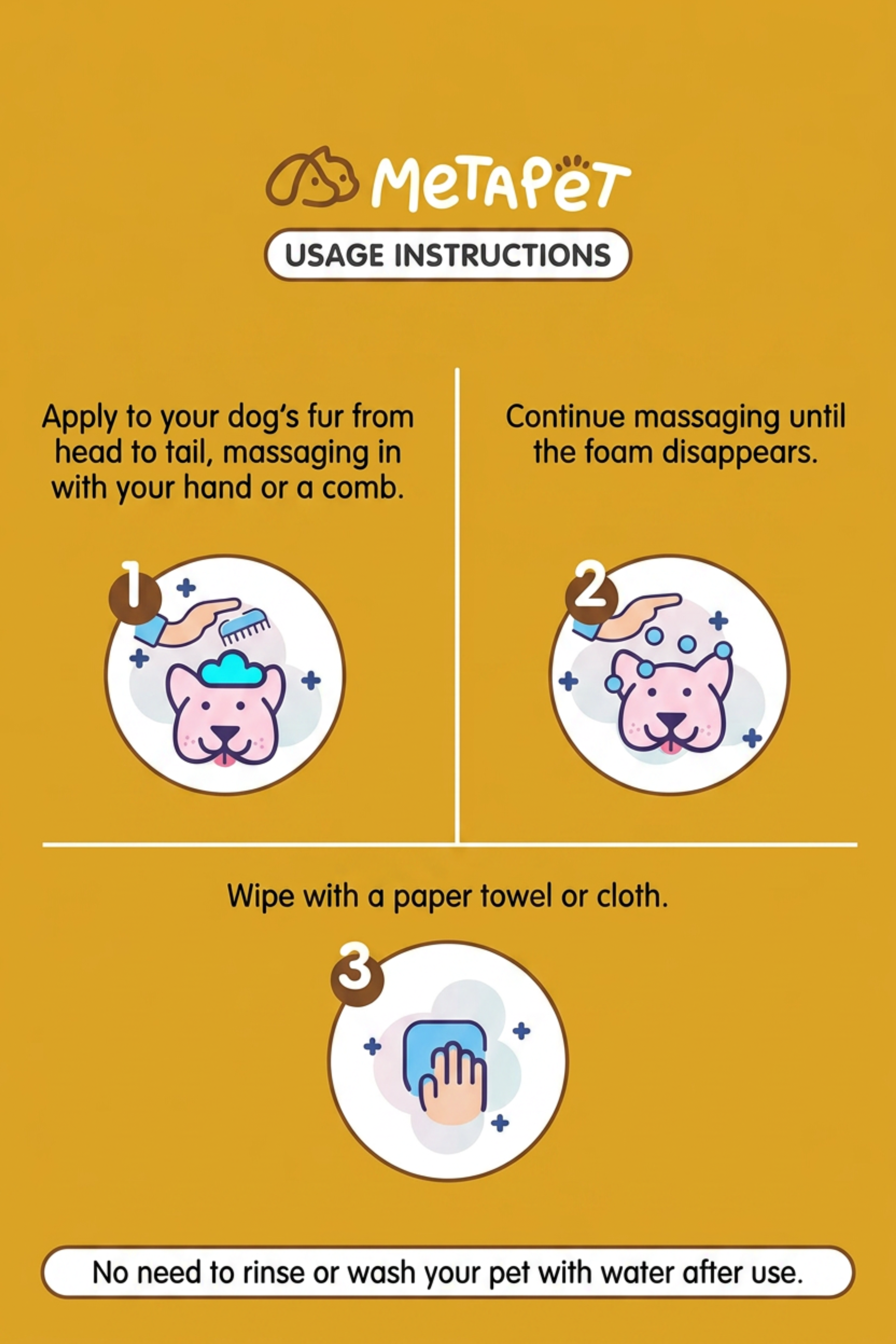
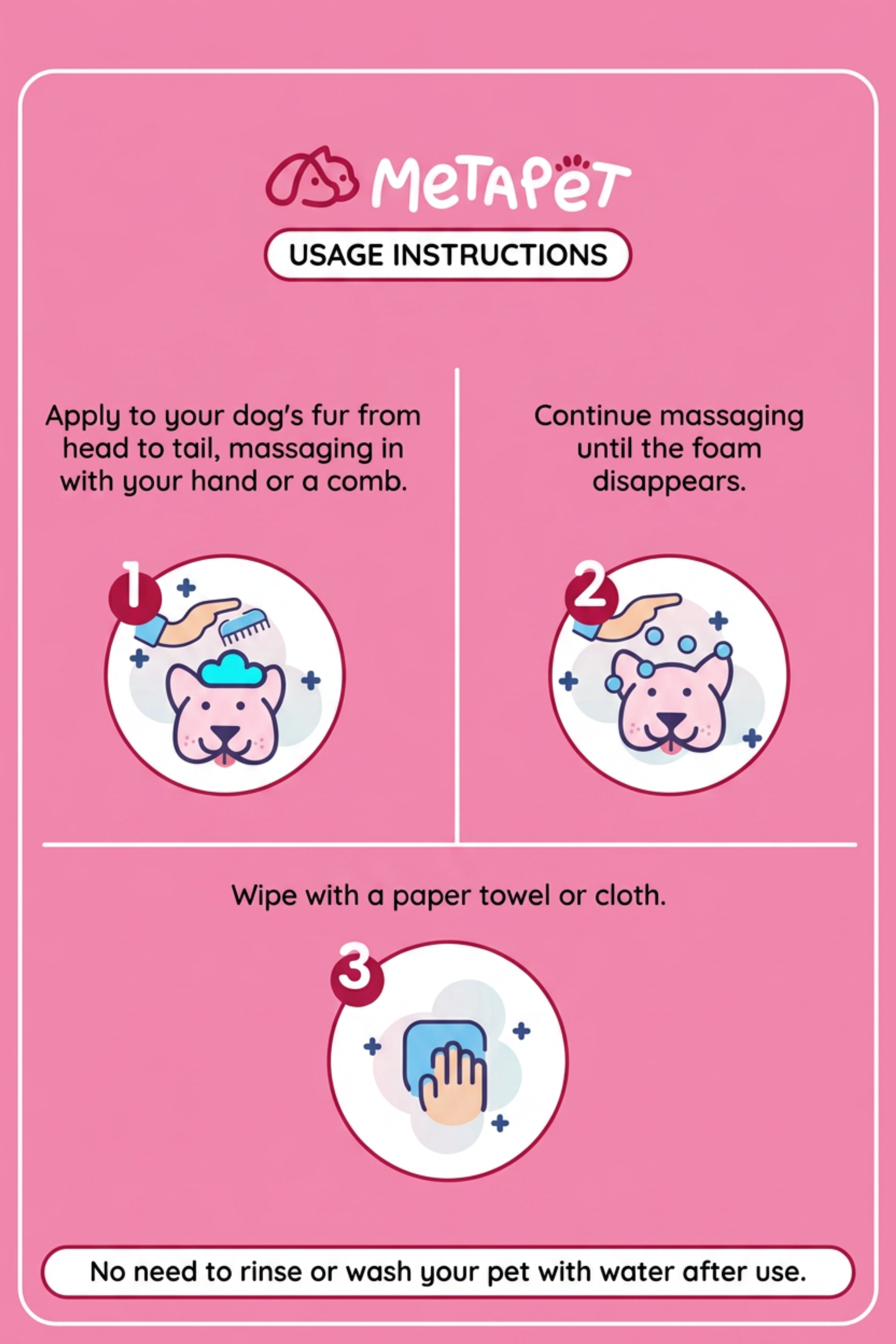
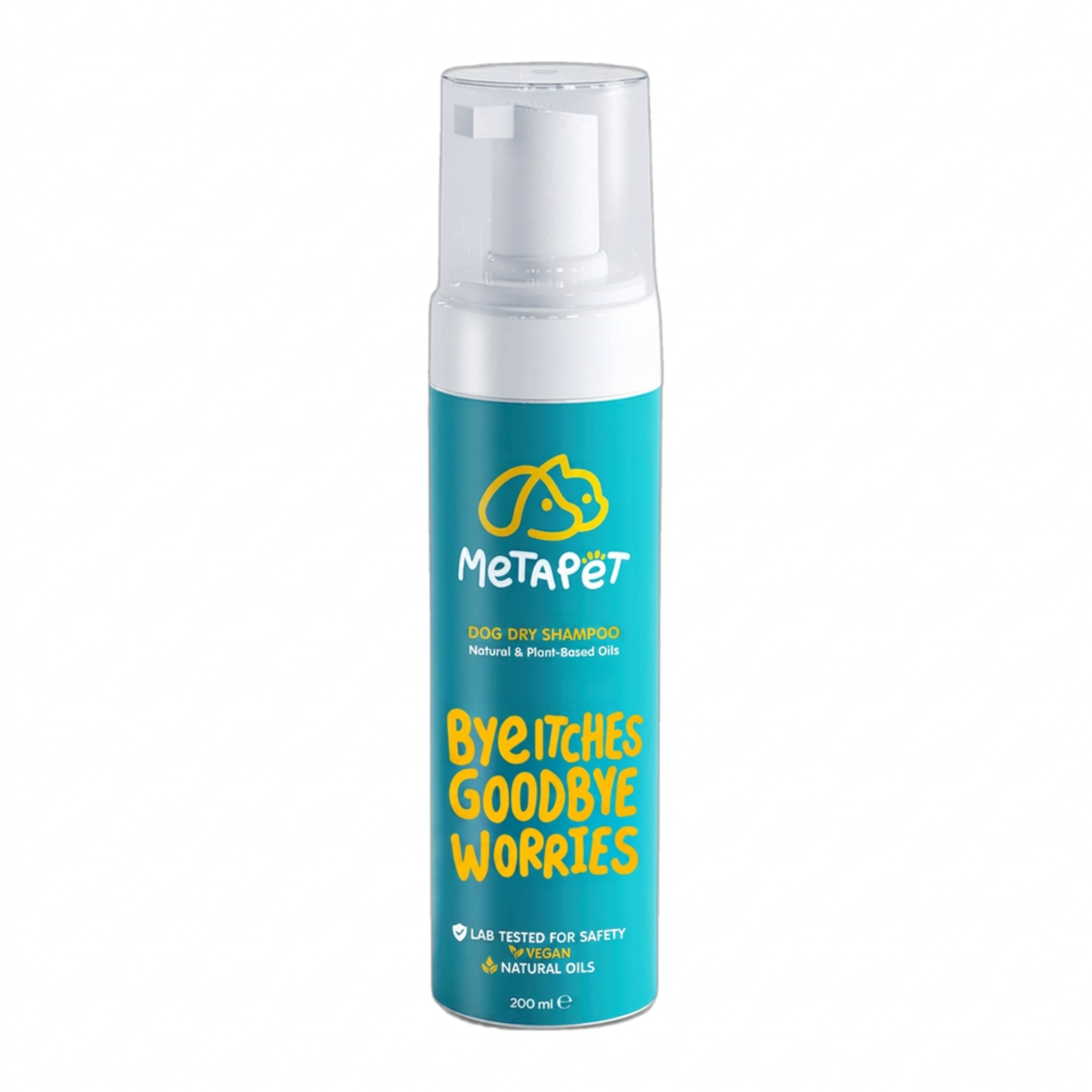
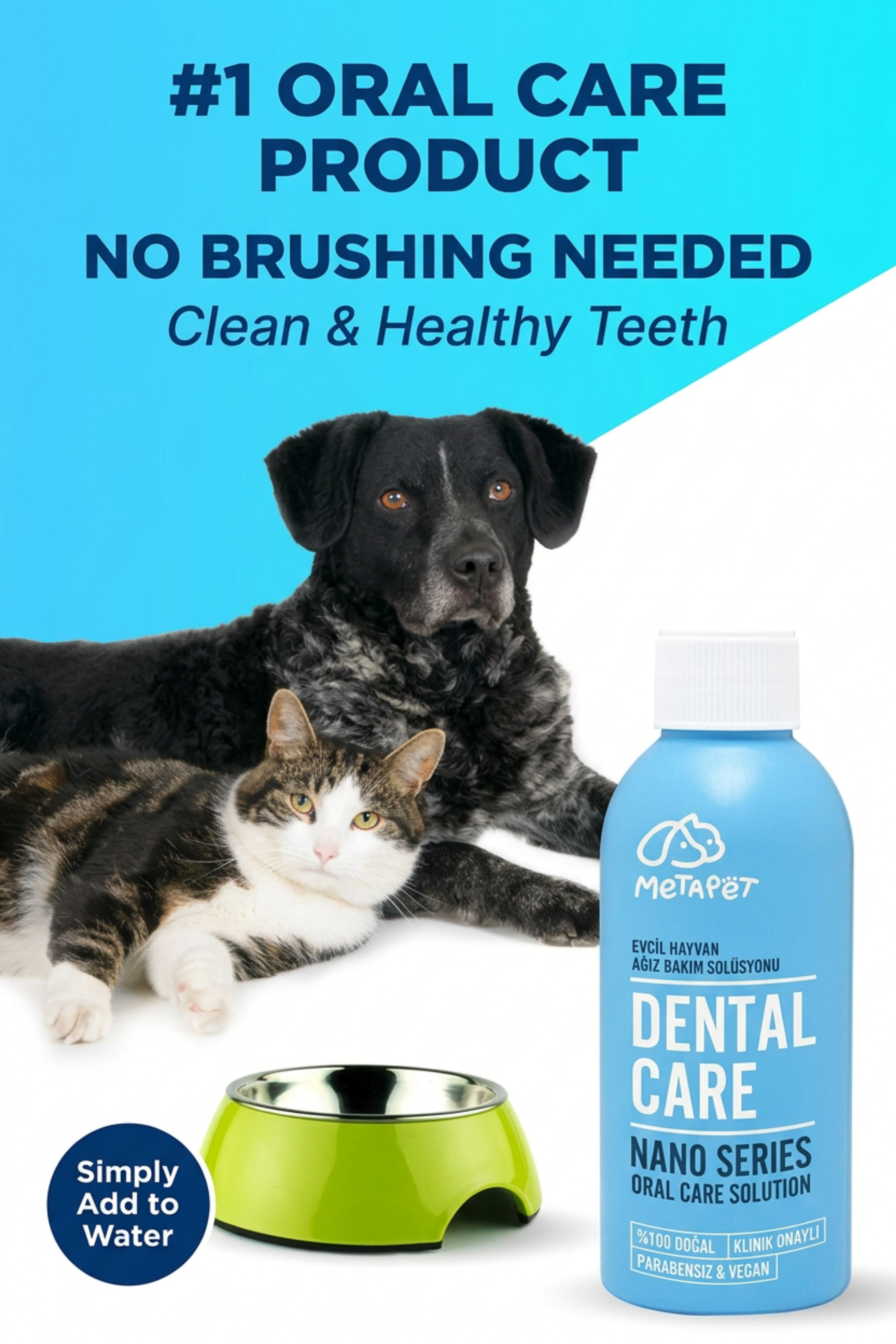
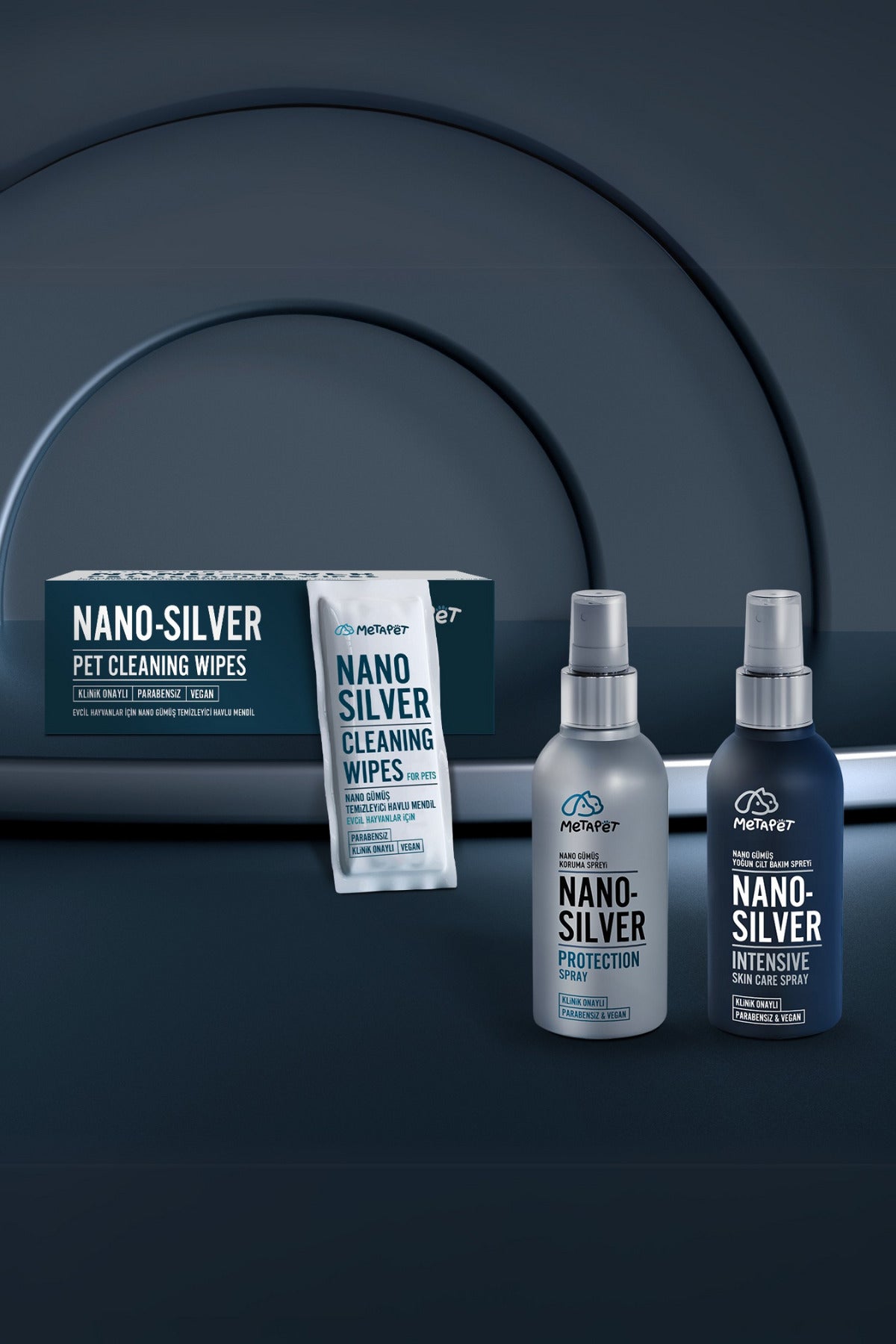
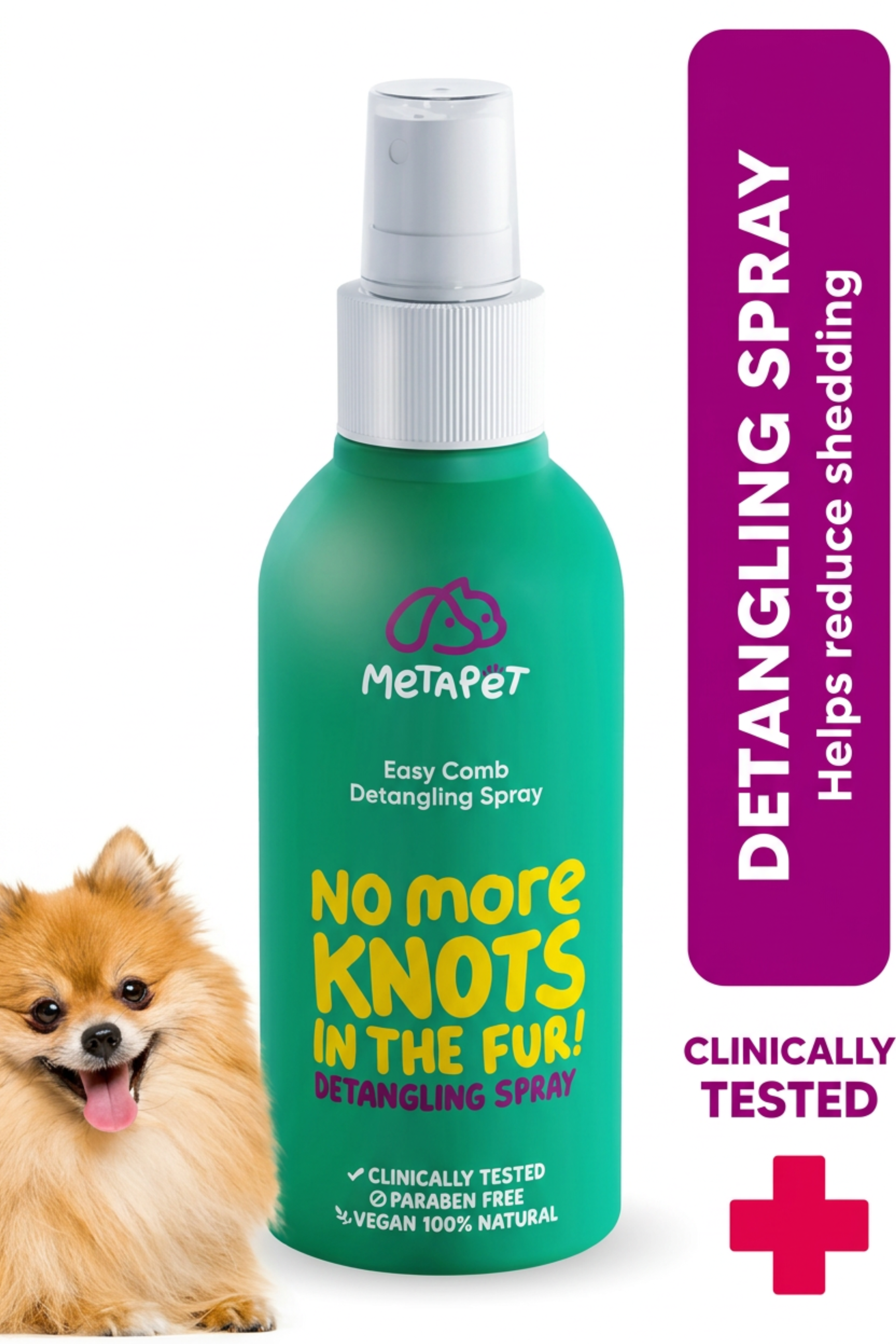
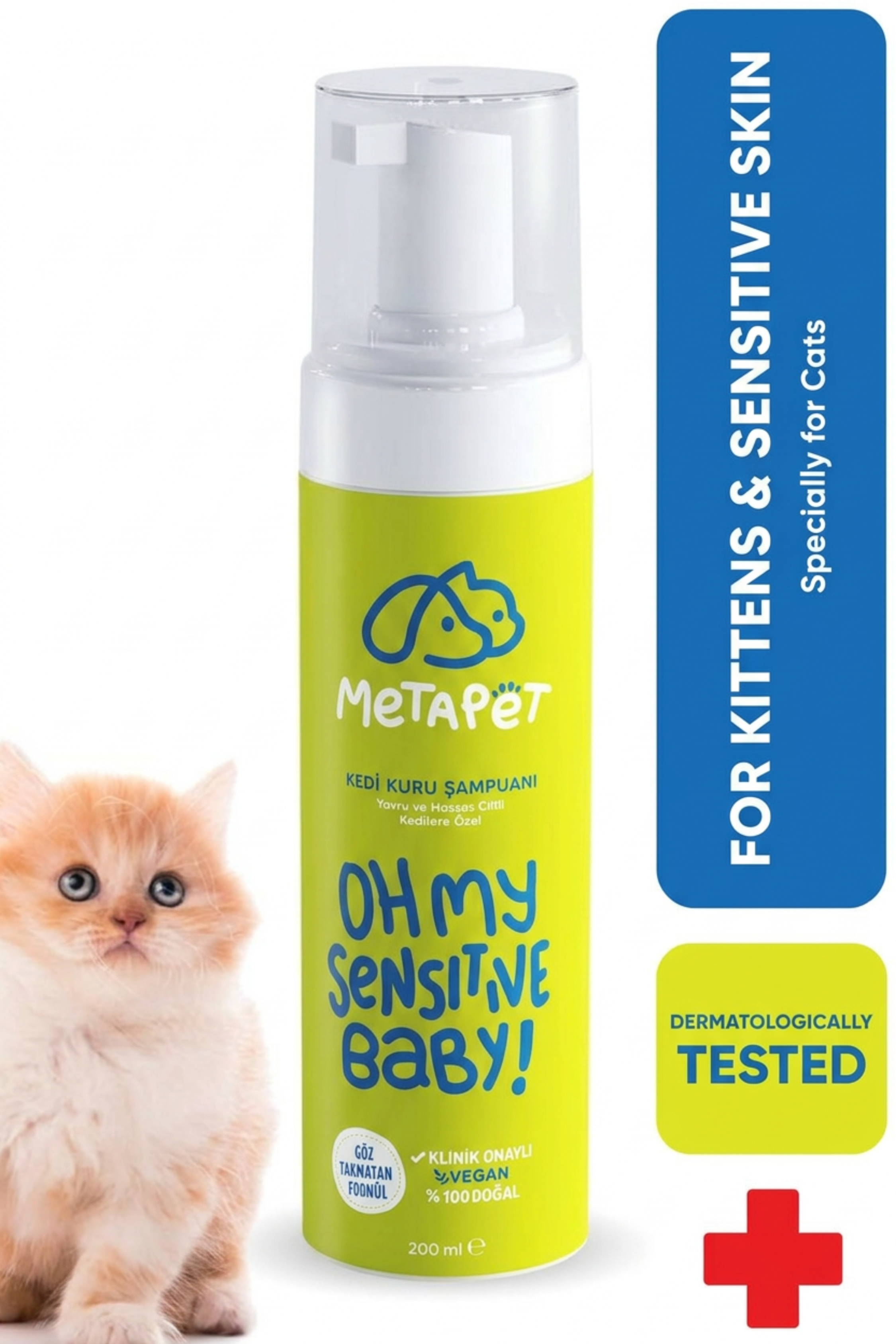
Where a full bath is impractical — a young kitten, a cat who cannot be bathed safely, or a small mess that does not warrant one — waterless foam products are a gentler option for freshening the coat. Cosmetic grooming products such as the MetaPet Is It a Cookie or a Dog? Vanilla Dry Foam Shampoo for Dogs or the MetaPet Oh My Sensitive Baby Waterless Dry Foam Shampoo for Cats are designed to help clean and freshen the coat without rinsing. They are cosmetic grooming aids, not medicated products, and they are not intended to treat, prevent, or manage any skin condition, and they are a complement to veterinary care rather than a substitute for it. Check with your veterinarian before using any product on a very young animal or on skin that is red, broken, or under treatment.
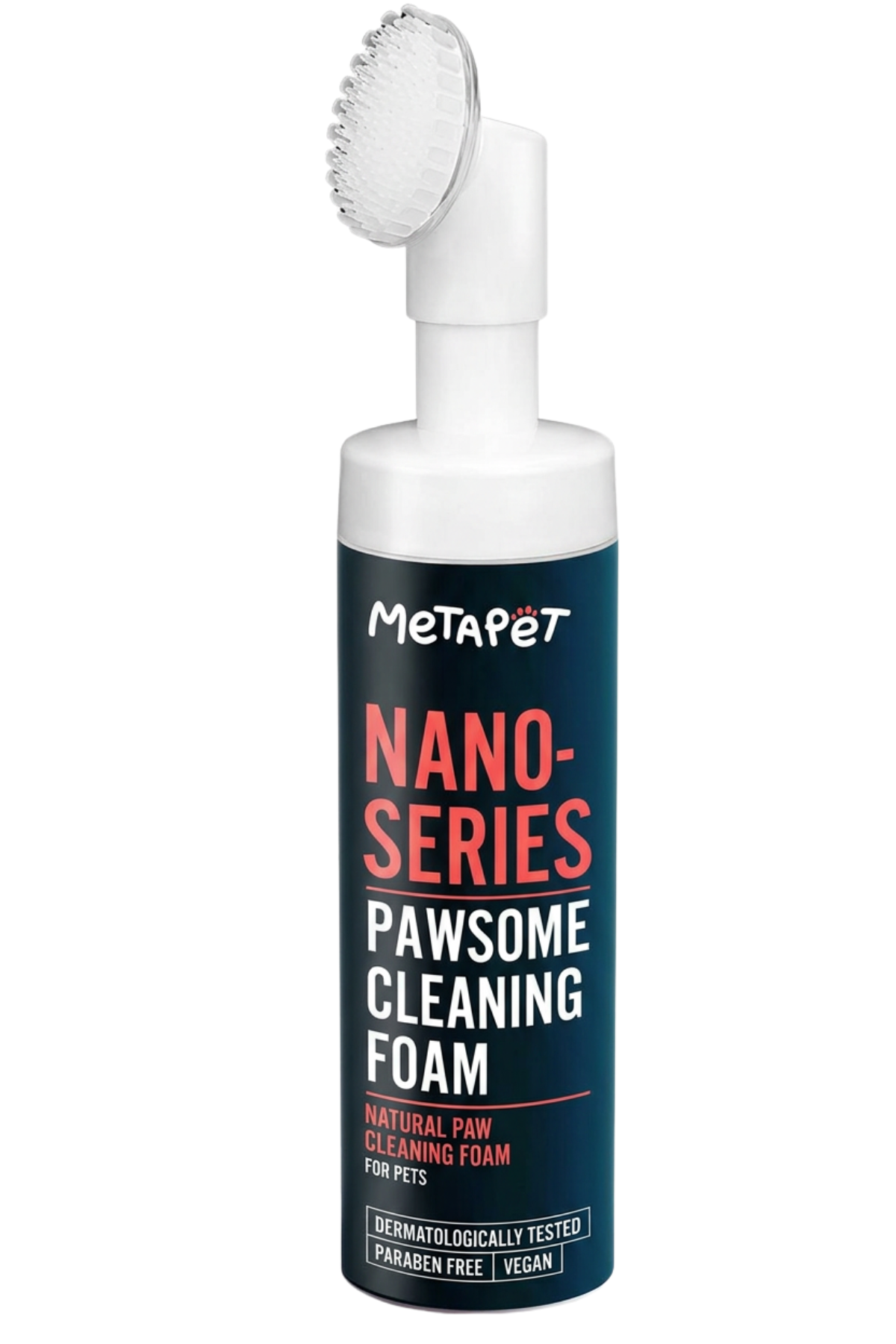
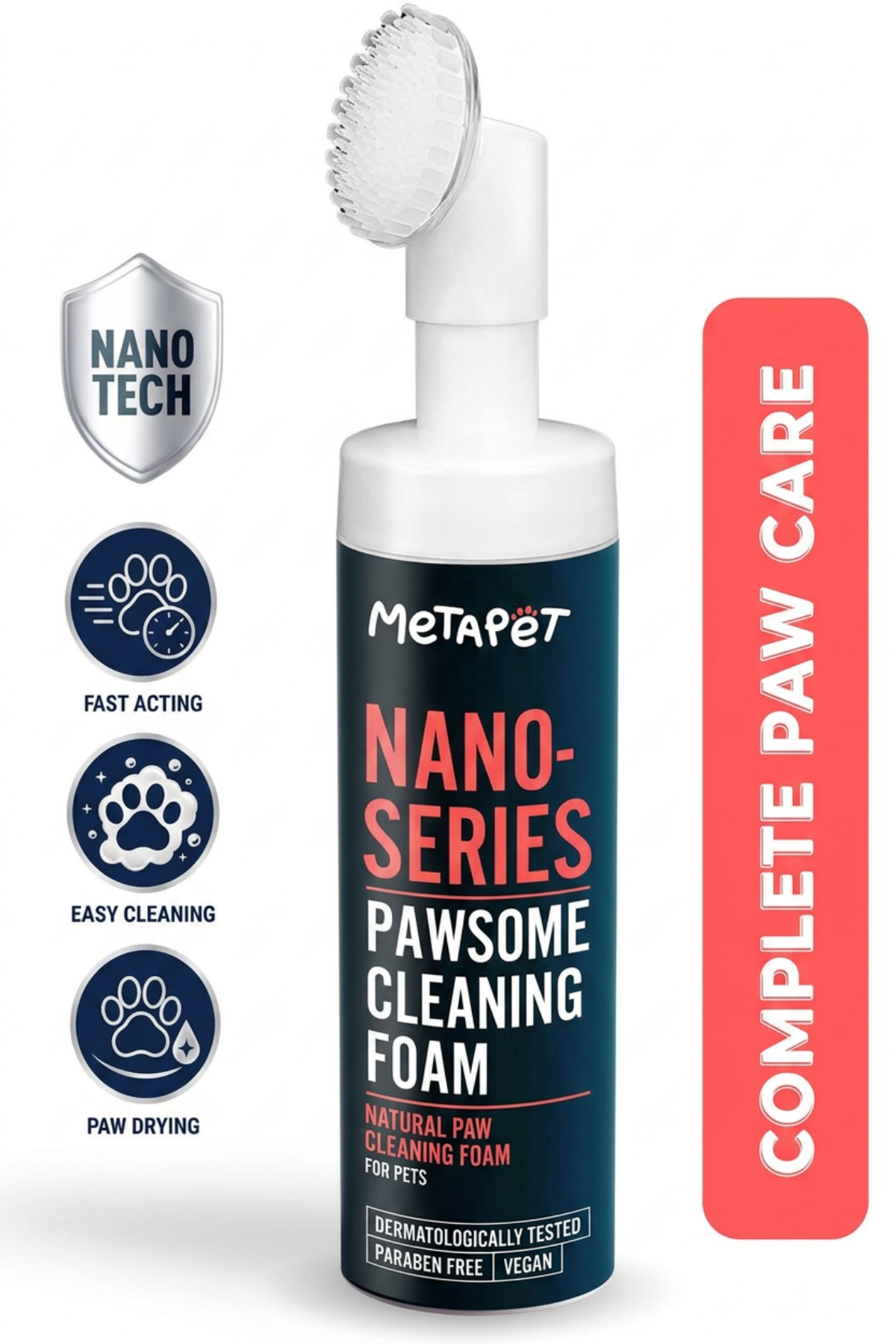
For muddy paws after a walk — a far more frequent situation than a full bath — a paw cleaning product such as the MetaPet Nano-Series Pawsome Paw Cleaning Foam is a cosmetic grooming aid designed to help clean paws, and it doubles as a useful, low-pressure way to practice paw handling every day. It is a cosmetic grooming aid, not a medicated product, and it is a complement to veterinary care rather than a substitute for it.
Kittens: Some Differences
Kittens respond to the same principles but need a slightly different approach, and the consequences of getting it wrong are more lasting.
Cats generalize negative experiences readily and remember them for a long time. A kitten who is held down and combed against its will may resist handling for years. Sessions should therefore be even shorter than for puppies — thirty seconds is a perfectly good session — and should always end while the kitten is still relaxed.
Work with your kitten's natural rhythms. The best time is when they are sleepy after eating or playing, not when they are in a hunting mood. Groom on your lap or on a surface where they feel secure, and avoid looming over them from above.
Introduce the towel wrap early as a positive experience rather than a restraint. A kitten who has been gently wrapped in a towel many times, with treats and no unpleasant outcome, is far easier to medicate, examine, and groom as an adult. Practice it when nothing needs doing.
Long-haired kittens need particular attention because their adult coat will require daily maintenance. Comb right down to the skin from the start, especially in the armpits, behind the ears, on the belly, and around the rear — the areas where mats begin and where a surface brush does nothing. A minute a day from twelve weeks old is the whole strategy.
Also introduce the carrier and the nail clippers in the same low-pressure way. Cats who have had these things around them since kittenhood, without those things predicting anything unpleasant, are dramatically easier to care for.
Reading the Signs of Stress
The whole approach depends on stopping before the animal becomes uncomfortable, which means recognizing the early signs rather than the obvious ones.
- Turning the head away: an early and easily missed signal in dogs.
- Lip licking or yawning: in a dog who is not hungry or tired.
- Whale eye: the whites of a dog's eyes showing as they look sideways.
- A stiffened body: holding still and tense rather than relaxed.
- Tail tucked or held rigid: in either species.
- Ears flattened or rotated back: a clear discomfort signal in cats especially.
- A twitching tail tip: in cats, often the last warning before they have had enough.
- Skin rippling along the back: in cats, indicating overstimulation.
- Trying to move away: which should always be respected rather than prevented.
- Growling, hissing, or mouthing: a late signal that earlier ones were missed.
When you see an early sign, stop what you are doing, return to something the animal enjoys, and end the session on a good note. This is not giving in — it is the mechanism by which the animal learns that you listen, which is precisely why they stop needing to escalate.
If your pet is consistently frightened of handling despite a gentle approach, talk to your veterinarian. There may be a physical reason — pain somewhere you are touching — and there are behavioral approaches, including structured cooperative care training, that help considerably.
The First Professional Groom
If your pet will need professional grooming as an adult, arranging the first visit early and making it a positive one is worth planning deliberately.
Many groomers offer a short introductory session for puppies — a visit involving a look around, some handling, a little brushing, treats, and no full groom. Book one as soon as your puppy's vaccination status allows and your veterinarian agrees. The aim is a puppy who thinks the salon is an interesting place with friendly people, not a puppy whose first visit involves three hours of clipping.
Choose a groomer who is willing to work at your pet's pace, who will stop a session if the animal is distressed, and who communicates about what they find. Ask how they handle nervous animals. A groomer who talks about building tolerance over several visits is telling you something good about their approach.
Tell them everything relevant: any handling your pet dislikes, any medical issues, any previous bad experience. Groomers are far better able to keep a session positive when they know what to avoid.
Then keep the visits regular. A long-coated dog groomed every six to eight weeks stays comfortable with the process; the same dog groomed twice a year arrives matted, has a difficult experience each time, and gets steadily worse about it.
Myths and Facts
Myths, Corrected
- Myth: puppies are too young to groom. Gentle handling should begin as soon as they are settled at home.
- Myth: cats never need grooming help. Long-haired cats need daily combing, and all cats need nails and ears checked.
- Myth: an animal that struggles must be held firmly. Force reliably makes handling harder in the long run.
- Myth: all the nails must be done in one go. One nail a day is a perfectly good approach for a young animal.
- Myth: human shampoo is fine occasionally. Use products formulated for dogs and cats instead.
- Fact: short sessions beat long ones. Two minutes daily achieves far more than an hour weekly.
- Fact: ending early is the technique, not a failure. Stopping while relaxed is what builds tolerance.
- Fact: well-handled pets get better veterinary care. More can be examined and treated without sedation.
When to Contact Your Veterinarian
Thresholds for Calling
Grooming introduction is not usually a veterinary matter, but a few situations are.
- Book an appointment if: your pet reacts painfully to being touched in a specific area.
- Book an appointment if: fear of handling is severe or is not improving with a gentle approach.
- Book an appointment for: any lump, sore, or unusual smell you find while grooming.
- Call the same day for: a nail cut into the quick that will not stop bleeding, or any grooming injury.
- Ask for advice on: when your puppy can safely visit a grooming salon, based on their vaccination status.
For any medical emergency, contact your veterinarian or your nearest emergency veterinary hospital immediately rather than waiting for regular opening hours.
The Practical Takeaway
What to Remember
Grooming a puppy or kitten is not really about the coat. In the first few months it is about teaching an animal that hands are safe, that tools are boring, and that being touched anywhere leads to something pleasant. The actual brushing is almost incidental.
Two minutes a day is enough. Handle the paws, look in the ears, lift the lip, run a brush along the back, and finish before your pet wants you to. Do that most days for a few months, and you will have an animal who can be groomed, examined, medicated, and cared for easily for the next fifteen years.
And when it does not go well — when your puppy wriggles or your kitten has had enough — stop early and try again tomorrow. The animals who become impossible to groom are almost never the ones whose owners stopped too soon. They are the ones whose owners pushed on through.