Dogs Eating Cat Food and Cats Eating Dog Food: Why It Matters

In a household with both a dog and a cat, food theft is close to inevitable. The dog cleans out the cat's bowl the moment it is left unattended, and the cat helps itself to whatever is in the dog's dish while nobody is looking. Most owners treat this as a mildly annoying feature of multi-pet life rather than a nutritional issue.
For an occasional mouthful, that is a reasonable view. Where it stops being reasonable is when it becomes routine — when a cat regularly eats dog food as a meaningful part of its intake, or when a dog is consistently getting a second, richer dinner from the cat's bowl.
Cats and dogs have genuinely different nutritional requirements, and cat food is not simply a richer version of dog food. This guide explains what those differences actually are, what happens in the short and long term when the wrong species eats the wrong food, and — most usefully — the practical feeding arrangements that solve the problem without turning every mealtime into a negotiation.
Important: This article shares general educational information for pet owners and is not a substitute for an in-person veterinary examination, diagnosis, or treatment. For any medical concern or emergency, contact your veterinarian promptly.
Why the Two Diets Are Not Interchangeable
Dogs are omnivores with considerable metabolic flexibility. They can derive nutrition from a broad range of ingredients and can manufacture several nutrients internally from precursors in the diet.
Cats are obligate carnivores. Over evolutionary time, adapted to a diet consisting almost entirely of animal tissue, cats lost or reduced several metabolic pathways that other species retain. Nutrients that a dog can synthesize, a cat must obtain preformed in the diet.
This is not a marketing distinction. It is the reason complete cat foods are formulated with specific nutrients that complete dog foods are not required to contain in the same amounts, and it is why long-term substitution matters even when short-term substitution does not.
Both species also need diets that are complete and balanced for their life stage. A food designed for one species will not meet the profile required for the other, no matter how appetizing it is.
What Cats Need That Dogs Do Not
Several specific requirements set feline nutrition apart, and each of them is a reason dog food is inadequate for a cat over time.
- Taurine: an amino acid cats cannot make in sufficient quantity. Long-term deficiency is associated with serious heart and eye problems, and cat foods are formulated to supply it.
- Preformed vitamin A: cats cannot efficiently convert the plant precursor beta-carotene into vitamin A, so they need the preformed vitamin from animal sources.
- Arachidonic acid: a fatty acid cats cannot adequately synthesize and must obtain from the diet.
- Higher protein requirement: cats use protein for energy continuously and need proportionally more than dogs.
- Niacin and certain B vitamins: cats have limited ability to synthesize some of these from precursors.
- Higher requirements for certain amino acids: including those that support skin, coat, and general tissue maintenance.
A cat eating dog food occasionally is not going to become deficient. A cat whose main intake is dog food over months, however, is receiving a diet that was never designed to meet these requirements, and the resulting problems can be serious and are not always quickly reversible.
This is the single most important asymmetry in this topic: a cat eating dog food long term is a genuine nutritional concern, while a dog eating cat food is more often a calorie and digestion concern.
Why Cat Food Is So Appealing to Dogs
Cat food is typically higher in protein and fat, more strongly flavored, and more aromatic than dog food. To a dog, it is simply a better meal, and dogs are opportunistic feeders by nature.
Cat feeding habits make it easy. Many cats graze throughout the day rather than eating in one sitting, so a bowl is often left down. Cats also frequently leave a little behind, which trains the dog that checking the bowl is worthwhile.
Once a dog has learned that the cat's bowl is a reliable source of something delicious, the behavior is self-reinforcing and difficult to extinguish through training alone. Management — changing the setup so the opportunity does not arise — is usually more effective than trying to teach restraint around a highly valuable resource.
The Short-Term Problem for Dogs
The most common immediate consequence of a dog raiding the cat's bowl is digestive upset. Cat food is richer than most dog food, and a sudden intake of unfamiliar, high-fat food is a classic recipe for vomiting and diarrhea.
For dogs with sensitive digestion, existing gastrointestinal conditions, or food sensitivities, this matters more. So does the disruption of a carefully managed prescription diet — a dog on a veterinary diet for kidney, urinary, or digestive reasons is not getting the benefit of that diet if it is topping up from the cat's bowl.
There is also a recognized link between high-fat dietary indiscretion and pancreatitis in dogs, which is a painful and potentially serious condition. This is not a reason to panic over a single stolen mouthful, but it is a reason not to treat routine raiding as harmless.
Contact your veterinarian if your dog develops repeated vomiting, diarrhea that persists more than a day or so, abdominal pain, a hunched posture, or marked lethargy after eating something unusual.
The Long-Term Problem: Weight
Beyond digestion, the steadier issue is calories. Cat food is energy-dense, and a dog eating an extra portion daily accumulates weight over months in a way that is easy to miss because it happens so gradually.
Excess weight is one of the most consequential health issues in companion dogs, with well-recognized links to joint problems, reduced mobility, exercise intolerance, and shortened comfortable lifespan. It also complicates the management of almost every other condition a dog may develop.
The same applies in reverse to a cat with unlimited access to a dog's bowl, particularly a cat that would otherwise be portion-controlled.
Learning to body-condition-score your pets by feel is a useful habit — you should be able to feel the ribs easily under a thin layer of covering, and see a waist from above. Your veterinary team can show you how in a couple of minutes at a routine visit, and it is far more informative than the number on the scale alone.
Feeding Setups That Actually Work
Almost every solution to this problem is environmental rather than behavioral. The aim is to make the wrong bowl inaccessible rather than to teach self-control around food that smells irresistible.
- Feed the cat up high: on a counter, shelf, or cat tree the dog cannot reach — the simplest and most reliable solution in most homes. Choose a height your particular cat manages comfortably, and use steps or a lower platform for older, arthritic, or overweight cats, for whom repeated jumping is harder than it looks.
- Use a separate room: feed the cat behind a closed door, or behind a gate with a cat-sized gap the dog cannot fit through.
- Fit a microchip or collar-activated feeder: these open only for the registered pet and work well for grazing cats.
- Feed at set times rather than free-feeding: put food down, supervise, and lift what is not eaten after a set period.
- Feed in different rooms simultaneously: so neither animal is waiting beside the other's bowl.
- Use a dog crate or pen at mealtimes: if the dog is comfortably crate-trained, this makes supervision straightforward.
- Elevate on a stable surface: cats jump reliably but need a landing area that does not slide.
- Pick up bowls promptly: an empty floor gives nothing to raid.
For cats who genuinely graze, timed or chip-activated feeders are usually the most practical answer, since they preserve the cat's natural eating pattern while removing the dog's access.
Whatever you choose, keep it consistent. Intermittent success is worse than none, because a food source that occasionally pays off is exactly the kind that a dog will keep checking.
Managing Mealtimes in a Multi-Pet Home
Beyond physical separation, a few habits reduce friction and make the whole arrangement easier to sustain.
- Feed at consistent times so both animals know what to expect and are less inclined to scavenge.
- Measure portions with a proper scoop or a kitchen scale rather than estimating, so you know what each animal is actually receiving.
- Keep water available separately and freely for both, with the cat's water away from the dog's bowls.
- Never leave food unattended on counters or tables — dogs counter-surf and cats reach further than owners expect.
- Store bags and cans securely, since a chewed-open bag is a much larger dietary indiscretion than a stolen bowlful.
- Brief visitors and family members about the feeding rules so the setup is not undone by good intentions.
- Watch for guarding behavior around food and speak to your veterinarian or a qualified behavior professional if any appears.
- Weigh both animals regularly and log the numbers so gradual gain is visible.
If your pets eat calmly side by side without stealing, there is no need to change a working arrangement. The setups above are for households where theft is actually happening, which is most of them.
What About the Occasional Mouthful
Perspective matters. A cat that licks out the dog's bowl now and then is not at risk of taurine deficiency, and a dog that steals a few pieces of kibble is not going to become unwell from it.
The concern is proportion and consistency: when the wrong food becomes a regular and meaningful part of an animal's daily intake, rather than an occasional accident.
If your cat has been eating mainly dog food for an extended period — which happens most often in homes where a cat was fed dog food unknowingly, or in multi-pet households with a determined cat — speak to your veterinarian. A check-up and a transition back to an appropriate complete cat food is a straightforward conversation, and any changes should be made gradually to avoid digestive upset.
Supplements Are a Complement, Not a Substitute
Owners sometimes ask whether a supplement can bridge the gap when a pet has been eating the wrong food. It is a fair question, and the honest answer is that the foundation always has to be a complete and balanced diet formulated for that species and life stage.
Supplements are designed to be used alongside an appropriate diet as part of a general care routine, not to correct a fundamentally unsuitable one. It is worth remembering that a complete and balanced food already supplies the vitamins and minerals your pet needs, and that adding more of a nutrient is not automatically better — which is another reason to ask your veterinarian before layering anything on top. If you are considering adding anything, the sensible first step is a conversation with your veterinarian about what your individual pet actually needs, particularly for animals with existing health conditions or on prescription diets.
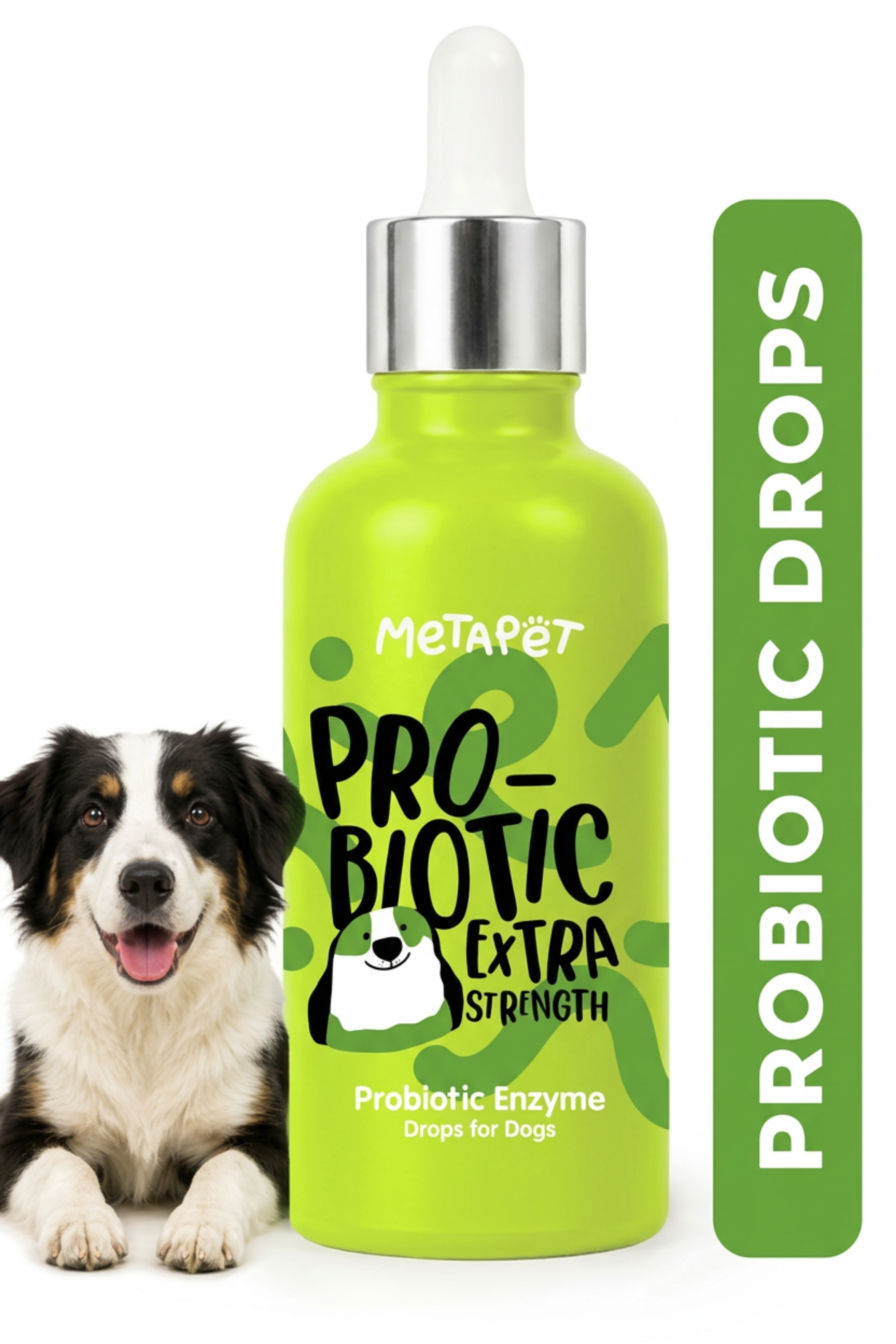
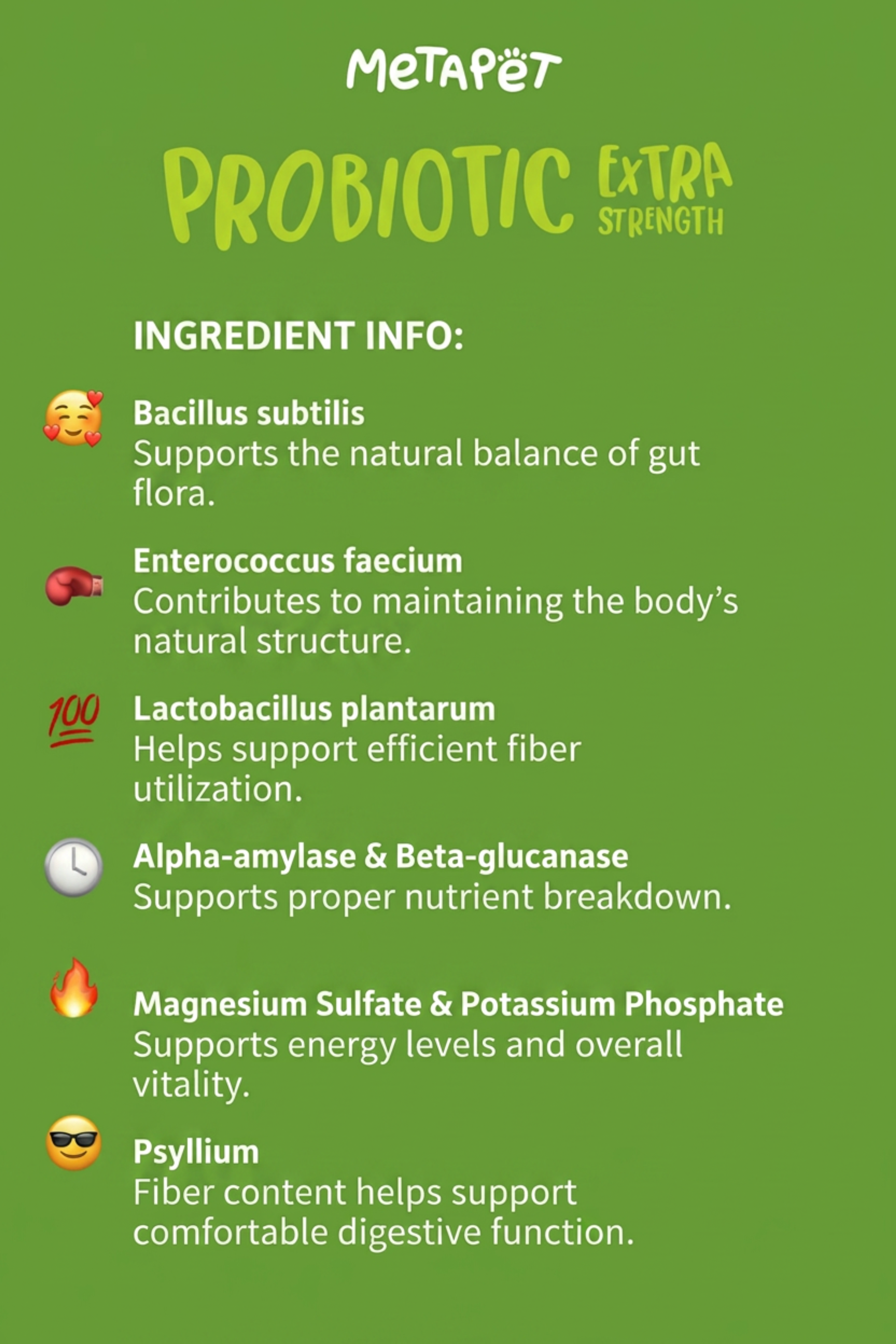
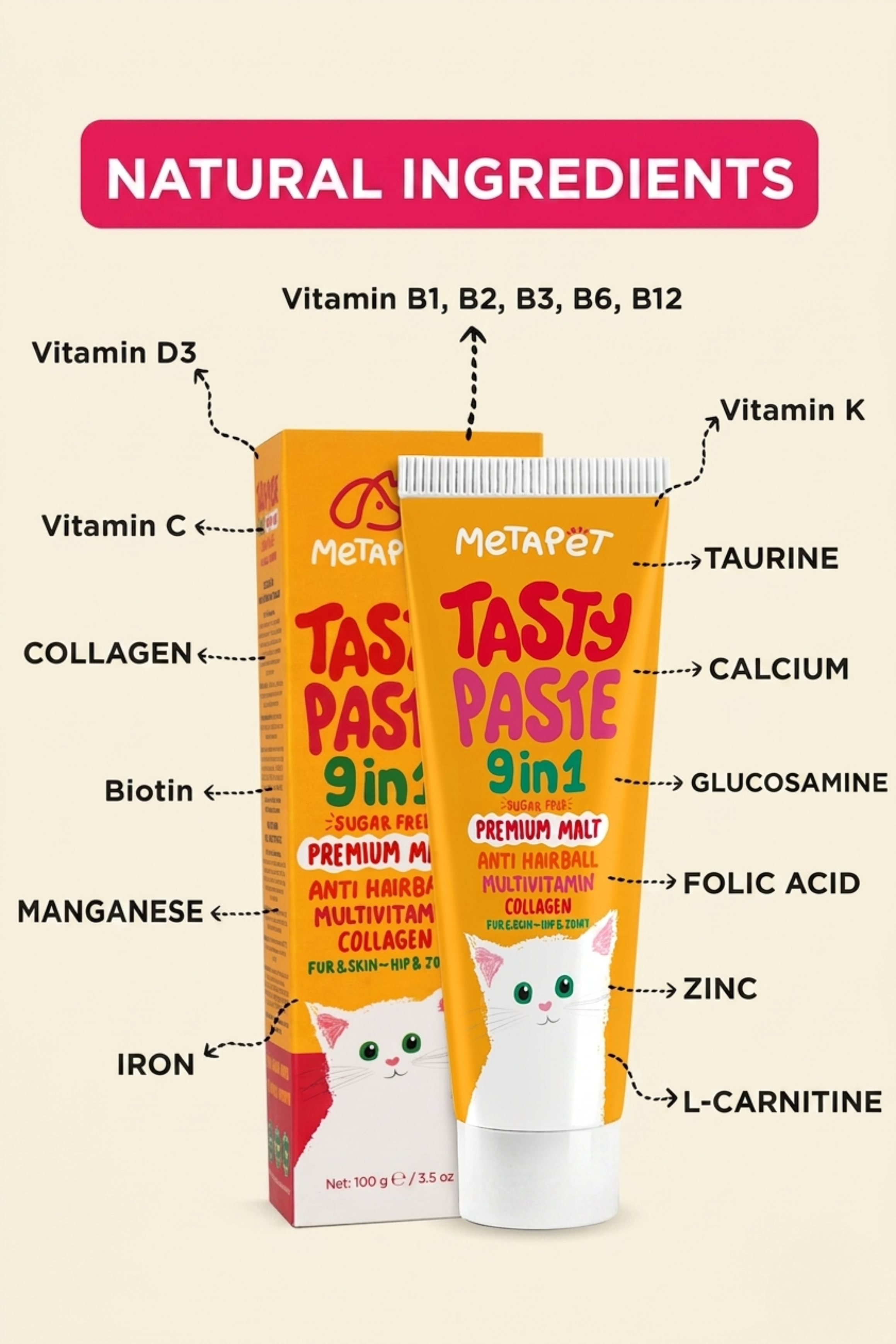
Within that framework, some owners like to include a routine daily supplement as part of general upkeep. Species-specific options exist for both — for example the MetaPet 25-in-1 Multivitamin Drops with D3 for Cats and the MetaPet Multivitamin Drops with D3 for Dogs, or Probiotic Drops for Cats and Probiotic Drops for Dogs. Note that these are formulated separately for each species, which is the same principle that applies to food.
Products of this kind are intended to complement a balanced diet and regular veterinary care, not to replace either. They are not a substitute for feeding the correct species-appropriate food, and they do not treat, prevent, or correct any medical or nutritional disorder. If you suspect your pet has been on an inappropriate diet, the right first step is a veterinary appointment rather than a supplement.
Myths and Facts
- Myth: cat food is just richer dog food. Cat food is formulated to meet requirements dogs do not have, including taurine and preformed vitamin A.
- Myth: a cat can live on dog food if it likes it. Long-term feeding of dog food to a cat risks serious nutritional deficiencies.
- Myth: dogs raiding the cat bowl is harmless. It commonly causes digestive upset and steady weight gain, and undermines prescription diets.
- Myth: training will stop food stealing. Management is far more reliable than training around a highly valuable resource.
- Myth: supplements can make dog food suitable for a cat. The base diet must be species-appropriate; supplements complement rather than replace it.
- Fact: feeding the cat up high solves most cases. Height is the simplest barrier in a mixed household.
- Fact: an occasional mouthful is not a crisis. Proportion and consistency are what matter.
When to Contact Your Veterinarian
Most food-swapping needs a change of setup rather than an appointment, but some situations do warrant a call.
- Book an appointment if: your cat has been eating mainly dog food for an extended period, or you are unsure whether the current diet is appropriate.
- Book an appointment if: either animal is gaining or losing weight noticeably, or if you are unsure how much to feed.
- Call promptly for: repeated vomiting, diarrhea lasting more than a day, abdominal pain, a hunched posture, or marked lethargy after eating the wrong food.
- Seek urgent care for: a dog that has eaten a very large quantity of rich food and is unwell, showing a distended abdomen, retching without producing anything, or collapse.
Also contact your veterinarian if a pet on a prescription diet has been getting significant amounts of another food, since the diet may not be doing its intended job.
For any medical emergency, contact your veterinarian or the nearest emergency veterinary hospital immediately.
The Practical Takeaway
Cats and dogs need different diets because they are built differently, and the difference is not cosmetic — cats require nutrients in their food that dogs can manufacture for themselves. That makes long-term dog food a genuine problem for a cat, while cat food for a dog is mainly a matter of calories and digestion.
An occasional stolen mouthful is not worth losing sleep over. Routine access is, and the fix is almost always environmental: feed the cat somewhere the dog cannot reach, feed at set times rather than leaving bowls down, consider a chip-activated feeder for a grazing cat, and pick bowls up promptly.
Beyond that, measure portions, weigh both animals regularly, and raise any concerns about diet with your veterinarian. Getting the basics right — the correct complete food, in the correct amount, eaten by the correct animal — does more for long-term health than anything you can add on top.