Compulsive Behaviors in Dogs and Cats: Signs and Solutions

A dog who occasionally chases his tail after a burst of zoomies is being a dog. A dog who spends hours a day spinning, who cannot be interrupted, and whose tail tip is raw from catching it — that dog has crossed into different territory. Repetitive behaviors that escalate beyond play, interfere with normal life, or continue despite consequences are called compulsive behaviors, and both dogs and cats can develop them.
Compulsions are widely misunderstood. Owners often find them funny at first, then baffling, then distressing — and the internet is full of videos celebrating exactly the behaviors that deserve concern. Understanding what drives them changes everything: these are usually coping mechanisms gone into overdrive, born from stress, frustration, under-stimulation, pain, or genetics, not naughtiness and not entertainment.
This guide covers the common compulsive patterns in each species, why they develop, the medical look-alikes that must be ruled out first, what genuinely helps at home, and when a veterinarian or behavior professional should join the team.
Important: This article shares general educational information for pet owners and is not a substitute for an in-person veterinary examination, diagnosis, or treatment. For any medical concern or emergency, contact your veterinarian promptly.
What Makes a Behavior 'Compulsive'?
Normal behaviors — grooming, chasing, chewing, sucking — become compulsive when they detach from their original purpose and start running on a loop. Hallmarks include escalating frequency, difficulty interrupting the pet mid-behavior, performing the behavior out of context, choosing it over eating or play, and in many cases self-injury: raw skin, worn teeth, bald patches, wounded tails.
Frequency alone is not the test; function is. A bored border collie who chases light beams for two minutes and moves on is playing. One who scans walls for reflections all evening, ignores dinner while waiting for one, and cannot settle is trapped in a loop. Ask three questions: Can I easily interrupt it? Is it damaging body or life quality? Is it growing? Honest answers sort quirk from problem quickly.
Common Compulsions in Dogs
- Spinning and tail chasing. Circling that intensifies with excitement or stress; some affected dogs injure tails or lose weight from sheer activity.
- Light and shadow chasing. Fixated scanning, pouncing at reflections — often accidentally trained by laser-pointer games in intense, movement-driven dogs.
- Acral lick dermatitis. Persistent licking of one spot, classically a front leg, creating a thickened, hairless, sometimes ulcerated patch.
- Flank sucking. Holding a mouthful of flank skin — a well-known pattern with a strong breed association in Dobermans.
- Fly snapping. Biting at insects that are not there; this one especially requires veterinary evaluation, since it can have medical or neurological explanations.
- Pacing and patterned running. Fence-line loops or fixed routes, worn into the lawn, run with a driven, joyless quality.
Breed tendencies are real: herding breeds over-represent light chasing, bull terriers spinning, Dobermans flank sucking, large breeds lick lesions. Genetics loads the gun; environment tends to pull the trigger.
Common Compulsions in Cats
- Overgrooming. Licking beyond hygiene into bald bellies, inner thighs, and forelegs — often called psychogenic alopecia, and diagnosable only after skin disease is excluded.
- Wool sucking and fabric chewing. Rhythmic sucking or actual eating of blankets and sweaters, seen disproportionately in Siamese and other Oriental breeds; swallowed fabric can cause dangerous blockages.
- Tail chasing or attacking. A cat who hunts her own tail aggressively, sometimes wounding it.
- Feline hyperesthesia. Episodes of rippling back skin, sudden frantic grooming, and sprinting — a syndrome that sits on the border of behavior and neurology and always merits a veterinary visit.
- Repetitive pacing or vocal loops. Patterned walking or persistent rhythmic meowing beyond ordinary chattiness.
Cats add a diagnostic wrinkle: they hide stress well and often perform compulsions privately. Bald patches with no observed licking still count — the evidence outranks the alibi.
Why Compulsions Develop
Most compulsions begin as displacement behaviors — normal actions performed out of context when an animal is conflicted, frustrated, or anxious, the way humans bite nails. A dog who cannot reach the squirrel spins; a cat unsettled by the new baby grooms. If the underlying tension persists, the displacement behavior gets rehearsed, and rehearsal makes it automatic. Over time the behavior may even self-soothe, which reinforces the loop from the inside.
The classic contributing ingredients: chronic under-stimulation in bright, driven animals; unpredictable households or conflict between pets; frustration around barriers, confinement, or unreachable prey; early weaning or deprived kittenhoods and puppyhoods; and genetic predisposition. Notice what is absent from that list: spite, silliness, and 'attention-seeking' as a moral failing. Attention can reinforce a loop, but it almost never creates one.
First Stop, Always: Rule Out Medical Causes
This is the most important section of this article. A large share of pets brought in for 'compulsive' behavior turn out to have a medical driver — and treating the body resolves the behavior. Overgrooming cats frequently have itchy skin from flea allergy, food allergy, or parasites; some have bladder pain and lick the belly over it. Licking dogs may have arthritis or nerve pain under the favorite spot. Tail chasers can have impacted anal glands or tail injuries; fly snappers need neurological and gastrointestinal evaluation; hyperesthesia overlaps with skin disease, pain, and seizure-spectrum conditions.
So the correct first move is never a training plan — it is a veterinary exam, with the tests your veterinarian recommends. Bring videos of episodes, note when they happen and what precedes them, and be ready to describe diet, parasite prevention, and household changes. Only when medicine has had its say should the label 'behavioral' be applied.
Home Strategy One: Fill the Life
Once medical causes are addressed, the most powerful home intervention is enriching the pet's daily life until the compulsion has real competition. Under-stimulated brains build loops; occupied brains have less spare capacity for them.
- Work the species. Dogs: sniffing walks where the nose sets the route, food puzzles, chew projects, training games, safe social time. Cats: multiple daily wand-toy hunts ending in a catch and a snack, food puzzles, window perches, climbing furniture, boxes and tunnels rotated weekly.
- Feed the brain, not just the bowl. Scatter feeding, snuffle mats, and puzzle feeders convert meals from ten seconds of gulping into twenty minutes of purpose.
- Make a schedule. Predictable meals, play, and rest lower background anxiety — compulsions feed on uncertainty.
- Retire the laser pointer. For light-chasers especially, switch to toys that can actually be caught; unfinishable prey games pour fuel on the fire.
Home Strategy Two: Interrupt Kindly, Redirect, Never Punish
When the behavior starts, the goal is a calm interruption followed by an incompatible activity: call the dog for a sniffing game, toss a treat away from the shadow wall, invite the cat onto a perch with a wand toy. Reward engagement with the alternative generously. Over weeks, many pets learn to offer the alternative when they feel the itch rising.
Punishment — yelling, spray bottles, grabbing — reliably backfires. It adds stress to a stress-driven problem, teaches the pet to perform the behavior out of sight, and can convert frustration into fear or aggression. Equally, avoid accidentally paying the loop in attention: if a mild episode dissolves the moment you calmly leave the room, that information belongs in your notes for the behavior professional.
When to Escalate to Professionals
- Self-injury of any kind. Raw skin, wounds, worn or broken teeth, damaged tails — involve your veterinarian promptly.
- Loops that resist interruption. If you increasingly cannot call your pet out of the behavior, the loop is strengthening.
- Expanding footprint. More hours, more triggers, more contexts than a month ago.
- Life displacement. Meals skipped, play declined, sleep disrupted, family interaction reduced.
- Sudden onset in an adult. New repetitive behavior in a previously normal adult or senior pet leans medical until proven otherwise.
Veterinarians can address pain, itch, and anxiety medically, and veterinary behaviorists combine medical and behavior-modification tools for entrenched cases. Seeking that help early is not overreaction — established loops respond far better than decade-old ones.
Tracking Progress: The Behavior Diary
Whatever plan you and your veterinarian build, measure it. Keep a simple daily log: how many episodes, roughly how long, what happened just before, how easily you interrupted, and what the household was doing at the time. Patterns emerge fast — episodes clustering around your departure for work, the neighbor's dog barking, or the evening chaos hour — and each pattern is a lever you can pull.
The diary also protects you from the two classic judgment errors: missing slow improvement and missing slow relapse. Compulsive behaviors rarely vanish overnight; they shrink — fewer episodes, shorter, easier to interrupt. A log turns that invisible progress into visible encouragement, and it gives your veterinarian or behaviorist real data instead of impressions when the plan needs adjusting.
Calm as a Foundation
Because stress is the fuel for most compulsive loops, everything that lowers a pet's baseline arousal helps: reliable routines, quiet retreat spaces where the pet is never disturbed, resolving inter-pet tension with separate resources, and unhurried daily one-on-one time. For multi-cat homes, that means litter boxes, feeding stations, and resting perches in plural, spread through the house.
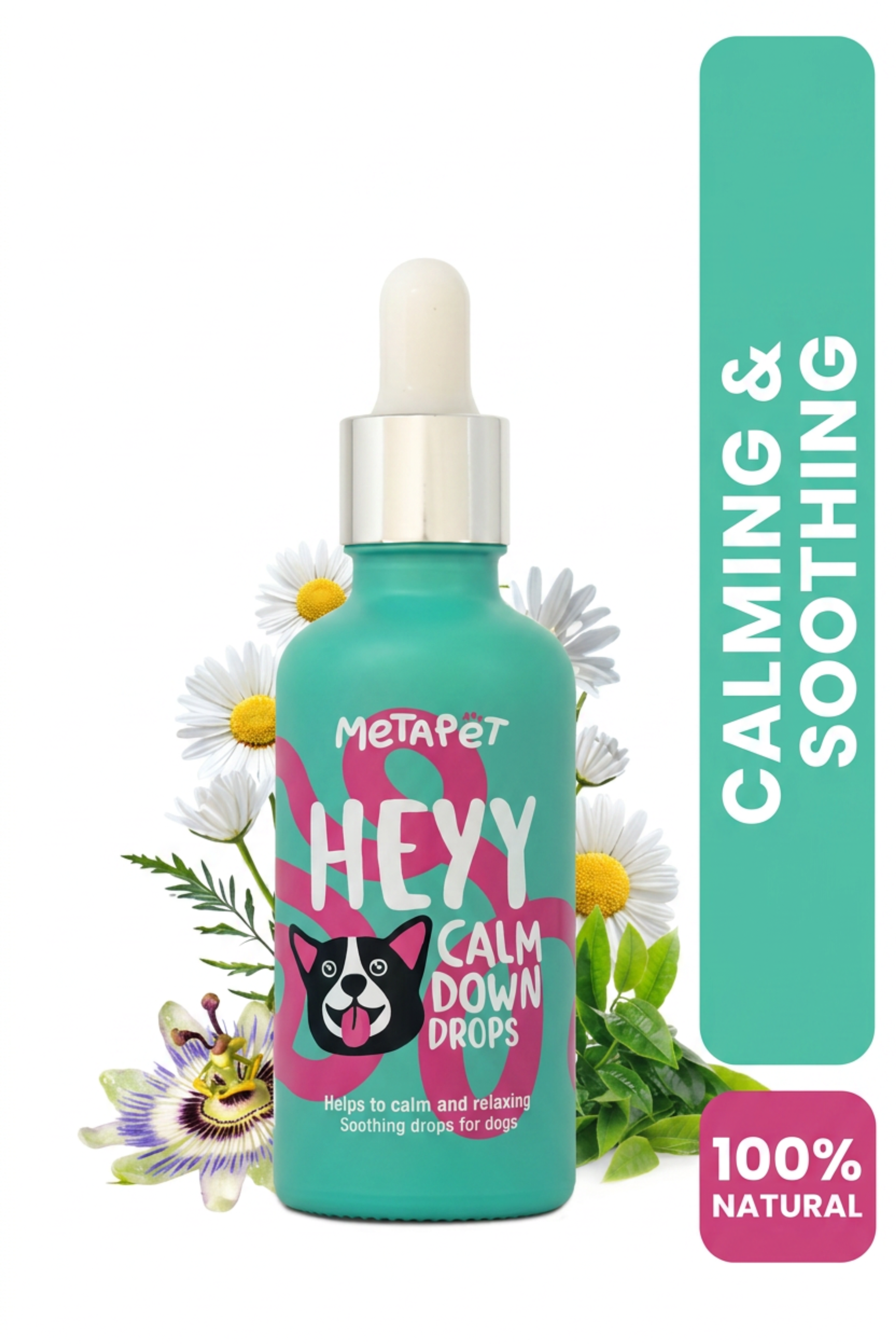
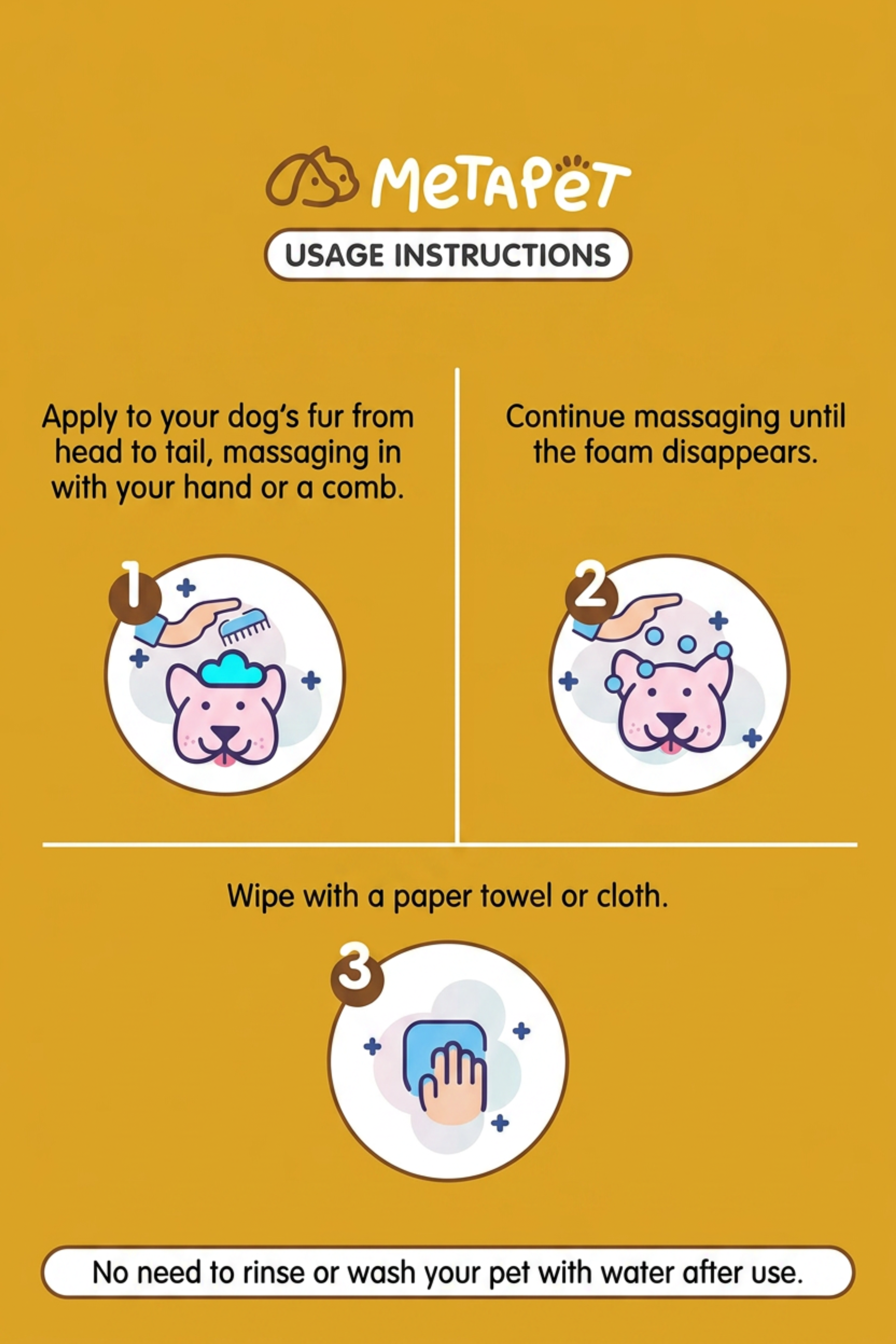
Some owners also explore calming supports as one small piece of the plan. If you are curious, options like MetaPet's Heyy Calm Down natural calming drops for dogs and cats are designed to support calm and comfort during stressful moments such as travel, houseguests, or routine changes. They are complementary supplements, not medicine — they do not treat compulsive disorder or any condition, and they never replace the veterinary evaluation, enrichment, and behavior work this article describes. Ask your veterinarian whether such a product fits your pet's overall plan.
The Takeaway for Pet Parents
Repetitive behavior is a message. Sometimes it says 'my skin itches' or 'my hip hurts'; sometimes 'my days are empty'; sometimes 'my brain has built a loop I cannot exit alone.' None of those messages is answered by laughter, scolding, or hoping it fades. They are answered by a veterinary exam, an honest audit of the pet's daily life, kind redirection, and professional help where loops run deep.
Approached that way, the outlook is genuinely good: most pets improve substantially, many dramatically. And the process — richer days, lower stress, closer observation — leaves you with a healthier, happier animal even beyond the behavior that started it. Watch closely, act early, and let your veterinarian be your first call.