Canine Acne: Chin and Muzzle Bumps in Dogs Explained
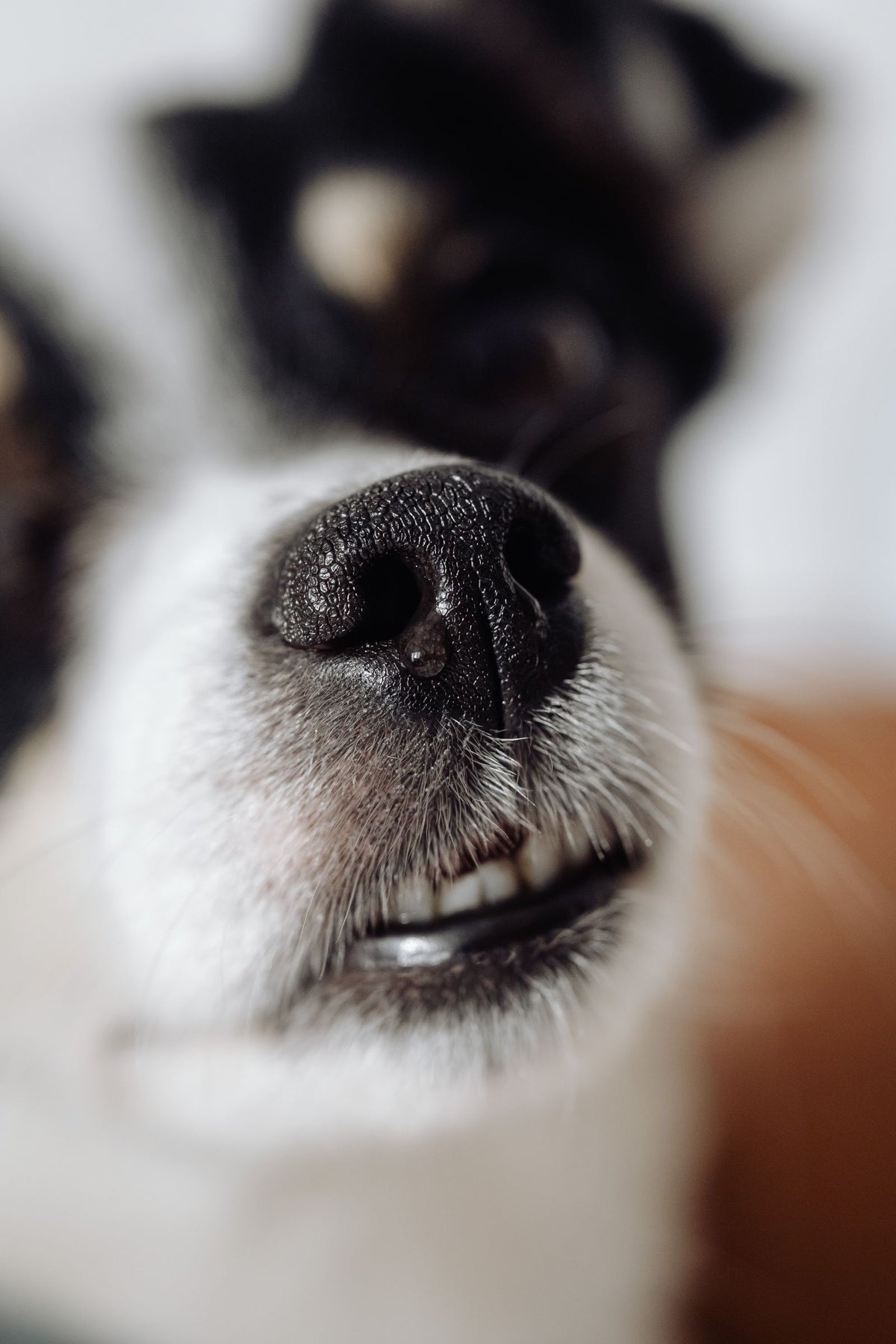
A dog turns up with a scattering of small red bumps along the chin and lower lip, or across the front of the muzzle. Some look like little pimples. A few may have come to a head. The dog may be rubbing his face on the carpet or the sofa arm. Most owners either dismiss it as nothing or panic that it is something serious. Canine acne sits somewhere in between: a genuine skin condition, usually mild, but one that is easy to confuse with several other things that are not mild at all.
The name is slightly misleading. Canine acne is not the hormonal condition that affects human teenagers, even though it typically shows up in young dogs and often settles with maturity. Veterinary dermatologists generally describe it as an inflammatory condition of the hair follicles in the chin and muzzle region, and the underlying process is inflammation and follicular rupture rather than blocked pores in the human sense.
This guide explains what canine acne looks like, which dogs tend to develop it, what makes it worse, how veterinarians approach it, and — most importantly — the signs that mean the bumps on your dog's face are something other than acne and need prompt attention.
Important: This article shares general educational information for pet owners and is not a substitute for an in-person veterinary examination, diagnosis, or treatment. For any medical concern or emergency, contact your veterinarian promptly.
What Canine Acne Actually Is
The chin and muzzle carry short, stiff hairs set in relatively deep follicles, in an area that takes constant physical contact. Dogs press their chins into bowls, push their muzzles through undergrowth, rub their faces on carpet and furniture, and carry toys. That combination of coarse hair and repeated friction sets the scene.
When a follicle in this region becomes inflamed, the hair shaft can break through the follicle wall into the surrounding tissue. The body reacts strongly to hair keratin in the wrong place, and the result is a firm, reddened bump. Some remain as small papules; others develop into pustules or, if the inflammation is deeper, into more substantial swellings that can discharge.
Secondary bacterial involvement is common, because inflamed and broken skin is easily colonised. That is part of why the condition sometimes looks worse over time rather than settling on its own, and part of why veterinary assessment is worth having rather than simply waiting it out.
Which Dogs Are Most Affected
Canine acne is most classically seen in young dogs, often appearing in adolescence and frequently improving as the dog matures. It is not exclusive to young dogs, however, and an older dog developing facial bumps for the first time deserves a more careful look at other explanations.
Short-coated breeds are over-represented, and the breeds most often mentioned in veterinary dermatology texts include Boxers, Bulldogs, Great Danes, Dobermanns, Rottweilers, Mastiffs and Weimaraners. The common thread is a short, coarse coat over a muzzle that gets used vigorously.
That said, any dog can develop follicular inflammation in this region. Breed tendency is a clue rather than a rule, and it should never be used to talk yourself out of having a persistent skin problem examined.
What It Looks Like — and What It Feels Like to the Dog
Recognising the pattern helps you describe it accurately to your veterinarian, which is more useful than trying to diagnose it yourself.
Typical features
- Location — chin, lower lip and the front of the muzzle, sometimes extending toward the lip margins.
- Appearance — small red or purple-tinged bumps, sometimes with visible pustules, occasionally with crusting.
- Texture — the skin often feels bumpy or thickened to the touch before it looks dramatic.
- Behaviour — face rubbing on carpet, furniture or your legs; pawing at the muzzle; reluctance to have the chin handled.
- Course — frequently waxes and wanes, flaring after periods of more vigorous play or face contact.
Many dogs are not especially bothered by mild cases. Others are clearly uncomfortable, and deeper lesions can be genuinely painful. Pain, swelling that is increasing, discharge or a dog who flinches when the area is touched all move this from 'monitor' to 'get it seen'.
Things That Commonly Make It Worse
Canine acne is not caused by poor hygiene, and owners should not read it as a failure of care. There are, however, several everyday factors that plausibly contribute to irritation in this area and are simple to adjust.
- Rough or damaged bowls — scratched plastic bowls hold bacteria in the surface and sit directly against the chin at every meal. Many veterinarians suggest switching to stainless steel or ceramic and washing bowls daily.
- Repeated facial friction — dogs who habitually rub their faces, dig, or push through dense cover give the follicles constant mechanical stress.
- Squeezing or picking — understandable and genuinely counterproductive. Squeezing ruptures follicles further and drives material deeper into the tissue.
- Harsh home remedies — human acne products, alcohol, strong antiseptics and essential oils applied to a dog's face can cause chemical irritation or worse, and some are toxic if licked.
- Damp, dirty chin fur — food and water residue left to sit is an avoidable source of irritation, particularly in dogs with loose lips.
Simple, gentle daily hygiene of the chin area — wiping after meals with a soft, damp cloth or a product designed for routine pet cleaning, then drying properly — is reasonable general care. MetaPet's Nano-Series Hygiene & Care Towel Wipes are made for that kind of routine cleaning between grooms. Cosmetic grooming products support cleanliness; they do not treat skin disease, and they are a complement to veterinary care rather than a replacement for it.
Conditions That Look Similar but Are Not Acne
This is the section that matters most, because several conditions produce bumps in exactly this area and a few of them are serious. A visual similarity is not a diagnosis, and this is the reason veterinarians examine rather than prescribe over the phone.
- Demodicosis — a mite condition that commonly affects the face of young dogs and requires specific diagnosis by skin scraping.
- Ringworm — a fungal infection that is contagious to other animals and to people, and needs confirmation rather than assumption.
- Bacterial folliculitis or deeper infection — may look like acne but requires a different approach.
- Contact or food-related allergic skin disease — allergy can present with facial irritation and needs its own investigation.
- Autoimmune skin disease — uncommon, but several conditions target the face and muzzle specifically.
- Mast cell tumours and other growths — any solitary lump that grows, changes, ulcerates or persists needs veterinary assessment rather than watchful waiting.
- Juvenile cellulitis — a distinct condition of young puppies involving marked facial swelling, which needs urgent veterinary care.
None of these can be reliably distinguished from acne by appearance alone. That is not a failure on the owner's part; it is simply how skin works. Skin has a limited number of ways to look unhappy, and many different processes produce overlapping patterns.
How Veterinarians Approach It
Diagnosis begins with history and examination: the dog's age, how long the bumps have been present, whether they have changed, what the dog's routine involves, what bowls and bedding are used, whether other animals or people in the home have skin changes, and whether anything has been applied already.
Depending on the picture, your veterinarian may perform simple in-clinic tests. Skin scrapings look for mites. Tape or impression cytology examines cells and organisms from the surface. Fungal culture or specific testing may be used where ringworm is a possibility. In persistent, unusual or non-responsive cases, a skin biopsy may be recommended, and referral to a veterinary dermatologist is an option for difficult cases.
This stepwise approach exists because treatment differs completely between causes. Something that helps one condition can worsen another, which is the core reason not to treat a dog's face based on an internet photo match.
What Treatment Generally Involves
Management is individual and prescribed by your veterinarian after examination. Broadly, approaches may include topical products applied to the affected skin, medicated cleansing regimes, and in some cases systemic medication where infection is deeper or more established. Cases with a strong secondary bacterial component often need a longer course than owners expect.
Alongside any prescribed treatment, practical adjustments are usually recommended: changing bowls, keeping the chin clean and dry, reducing opportunities for facial friction where possible, and avoiding anything abrasive on the area. Owners are consistently advised not to squeeze lesions, however tempting.
No specific products, doses or durations are given here deliberately. Medication choice depends on the confirmed cause, the dog's age and weight, other health conditions and any concurrent treatment. Ask your veterinarian to explain what they are treating, how long it should take to improve, and what should prompt an earlier recheck.
Realistic Expectations Over Time
Many young dogs improve as they mature, and mild cases often become a minor, occasional issue rather than a permanent one. Some dogs, particularly certain short-coated breeds, remain prone to flares throughout life and are managed with an ongoing routine rather than a one-off course.
Flares often follow identifiable triggers — a period of rough play, a new bowl, a change of bedding, a spell of face-rubbing in long grass. Keeping a simple note of when flares happen frequently reveals a pattern that is easy to reduce once you can see it.
Scarring can occur where lesions have been deep or repeatedly damaged, which is a further argument against squeezing. Where the chin has been affected for a long time, some permanent thickening or pigment change may remain even after the inflammation settles.
Supporting Skin Health Generally
General skin and coat condition depends heavily on a complete, balanced diet appropriate to the dog's life stage, alongside consistent parasite prevention as advised by your veterinarian. Those two foundations do more for skin than any product applied to the surface.
Regular grooming with a gentle brush suited to the coat helps you notice changes early, and a weekly hands-on check of the face, ears, paws and body catches new lumps while they are still small. For dogs prone to chin irritation, keeping the area clean and dry after meals is a sensible daily habit.
Supplements are sometimes used as part of general skin and coat support; products such as MetaPet's Wow Beauty Drops fur and skin vitamin drops for dogs are formulated to support normal skin and coat condition as part of a daily routine. Any supplement should be discussed with your veterinarian first, is a complement to proper veterinary care rather than a substitute for it, and is not a treatment for canine acne or any other skin condition.
When to Book an Appointment
Mild, stable bumps in an otherwise well young dog can reasonably be mentioned at the next routine visit. Several situations should not wait.
- Bumps that are growing, spreading or changing — any lesion that changes in size, colour or texture needs examination.
- Pain, swelling or discharge — signs of deeper inflammation or infection.
- Bleeding or ulceration — broken skin on the face should be assessed rather than managed at home.
- Facial swelling in a puppy — marked swelling of the muzzle, eyelids or lymph nodes in a young puppy needs urgent veterinary attention.
- Skin changes in people or other pets in the home — raises the possibility of a contagious cause such as ringworm.
- A first-time occurrence in an older dog — warrants a proper workup rather than an assumption of acne.
- No improvement with veterinary treatment — go back rather than persevering; the diagnosis may need revisiting.
If your dog seems systemically unwell — off food, lethargic, feverish, or with facial swelling that is progressing — contact your veterinary practice promptly rather than waiting for a routine slot.
The Short Version for Owners
Canine acne is a relatively common, usually mild inflammatory condition of the chin and muzzle, most often seen in young, short-coated dogs, and frequently improving with maturity. Sensible bowl hygiene, gentle daily cleaning of the chin and resisting the urge to squeeze are the three things owners can do that genuinely help.
The part that matters more than the treatment is the diagnosis. Facial bumps have many possible causes, some of them contagious and some of them serious, and none of them can be reliably told apart by eye. A single examination early on is a small investment that avoids a great deal of guesswork.
If your dog has bumps on the chin or muzzle that are persistent, painful, changing or accompanied by any other sign of illness, book an appointment. If they are mild and your dog is happy, mention them at the next check-up and keep an eye on the pattern in the meantime.