Multi-Cat Households: Reducing Conflict and Stress at Home

Sharing your home with more than one cat can be wonderful, but cats are not naturally pack animals the way dogs are. Each cat is an individual with its own needs for space, security, and routine. When those needs overlap or compete, tension can simmer quietly for months before owners notice. The good news is that most multi-cat conflict can be reduced with thoughtful changes to the home and daily routine. This guide explains why friction develops between cats living together and offers practical, evidence-informed steps to help your household feel calmer for everyone in it.
Important: This article provides general educational information and is not a substitute for an in-person examination by your veterinarian or a qualified veterinary behaviorist. A sudden change in behavior, new aggression, or a cat that begins hiding can signal pain or underlying illness. If conflict appears suddenly, escalates, or is accompanied by changes in appetite, litter box habits, grooming, or energy, please contact your veterinarian promptly.
Understanding the social nature of cats
Domestic cats descend from a largely solitary ancestor, the African wildcat, which hunted alone and defended its own territory. Unlike dogs, cats did not evolve to rely on a tightly organized group for survival. That does not mean cats cannot live happily together, many do, but it does mean that cohabitation is something we ask of them rather than something they instinctively seek.
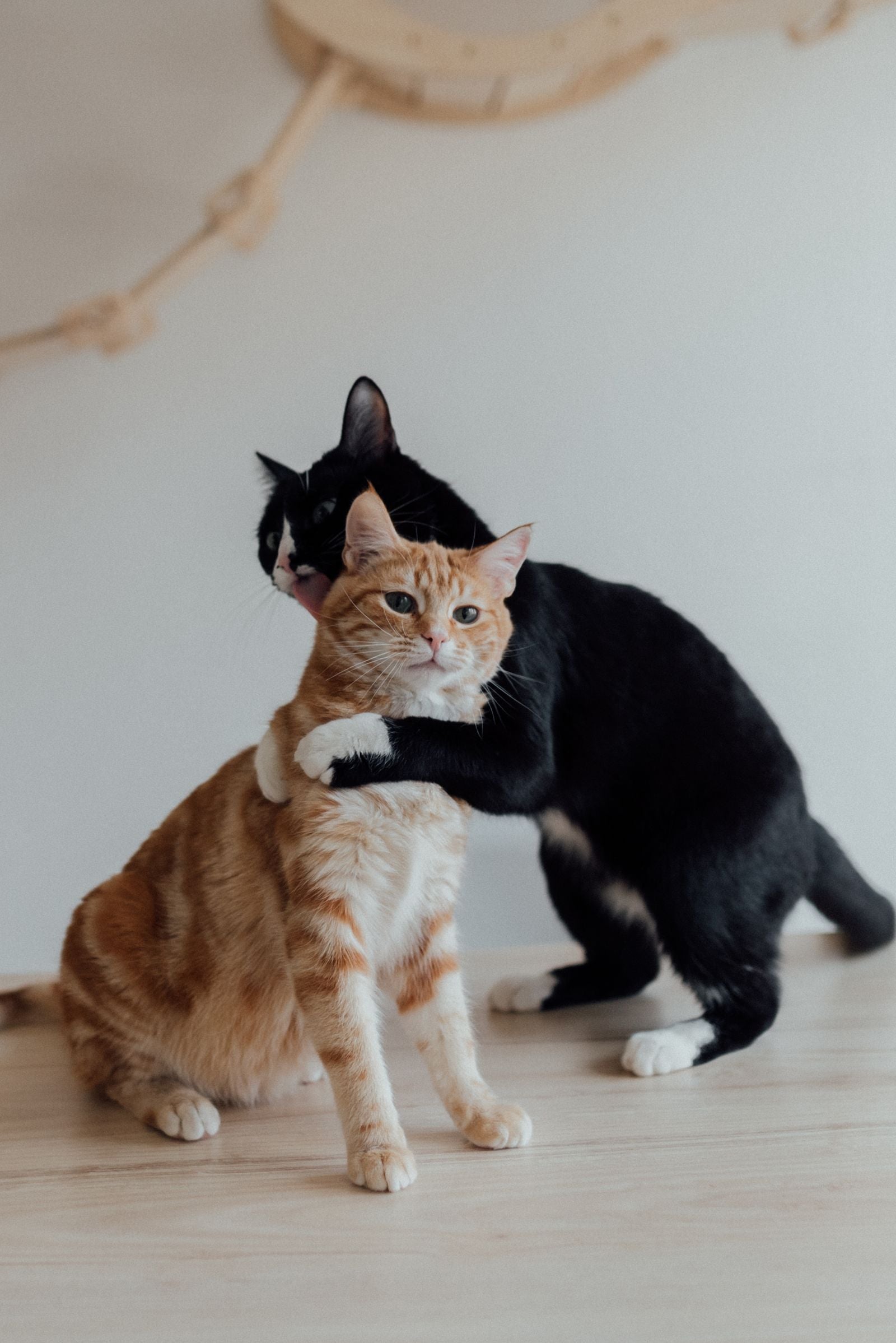
Cats that grow up together, especially littermates, or that are introduced carefully often form genuinely affectionate bonds. They may groom each other, sleep curled together, and greet one another with raised tails. These are signs of a socially bonded group. Cats that merely tolerate one another, by contrast, share space without conflict but keep a polite distance. Both arrangements can be perfectly healthy. Problems arise when cats are forced into close contact without enough resources or escape routes, because a cat under social pressure has no built-in way to "work things out" the way a more group-oriented species might.
Understanding this helps set realistic expectations. The goal in a multi-cat home is not to force every cat to be best friends, but to create an environment where each cat feels secure enough that competition and threat are minimized.
Telling tension, play, and serious aggression apart
One of the hardest tasks for owners is reading what is actually happening between their cats. Rough-and-tumble play can look alarming, while quiet, chronic tension can be almost invisible. Learning to distinguish them is the foundation of good management.
Healthy play
Playful interactions tend to be relaxed and reciprocal. Cats take turns chasing and being chased, claws are usually sheathed, bites are inhibited, and there is little or no hissing, growling, or yowling. After a play bout, both cats typically go back to normal activities without lingering tension.
Signs of underlying tension
- Staring and blocking: One cat fixing another with a hard stare, or sitting in doorways and hallways to control access to food, litter, or resting spots.
- Avoidance: A cat that hangs back, waits for another to leave before eating, or spends more time hiding or up high.
- Subtle body language: Flattened ears, a twitching or thumping tail, crouched posture, dilated pupils, or a cat that freezes when another enters the room.
- Over-grooming or under-grooming: Stress can show up as bald patches from excessive licking or, conversely, a neglected, unkempt coat.
Serious aggression
True fights involve sustained yowling and screaming, ears pinned flat, piloerection (fur standing on end), swatting with claws out, wrestling that does not pause, and sometimes injuries such as scratches or bite wounds. If you see this, do not reach in with your hands. Instead, interrupt from a distance with a loud noise, a cushion placed between them, or by tossing a towel nearby, then separate the cats into different rooms to calm down. Repeated or injurious fighting warrants professional help.
The golden rule of resource distribution
Most ongoing conflict between housemate cats traces back to competition over resources. When cats must share a single food bowl, one litter box, or the only sunny windowsill, the stage is set for one cat to guard and another to feel deprived. The widely recommended guideline is simple to remember.
One per cat, plus one. Provide one of each key resource for every cat in the home, plus one extra. In a two-cat household, that means three litter boxes, multiple feeding stations, and several water sources. The "plus one" gives a buffer so no single resource becomes a contested chokepoint.
Just as important as the number is the placement. Resources clustered in one corner of the house still force cats into the same space. Spread them out so a cat can eat, drink, eliminate, and rest without having to pass or confront another cat to do so.
Litter boxes: number, type, and placement
Litter box conflict is one of the most common and most fixable sources of stress. Follow the "one per cat plus one" rule, so two cats need at least three boxes. Place them in different, quiet locations rather than side by side, since two adjacent boxes can function as one in a cat's mind and can be guarded by a single individual.
- Avoid dead ends: Position boxes where a cat cannot be cornered or ambushed, ideally with more than one way in and out of the area.
- Consider open boxes: Many cats prefer large, uncovered boxes that let them see their surroundings and feel less trapped.
- Keep them clean: Scoop daily. A soiled box may be avoided, concentrating all cats onto fewer acceptable boxes and increasing competition.
A cat that suddenly stops using the box, or begins eliminating in the open, may be signaling social stress, but the same sign can indicate a urinary or other medical problem. Always rule out illness with your veterinarian before assuming the cause is behavioral.
Feeding, water, and reducing mealtime rivalry
Communal feeding, where all cats eat shoulder to shoulder from bowls in one spot, often creates pressure even if no obvious fighting occurs. A more confident cat may hover, and a more timid one may bolt food quickly or skip meals.
- Separate stations: Offer each cat its own bowl in a different location, so eating is calm and private.
- Use distance and height: Some cats feel safer eating on a counter, shelf, or in a separate room behind a door.
- Provide multiple water sources: Place water away from food and litter, in several spots, and consider a wide bowl or fountain for cats that prefer running water.
- Try food puzzles: Foraging toys engage natural hunting behavior and give each cat a positive, independent activity.
Vertical space and the importance of escape routes
Cats use the third dimension. Shelves, cat trees, window perches, and the tops of furniture all expand the usable territory of a home without adding square footage. Vertical space lets cats increase the distance between themselves and time-share favored areas, with one cat up high and another below.
Equally important are escape routes. A cat should never feel trapped. Avoid arrangements where a cat must squeeze past a housemate to reach food, water, or the litter box. Keep doorways and hallways clear, provide more than one path through key rooms, and offer plenty of hiding spots such as covered beds, boxes, and quiet corners where a cat can retreat and feel safe.
Time-sharing and respecting individual routines
In many seemingly peaceful multi-cat homes, cats are actually time-sharing the space, using the same favorite spots and pathways at different times of day. This is a normal, healthy strategy. You can support it by keeping daily routines predictable, since cats are creatures of habit and unpredictability is itself a stressor.
- Consistent schedules: Feed, play, and clean litter at roughly the same times each day.
- Individual attention: Spend one-on-one time with each cat for play and affection, so attention is not a contested resource.
- Respect preferences: Let each cat have its own preferred resting areas rather than expecting them to share a single bed.
Scent, pheromones, and a calmer environment
Scent is central to how cats understand their world and recognize members of their social group. In a multi-cat home, maintaining a shared, familiar group scent can ease tension. You can gently support this by allowing cats to rub on shared surfaces and by not over-cleaning every scent mark with harsh products.
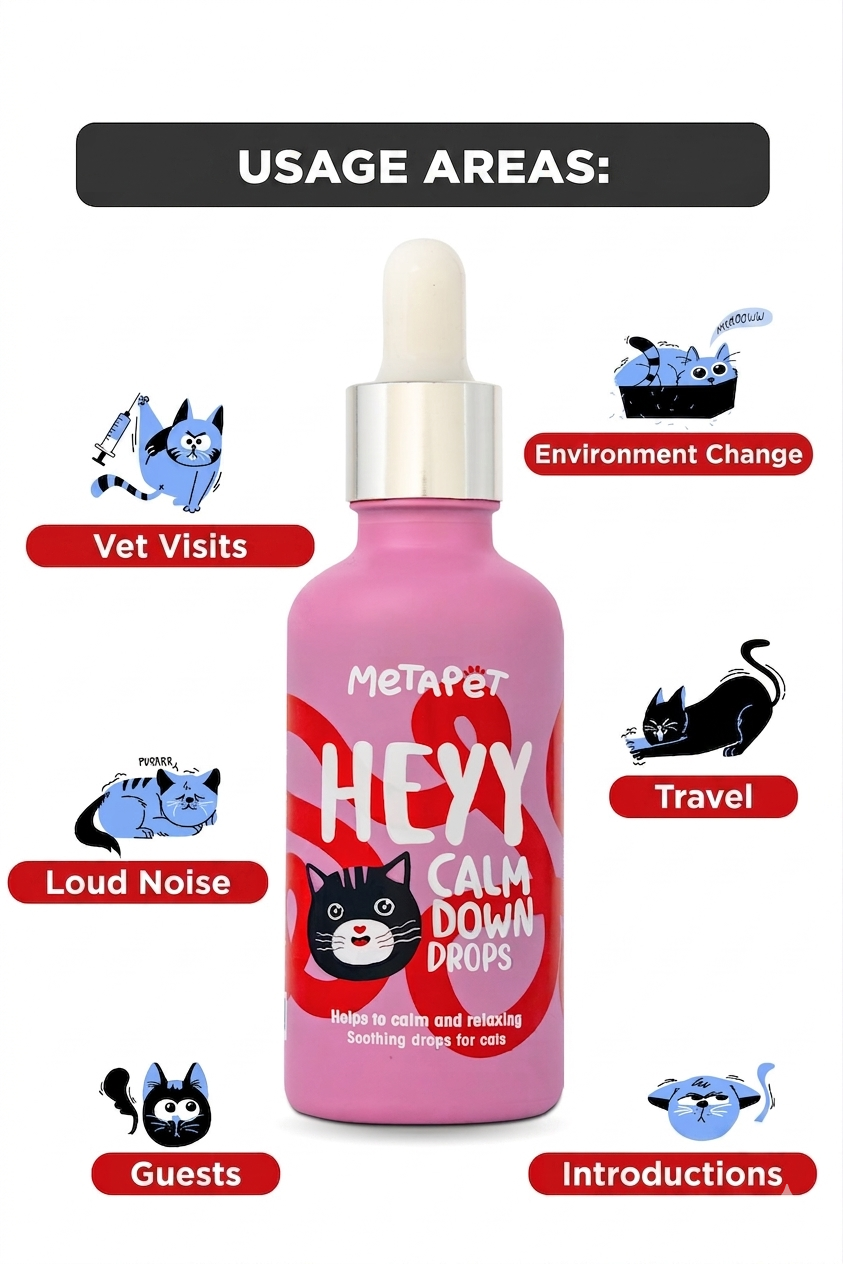
Synthetic feline pheromone products, available as diffusers or sprays, are designed to mimic the natural facial and maternal pheromones cats use to mark safe territory. These products may help support a calmer environment for some cats and can be a reasonable complement to good environmental management. They are not a cure for conflict and work best alongside the resource and space changes described above, not as a replacement for them. If you choose to try one, view it as one supportive tool within a broader plan, and discuss persistent problems with your veterinarian.
Environmental enrichment and play
A bored cat is more likely to redirect frustration toward a housemate. Daily enrichment channels energy into healthy outlets and reduces the build-up of tension that can spill into conflict.
- Interactive play: Use wand toys to mimic prey, letting each cat "hunt," pounce, and catch. Short, frequent sessions work well.
- Rotating toys: Keep novelty by rotating a selection of toys rather than leaving everything out at once.
- Scratching surfaces: Provide multiple posts and pads so cats can scent-mark and stretch without competing.
- Sensory variety: Window perches for bird-watching, safe cat-friendly plants, and food puzzles all add interest to the day.
When cats are already fighting: a careful reintroduction
If two cats who once coexisted have begun fighting, or if tension has escalated to real aggression, a structured reintroduction can help reset the relationship. The principle is to lower the pressure to zero and then rebuild positive associations slowly.
- Separate fully: Give each cat its own room with all resources, so neither feels threatened and both can relax.
- Swap scents: Exchange bedding or gently rub a soft cloth on one cat and place it near the other, so each becomes familiar with the other's smell in a calm context.
- Feed on either side of a barrier: Once calm, feed both cats on opposite sides of a closed door, gradually decreasing distance, so good things happen in each other's presence.
- Allow brief, supervised contact: Progress to short visual access through a baby gate or cracked door, then to supervised time together, ending each session on a positive note before any tension appears.
- Go at the cats' pace: Move forward only when both are relaxed, and step back a stage if you see fear or aggression.
This process can take weeks. Rushing it is the most common reason reintroductions fail.
Myth versus fact
- Myth: "Cats will sort out their differences if I just leave them alone." Fact: Because cats are not pack animals, leaving conflict unmanaged often allows tension to worsen. Thoughtful changes to the environment are usually needed.
- Myth: "Two cats are automatically company for each other." Fact: Some cats prefer to be the only cat. Compatibility depends on temperament, history, and the environment, not simply on having a companion present.
- Myth: "Hissing and the occasional swat mean the cats hate each other." Fact: Brief communication like this is normal and helps cats set boundaries. Sustained fighting and injuries are the real warning signs.
- Myth: "A pheromone diffuser will fix everything." Fact: These products may help support calm but are not a standalone solution; they work alongside good resource and space management.
Frequently asked questions
How long does it take for cats to get along?
There is no fixed timeline. Some cats settle within days, others take many weeks or months, and a few will always prefer to coexist at a polite distance rather than become close friends. Patience and a low-pressure environment matter more than speed.
Will getting a third cat reduce the tension between my two cats?
Usually not. Adding another cat increases competition for resources and space and can intensify conflict. It is generally wiser to resolve existing tension first rather than hope a new cat will balance things out.
My cats used to get along and suddenly stopped. Why?
Sudden changes can be triggered by illness or pain in one cat, a frightening event, a change in the home, or even a redirected response to something outside a window. Because a medical cause is common, a veterinary check is an important first step.
Is it ever okay to punish a cat for aggression?
No. Punishment increases fear and stress and tends to make conflict worse, not better. Focus instead on managing the environment and rewarding calm behavior.
When to seek professional help
Many multi-cat households improve dramatically with environmental changes alone. But some situations call for expert guidance. Reach out to your veterinarian or a qualified veterinary behaviorist if you notice any of the following.
- Injuries: Fighting that results in wounds, abscesses, or repeated visible scratches and bites.
- Sudden changes: A previously peaceful pair that abruptly turns hostile, or a cat that suddenly begins hiding, which may indicate pain or illness.
- Stress signs: Inappropriate elimination, over-grooming, appetite changes, or a cat that withdraws from normal life.
- No improvement: Conflict that persists despite consistent environmental management and a careful reintroduction.
A professional can rule out underlying medical problems, assess the specific dynamics in your home, and tailor a behavior plan to your cats. Living in a multi-cat household is a lifelong relationship that you can actively support. With enough resources spread thoughtfully through the home, plenty of vertical space and escape routes, predictable routines, daily enrichment, and patience, most cats can share a home in genuine peace, and many will come to enjoy each other's company.